11 Modern Villa Landscaping Ideas To Try
A villa should never feel like a beautiful house sitting in an unfinished outdoor space. The landscape around it should feel just as intentional as the architecture, the driveway, the entry door, the windows, and the outdoor living areas. When the outside is planned well, the whole property feels more expensive, more peaceful, and more…
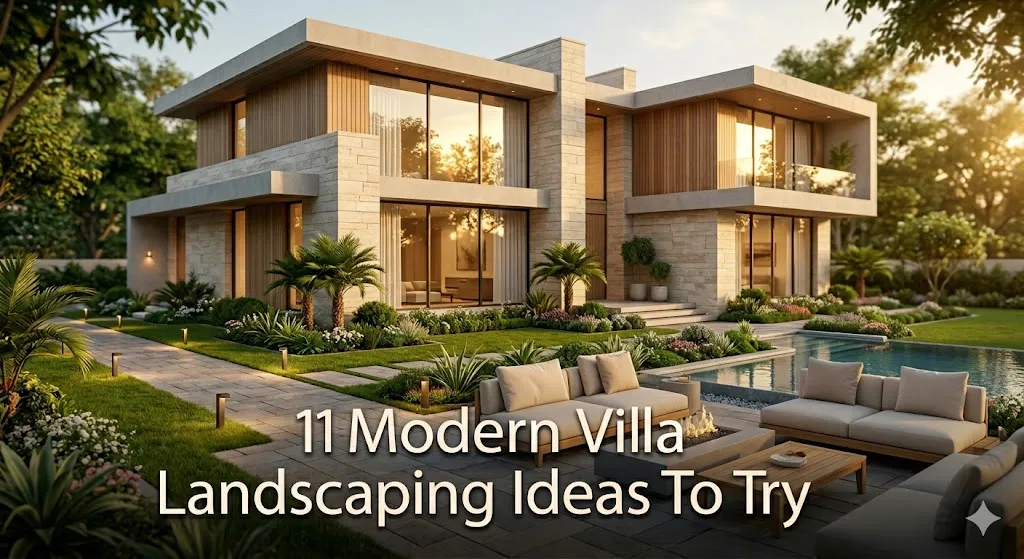
A villa should never feel like a beautiful house sitting in an unfinished outdoor space. The landscape around it should feel just as intentional as the architecture, the driveway, the entry door, the windows, and the outdoor living areas. When the outside is planned well, the whole property feels more expensive, more peaceful, and more complete. This is why villa landscaping matters so much. It is not only about plants. It is about arrival, privacy, movement, outdoor comfort, lighting, shade, entertaining, and the way the home looks from every angle.
For USA homeowners, villa-inspired outdoor design can work in many different locations. A Mediterranean-style home in California, a luxury suburban house in Texas, a coastal property in Florida, a desert villa in Arizona, or a large modern home in Georgia can all benefit from clean landscaping decisions. The climate, materials, and plant choices may change, but the design principles stay the same. A strong villa landscape usually has structure, balance, clear pathways, well-placed greenery, comfortable outdoor spaces, and lighting that makes the home look beautiful after sunset.
The best villa gardens do not feel crowded. They feel edited. Instead of adding every plant, every flower color, and every outdoor feature at once, the design focuses on what improves the home most. A grand entrance can make the property feel welcoming. A reflecting pool can create calm. A floating pathway can guide movement. Sculptural palms can add height. An outdoor lounge can make the yard useful, not just pretty. These are the kinds of ideas that create a polished outdoor space people save on Pinterest and actually want to recreate.
A common mistake many homeowners make is treating landscaping as decoration instead of design. They buy a few plants, place some pots near the door, add lights randomly, and hope the yard will look finished. But a villa needs more than scattered details. It needs flow. The driveway should connect visually to the entry. The entry should connect to the garden. The garden should connect to the pool, patio, or lounge. When each area relates to the next, the property feels professionally planned, even if the homeowner improves it in phases.
Modern Villa Landscaping often uses clean lines, strong materials, architectural plants, and simple color palettes. That does not mean the space has to feel cold or empty. In fact, the most beautiful villa gardens balance structure with softness. Smooth stone can be paired with olive trees. Concrete pathways can be softened with grasses. White walls can be warmed with wood, lanterns, and uplighting. A sleek pool edge can feel more inviting with palms, loungers, and textured planters nearby. The balance between sharp and soft is what makes the space feel luxurious.
Material choice is especially important. Villas often look best with materials that feel permanent and substantial, such as limestone, travertine, porcelain pavers, concrete, gravel, natural stone, teak, corten steel, black metal, and smooth stucco. The key is repetition. If every outdoor area uses a different surface, the property can feel busy and disconnected. When the same two or three materials appear in the entry, pathways, courtyard, pool area, and lounge, the whole landscape feels calmer and more custom.
Planting should also feel intentional. Instead of filling every open bed with random shrubs and seasonal flowers, focus on plants with shape, height, texture, and rhythm. Palms, olive trees, agave, boxwood, ornamental grasses, lavender, rosemary, cypress, yucca, and clipped hedges all work beautifully in villa-style outdoor spaces. In colder American regions, homeowners can adapt the look with hardy evergreens, ornamental grasses, columnar trees, potted plants, and stone-based layouts. The style is flexible as long as the planting feels clean and repeated.
Lighting is another detail that can completely change a villa landscape. During the day, the property depends on plant form, stone texture, water, and sunlight. At night, it depends on lighting. Uplights under palms, path lights along walkways, soft wall lights near courtyards, and warm lights around seating areas can make the home feel elegant after dark. The goal is not harsh brightness. The goal is warmth, safety, depth, and atmosphere. A well-lit villa garden can feel like a private resort without becoming flashy.
This first part focuses on six foundational ideas that can shape the entire outdoor experience. These ideas are strong enough to stand alone, but they also work beautifully together. A grand entry can lead to floating pathways. A reflecting pool can sit beside a courtyard. Sculptural palms can frame an outdoor lounge. Each section includes practical styling notes, useful materials, layout guidance, and design logic so the ideas feel realistic for real American homes, not just fantasy inspiration.
1. Grand Entry
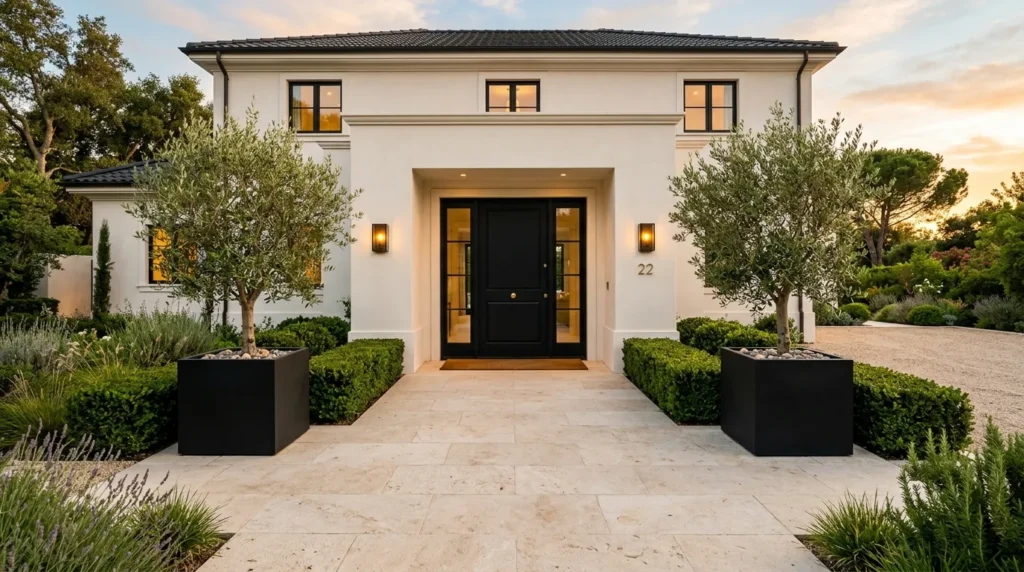
- Creates a strong first impression by making the front of the villa feel polished, welcoming, and intentionally designed.
- Works beautifully with wide pavers, symmetrical planters, trimmed hedges, statement trees, stone steps, and warm entry lighting.
- Helps connect the driveway, walkway, gate, and front door so the arrival experience feels smooth and visually organized.
- Adds curb appeal for guests, real estate value, evening views, and everyday pride when coming home.
- Materials may include limestone, travertine, concrete slabs, black metal planters, gravel borders, stucco walls, and low-voltage lights.
A grand villa entrance should feel impressive before anyone reaches the front door. This idea works because the entry landscape creates the first emotional signal of the entire home. Use wide pavers, symmetrical planters, trimmed hedges, soft uplighting, and one strong focal point like an olive tree, water bowl, or sculptural pot. In my experience, villa entrances look best when the materials match the architecture instead of fighting it. Limestone, concrete, porcelain, gravel, and matte black metal can create a clean arrival experience with strong curb appeal for visitors and family.
The transformation comes from making the driveway, walkway, and front planting feel connected. Instead of decorating only near the door, extend the design from the curb or gate toward the entrance. Add low hedges to guide the eye, large planters to frame the steps, and warm lights to highlight walls or trees at night. Keep flower colors controlled so the look feels upscale rather than busy. The result is a polished arrival zone that feels welcoming, expensive, and practical for guests, deliveries, daily use, and evening curb appeal every season.
2. Reflecting Pools
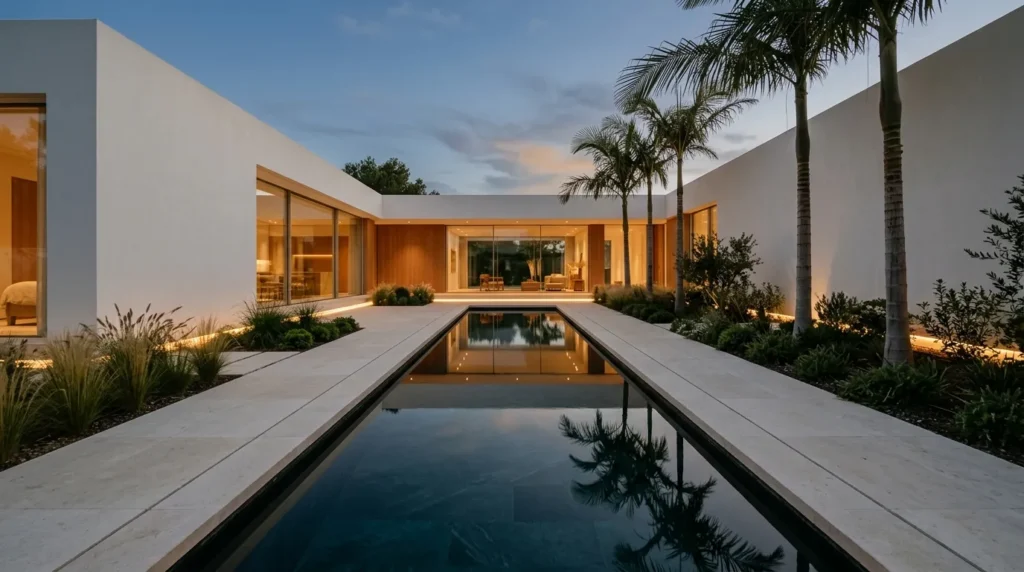
- Adds a calm luxury feature that makes the villa feel more peaceful, architectural, and resort-inspired.
- Works near front entries, courtyards, patios, pool terraces, glass walls, garden walkways, or quiet seating corners.
- Pairs well with concrete, black tile, limestone coping, smooth stone, low planting, underwater lights, and simple water edges.
- Helps soften hard exterior materials by adding reflection, movement, sound, and visual depth.
- For practical planning, consider filtration, electrical access, splash control, cleaning access, shade, and child safety.
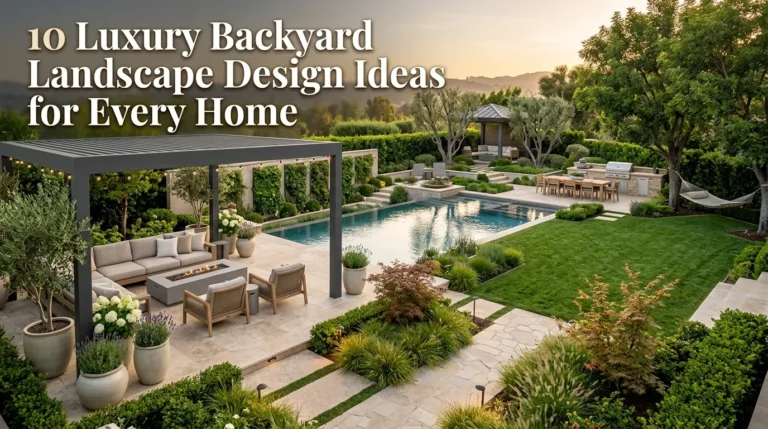
A reflecting pool can make a villa landscape feel calm, luxurious, and architectural. This idea works because still water adds light, movement, and symmetry without needing a crowded planting design. A narrow rectangular pool beside an entry path, courtyard, or patio creates a resort-like mood that feels especially elegant around large homes. Use dark tile, smooth concrete, limestone coping, or black stone for a clean edge. I’ve noticed that shallow water features look most modern when the surrounding planting stays simple, low, and carefully spaced around the edges nearby.
The transformation is strongest when the water feature reflects something beautiful, such as palm trunks, white walls, warm lights, or the sky. Add underwater lighting, a slim overflow edge, or stepping stones nearby for extra visual impact. For practical use, plan access to electricity, filtration, water refilling, and easy cleaning before construction begins. In hot states like Florida, Texas, Arizona, and California, shade placement can reduce evaporation. The final look feels peaceful, elegant, and highly photogenic while still giving the outdoor space a quiet sense of movement every day.
3. Layered Courtyards
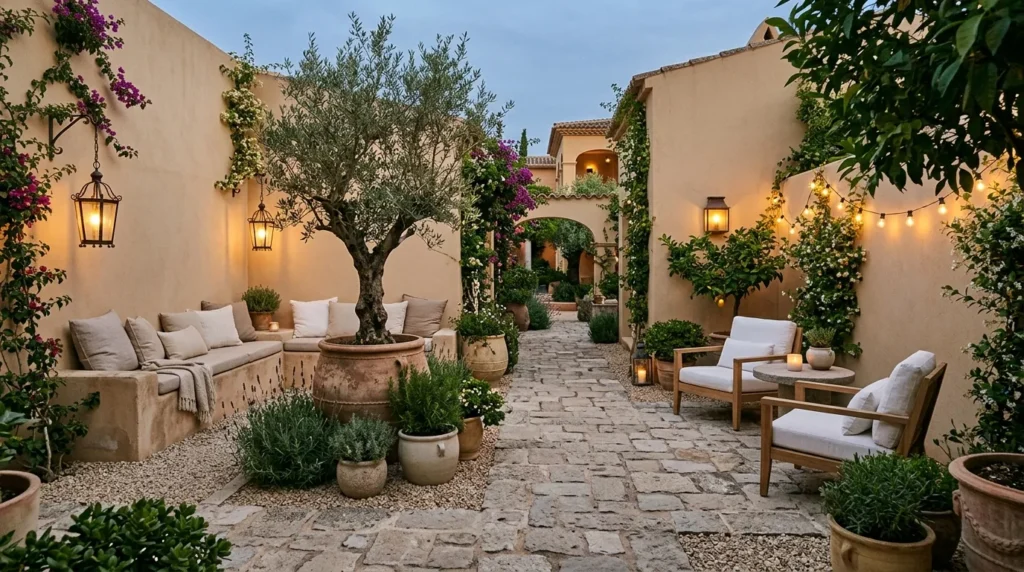
- Turns empty outdoor areas into private garden rooms for lounging, dining, reading, or quiet morning routines.
- Works with stone flooring, stucco walls, hedges, trees, gravel borders, benches, planters, lanterns, and water bowls.
- Helps large villa properties feel intimate by dividing outdoor space into comfortable zones instead of one open yard.
- Adds privacy, shade, architectural depth, and a more thoughtful connection between indoor and outdoor living.
- Perfect for side yards, entry gardens, inner courtyards, pool-adjacent patios, and spaces near bedrooms or guest suites.
Layered courtyards can turn a villa into a private outdoor retreat instead of a house surrounded by leftover yard space. This idea works because courtyards create outdoor rooms with clear purpose, whether for seating, dining, reading, or quiet morning coffee. Use walls, hedges, planters, paving, and trees to create layers of privacy and depth. That’s why many designers recommend treating courtyards like interiors, with a floor material, focal point, lighting plan, furniture layout, and plant palette that all work together for daily comfort outdoors at home.
The transformation happens when each courtyard layer has a role. A tiled floor gives structure, a bench creates use, a tree adds height, and a planter softens the edges. For villas with large footprints, multiple small courtyards often feel more intimate than one huge open lawn. Add water bowls, sculptural pots, wall lights, or gravel borders to keep the mood refined. This layout is practical because it offers shade, privacy, and flexible outdoor living without needing the entire property to be heavily landscaped at once completely.
4. Floating Pathways
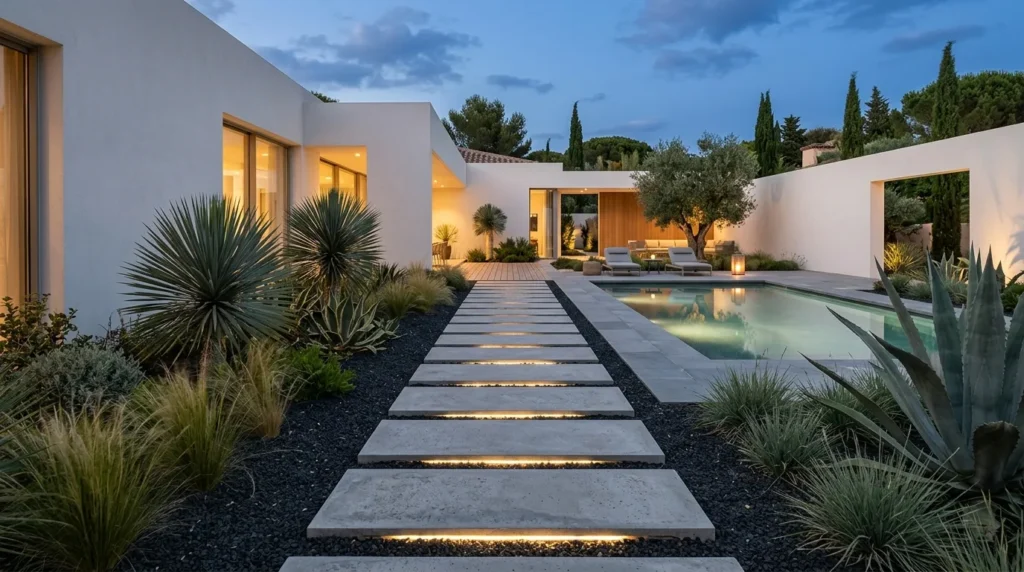
- Creates a clean route through the property while giving the garden a light, modern, architectural appearance.
- Works with large concrete slabs, porcelain pavers, limestone rectangles, dark stone, gravel joints, grass gaps, or black pebbles.
- Helps connect the driveway, entry, pool, guest house, courtyard, outdoor lounge, and garden zones with visual rhythm.
- Adds a high-end Pinterest look because the repeated slabs photograph beautifully from ground level and upper-floor views.
- Improves usability by keeping walking areas clear, dry, intentional, and easier to navigate at night with soft lighting.
Floating pathways give a villa garden that clean, high-end look people immediately save for inspiration. This idea works because large slabs appear to hover over gravel, grass, water, or low ground cover, creating visual rhythm and direction. Use concrete pads, porcelain pavers, limestone slabs, or dark stone rectangles with consistent spacing. The shape should feel generous, not narrow, because villa landscapes need scale. In my experience, pathways look more luxurious when the gaps are measured carefully and the surrounding material is kept simple and uncluttered overall.
The practical benefit is movement that feels organized without building a heavy walkway. Floating paths can connect the driveway, pool, courtyard, guest house, garden lounge, or front entry while keeping the overall landscape light. Use gravel for a crisp desert look, grass joints for softness, or black pebbles for bold contrast. Add recessed lights or low path lights for evening safety and atmosphere. The result is a landscape feature that is functional, modern, and visually strong from both ground level and upper-floor views of the property.
5. Sculptural Palms
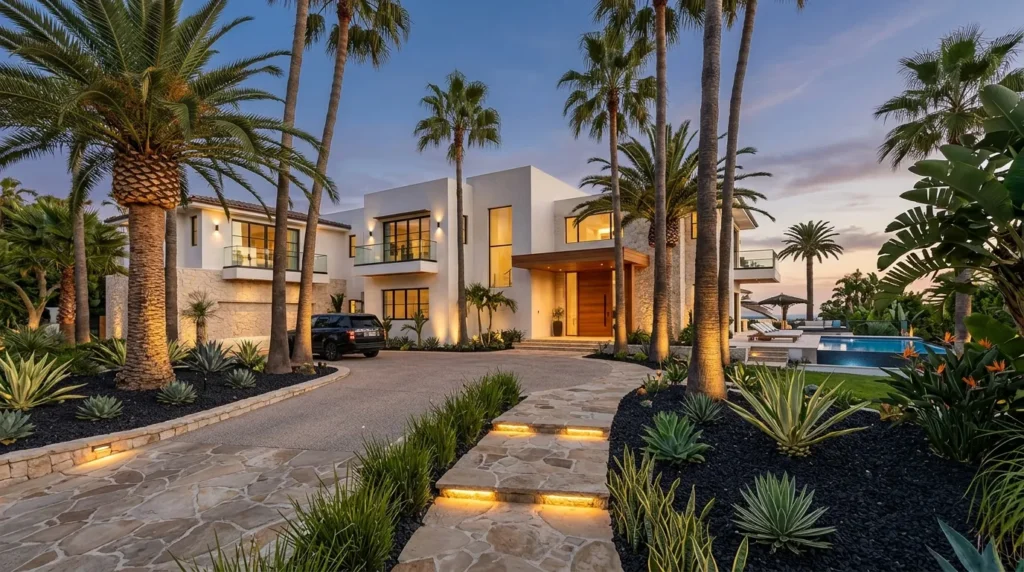
- Adds height, rhythm, shade, and a resort-inspired feeling that works especially well around villas, pools, and courtyards.
- Works with queen palms, date palms, Mediterranean fan palms, windmill palms, potted palms, and climate-appropriate alternatives.
- Helps emphasize vertical lines, tall walls, large windows, driveway edges, entry paths, and poolside architecture.
- Looks best when paired with simple underplanting such as gravel, agave, grasses, clipped shrubs, or low ground cover.
- For colder states, use hardy palms, large containers, seasonal protection, or similar vertical plants with strong silhouettes.
Sculptural palms can give a villa landscape instant height, shade, and resort-style elegance. This idea works because palms have strong vertical lines that pair beautifully with modern architecture, white walls, glass doors, pools, and stone patios. Instead of planting too many varieties, choose a few palms with clean trunks and balanced crowns. Queen palms, date palms, Mediterranean fan palms, and windmill palms can all work depending on climate. I’ve seen this work well when palms are placed like architecture, not scattered randomly around the yard everywhere.
The transformation comes from spacing and lighting. A row of palms can frame a driveway, while a pair can mark an entry, pool edge, or courtyard opening. Underplant with gravel, low grasses, agave, liriope, or clipped shrubs so the trunks remain visible. In colder parts of the USA, choose hardy options or use large potted palms that can be protected seasonally. Add uplighting at the base to create dramatic evening shadows. The result feels elegant, tropical, and structured without overwhelming the villa’s clean exterior lines.
6. Outdoor Lounge
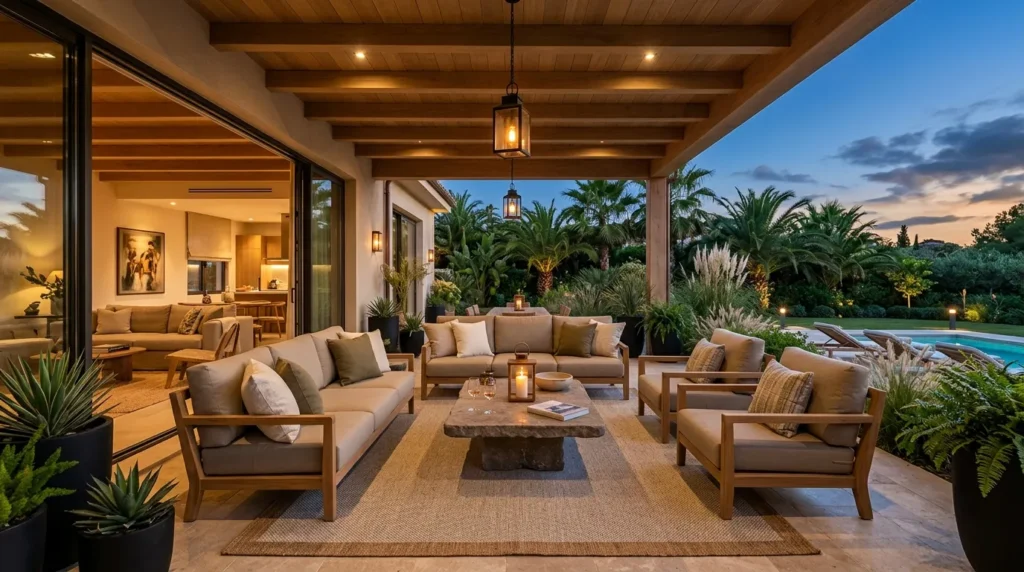
- Turns the villa landscape into a real living space where people can relax, host, read, drink coffee, or gather after dinner.
- Works with deep outdoor sofas, lounge chairs, stone tables, teak frames, pergolas, umbrellas, outdoor rugs, lanterns, and planters.
- Helps large properties feel more usable by creating a clear destination instead of open space with no purpose.
- Adds comfort, texture, shade, and softness while keeping the overall design clean and sophisticated.
- Best placed on a stable surface like stone tile, porcelain pavers, concrete, composite decking, or a covered terrace.
An outdoor lounge makes a villa landscape feel lived-in, not just photographed. This idea works because large homes need outdoor destinations where people can actually gather, relax, and enjoy the property. Choose deep seating, low tables, outdoor rugs, shade structures, side tables, and durable cushions in calm neutral tones. Many designers recommend building the lounge on a defined surface like porcelain tile, stone, concrete, or composite decking. This keeps the furniture grounded and makes the area feel like an extension of the interior living space.
The transformation is strongest when the lounge has comfort, shade, and lighting together. Add a pergola, umbrella, canopy tree, or covered terrace for daytime use, then layer lanterns, sconces, or LED strips for evening mood. Materials like teak, aluminum, rope, stone, and performance fabric handle outdoor conditions better than delicate indoor-style pieces. Place planters around the lounge to soften edges and create privacy. The result is a welcoming villa zone that works for family evenings, weekend hosting, poolside drinks, and quiet mornings outside year-round comfortably.
7. Pool Terrace
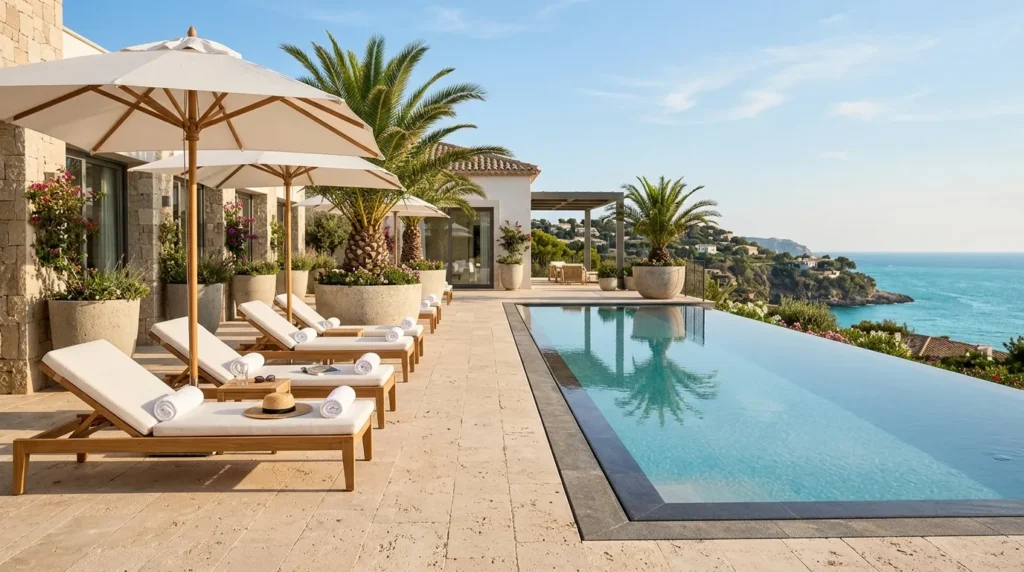
- Creates a resort-inspired outdoor zone that connects swimming, lounging, sunbathing, and entertaining in one polished space.
- Works beautifully with porcelain pavers, travertine, limestone, concrete slabs, teak loungers, umbrellas, palms, and low planters.
- Helps make the pool area feel intentional instead of looking like water surrounded by empty paving.
- Adds comfort through shade, seating, slip-resistant surfaces, side tables, towels, lighting, and planting.
- Best designed with drainage, heat reflection, barefoot comfort, furniture spacing, and pool safety in mind.
A pool terrace can make a villa feel like a private resort when it is planned with care. This idea works because the space around the pool is just as important as the water itself. Choose pale porcelain, travertine, limestone, textured concrete, or natural stone that feels comfortable under bare feet. Add loungers, umbrellas, side tables, and large planters to create a complete relaxation zone. I’ve noticed that pool terraces look most elegant when the furniture is arranged in clean groups rather than scattered along every empty edge.
The transformation comes from turning the pool into a lifestyle area, not just a swimming feature. Leave enough space for walking, towels, loungers, and serving trays so the terrace stays comfortable during real use. Palms, grasses, agave, and low hedges can soften the hardscape without dropping too much debris into the water. For hot states, consider shade sails, pergolas, or umbrellas to reduce heat and glare. Add subtle lighting near steps, planters, and pathways. The finished terrace feels calm, functional, and luxurious from morning sun to evening gatherings.
8. Privacy Walls
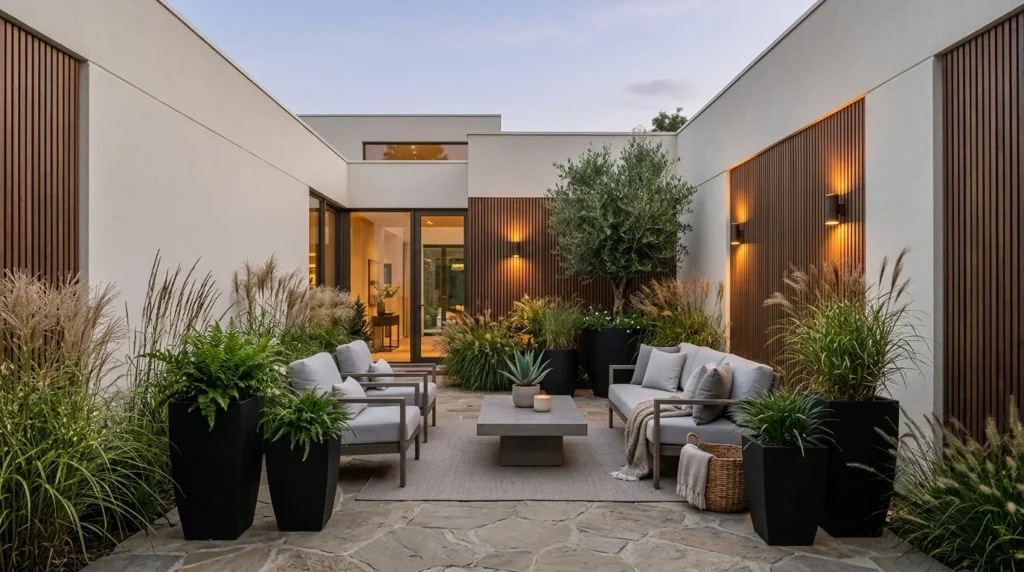
- Adds structure, enclosure, and calm by protecting the villa from street views, neighbors, exposed yards, or open boundaries.
- Works with smooth stucco walls, stone cladding, wood slats, concrete panels, black metal screens, hedges, and climbing plants.
- Helps outdoor lounges, pool areas, courtyards, and dining spaces feel more intimate and comfortable.
- Creates a strong backdrop for plants, water features, seating, sculptures, and warm architectural lighting.
- For best results, combine hard walls with greenery so the space feels private but not cold or closed in.
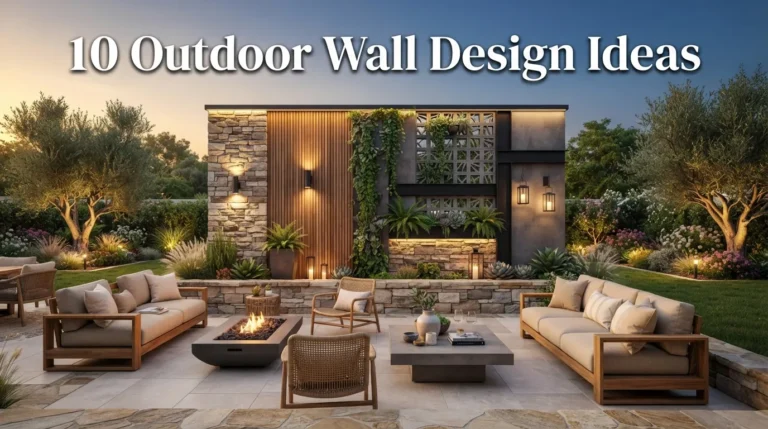
Privacy walls can completely change how comfortable a villa garden feels. This idea works because luxury outdoor living depends on a sense of enclosure, especially when homes are near neighbors, roads, or open views. A smooth stucco wall, stone feature wall, slatted wood screen, concrete panel, or black metal screen can create instant structure. That’s why many designers recommend planning privacy before choosing furniture. If the outdoor room feels exposed, even expensive seating will not feel relaxing, no matter how beautiful the cushions or surrounding plants look.
The visual upgrade is strongest when privacy walls become design features instead of plain barriers. Add climbing jasmine, espalier trees, tall grasses, slim hedges, or large planters to soften the surface. Use wall lights or uplights to create depth at night, especially around courtyards, pools, and dining areas. A white wall can brighten a small garden, while stone or wood adds warmth and texture. The result is a more peaceful outdoor space that feels protected, elegant, and usable for family time, entertaining, and quiet mornings outside.
9. Fire Feature
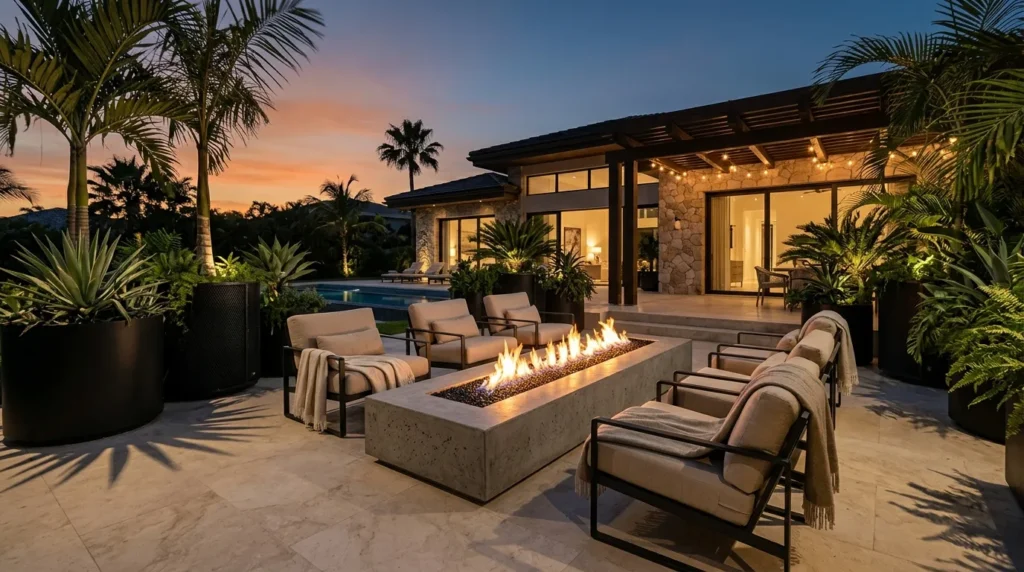
- Creates a warm gathering point that makes the villa landscape more inviting after sunset and during cooler seasons.
- Works with linear gas fireplaces, round fire bowls, concrete fire pits, built-in stone features, and modern fire tables.
- Adds movement, glow, and atmosphere without needing heavy decor or complicated garden styling.
- Helps define outdoor lounge areas, poolside seating, courtyards, patios, and evening entertaining zones.
- Requires careful planning for heat clearance, gas lines, wind direction, local fire codes, and furniture distance.
A fire feature gives a villa landscape warmth, movement, and instant evening atmosphere. This idea works because fire naturally draws people together and creates a focal point after sunset. Choose a linear gas fireplace, round fire bowl, concrete fire pit, stone-built feature, or low fire table depending on the scale of the property. For a modern villa, clean shapes usually look better than rustic designs. A long flame near a lounge area or pool terrace can feel especially elegant when paired with stone, neutral seating, and simple planting.
The transformation is both visual and practical because the garden becomes more usable at night. A fire feature can extend outdoor living into cooler months, especially in states with mild winters or crisp fall evenings. Place seating at a safe distance and leave enough room for people to move comfortably. Gas features are often easier for polished spaces because they burn cleaner and start quickly. Add side tables, low lighting, and weather-resistant cushions nearby. The result feels intimate, high-end, and perfect for relaxed conversations after dinner.
10. Dining Terrace
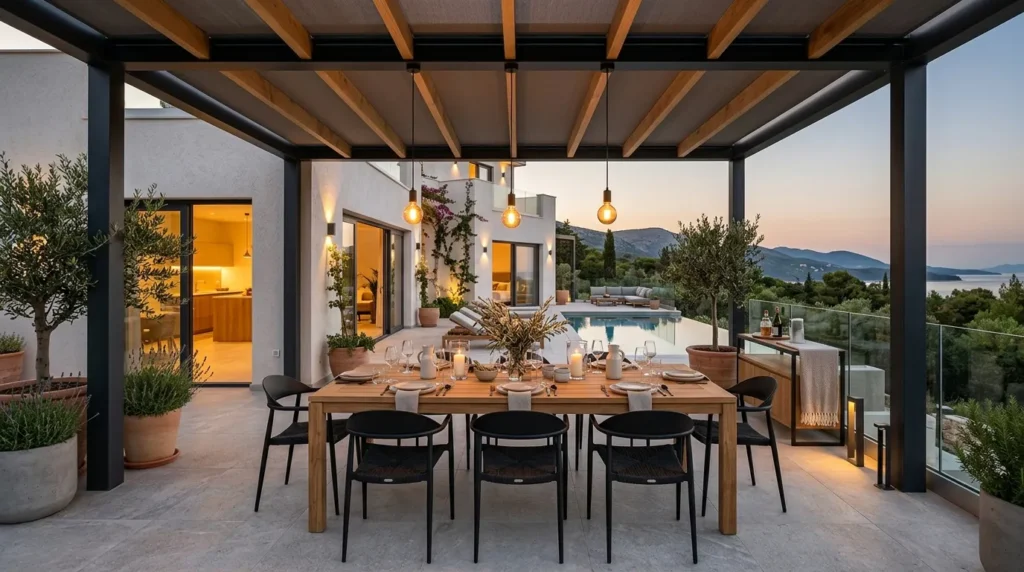
- Turns the villa garden into a functional outdoor entertaining area for meals, celebrations, family dinners, and weekend hosting.
- Works with stone flooring, porcelain tile, teak tables, black metal chairs, pergolas, pendant lights, umbrellas, and planters.
- Helps connect the kitchen, garden, and lounge areas so outdoor living feels natural and easy.
- Adds a polished hospitality feeling, especially when styled with simple table decor, lighting, greenery, and comfortable seating.
- Best placed on a stable surface with shade, lighting, easy kitchen access, and enough clearance for chairs.
A dining terrace makes the villa garden feel ready for real hosting, not just quiet viewing. This idea works because outdoor dining gives the landscape a clear purpose and connects the home to daily life. Place the table near the kitchen, covered patio, pool, or lounge area so serving food feels easy. Use a rectangular teak table, stone table, concrete table, or slim metal dining set depending on the home’s style. I’ve seen this work well when the dining area has its own surface, lighting, and planting border.
The transformation comes from making the dining area feel permanent and comfortable. Place it on stone tile, porcelain pavers, concrete, or compacted gravel so chairs move smoothly. Add a pergola, umbrella, shade sail, or nearby tree for daytime comfort. At night, pendant lights, wall sconces, lanterns, or string lights can create a warm restaurant-like mood. Use planters, herbs, or olive trees nearby to soften the edges. The final result feels practical, elegant, and perfect for family dinners, summer parties, holiday meals, and weekend entertaining.
11. Ambient Lighting
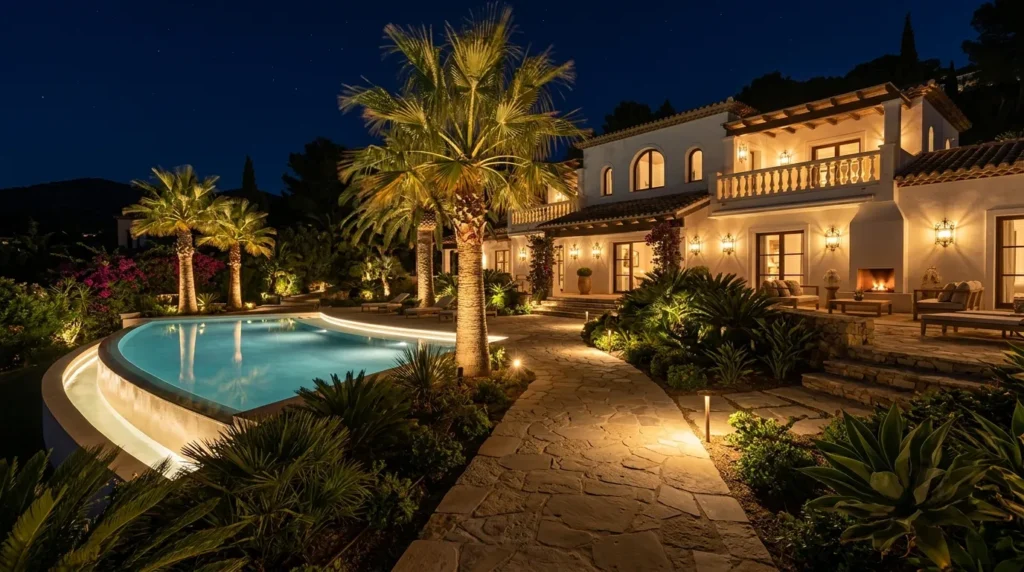
- Makes the villa landscape usable, safe, and visually impressive after sunset without overwhelming the space.
- Works with uplights, path lights, wall sconces, step lights, recessed LEDs, lanterns, pool lights, and tree lighting.
- Highlights architecture, palms, pathways, courtyards, water features, walls, stairs, and outdoor seating areas.
- Adds depth and mood by layering soft light instead of relying on one bright fixture.
- For best results, use warm light, hidden fixtures, dimmers, timers, and consistent placement throughout the property.
Ambient lighting can make a villa landscape look more luxurious than almost any daytime feature. This idea works because light adds depth, warmth, safety, and mood after the sun goes down. Use uplights under palms, step lights on stairs, path lights along walkways, wall sconces near courtyards, and soft LEDs around seating areas. The goal is not brightness everywhere. It is layering. In my experience, warm low lighting always feels more expensive than harsh white floodlights, especially around stone, stucco, water, and architectural planting.
The transformation is dramatic because evening lighting reveals the shape of the whole property. A dark garden can feel unfinished, but a softly lit garden feels calm, secure, and ready for use. Highlight the best features first, such as entry trees, textured walls, pool edges, water bowls, and lounge areas. Use timers, dimmers, and weather-rated fixtures for convenience. Keep fixture styles consistent so the lighting plan feels custom. The result is a villa exterior that looks polished from the street, the patio, and every window after sunset.