
10 upstairs hallway remodel ideas
The upstairs level can feel beautifully finished or strangely forgotten, depending on how the hallway is designed. In many USA homes, this pass-through area connects bedrooms, bathrooms, laundry rooms, closets, and stair landings, yet it often gets the least attention. A thoughtful upstairs hallway remodel can make the entire second floor feel brighter, quieter, safer,…
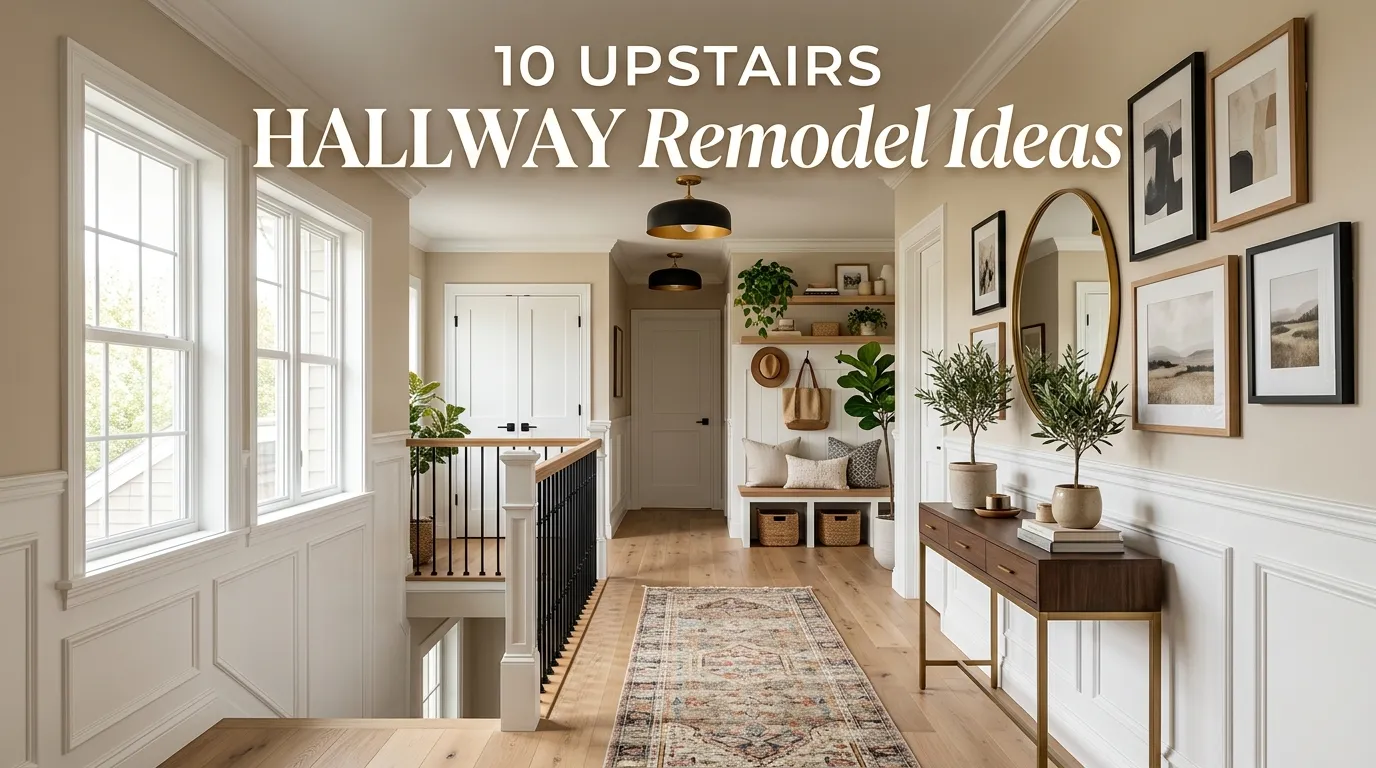
The upstairs level can feel beautifully finished or strangely forgotten, depending on how the hallway is designed. In many USA homes, this pass-through area connects bedrooms, bathrooms, laundry rooms, closets, and stair landings, yet it often gets the least attention. A thoughtful upstairs hallway remodel can make the entire second floor feel brighter, quieter, safer, and more intentional. You do not always need structural changes either. Paint, lighting, trim, storage, rugs, art, and mirrors can create a polished transition that feels connected to the rest of the home every day.
Because this space is used every day, the best remodel ideas need to balance style with real-life function. The area may need to handle laundry baskets, kids moving between bedrooms, nighttime bathroom trips, guests finding their room, or family photos that deserve a better display. These ideas focus on practical upgrades that look beautiful in photos but also work in normal homes. Whether your second-floor passage is narrow, dark, open, long, or awkward, the right design choices can make it feel more inviting, useful, and easy to maintain over time.
1. Stair Landing Gallery
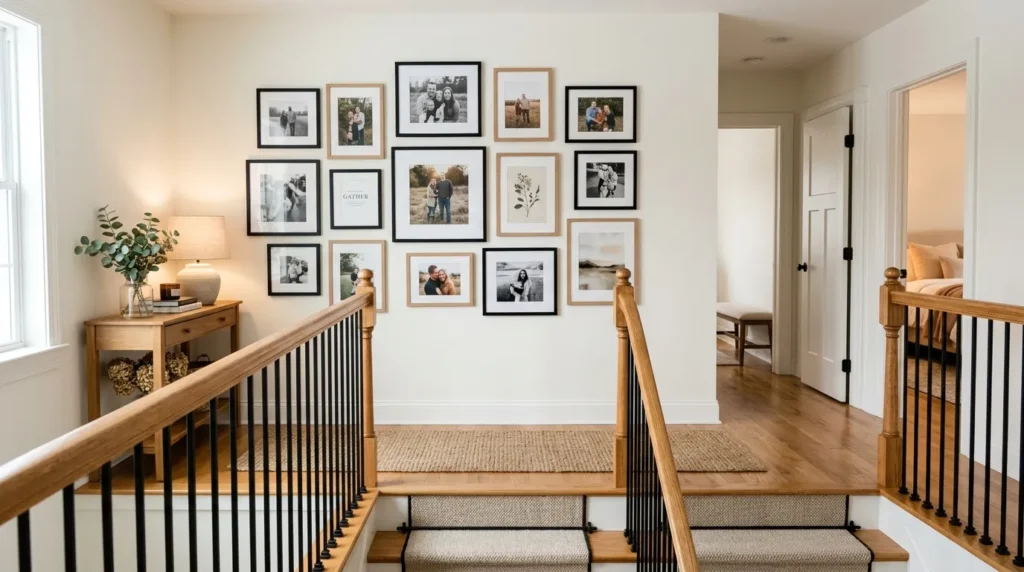
- Use the landing wall for framed art, family photos, or collected prints.
- Choose matching frames to keep the display clean and balanced.
- Add a picture light or nearby sconce for a polished evening look.
- Keep spacing even so the gallery feels intentional from the stairs and hallway.
A stair landing gallery gives the upper level a natural focal point before guests even reach the bedrooms. Instead of leaving the landing bare, use framed art, family photos, or collected prints to create a styled transition from the stairs to the rooms. This works especially well because people naturally pause on a landing, making it the perfect place for something personal and visually interesting. In my experience, the best galleries use consistent frame finishes so the display feels curated rather than busy, especially when the wall is visible from below.
Plan the layout on the floor first, then transfer the spacing to the wall with painter’s tape. Keep larger pieces near the center and smaller frames around them so the arrangement feels balanced from multiple angles. If the landing is tight, choose slim frames with acrylic fronts instead of heavy glass. Add a picture light or nearby sconce if the area feels dim at night. The finished landing becomes more than a turning point; it feels like a meaningful design moment that connects the staircase with the upper rooms beautifully.
2. Soft Runner Flow
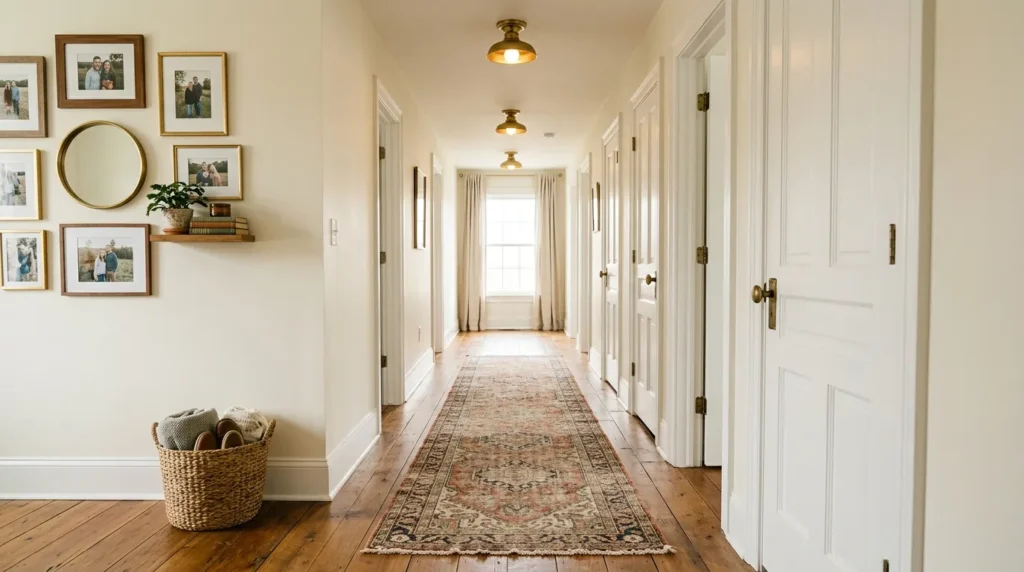
- Choose a low-pile runner that does not block bedroom or bathroom doors.
- Use muted vintage, striped, or washable patterns for easy maintenance.
- Add a strong rug pad to reduce slipping and soften noise.
- Pick colors that connect with bedrooms, stair carpet, or wood flooring.
A soft runner flow makes a long upper passage feel warmer, quieter, and more connected from room to room. Upstairs floors often carry more sound, especially with hardwood, vinyl plank, or laminate, so a runner helps soften footsteps and reduce echo. It also adds color and pattern without taking up wall space. I’ve noticed that muted vintage rugs, subtle stripes, and washable low-pile runners work beautifully in family homes because they feel stylish but still handle daily traffic, pets, kids, and laundry baskets moving through the space with ease during busy weekday routines.
Measure the walking path carefully so the runner leaves visible flooring on both sides and does not interfere with bedroom doors. A rug pad is essential because upstairs halls are high-traffic areas where slipping can become a safety issue. Choose a pattern that connects with nearby bedroom colors, stair carpet, or wood tones for a smoother visual flow. For homes with young children, darker patterns hide small marks better than solid pale rugs. The result is a hallway that feels softer underfoot, more finished, and much easier to photograph beautifully.
3. Linen Cabinet Built-In
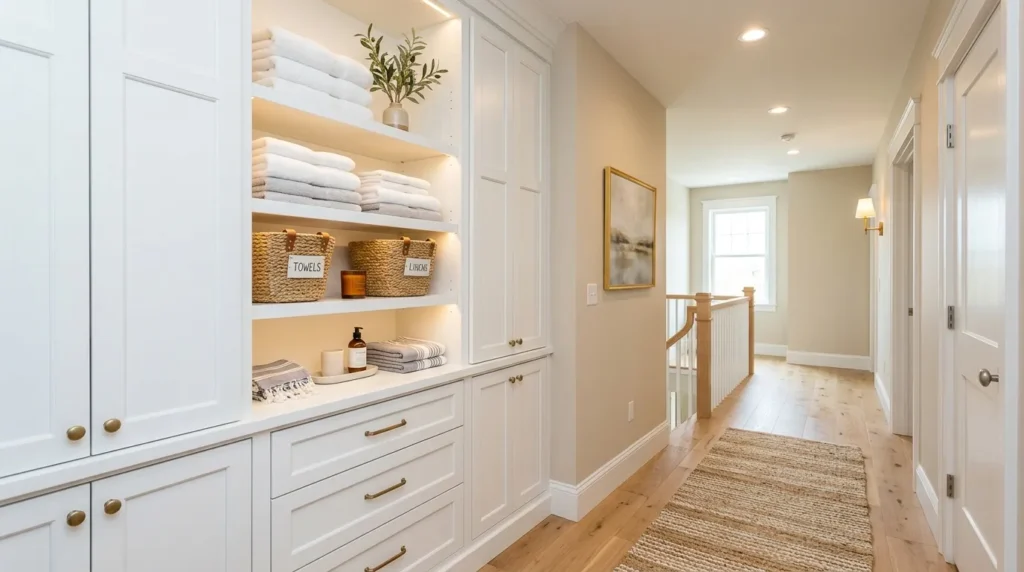
- Add shallow cabinets or shelves near bedrooms and bathrooms for daily linens.
- Use closed doors for a clean look or baskets for soft open storage.
- Label shelves by room, season, or item type for quick access.
- Store towels, sheets, blankets, and guest bedding where they are actually used.
A built-in linen cabinet can turn wasted hallway wall space into one of the most useful storage features upstairs. Many homes have towels, sheets, pillowcases, extra blankets, and guest bedding scattered between bedrooms and bathrooms, which makes everyday routines frustrating. A shallow cabinet, recessed shelving unit, or custom-looking storage tower keeps those essentials close to where they are needed. That’s why many designers recommend upper-level linen storage when remodeling, especially in homes where the laundry room, bathrooms, and bedrooms all sit near the same hallway for quick access and less searching.
Use closed cabinet doors if you want the cleanest look, or combine open shelves with baskets for a softer, more decorative finish. Store everyday towels at arm level, guest bedding higher up, and bulky blankets on the bottom or top shelves. Add labels by room, such as primary bath, kids’ bath, guest sheets, or seasonal blankets. If the cabinet is shallow, roll towels instead of stacking them deep. This upgrade improves the entire upstairs routine because fresh linens become easy to find, return, and keep organized without extra effort during laundry days.
4. Reading Corner Nook
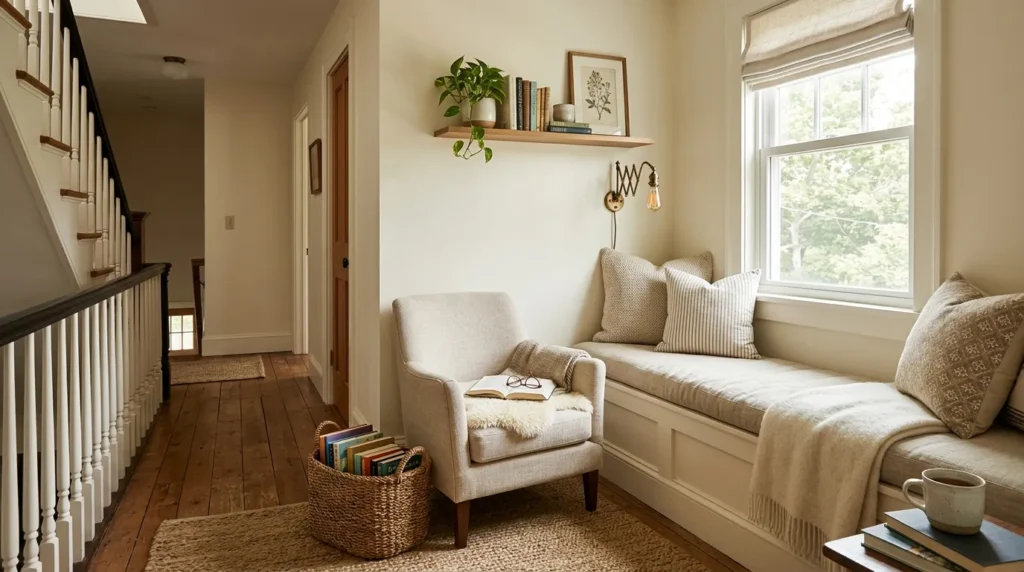
- Use an awkward landing, dormer space, or wider corner for a cozy reading spot.
- Add a small chair, built-in bench, floor cushion, or compact wall shelf.
- Include warm lighting, a book basket, and washable textiles for comfort.
- Keep the furniture slim so the walking path stays open and safe.
A reading corner nook can make an awkward upper landing feel cozy instead of empty. Many homes have a slightly wider turn near the stairs, a dormer window, or a small open corner that is too small for full furniture but too visible to ignore. A compact chair, wall shelf, floor pillow, or built-in bench can create a quiet spot for books, morning coffee, or bedtime routines. I’ve seen this work well in many homes because it gives the second floor a softer, more lived-in personality for everyone upstairs daily.
Keep the setup narrow and intentional so it does not block the walkway or create clutter. Use a small upholstered chair if there is enough clearance, or choose a built-in bench with drawers when storage matters more. Add a plug-in wall sconce, a basket of books, and a washable cushion for comfort. If the nook is near kids’ bedrooms, it can become a sweet bedtime reading zone. The area transforms from unused square footage into a charming pause point that feels warm, practical, and naturally Pinterest-worthy for families and guests alike.
5. Warm Sconce Lighting
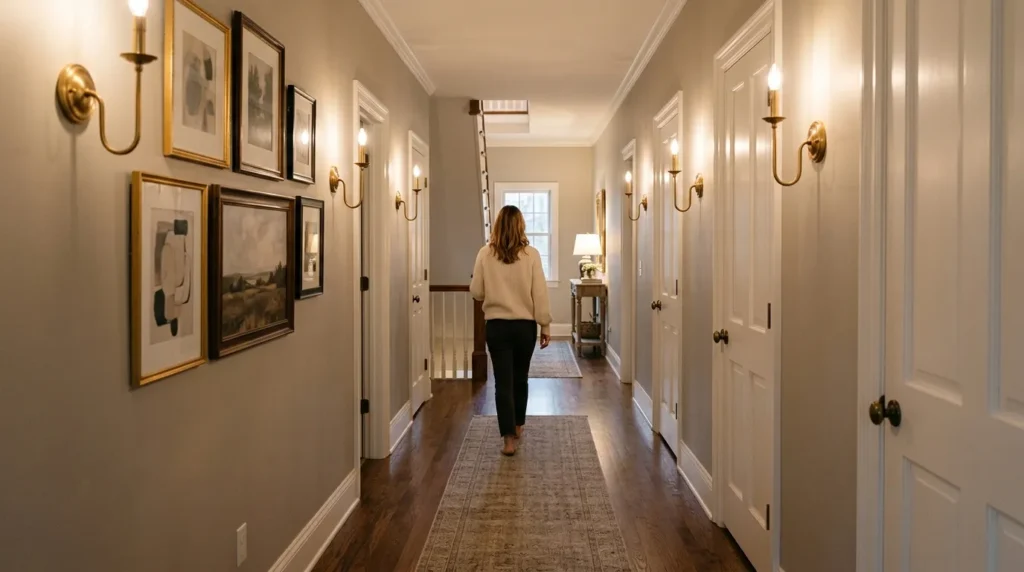
- Replace harsh overhead lighting with sconces, picture lights, or warm flush mounts.
- Choose warm white bulbs around 2700K to 3000K for a softer glow.
- Use plug-in, hardwired, rechargeable, or battery-operated options based on budget.
- Match metal finishes with door knobs, hinges, or stair rail details.
Warm sconce lighting can make the entire second floor feel safer, softer, and more designed after dark. Many upper halls rely on one overhead fixture that creates harsh shadows near bedroom doors and stair openings. Adding sconces, picture lights, or updated flush mounts spreads light more evenly and gives the area a finished look. In my experience, lighting is one of the quickest ways to elevate an upper hall because it changes how paint, trim, artwork, flooring, and door hardware appear throughout the day and night in every season upstairs.
Choose warm white bulbs around 2700K to 3000K so the glow feels gentle during nighttime trips to the bathroom or nursery. Hardwired sconces look seamless, but plug-in, rechargeable, and battery-operated options can work when electrical changes are not possible. Place fixtures where they guide movement, such as near stairs, bedroom clusters, or artwork. Match metal finishes with door knobs, hinges, or nearby railings for a cohesive look. The hallway becomes more comfortable and functional while gaining the kind of layered lighting that makes homes feel thoughtfully remodeled without feeling harsh.
6. Family Photo Grid
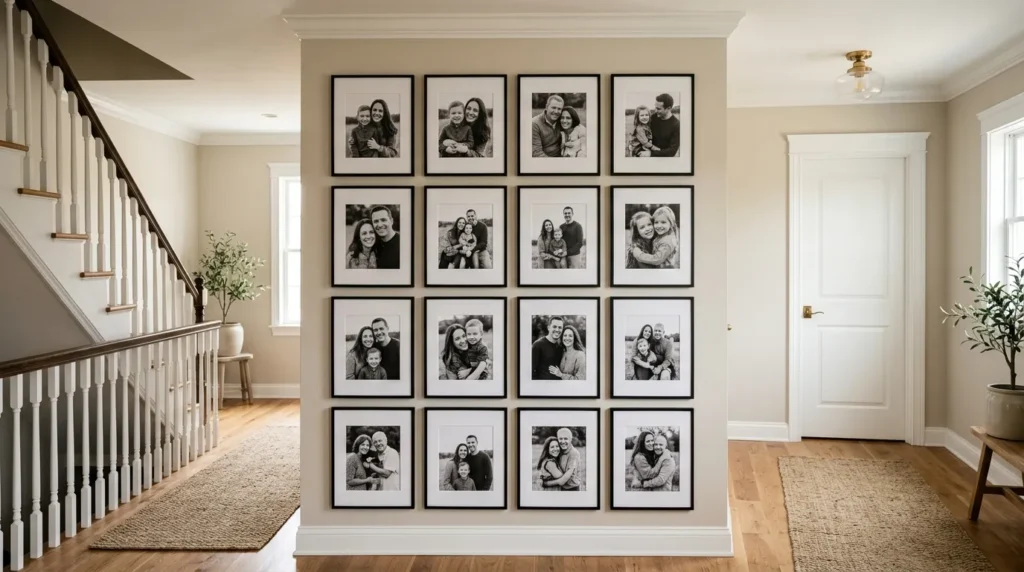
- Use matching frames and even spacing for a clean, timeless display.
- Choose black-and-white photos for a calm look near bedroom doors.
- Map the layout with paper templates before hanging frames.
- Use lightweight acrylic-front frames for safer high-traffic family areas.
A family photo grid gives the upper floor personality while keeping the wall visually organized. Instead of random frames that compete with doors and trim, a grid uses matching sizes, consistent spacing, and one frame finish for a calm designer look. This is especially effective in a busy bedroom hallway where many doorways already create visual breaks. I’ve noticed that black-and-white family photos often look timeless upstairs because they feel personal without adding too many colors to a narrow or dim area near private rooms throughout the day upstairs clearly.
Before hanging frames, map the entire grid with paper templates or painter’s tape so the spacing stays even around switches, vents, and door casings. Use lightweight frames with acrylic fronts if kids, pets, or laundry baskets often pass through the area. Keep the center line near eye level and avoid extending the grid too close to the floor. The result feels polished, sentimental, and easy to update over time. It turns a plain wall into a memory-filled feature without making the passage feel cluttered or heavy in the home beautifully.
7. Low Storage Bench
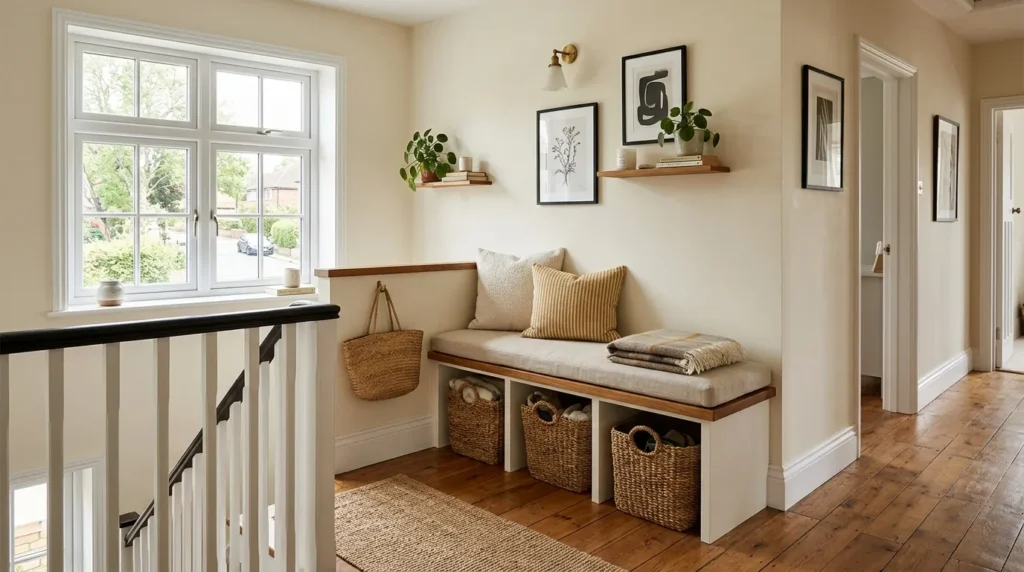
- Add a bench near a landing, window, laundry zone, or wider hallway section.
- Choose drawers, baskets, or lift-top storage for hidden function.
- Use performance fabric cushions if the bench needs softness.
- Keep the depth modest so people can still walk through comfortably.
A low storage bench can make an upper landing or wide hallway work harder without overwhelming the space. This idea is especially useful near bedrooms, playrooms, or laundry areas where extra blankets, toys, books, or seasonal items need a nearby home. A bench gives you a place to sit, fold a towel, set down laundry, or help a child with shoes. That’s why many designers recommend dual-purpose furniture in transitional areas, because every piece should earn its space when square footage is limited upstairs and storage is scarce nearby clearly.
Choose a bench with drawers, lift-top storage, or baskets underneath depending on what you need to hide. Keep the depth modest so people can still move comfortably through the hallway. Add a cushion in performance fabric for softness, or leave a wood top bare for easier cleaning. If the bench sits under a window, layer it with pillows in colors that connect to nearby bedrooms. This remodel makes the upper level feel more finished while providing storage that supports real daily life instead of just decorating an empty wall or feeling awkward.
8. Door Trim Refresh
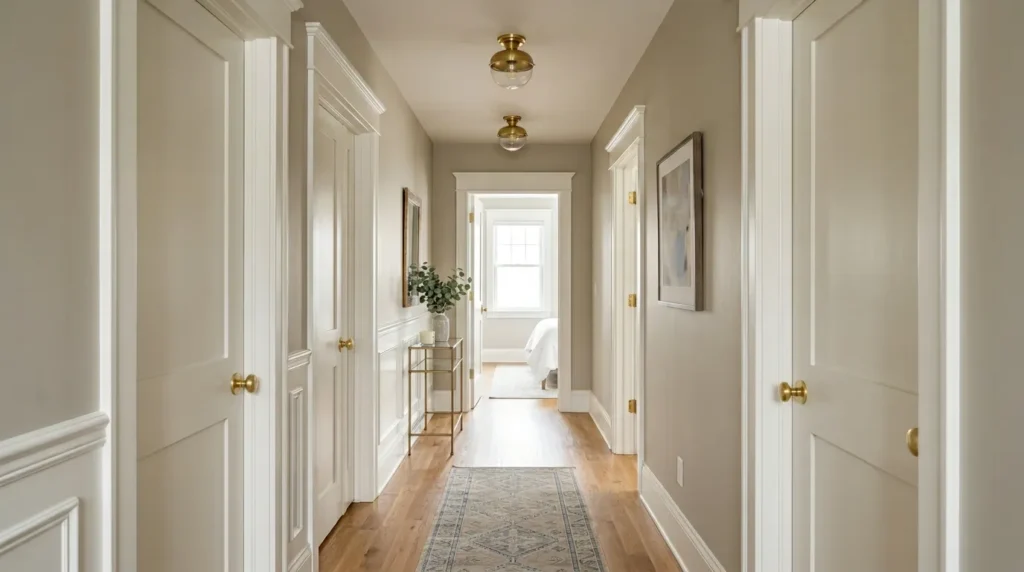
- Replace thin casing with wider trim for a more custom architectural look.
- Repaint doors and trim to create a cleaner rhythm down the hall.
- Update hinges and knobs if the old finishes look worn or mismatched.
- Use caulk and durable paint for a neat, long-lasting finish.
Fresh door trim can make a bedroom hallway feel custom even when the doors themselves stay the same. Upstairs corridors often have several doors in a row, so outdated casing, chipped paint, or mismatched hardware becomes very noticeable. Replacing thin trim with wider casing, adding simple header details, or repainting the existing trim can create a cleaner architectural rhythm. I’ve seen this work well in older homes because it respects the original layout while giving the entire upper level a sharper, more intentional appearance without major construction or expensive custom carpentry.
Start by deciding whether the trim should blend with the walls or create subtle contrast. White trim against warm neutral walls feels classic, while tone-on-tone paint can make a narrow passage feel calmer and less chopped up. Replace old hinges and knobs if the finish looks worn or mismatched. Caulk gaps carefully and use durable semi-gloss or satin paint for easy cleaning. This remodel may seem small, but repeated doors create a big visual impact, making the hallway feel polished from one bedroom entrance to the next with very little disruption.
9. Neutral Paint Wrap
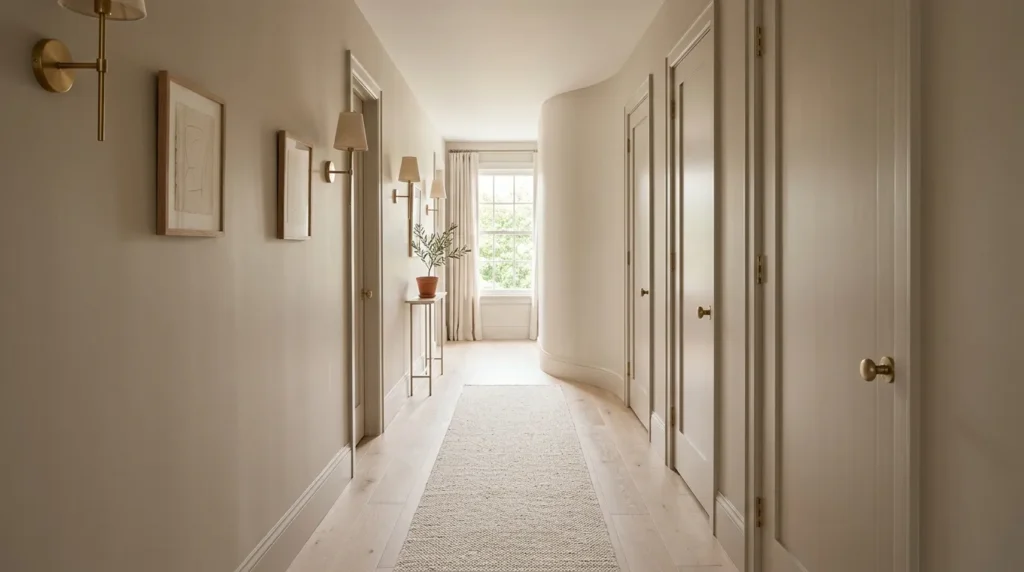
- Use one soft neutral across walls, trim, or doors for a seamless effect.
- Try warm white, greige, mushroom, pale taupe, or soft beige.
- Test samples near bedrooms, stairs, bathroom tile, and natural light.
- Add contrast through lighting, runners, hardware, or framed art instead of heavy wall color.
A neutral paint wrap can visually calm an upper corridor that has many doors, corners, and shadows. Instead of using a bold color on every wall, choose a soft shade that flows across walls, trim, and sometimes doors for a more seamless look. Warm white, greige, mushroom, pale taupe, and soft beige work especially well in bedroom zones because they feel restful. In my experience, the right neutral can make the second-floor passage feel wider, brighter, and less interrupted without needing major renovation work at all or complicated design decisions.
Test samples beside bedroom doors, bathroom tile, stair railings, and flooring before choosing the final color. Upper halls often receive mixed light from windows, rooms, and stairwells, so a paint color can shift throughout the day. Use washable eggshell on walls and satin on trim for durability. Add contrast through art, runners, lighting, or hardware rather than heavy wall color. The transformation feels subtle but powerful because the hallway stops looking like a leftover area and starts feeling like a calm connection between private rooms upstairs and shared family routines.
10. Skylight Mirror Pairing
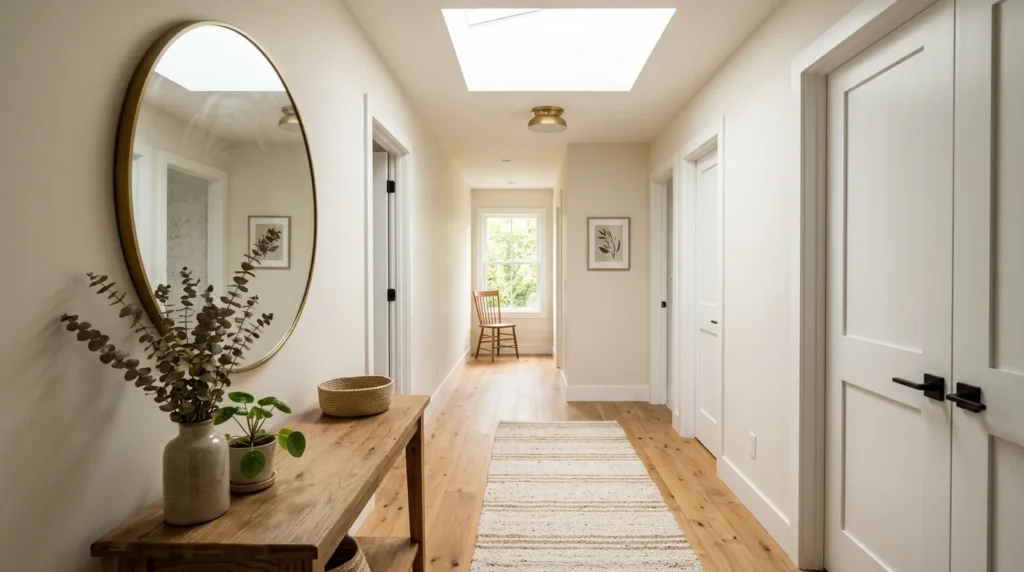
- Place mirrors near skylights, stair windows, or borrowed bedroom light.
- Use round mirrors to soften door lines or tall mirrors to elongate the passage.
- Reflect clean views, art, or light instead of cluttered rooms.
- Pair mirrors with pale paint and warm lighting for maximum brightness.
A mirror and skylight pairing can brighten an upper passage in a way that feels natural and airy. If your hallway has a skylight, stairwell window, or borrowed light from nearby bedrooms, a mirror can help spread that brightness farther. Even without a true skylight, placing a mirror near a light source can create a similar effect. I’ve noticed this approach works especially well in second-floor halls because natural light is often uneven, with one bright end and one darker section that needs visual lift without adding clutter nearby clearly.
Choose a mirror shape that fits the wall without blocking movement or reflecting cluttered bedrooms. A tall narrow mirror can elongate the passage, while a round mirror softens sharp door lines and trim. Hang it where it reflects light, artwork, or a clean architectural view rather than open laundry or closet doors. Pair the mirror with pale paint and warm lighting for the strongest effect. The space becomes brighter and more breathable, making the upper floor feel thoughtfully designed instead of dim, closed off, or purely functional every day upstairs.