How to Keep Oil-Rubbed Bronze Cabinet Hardware from Fading
Preserving the rich, dark aesthetic of your fixtures is a common goal for homeowners who appreciate the classic appeal of deep, metallic tones. Successfully keeping Oil-Rubbed Bronze Cabinet Hardware from Fading requires a consistent approach to cleaning and a clear understanding of how these finishes react to environmental factors. By avoiding harsh chemicals and adopting…
Preserving the rich, dark aesthetic of your fixtures is a common goal for homeowners who appreciate the classic appeal of deep, metallic tones. Successfully keeping Oil-Rubbed Bronze Cabinet Hardware from Fading requires a consistent approach to cleaning and a clear understanding of how these finishes react to environmental factors.
By avoiding harsh chemicals and adopting a gentle maintenance routine, you can ensure your kitchen or bathroom hardware retains its original luster for years to come. This article provides actionable steps to protect your investment and keep your home looking its best without the need for expensive professional restoration.
Understanding the Nature of Oil-Rubbed Bronze
Oil-rubbed bronze is technically a living finish, meaning it is designed to change and evolve over time. Unlike chrome or brushed nickel, which rely on a static electroplated layer, this finish is often achieved through chemical oxidation. The manufacturer applies a dark coating to the base metal, which is then lightly buffed to reveal the underlying copper or bronze tones.
Because it is a “living” surface, the finish reacts to the oils from your hands, the humidity in your kitchen, and even the air quality in your home. This process is intentional, often called “living” because it develops a unique patina as you use it. However, many people prefer the deep, uniform look of a new piece and want to slow down this natural aging process.
When you are keeping Oil-Rubbed Bronze Cabinet Hardware from Fading, you are essentially trying to preserve the manufacturer’s original protective layer. Most high-quality pieces are finished with a clear lacquer or wax coating to seal the oxidation. Once this seal is compromised by abrasive cleaners or excessive scrubbing, the metal underneath begins to oxidize faster, leading to the fading or uneven spotting that many homeowners try to avoid.
The Role of Gentle Cleaning Methods
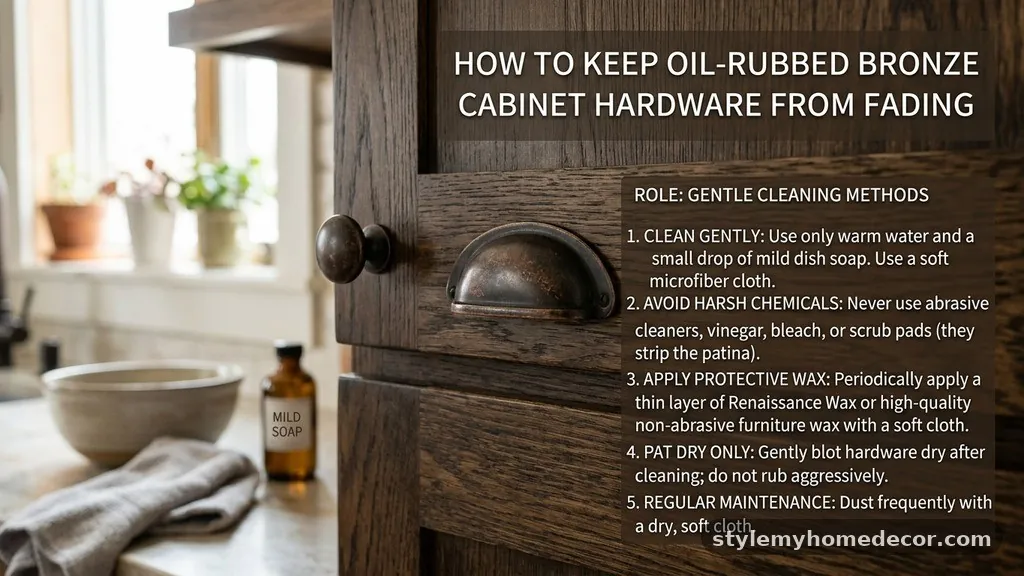
The most frequent cause of premature finish loss is the use of household cleaners that are too aggressive for delicate metallic surfaces. Many standard glass cleaners or bathroom disinfectants contain ammonia, bleach, or acidic compounds that strip away the protective lacquer. If you use these on your cabinet knobs, you will almost certainly accelerate the wear and tear.
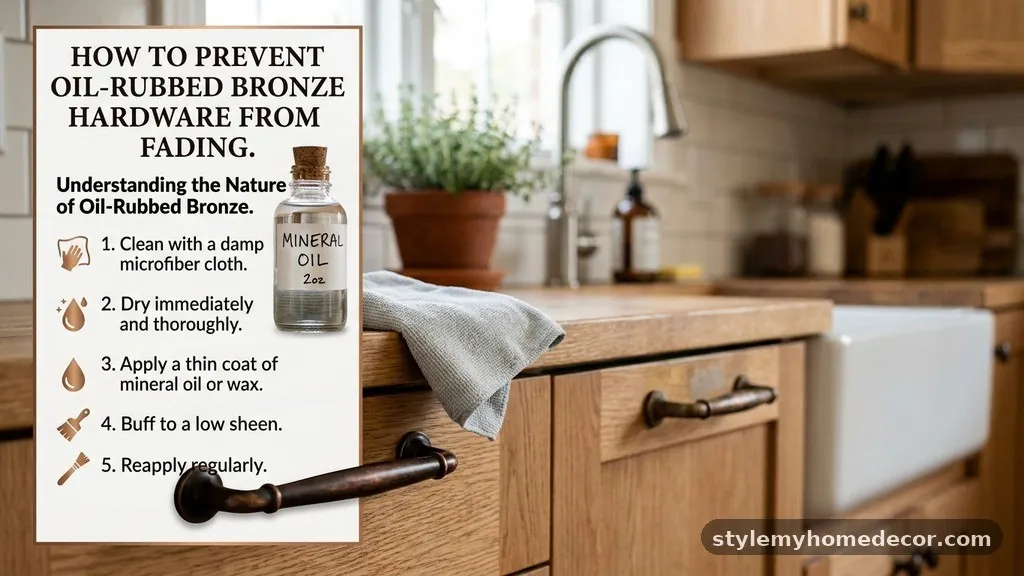
Instead, stick to the simplest solution: warm water and a very mild dish soap. Use a soft, non-abrasive microfiber cloth to wipe down the hardware, ensuring you remove any food residue or grease buildup from daily cooking. Harsh scrubbing pads, such as steel wool or the green side of a kitchen sponge, are the sworn enemies of this finish.
Effective Cleaning Frequency
* Weekly: Wipe down high-traffic pulls with a damp, soft cloth to remove skin oils.
* Monthly: Perform a deeper inspection to check for signs of moisture damage near sink areas.
* Quarterly: Apply a light coat of high-quality carnauba wax to create a sacrificial barrier.
If you notice sticky residue, use a slightly damp cloth with a tiny drop of mild soap, then immediately follow up with a dry cloth. Never leave water sitting on the surface, as mineral deposits in tap water can leave spots that look like fading or corrosion. Drying the hardware completely after cleaning is a small step that makes a significant difference in the long-term appearance of the finish.
Why Avoiding Abrasives Matters
Oil-rubbed bronze finishes are relatively thin compared to industrial-grade coatings. When you use an abrasive cleaner, you are physically removing microscopic layers of the finish every time you scrub. Over time, this makes the hardware appear dull, faded, or “brushed” in the areas where you grip it most often.
Think of the finish as a protective skin. Once that skin is scratched, the base metal is exposed to oxygen and moisture, which causes it to darken or change color rapidly.
This is why you should never use commercial metal polishes meant for brass or silver on your bronze hardware. These products are designed to remove tarnish through chemical abrasion, which will effectively strip the dark finish right off your knobs.
If you have a particularly stubborn spot of grime, resist the urge to use a metal scraper or a stiff-bristled brush. Use a soft-bristled toothbrush to gently agitate the area, and always move in the direction of the grain if the hardware has a textured surface. If the grime still won’t budge, it is better to let it be than to risk permanent damage to the finish.
The Importance of Proper Installation

Sometimes, the “fading” you see is actually the result of the hardware being installed incorrectly or being exposed to excessive heat. If your cabinet pulls are located directly next to an oven or a dishwasher that vents moisture, the heat can break down the lacquer coating over time. This is a common issue in many kitchens, and it often leads to a patchy, uneven look.
When installing new hardware, consider using small, clear washers between the knob and the cabinet door. This prevents the metal from rubbing directly against the wood, which can sometimes trap moisture and cause the back of the knob to corrode. Ensure that the screws are tightened properly but not over-torqued, as excessive pressure can crack the finish around the mounting hole.
If you are replacing old hardware, take the time to clean the surface of the cabinet doors before mounting the new pieces. Any leftover residue from old cleaners or cabinet wax can interact with the new finish. A clean, neutral surface will ensure that your hardware sits flush and is less likely to experience premature wear from uneven pressure points.
Comparing Maintenance Requirements
It is helpful to understand how different finishes respond to long-term use. While oil-rubbed bronze requires a specific, gentle approach, other metals have different vulnerabilities. The following table illustrates how common hardware finishes stack up in terms of maintenance and environmental sensitivity.
| Finish Type | Sensitivity to Chemicals | Best Cleaning Method |
|---|---|---|
| Oil-Rubbed Bronze | High | Mild soap and water; wax sealant |
| Polished Chrome | Low | Glass cleaner or vinegar solution |
| Brushed Nickel | Moderate | Mild soap and soft cloth |
| Matte Black | Moderate | Damp cloth; avoid all abrasives |
As shown in the table, oil-rubbed bronze is among the most sensitive finishes. This does not mean it is a bad choice for a home, but it does mean you must be intentional about how you treat it. By prioritizing the “living” nature of the metal, you can actually learn to appreciate the subtle changes that occur over the years.
Using Wax as a Protective Sealant
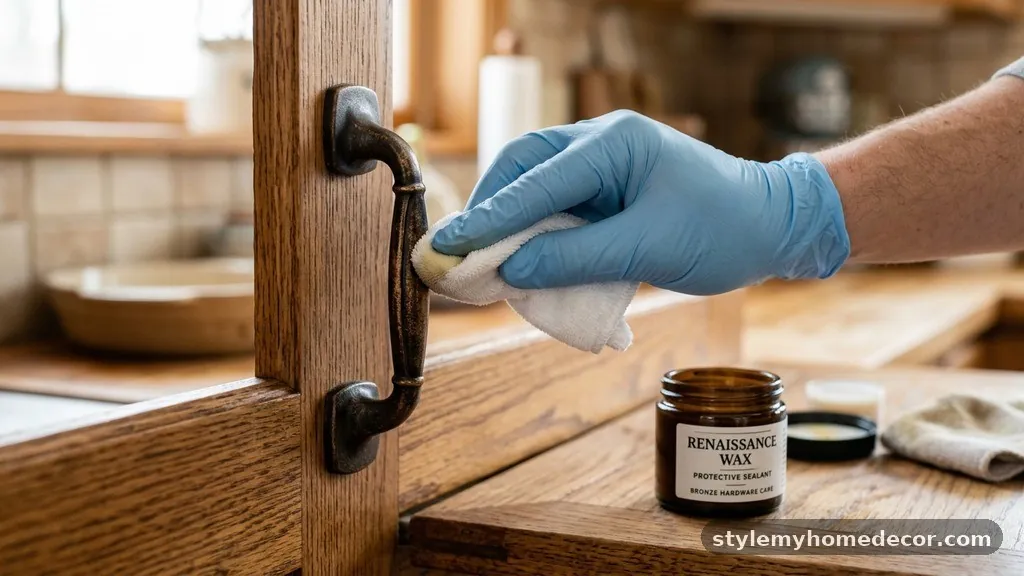
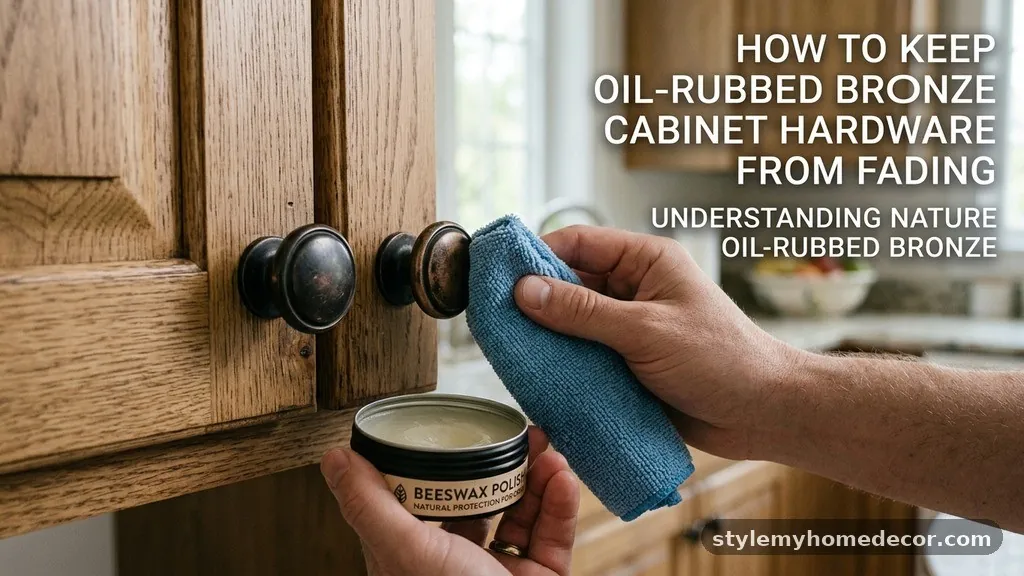
One of the best-kept secrets for keeping Oil-Rubbed Bronze Cabinet Hardware from Fading is the application of a high-quality wax. A thin layer of carnauba wax or a specialized metal wax creates a protective shield that prevents moisture and oxygen from reaching the oxidation layer. This is the same principle used to protect antique furniture or automotive paint.
Apply the wax once or twice a year to keep the hardware looking fresh. Use a soft, lint-free cloth to apply a very small amount of wax, then buff it gently with a clean part of the cloth. You do not need a thick layer; a microscopic film is sufficient to provide a barrier against daily wear.
This step is particularly important for hardware in high-humidity areas, such as the bathroom. The wax will bead up water, preventing it from sitting on the surface of the metal and causing potential pitting or fading. If you find that the hardware starts to look dull, simply reapply the wax to restore the luster.
Identifying Signs of Chemical Damage
If your hardware is already showing signs of uneven fading, it is helpful to identify the cause so you can adjust your routine. Chemical damage often manifests as a “blotchy” or milky appearance on the surface. This happens when the lacquer has been partially dissolved by aggressive cleaning agents.
If you suspect chemical damage, look for areas where the hardware is frequently touched. If the fading is concentrated on the grip, it is likely a combination of natural hand oils and the use of harsh cleaners. If the fading is uniform across the entire piece, it may be due to environmental humidity or a poor-quality initial coating from the factory.
Unfortunately, once the factory lacquer is compromised, there is no way to “fix” it without stripping and refinishing the metal. This is why prevention is the most effective strategy. If your hardware is already damaged, you might consider using a specialized bronze touch-up pen to disguise the spots, though this will only be a temporary aesthetic fix.
Environmental Factors and Your Home

Your home’s environment plays a massive role in the lifespan of your cabinet hardware. Homes in coastal areas with high salt content in the air will see faster oxidation than homes in dry, inland climates. If you live near the ocean, you may need to clean your hardware more frequently to remove salt deposits that can eat through the finish.
Indoor humidity levels also matter significantly. During the winter months, when heating systems dry out the air, your hardware will likely remain stable. However, in the summer, or if you live in a perpetually humid climate, the air itself can contribute to the “living” process of the metal.
Proper ventilation in your kitchen and bathroom is essential. Ensure that your range hood is functioning correctly to pull moisture and grease away from your cabinets. By reducing the amount of airborne contaminants that land on your hardware, you are effectively extending the life of the finish and reducing the need for aggressive cleaning.
Choosing Quality Hardware Initially
Not all oil-rubbed bronze is created equal. There is a significant difference between a high-end, solid-bronze piece and a cheaper, plated alternative. Solid bronze pieces have a depth of color that is baked into the metal, making them much more forgiving if they become scratched or worn.
When selecting hardware, look for reputable manufacturers who provide detailed information about their finishing processes. A high-quality piece will have a consistent, deep color and a robust clear coat that is designed to withstand residential use. You can read more about standard industry practices for hardware durability at the Builders Hardware Manufacturers Association website.
If you are renovating, prioritize quality over quantity. It is better to have fewer, high-quality pulls that will last for decades than to replace cheaper hardware every few years. The long-term cost of replacing hardware, combined with the risk of damaging your cabinet doors during the swap, makes the initial investment in premium pieces well worth the price.
Frequently Asked Questions
Does oil-rubbed bronze naturally turn lighter or darker?
It usually turns lighter in high-friction areas as the dark finish wears away to reveal the lighter copper or bronze base metal. In low-friction areas, it may darken slightly over time as the oxidation process continues.
Can I use clear coat spray to restore faded hardware?
While it is possible, it is rarely recommended for the average homeowner. Achieving an even, factory-quality finish with a spray can is extremely difficult, and it often results in a tacky or uneven texture that looks worse than the original fade.
Is it normal for my new hardware to look different from the display model?
Yes, because oil-rubbed bronze is often finished by hand. Slight variations in color and texture are part of the charm of this finish, and no two pieces will ever be exactly identical in their undertones.
How do I remove hard water spots from my bronze pulls?
Use a mixture of half white vinegar and half water, but apply it with extreme caution. Dab the spot, wait only a few seconds, and immediately rinse with clean water and buff dry. Do not let the vinegar sit, as it is acidic and will strip the finish if left for too long.
What if my hardware is turning green?
A green tint is a sign of verdigris, which occurs when copper-based metals are exposed to moisture for long periods. This usually indicates that the protective lacquer has completely failed, and you should focus on keeping the hardware as dry as possible moving forward.
Conclusion
Successfully keeping Oil-Rubbed Bronze Cabinet Hardware from Fading is an exercise in gentle, consistent maintenance rather than heavy-duty restoration. By avoiding abrasive chemicals, keeping your fixtures dry, and applying a light wax barrier, you can preserve the beautiful, dark tone of your hardware for many years. Remember that this finish is a living surface; while you can slow the aging process, embracing its evolution can also add a sense of character to your home.
Start your maintenance routine today by wiping down your pulls with a soft cloth and ensuring your kitchen environment is well-ventilated. With these simple habits, you will protect your investment and maintain the elegant look of your cabinetry for years to come.