10 Stylish Modern Contemporary Garden Ideas
A beautiful garden does not need to feel overly traditional, crowded, or hard to maintain. Today, many homeowners in the USA want outdoor spaces that feel clean, calming, useful, and visually impressive without becoming too complicated. A modern garden can do exactly that. It can turn a small backyard, front yard, patio, side yard, or…
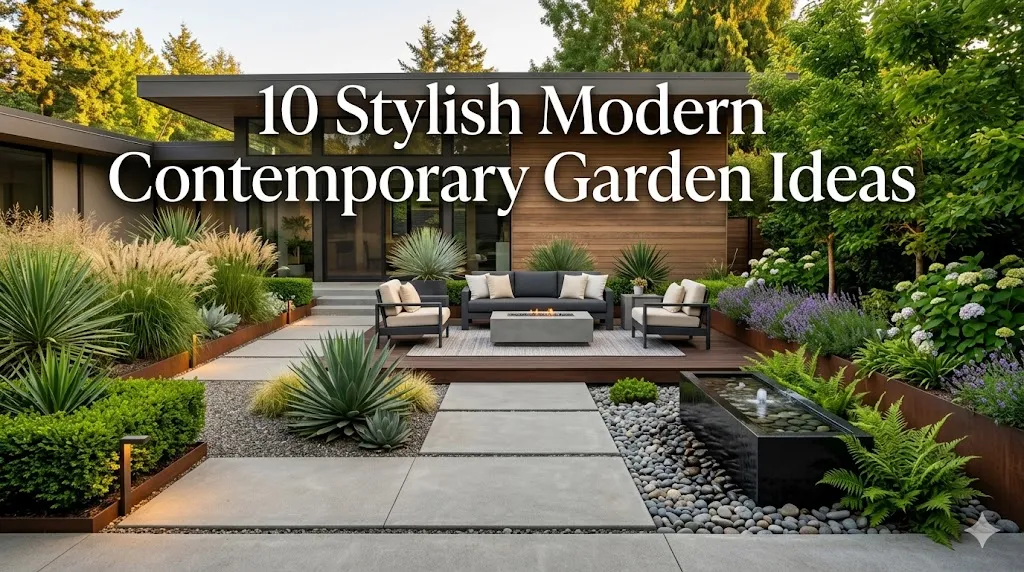
A beautiful garden does not need to feel overly traditional, crowded, or hard to maintain. Today, many homeowners in the USA want outdoor spaces that feel clean, calming, useful, and visually impressive without becoming too complicated. A modern garden can do exactly that. It can turn a small backyard, front yard, patio, side yard, or narrow outdoor corner into a place that feels designed with purpose. The best part is that this look does not depend on having a huge property. It depends on smart layout, strong materials, repeated shapes, thoughtful lighting, and plants that support the overall mood.
Modern garden design is popular because it works with real life. People want outdoor spaces that look good in photos, feel comfortable for family time, and do not require constant weekend maintenance. A neat pathway, a gravel courtyard, a sculptural planter, or a low-profile seating area can make the entire yard feel more valuable and more enjoyable. These ideas are especially useful for homeowners who love Pinterest inspiration but still need practical solutions for weather, budgets, small spaces, pets, children, guests, and everyday outdoor routines.
A Stylish Modern Contemporary garden usually feels simple at first glance, but the details are what make it special. You will often notice clean lines, smooth surfaces, neutral colors, architectural plants, structured seating, warm lighting, and a clear sense of flow. Nothing feels random. Even when the plants are soft and natural, the layout still feels intentional. This is why the style works so well for American homes, from California ranch houses and Arizona desert homes to suburban patios, townhouse yards, Midwest backyards, and East Coast garden spaces.
The most important thing to understand is that modern does not mean cold. A good contemporary garden should still feel welcoming, livable, and comfortable. The clean materials create structure, while plants, cushions, wood tones, stone textures, fire features, and soft lighting add warmth. This balance is what makes the design feel expensive without feeling stiff. If everything is too plain, the yard can look unfinished. If everything is too busy, the modern feeling disappears. The goal is to create calm visual order with enough softness to make people want to stay outside.
For Pinterest-style garden content, the visual impact matters a lot. People are drawn to spaces that are easy to understand quickly: a straight stepping-stone path, a black planter against a white wall, a fire pit surrounded by gravel, or a cozy lounge with clean furniture and soft neutral cushions. These garden ideas photograph beautifully because they use contrast, repetition, and clear focal points. A person scrolling through Pinterest can instantly imagine saving the idea, recreating it, or adapting it for their own backyard.
For Google search intent, the practical side matters just as much. Homeowners are not only looking for pretty garden pictures. They want to know what materials to use, where to place each feature, how to keep the space usable, and how to avoid mistakes. A modern garden should answer real questions. Will the pathway be easy to walk on? Will the gravel spread everywhere? Will the furniture survive rain and sun? Will the plants look good after one season? Will the layout work for entertaining? These questions shape every strong garden design.
The first step is always deciding how the garden should function. Some outdoor spaces are made for relaxing after work. Some are made for entertaining friends. Some need privacy from neighbors. Some need a better front yard view. Some need a low-maintenance replacement for grass. Before buying planters, furniture, or plants, it helps to think about the main purpose of the area. Once the purpose is clear, design choices become easier. A lounge needs a solid surface. A pathway needs direction. A courtyard needs edging. A planter arrangement needs repetition.
Materials also play a major role in the modern garden look. Concrete, porcelain, gravel, steel, wood, stone, fiber cement, and matte ceramic all work beautifully when used with restraint. The trick is not to use too many finishes at once. A clean garden usually looks better with two or three main materials repeated throughout the space. For example, concrete pavers, black planters, and warm wood furniture can create a balanced outdoor design. Too many colors, shapes, and surfaces can make the garden feel busy instead of refined.
Plant selection should support the design rather than fight it. Instead of filling every inch with mixed flowers, modern gardens often use plants with strong shapes, calm colors, and reliable structure. Ornamental grasses, agave, boxwood, lavender, olive trees, Japanese maple, yucca, rosemary, and compact evergreens can all help create that clean garden mood. The planting does not have to be plain. It simply needs rhythm. Repeating the same plant in several places often looks more polished than using a different plant in every corner.
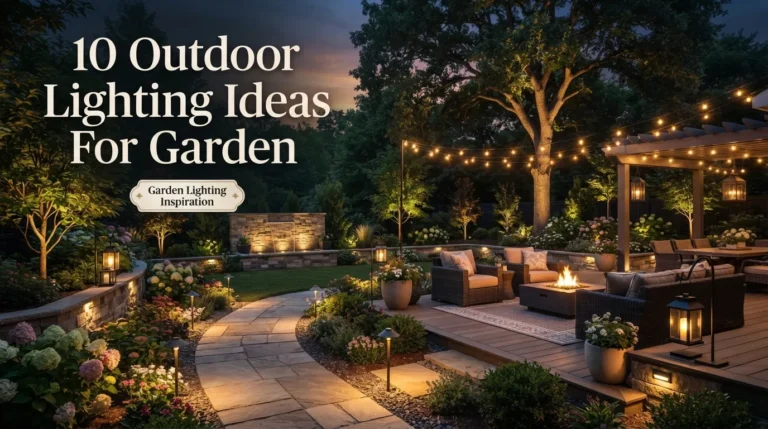
Lighting is another detail that can completely change the experience. A garden may look beautiful during the day, but soft evening lighting makes it usable after sunset. Path lights, wall lights, uplights, lanterns, and hidden LED strips can highlight texture, plants, seating, and walkways. For many American homes, outdoor lighting also improves safety and makes the space feel more finished. The goal is not to flood the garden with harsh brightness. Warm, low, layered light usually creates the most inviting modern atmosphere.
This first part focuses on five foundational garden ideas that can shape the entire outdoor space. These are not random decoration tips. They are design moves that help organize the yard, create visual structure, and make the garden easier to use. You can use one idea alone or combine several together. A linear pathway can lead to a gravel courtyard. Concrete planters can frame an outdoor lounge. Sculptural greenery can soften hard materials. Each idea brings a different kind of upgrade, but all of them work toward the same goal: a clean, functional, beautiful garden that feels intentional.
1. Linear Pathways
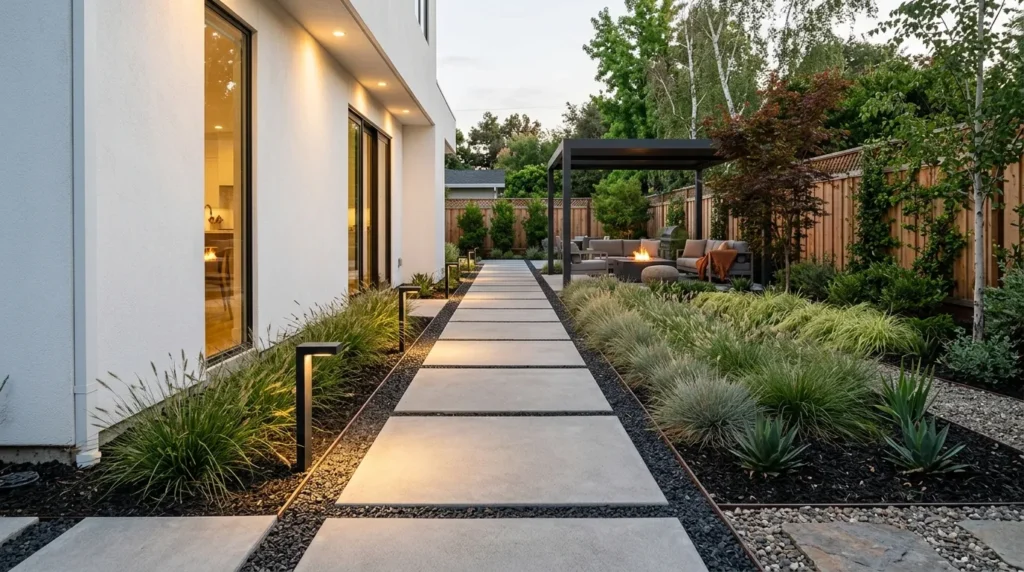
- Creates a clean garden layout by guiding movement from one outdoor zone to another in a simple, visually pleasing way.
- Works well with concrete pavers, porcelain slabs, limestone rectangles, stepping stones, gravel, black river rock, or decomposed granite.
- Helps small yards feel longer, wider, and more organized because the eye follows a clear direction through the space.
- Makes the garden more practical by connecting patios, fire pits, gates, seating corners, raised beds, and outdoor dining areas.
- Adds strong Pinterest appeal because repeated shapes, even spacing, and clean lines always photograph beautifully from above and eye level.
A clean walkway can make even a small backyard feel planned, polished, and expensive. This idea works because straight lines naturally guide the eye, creating order in a space that may otherwise feel busy. Use large concrete pavers, porcelain slabs, limestone rectangles, or dark stepping stones with gravel between them for a crisp layout. In my experience, the most successful modern paths are wide enough to feel intentional, not squeezed in as an afterthought. Keep planting low along the edges so the geometry stays visible and the garden feels calm.
The transformation is strongest when the path connects real zones, such as the patio, dining corner, fire pit, side gate, or raised beds. Instead of placing stones randomly, measure consistent gaps and repeat the same material throughout the yard. Black river rock, pea gravel, decomposed granite, or white stone can create contrast around each slab. Solar path lights or low-voltage fixtures add evening usability without clutter. The result is a garden that feels easier to walk through, easier to photograph, and much more finished from every angle during everyday use.
2. Concrete Planters
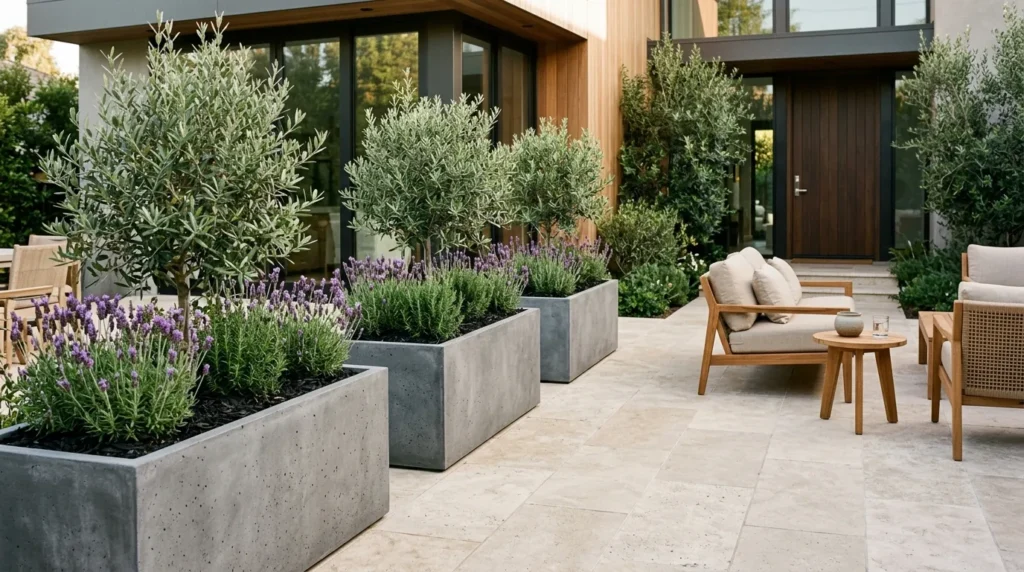
- Adds instant structure to patios, decks, entrances, balconies, poolside corners, and small backyard areas without major landscaping work.
- Works beautifully with concrete, fiber cement, corten steel, matte ceramic, fiberglass, stone-look resin, or smooth rectangular planter boxes.
- Gives homeowners control over soil, drainage, plant placement, and seasonal changes, especially in rentals or homes with poor yard soil.
- Makes plants look more intentional because the container becomes part of the design instead of just a background detail.
- Creates a strong visual upgrade when repeated in matching finishes, especially around seating areas, fences, doors, and garden edges.
Oversized planters instantly give a garden that clean architectural feeling people save on Pinterest. This idea works because containers create structure even before the plants mature, which is helpful for new homes, rentals, townhouses, and patios that need fast visual impact. Choose concrete, fiber cement, matte ceramic, corten steel, or smooth fiberglass planters in simple shapes. Tall rectangles, low bowls, and square cubes look especially current. I’ve noticed that repeating the same planter style in different sizes makes the space feel designed instead of collected piece by piece over time.
This upgrade is practical because planters let you control soil, drainage, placement, and seasonal changes. Use them to frame an entry, soften a fence, define a seating area, or add privacy around a small deck. For a modern look, choose fewer plants with stronger shapes, such as olive trees, boxwood balls, agave, rosemary, lavender, ornamental grasses, or compact evergreens. Add a top layer of black mulch, gravel, or river stone for a finished surface. The final result feels clean, flexible, and easy to maintain in everyday outdoor living too, season after season.
3. Outdoor Lounge
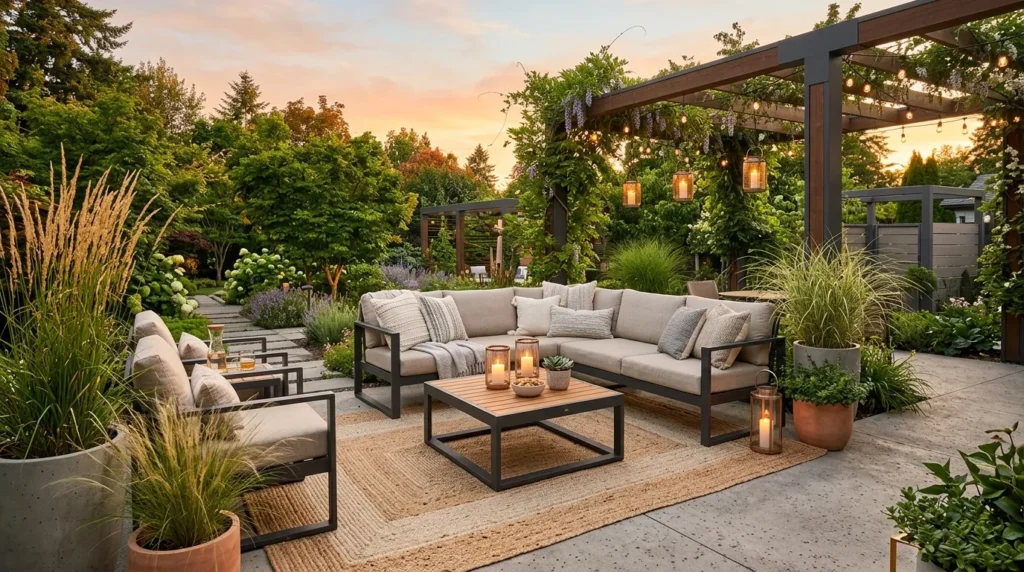
- Turns the garden into a real living space instead of a yard that is only viewed from inside the house.
- Works with low-profile sofas, lounge chairs, outdoor rugs, square coffee tables, lanterns, fire bowls, cushions, and pergola structures.
- Creates a comfortable area for morning coffee, evening conversations, casual dinners, weekend hosting, reading, and relaxing after work.
- Improves the overall layout by giving the garden a clear destination, especially when placed on pavers, decking, tile, or gravel.
- Adds visual softness through cushions, woven textures, warm wood tones, and layered lighting while keeping the modern shape clean.
A modern garden feels more inviting when it includes a real place to sit, not just plants. This idea works because furniture turns the yard into an outdoor room where people can drink coffee, read, entertain, or relax after work. Choose low-profile seating with clean frames, weather-resistant cushions, and simple neutral colors like charcoal, ivory, taupe, beige, or soft gray. Many designers recommend treating the lounge area like an indoor living room, with a rug, table, lighting, and layered textures that make the space feel comfortable outside every single day.
The transformation comes from making the seating area feel anchored instead of floating in the yard. Place the lounge on a defined surface, such as concrete pavers, composite decking, pea gravel, or porcelain tile. Add a fire bowl, square coffee table, ceramic side tables, or a slim pergola to complete the layout. Outdoor pillows, woven throws, and lanterns can soften the clean lines without making the space look cluttered. This setup works well for suburban backyards, small patios, poolside spaces, and weekend gatherings with family or friends comfortably at home.
4. Gravel Courtyard
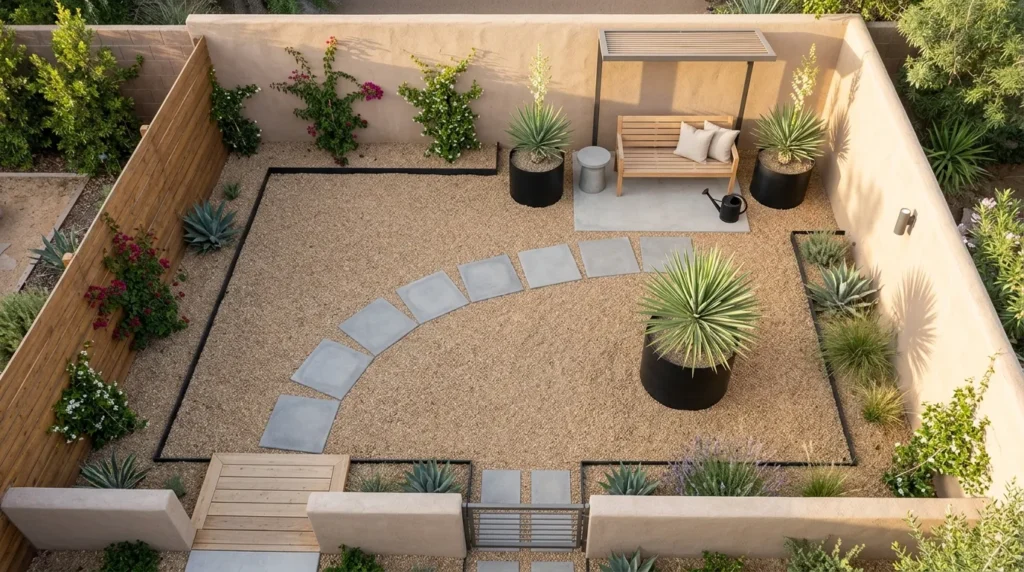
- Replaces unused grass, awkward side yards, or empty corners with a clean, low-maintenance outdoor area that feels intentional.
- Works with pea gravel, crushed granite, black basalt, tan stone, steel edging, concrete borders, stepping stones, and large planters.
- Helps improve drainage and texture while creating a calm backdrop for seating, sculptural plants, fire bowls, or a small dining setup.
- Gives small spaces a courtyard feeling, making them more useful for coffee, reading, conversation, and quiet outdoor breaks.
- Creates a relaxed modern look when paired with simple furniture, drought-tolerant plants, neutral colors, and strong garden borders.
A gravel courtyard can turn an unused patch of yard into a low-maintenance design feature. This idea works because gravel creates texture, drainage, and visual calm while keeping the layout simple. Instead of a plain lawn that needs constant care, a courtyard can hold seating, planters, stepping stones, or a sculptural tree. Use pea gravel, crushed granite, black basalt, or warm tan stone depending on the home’s exterior. In my experience, edging is what makes gravel look intentional, so include steel, stone, concrete, or brick borders from the very start.
This style is especially useful for side yards, small urban gardens, desert-inspired homes, and spaces where grass struggles. Start with weed barrier fabric, compacted base, and proper edging before adding the top layer of gravel. Then layer in a bench, bistro chairs, large pots, or a simple water bowl for personality. Drought-tolerant plants like yucca, sedum, lavender, salvia, and ornamental grasses work beautifully around the edges. The result is a peaceful, usable outdoor zone that feels modern, clean, and relaxed without demanding constant weekend maintenance from homeowners each busy month.
5. Sculptural Greenery
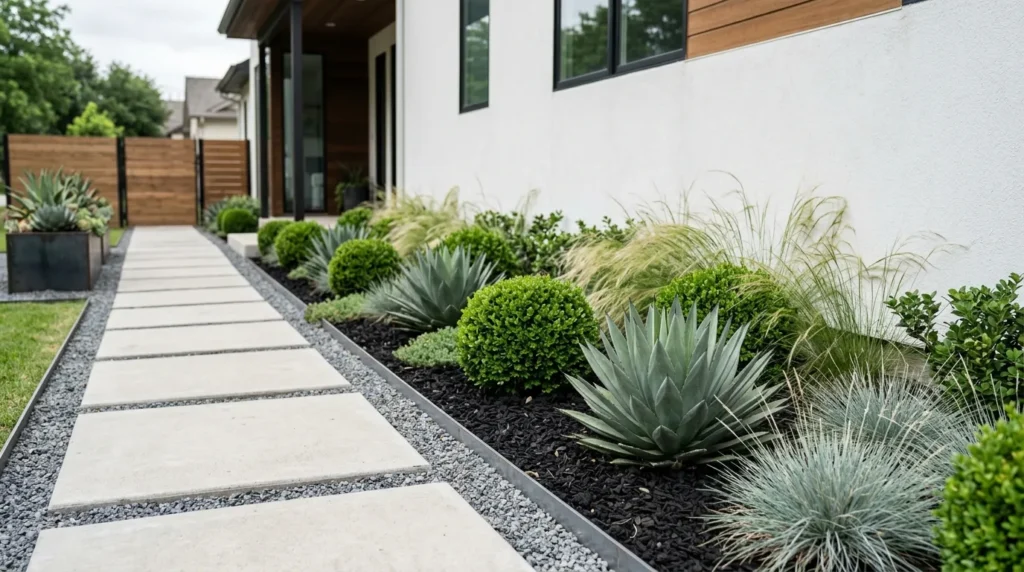
- Adds strong natural shapes that look beautiful even when the garden has a limited color palette and simple materials.
- Works with agave, yucca, boxwood, dwarf conifers, ornamental grasses, Japanese maple, clipped evergreens, phormium, and rosemary.
- Helps the garden feel designed because plant shape, spacing, and repetition become part of the architecture.
- Reduces visual clutter by focusing on fewer plants with stronger silhouettes instead of crowded mixed flower beds.
- Creates year-round structure in front yards, patios, pool gardens, entry paths, courtyards, and modern backyard borders.
Strong plant shapes can make a garden feel designed even when the planting palette is simple. This idea works because contemporary landscapes often rely on form, contrast, and repetition rather than crowded flower beds. Choose plants with clear silhouettes, such as agave, yucca, boxwood, dwarf conifers, snake plant, phormium, Japanese maple, or clipped evergreens. The goal is to create living architecture that looks beautiful throughout the year. I’ve seen this work well in many homes where the owner wants impact without constant replanting or complicated seasonal displays every few months.
The transformation happens when each plant has enough space to be noticed. Instead of filling every corner, group three to five strong shapes and repeat them across the garden for rhythm. Pair spiky plants with soft grasses, rounded shrubs with straight pathways, or clipped hedges with loose ground cover. Use mulch, gravel, or smooth stone around the base so the forms stand out clearly. This approach works for front yards, patios, pool gardens, and entry landscapes because it looks tidy, upscale, and visually balanced through different seasons of the year.
6. Water Features
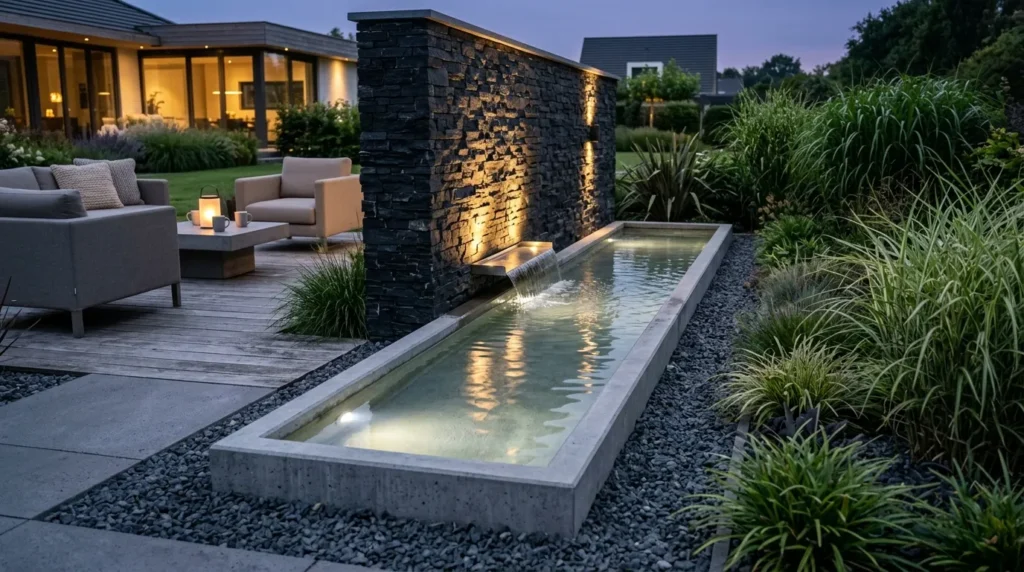
- Adds calming sound, soft movement, and visual interest without making the garden feel crowded or overly decorated.
- Works with concrete basins, wall fountains, stone bowls, steel rills, rectangular ponds, black metal features, and minimalist water bowls.
- Helps soften hard materials like concrete, gravel, stone, metal, and smooth exterior walls.
- Creates a peaceful focal point near seating areas, pathways, patios, entry corners, and small courtyard gardens.
- For practical use, consider electricity access, cleaning, splash control, algae prevention, and water refilling before installation.
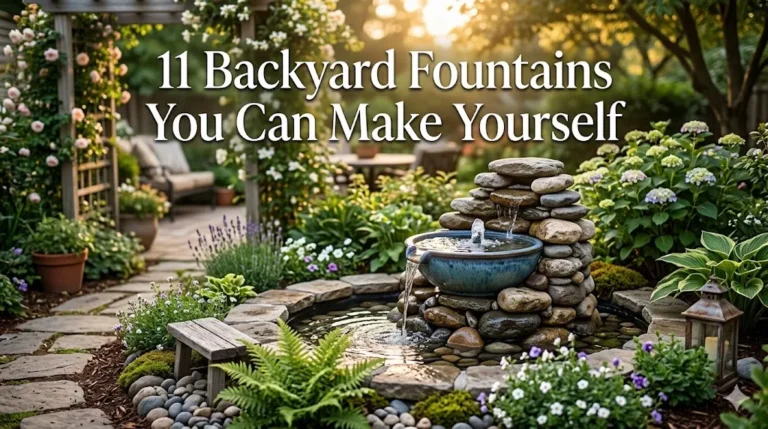
A slim water feature can make a modern garden feel calm without making it look decorative or crowded. This idea works because water adds movement, sound, and reflection while staying visually simple when the design is clean. Choose a narrow wall fountain, rectangular basin, steel rill, or low bowl fountain in stone, concrete, or matte black metal. Place it near seating, a pathway, or an entry corner so the sound becomes part of daily outdoor use rather than a feature seen only from far away during quiet mornings too at home.
The transformation feels strongest when the water feature matches the garden materials instead of standing apart. A concrete basin beside gravel, a black fountain against a white wall, or a shallow stone bowl near sculptural plants can look peaceful and refined. For practical use, check access to electricity, water refilling, splash control, and easy cleaning before installation. In warmer states, shade can reduce algae and evaporation. The finished space feels cooler, softer, and more relaxing, especially when paired with warm lights and simple planting around it after sunset on the patio.
7. Privacy Screens
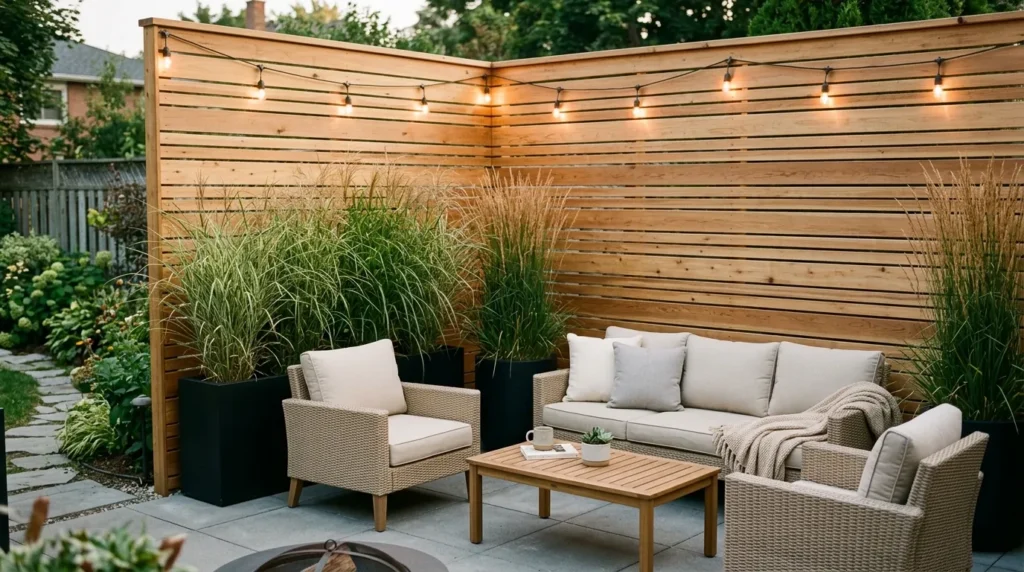
- Makes patios, decks, side yards, hot tubs, and lounge areas feel more protected from neighbors, windows, streets, and open views.
- Works with slatted wood, composite panels, metal screens, bamboo-style panels, modern lattice, tall planters, and climbing plants.
- Adds vertical structure, which is especially useful in small gardens where floor space is limited.
- Helps create an outdoor room feeling by giving the seating area a clear backdrop and stronger sense of enclosure.
- For a softer look, combine screens with climbing vines, tall grasses, evergreen shrubs, or large planters.
A privacy screen can make an outdoor space feel finished, protected, and much more comfortable. This idea works because many American backyards are close to neighbors, fences, windows, or busy streets. Instead of relying only on tall hedges, use slatted wood, metal panels, bamboo-style screens, composite boards, or modern lattice to create structure. Keep the spacing clean and repeat the same material so the screen feels architectural, not temporary. In my experience, privacy looks best when it blends with seating, planters, and lighting instead of looking like a wall outside.
The real improvement is emotional as much as visual because people relax more when the garden feels private. Place screens behind lounge seating, around hot tubs, beside patios, near dining areas, or along side yards where views feel exposed. Add climbing jasmine, star jasmine, clematis, or climbing roses if the space needs softness. For low maintenance, pair the screen with tall planters and evergreen grasses. The result is a backyard that feels cozy, intentional, and more usable for morning coffee, evening dinners, and weekend gatherings without feeling boxed in at all.
8. Fire Pit Zone
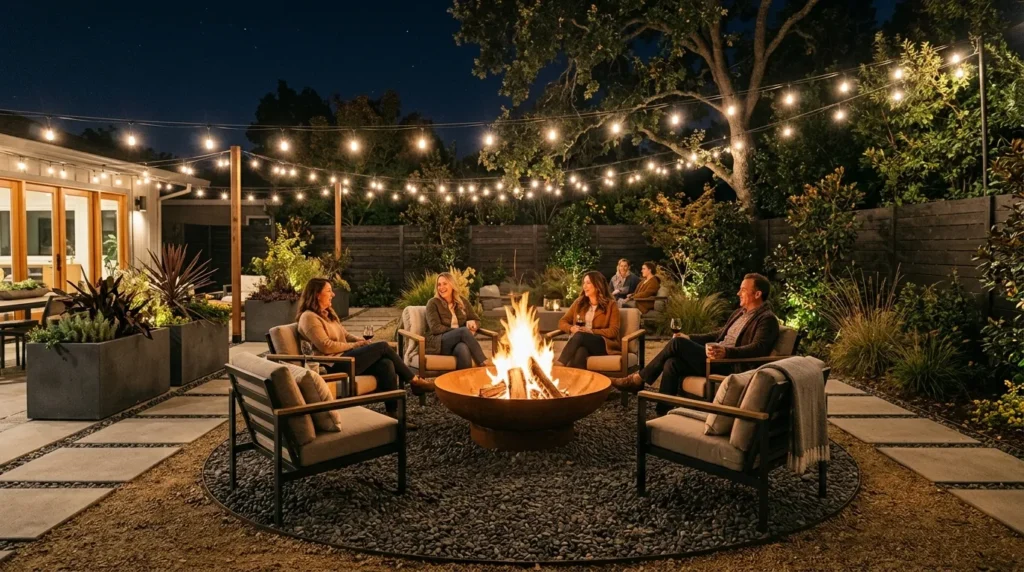
- Creates a natural gathering spot for family, friends, evening conversations, fall nights, and outdoor entertaining.
- Works with gas fire tables, steel bowls, concrete fire pits, linear burners, gravel pads, stone patios, and low outdoor seating.
- Adds warmth, light, and movement, making the garden feel more inviting after sunset.
- Helps define a separate outdoor zone, especially when placed on pavers, gravel, stone, tile, or a dedicated patio area.
- For safety, check local rules, heat clearance, gas connections, furniture distance, and wind exposure before final placement.
A fire pit zone gives a modern garden a natural gathering point that works across seasons. This idea works because fire adds warmth, light, and movement while creating a clear destination in the yard. Choose a square concrete fire pit, round steel bowl, low gas table, or built-in linear burner depending on the space. Surround it with gravel, large pavers, or stone tile so the area feels defined. That’s why many designers recommend planning the seating circle before buying the fire feature, because comfort depends on spacing and safe movement.
The transformation is easy to feel because people naturally gather around fire. Use low lounge chairs, teak benches, Adirondack-style modern chairs, or outdoor sofas with safe clearance from heat. In colder states, this zone can extend the outdoor season into fall. In warmer areas, it becomes a nighttime focal point rather than a daytime feature. Add pathway lighting, side tables, and weatherproof cushions for real usability. Always check local fire rules, gas connections, and safety distances. The finished space feels social, warm, and beautifully grounded for evening conversations outside after dinner.
9. Raised Beds
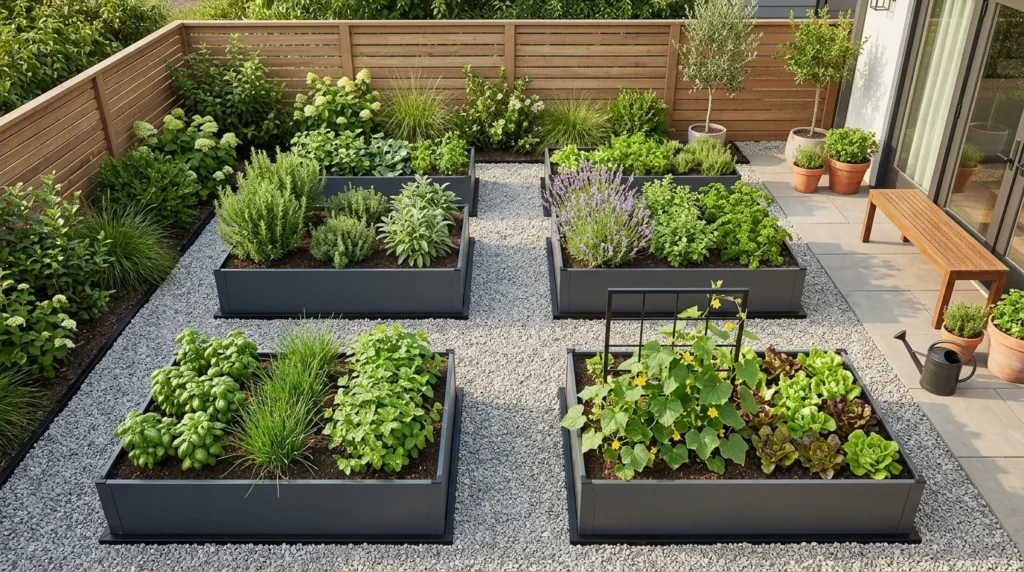
- Makes vegetable gardens, herb gardens, flower beds, and pollinator corners feel clean, organized, and visually intentional.
- Works with cedar, powder-coated steel, composite boards, concrete block, corten steel, black metal, and modular raised bed kits.
- Improves soil control, drainage, planting access, and maintenance while giving the yard a tidy structured layout.
- Looks especially polished with gravel paths, stepping stones, drip irrigation, trellises, plant labels, and repeated bed shapes.
- Adds function and beauty, making it ideal for homeowners who want edible gardening without a messy backyard corner.
Raised garden beds can look clean and modern when they are designed like outdoor architecture. This idea works because beds create order, height, and clear planting zones while making gardening easier on the back. Choose metal, cedar, composite, concrete block, or powder-coated steel beds with simple lines. Keep the layout symmetrical or grid-based for a contemporary look. I’ve noticed that raised beds look especially polished when paths between them are gravel, decomposed granite, mulch, or square stepping stones instead of plain soil around the planting area and borders outside.
The practical upgrade is huge for homeowners who want herbs, vegetables, flowers, or pollinator plants without a messy garden corner. Raised beds improve soil control, drainage, access, and seasonal planting flexibility. Use matching beds for a clean look, then add drip irrigation, trellises, labels, and compact paths for easy maintenance. For Pinterest-worthy styling, mix edible plants with lavender, rosemary, marigolds, basil, and ornamental grasses around the edges. The result feels useful and beautiful, turning everyday gardening into a neat design feature instead of a hidden chore in the yard daily.
10. Outdoor Dining
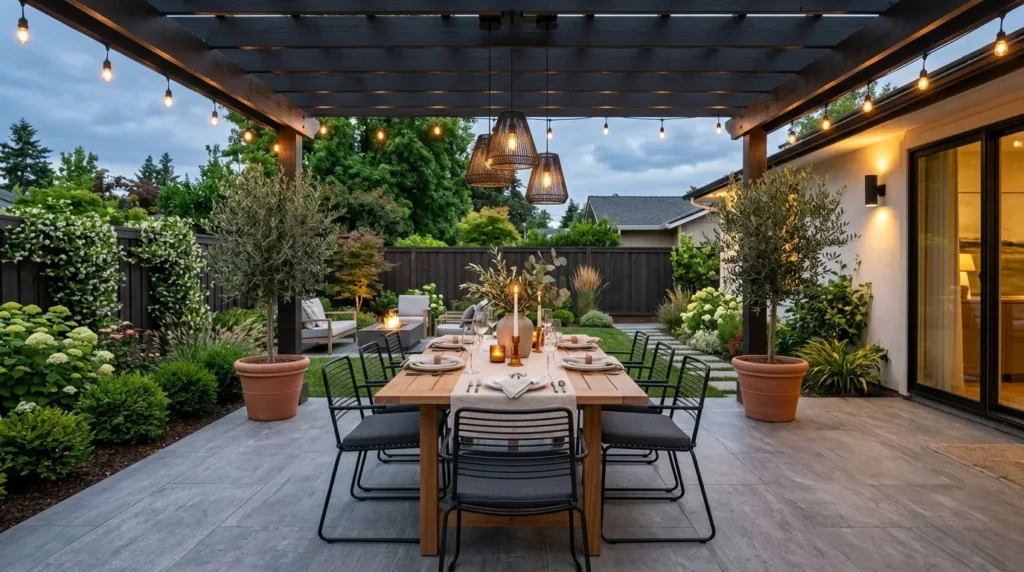
- Turns the garden into a usable extension of the kitchen, patio, or indoor living space.
- Works with teak tables, black metal chairs, concrete tables, woven seating, pergolas, umbrellas, outdoor rugs, and pendant lighting.
- Makes the backyard more useful for family dinners, weekend hosting, holidays, summer meals, and relaxed evening gatherings.
- Looks best when placed on a stable surface like pavers, decking, porcelain tile, compacted gravel, or concrete.
- Adds warmth through lighting, table styling, planters, cushions, shade features, and simple outdoor decor.
A modern dining space can make the garden feel like an extension of the kitchen. This idea works because outdoor meals are one of the most enjoyable ways to use a backyard, especially during spring, summer, and early fall in the USA. Choose a simple rectangular table, slim chairs, a pergola, outdoor rug, string lights, or pendant-style patio lighting. Keep the materials consistent with the rest of the garden, such as teak, black metal, concrete, stone, or weather-resistant wicker for a calm pulled-together look outdoors with guests and family comfortably.
The transformation comes from making the dining area feel permanent, not like furniture placed temporarily on grass. Set the table on pavers, decking, tile, or compacted gravel so chairs move easily. Add planters nearby for softness and use a shade sail, umbrella, pergola, or tree canopy for daytime comfort. In my experience, lighting is what makes outdoor dining feel special at night. Lanterns, wall sconces, or overhead bulbs create warmth without clutter. The result is a practical and inviting space for casual dinners, holidays, and hosting friends comfortably year-round outside.