10 Backyard Grass Design Ideas For Inspiration
A backyard with grass can be much more than an open green space behind the house. When the lawn is shaped, bordered, framed, and connected properly, it can become the main design feature of the entire outdoor area. Many homeowners in the USA already have some type of grass in the backyard, but the space…
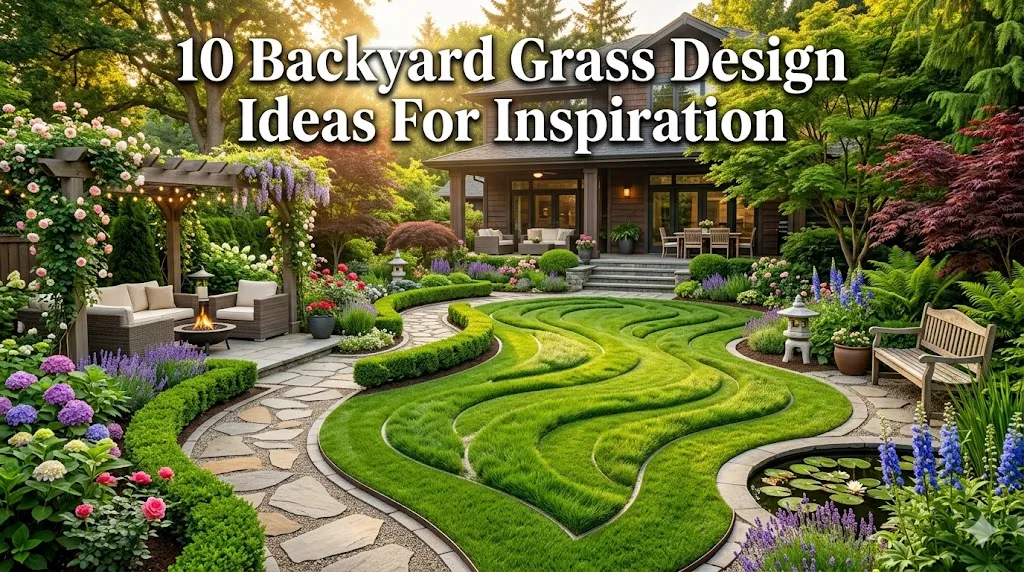
A backyard with grass can be much more than an open green space behind the house. When the lawn is shaped, bordered, framed, and connected properly, it can become the main design feature of the entire outdoor area. Many homeowners in the USA already have some type of grass in the backyard, but the space often feels plain because the lawn has no clear shape or purpose. It may be a simple rectangle, an unused patch, or a wide empty area that does not connect well with the patio, fence, garden beds, or seating zone.
The beauty of a thoughtful grass layout is that it can make the backyard feel cleaner, larger, softer, and more welcoming without requiring a full outdoor renovation. Grass adds comfort underfoot, natural color, cooling texture, and a relaxed feeling that hard surfaces cannot always create. A good lawn design can support family play, pets, weekend hosting, outdoor meals, quiet mornings, and casual evenings at home. The key is to treat the grass as part of the design instead of leaving it as leftover space.
A strong Backyard Grass Design does not always mean covering the whole yard with turf. In many modern homes, the best result comes from mixing grass with stone, gravel, pavers, garden beds, patios, wood decking, fire pits, and outdoor furniture. This creates balance. Too much grass can feel empty and high-maintenance, while too many hard surfaces can feel hot or harsh. When grass is used in the right areas, it softens the yard and makes every other feature look more intentional.
For American homeowners, climate matters a lot. A backyard in Florida may need grass that handles humidity and rain. A Texas yard may need heat tolerance and good irrigation. A California backyard may benefit from smaller lawn areas mixed with drought-conscious landscaping. A Midwest backyard may need grass that survives seasonal changes, family use, and snow recovery. A backyard in Arizona or Nevada may use artificial turf, gravel borders, or small green zones instead of a full traditional lawn. The best idea is the one that fits the home, weather, maintenance level, and lifestyle.
Pinterest-style backyard inspiration often looks beautiful because the lawn has a clear shape. You might see a curved grass panel surrounded by flower beds, a square lawn framed by concrete pavers, a narrow green pathway leading to a seating area, or a soft grass circle around a fire pit. These designs are easy to save because they look organized and calm. The viewer can understand the layout immediately. That is one reason grass design performs so well visually: green space creates contrast, freshness, and a natural focal point.
A common mistake is thinking grass must be simple to be practical. In reality, a well-shaped lawn can be easier to maintain than a random one. Clean edges reduce messy trimming. Defined borders stop mulch and gravel from spreading. Pathways protect the lawn from foot traffic. Seating zones prevent furniture from damaging the grass. Garden beds can replace awkward mowing corners. When the layout is planned carefully, the backyard becomes easier to use and easier to care for.
The first step is deciding what role the grass should play. Do you want a central lawn for kids and pets? A small green patch for visual softness? A grass walkway between pavers? A soft border around a patio? A modern lawn framed by gravel? A cozy picnic area? Each choice creates a different feeling. Before adding plants or furniture, it helps to decide whether the grass is meant for activity, beauty, comfort, movement, or balance.
Materials around the grass matter just as much as the grass itself. Concrete pavers, brick edging, steel borders, pea gravel, mulch, wood decks, stone slabs, and raised beds can all make the lawn look more finished. The cleanest backyards usually repeat the same few materials instead of mixing too many. For example, a grass lawn with limestone pavers, black metal edging, and simple white planters can feel modern. A grass lawn with brick edging, flower beds, and wooden benches can feel warm and classic.
Planting around the lawn should also feel intentional. Ornamental grasses, hydrangeas, lavender, boxwood, hostas, salvia, rosemary, ferns, and low shrubs can frame the green area beautifully. In sunny yards, structured planting can add shape and color. In shaded yards, softer plants can make the lawn feel calm and woodland-inspired. The goal is not to overfill the backyard. The goal is to create edges, layers, and views that make the grass look like it belongs in the design.
Lighting can make a grass-focused backyard feel usable after sunset. Low path lights, fence lights, step lights, and soft uplighting near trees can make the lawn feel peaceful at night. This is especially helpful for families who entertain outdoors, eat dinner on the patio, or let pets outside in the evening. The grass may be the softest visual element during the day, but lighting helps the entire layout feel complete at night.
This first part focuses on five practical lawn ideas that can work for many backyard sizes. Some are ideal for small suburban yards, while others fit larger properties, patios, or family spaces. Each idea is designed to be visually strong enough for Pinterest but still realistic for everyday use. The goal is to help you see grass as a flexible design tool, not just a surface that needs mowing. With the right shape, border, pathway, or seating plan, even a simple backyard can feel more polished, inviting, and carefully designed.
1. Curved Lawn Borders
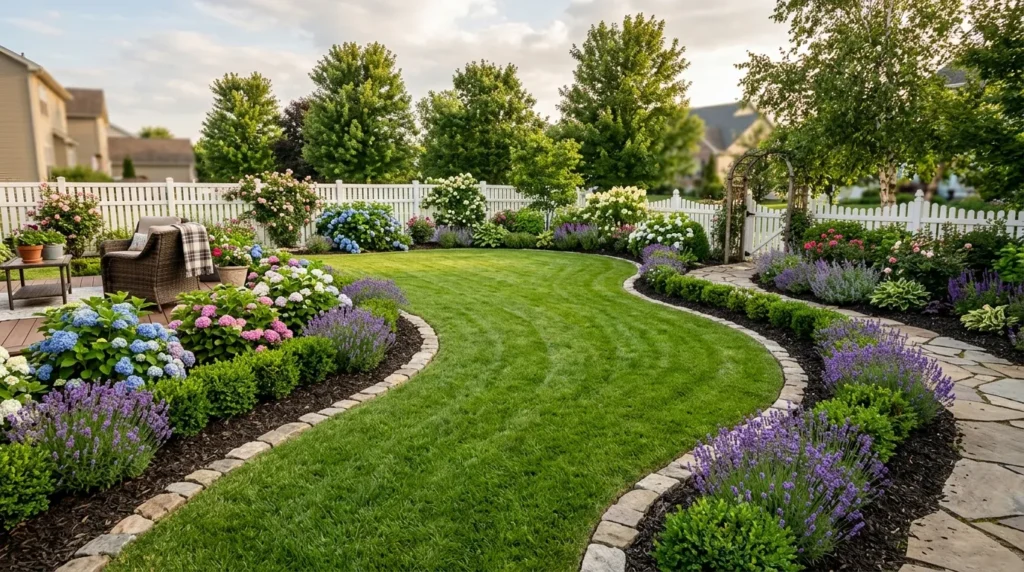
- Curved borders soften the backyard and help the grass feel more natural, relaxed, and visually connected to planting beds.
- This idea works well with flower beds, mulch edges, stone borders, brick edging, steel edging, and low shrubs.
- It helps reduce the harsh look of a plain square lawn, especially in smaller suburban yards or fenced backyards.
- Curves can guide the eye toward patios, fire pits, garden benches, trees, or outdoor seating areas.
- For easier maintenance, keep curves wide and smooth so mowing and trimming do not become frustrating.
A curved grass border can make a plain backyard feel softer almost immediately. This idea works because curves break up the stiffness of rectangular fences, patios, and house walls. Instead of letting the lawn meet the garden bed in a straight line, shape the edge into a gentle sweep that feels natural and relaxed. In my experience, wide curves look more expensive than tight curves because they are easier to mow and easier to understand visually. Add mulch, stone edging, or low shrubs to keep the shape clean.
The transformation is especially noticeable in small and medium backyards where every line matters. A curved border can make the lawn feel larger because the eye moves smoothly around the space instead of stopping at sharp corners. Use the curved edge to frame hydrangeas, lavender, boxwood, ornamental grasses, or seasonal flowers. Brick, steel, or stone edging helps prevent mulch from spilling into the grass. The result is a backyard that feels more designed, more welcoming, and easier to maintain than a basic square lawn with unfinished edges.
2. Stepping Stone Lawn
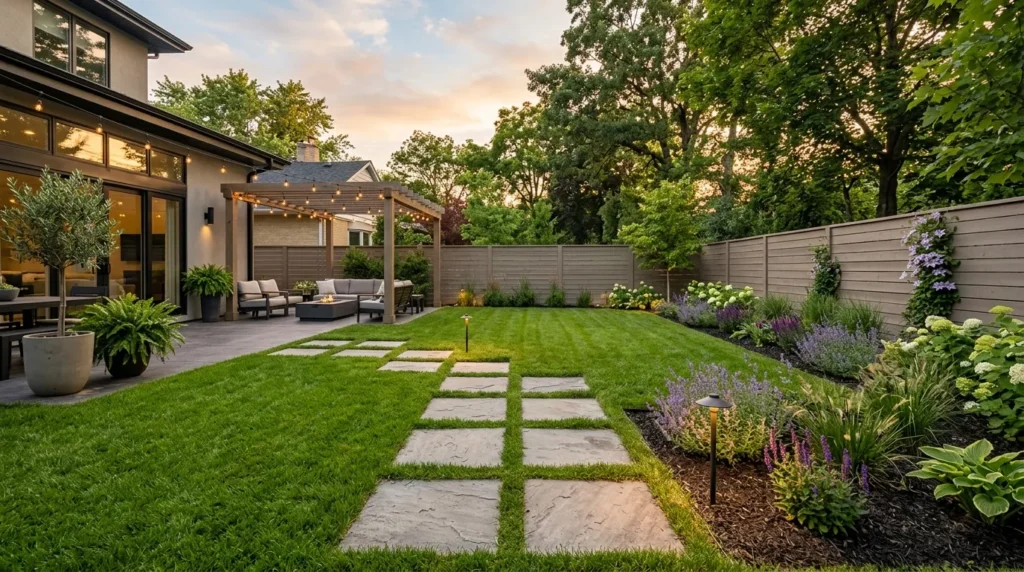
- Stepping stones create a practical walkway across grass while keeping the backyard soft, green, and open.
- This idea works with concrete slabs, natural stone, limestone, bluestone, flagstone, or square porcelain pavers.
- It protects the lawn from heavy foot traffic between the patio, gate, garden shed, pool, or seating area.
- Repeated stone shapes add rhythm and make the yard feel more planned without needing a full paved path.
- For best results, set stones level with the grass so walking, mowing, and maintenance stay simple.
Stepping stones can turn a grass area into a beautiful walkway without removing the softness of the lawn. This idea works because it gives people a clear place to walk while keeping the yard open and green. Use large square pavers for a modern look, flagstone for a natural style, or limestone for a softer classic finish. That’s why many landscape designers recommend placing stones along real walking routes, not just decorative lines. A path should connect useful areas like the patio, gate, grill, or garden shed.
The result is both practical and visually polished because the lawn stays protected from worn footpaths. Set each stone level with the grass so mowing remains easy and the surface feels safe underfoot. Leave enough space between stones for a comfortable stride, then repeat the same shape for a calm design. For a Pinterest-style finish, surround the path with low garden beds, lights, or simple planters. This idea works beautifully in family backyards because it adds structure while still leaving open grass for pets, kids, and everyday outdoor use.
3. Central Grass Panel
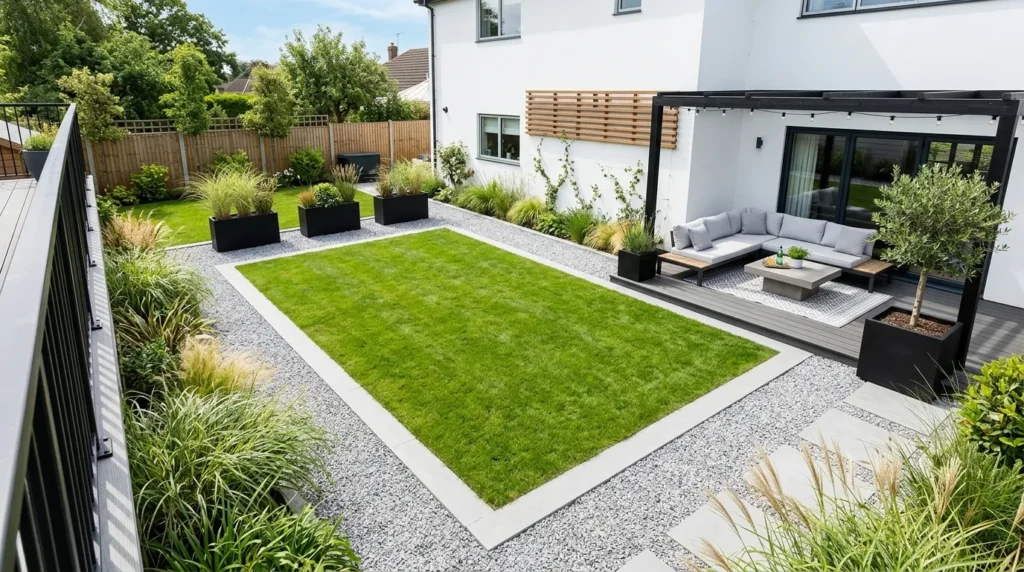
- A central grass panel creates a clean focal point and makes the backyard feel balanced, organized, and intentional.
- This idea works well with patios, gravel borders, concrete edging, raised beds, pool areas, and outdoor lounge zones.
- It is ideal for homeowners who want grass but do not want a full yard that requires constant mowing.
- A rectangular, square, or rounded grass panel can visually anchor furniture, pathways, and surrounding planting.
- It helps modern backyards feel neat because the grass has a defined shape instead of spreading into every corner.
A central grass panel gives the backyard a clean, modern foundation without using grass everywhere. This idea works because the lawn becomes a defined feature, almost like an outdoor rug. Instead of covering the entire yard, place a square, rectangle, or soft oval of grass in the middle and frame it with pavers, gravel, planting beds, or decking. I’ve noticed this layout works especially well for homeowners who want a green view from the house but prefer lower maintenance than a full traditional lawn across the entire backyard.
The transformation comes from giving the grass a clear boundary and purpose. A central panel can sit between a patio and garden bed, beside a pool, or in front of an outdoor lounge. Use steel edging, concrete borders, brick, or stone to keep the outline sharp. Around the lawn, add simple planting, gravel, or seating so the space feels complete. This approach is practical because it reduces mowing while still keeping the yard fresh, soft, and family-friendly. It also photographs beautifully from windows, decks, and upstairs views.
4. Grass Lounge Zone
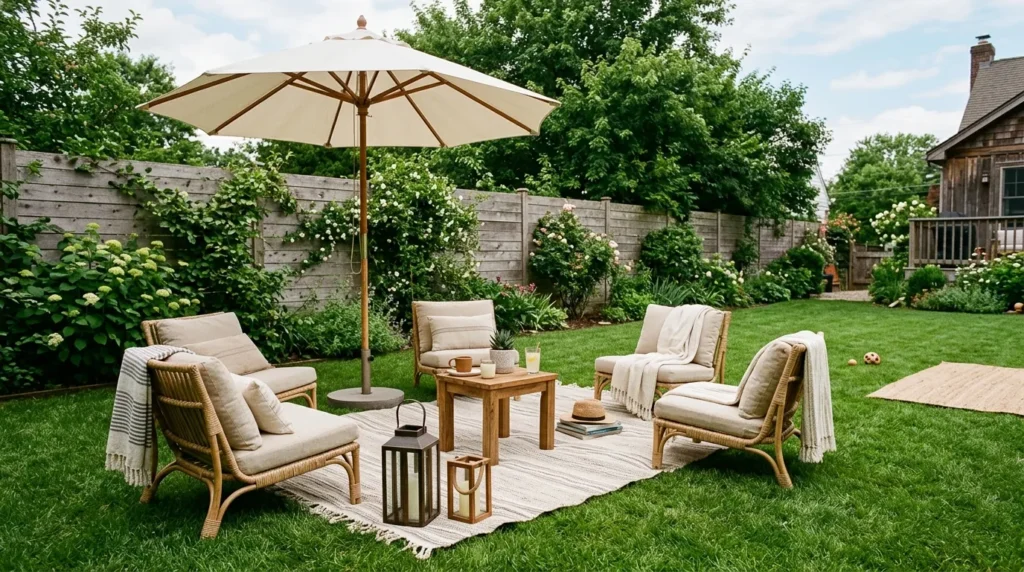
- A grass lounge zone creates a casual outdoor space for relaxing, reading, picnics, sunbathing, or spending time with family.
- This idea works with outdoor blankets, low chairs, poufs, umbrellas, side tables, lanterns, and lightweight furniture.
- It is useful for homeowners who want a softer alternative to a full patio or want extra seating during gatherings.
- Grass makes the lounge area feel relaxed and comfortable, especially in backyards with kids, pets, or informal entertaining.
- For better durability, choose a flat area with good drainage and avoid placing heavy furniture in one spot for too long.
A grass lounge zone can make the backyard feel relaxed, casual, and easy to enjoy. This idea works because not every outdoor seating area needs stone, tile, or decking. A soft patch of lawn can become a simple place for reading, picnics, sunbathing, or weekend family time. Use outdoor blankets, folding chairs, poufs, small side tables, umbrellas, or lanterns to create comfort without making the area feel permanent. In many homes, this is the most flexible kind of outdoor living because it can change with the season.
The practical value comes from keeping the setup light and movable. Heavy furniture can damage grass, especially after rain, so choose pieces that are easy to lift or rotate. Place the lounge zone near shade, a tree, a fence line, or a patio edge so it feels connected to the rest of the yard. Add a basket for cushions, throws, or outdoor games to keep the space useful. The result is a relaxed backyard feature that works for quiet mornings, family afternoons, and casual gatherings without requiring a large renovation.
5. Grass Pathways
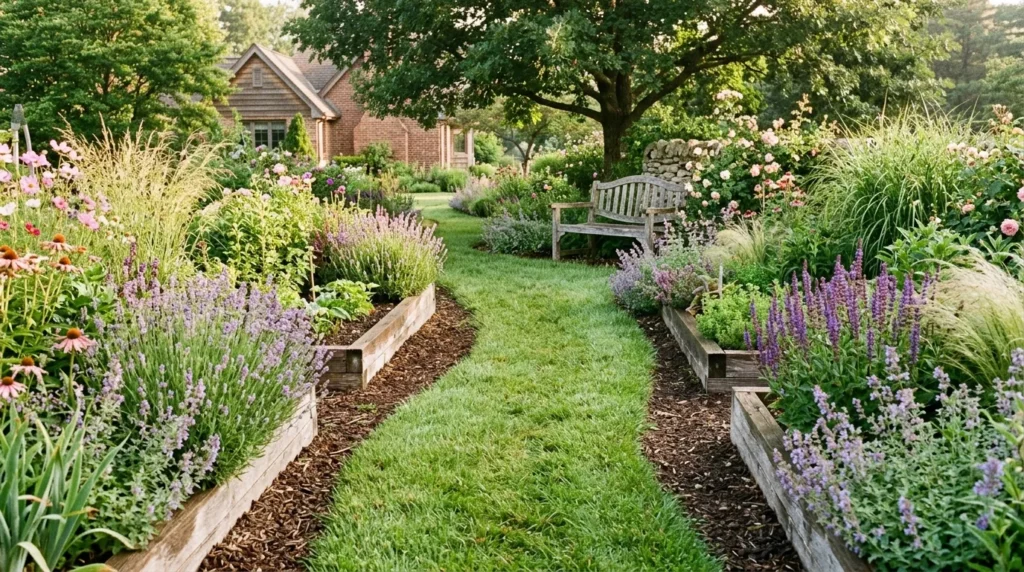
- Grass pathways create soft movement through the yard while connecting garden zones in a natural, understated way.
- This idea works well between raised beds, flower borders, side yards, vegetable gardens, patios, and seating corners.
- It gives the backyard a relaxed garden feel without the cost or hardness of a full stone walkway.
- Mowed grass paths look especially charming when surrounded by taller meadow plants, shrubs, flowers, or ornamental grasses.
- For clean results, keep the pathway wide enough for comfortable walking and define the edges with planting or borders.
A grass pathway can make a backyard feel peaceful, charming, and naturally organized. This idea works because the path is created through shape and mowing rather than heavy construction. Instead of installing stone or concrete, keep a neat strip of lawn between garden beds, raised planters, or meadow-style planting. The contrast between the shorter grass path and fuller planting along the sides creates a soft garden walkway. I’ve seen this work well in cottage-style yards, vegetable gardens, large suburban backyards, and relaxed family spaces where comfort matters.
The transformation is subtle but very effective because it turns open grass into movement. A grass path can lead to a bench, fire pit, shed, play area, or vegetable garden while keeping the landscape natural. Make the path wide enough for two people to walk comfortably, especially if it will be used often. Define the edges with lavender, salvia, boxwood, mulch, or simple metal edging if needed. This approach feels low-cost, flexible, and beautiful, especially for homeowners who want structure without losing the softness of a green backyard.
6. Checkerboard Pavers
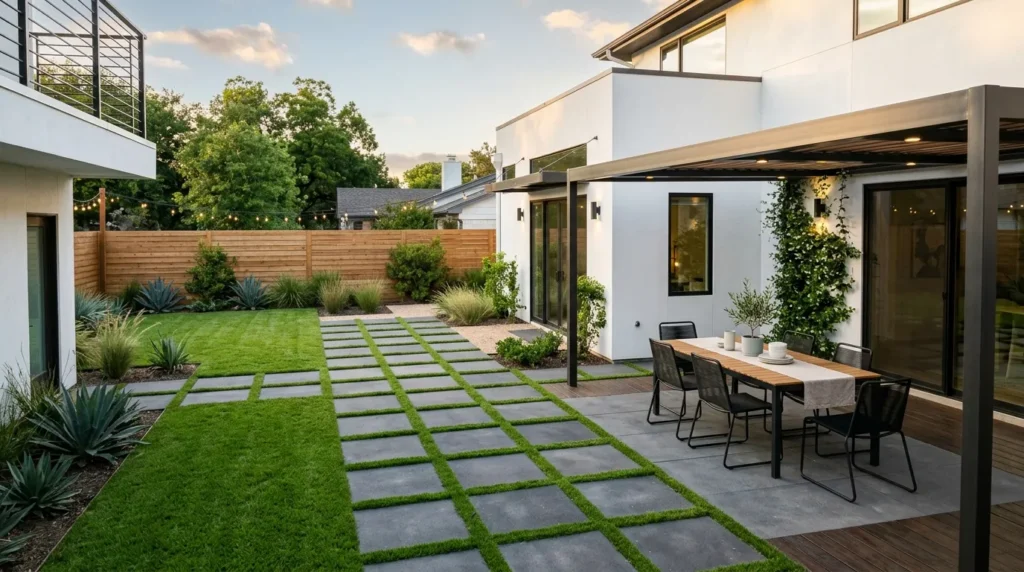
- Creates a clean modern pattern by alternating grass with concrete, stone, or porcelain paver squares.
- Works well for patios, side yards, pool areas, small backyards, and outdoor dining spaces.
- Adds visual rhythm while keeping the yard softer than a fully paved surface.
- Helps divide outdoor zones without using walls, fences, or bulky landscaping.
- For easy maintenance, keep pavers level with the grass so mowing and walking stay smooth.
Checkerboard pavers can make a backyard feel instantly more designed and visually memorable. This idea works because the repeated pattern creates order while the grass keeps the surface soft and fresh. Use square concrete pavers, limestone slabs, porcelain tiles, or natural stone with grass growing between each section. The look feels especially strong in modern patios, poolside areas, and small yards where every detail matters. In my experience, larger squares often look cleaner than tiny ones because they feel intentional, spacious, and easier to maintain through regular mowing and trimming.
The transformation comes from turning a plain lawn into a patterned outdoor floor. This layout works well near dining tables, lounge chairs, garden entrances, or transition spaces between the patio and yard. Keep the grass joints wide enough to look lush but not so wide that furniture becomes unstable. If natural grass is difficult to maintain in your climate, artificial turf strips can create a similar look with less care. The finished space feels polished, graphic, and practical while still keeping the backyard green, open, and comfortable for everyday use.
7. Fire Pit Lawn
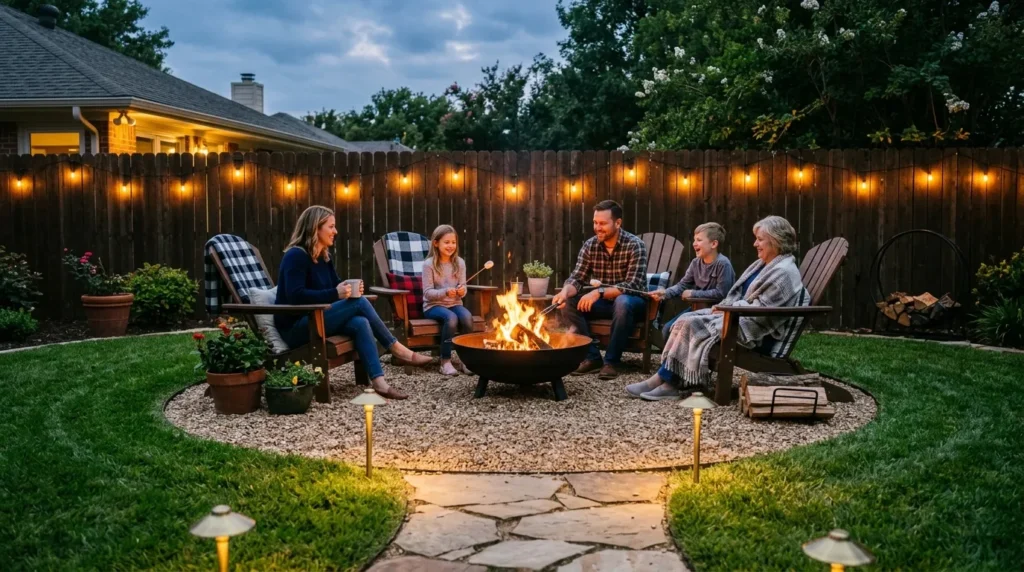
- Creates a cozy outdoor gathering area while keeping the surrounding yard soft, open, and family-friendly.
- Works with circular lawns, gravel fire pads, stone edging, Adirondack chairs, benches, and low pathway lights.
- Helps turn unused grass into a clear destination for evening conversations and casual hosting.
- Adds warmth and structure without needing a full patio installation.
- For safety, keep the fire feature on stone, gravel, concrete, or another nonflammable surface.
A fire pit surrounded by grass can make a backyard feel warm, relaxed, and naturally social. This idea works because the lawn softens the gathering area while the fire creates a clear focal point. Place the fire pit on a gravel, stone, or concrete pad, then let the grass frame the seating zone around it. This keeps the layout safe and visually balanced. A round arrangement often looks best because it encourages conversation and gives the entire area a cozy, camp-like feeling without looking messy or unfinished.
The practical upgrade is that the fire area becomes a real destination instead of a random feature in the yard. Use Adirondack chairs, low benches, outdoor stools, or simple lounge chairs that can be moved as needed. Add pathway lights so guests can walk safely after sunset. In cooler states, this setup extends outdoor use into fall, while warmer regions can enjoy it during mild evenings. The result is a backyard that feels inviting, useful, and perfect for casual gatherings, marshmallow nights, weekend hosting, and quiet conversations under the sky.
8. Raised Grass Beds
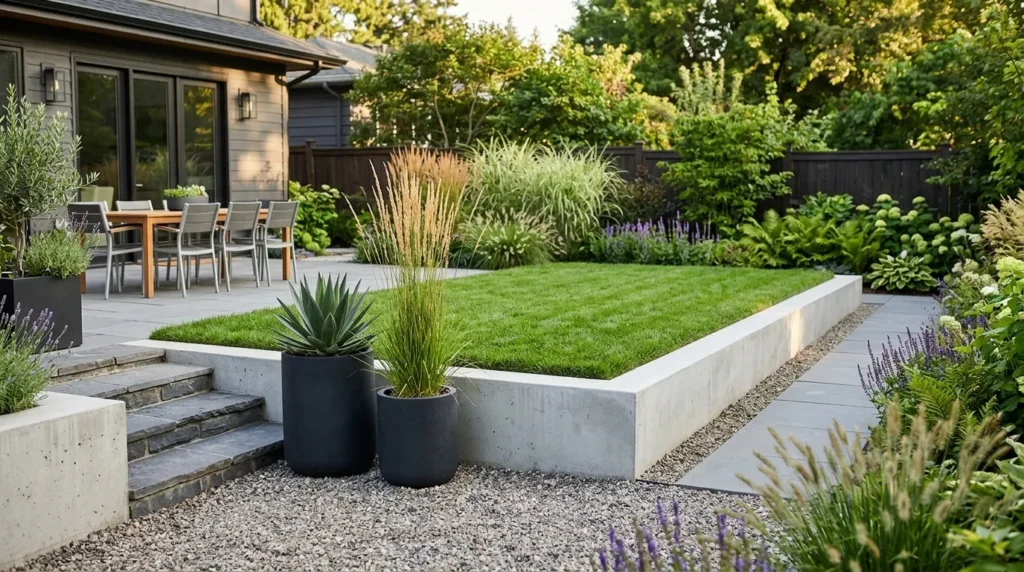
- Adds height and structure to the lawn by lifting small grass areas inside clean borders.
- Works with wood frames, stone retaining edges, concrete borders, steel edging, and modern planter-style layouts.
- Helps create visual layers in flat backyards that need more depth and definition.
- Can be used near patios, seating areas, play zones, garden walls, or outdoor lounge corners.
- Best for decorative lawn sections, small green platforms, or areas where drainage and soil control matter.
Raised grass beds give the backyard a layered look that feels fresh and unexpected. This idea works because grass is usually flat, so lifting it slightly creates instant dimension. Use low retaining edges made from stone, wood, concrete, brick, or metal to frame a small lawn section. The raised shape can sit beside a patio, around a play area, or near a seating corner. I’ve noticed this works especially well in flat suburban yards where the space needs depth but the homeowner does not want heavy planting everywhere.
The transformation is both visual and practical because a raised grass area feels like a designed feature. It can become a soft play platform, a green viewing area, or a clean transition between patio levels. Make sure the base has proper drainage so water does not sit inside the bed after rain. Keep the shape simple, such as a rectangle, square, or gentle curve, for easier mowing and edging. The result is a backyard that feels more architectural while still keeping the comfort and freshness people love about grass.
9. Bordered Play Area
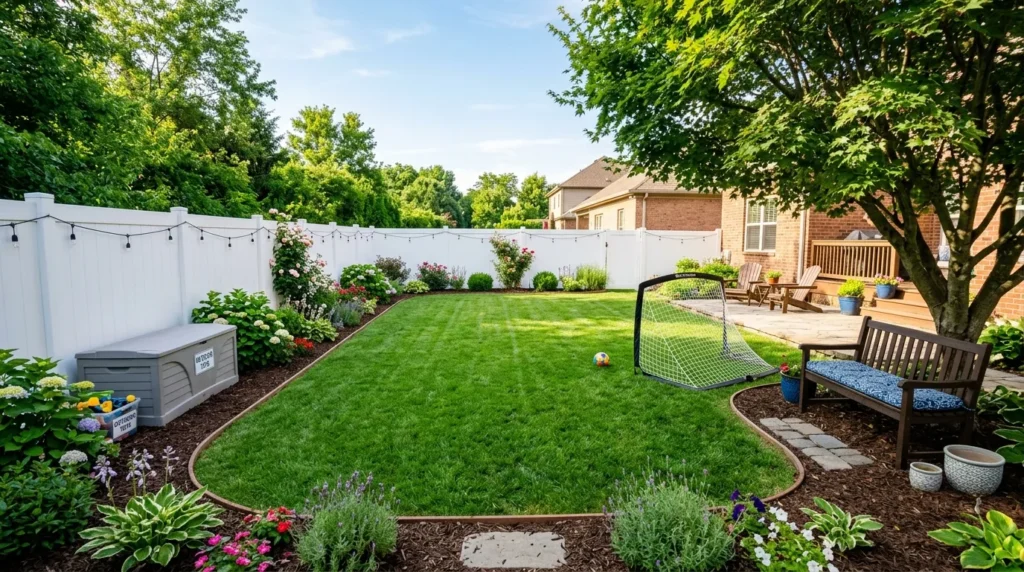
- Creates a safe and attractive grass zone for kids, pets, outdoor games, or family activities.
- Works with low fencing, mulch borders, rubber edging, stepping stones, shade trees, benches, and storage boxes.
- Helps separate active space from patios, flower beds, dining areas, and delicate planting.
- Makes family backyards look more organized without removing the relaxed feeling of open grass.
- For practical use, choose durable grass or turf that can handle foot traffic and frequent play.
A bordered play area keeps a family backyard useful without making it look chaotic. This idea works because kids, pets, and outdoor games need open grass, but the space still benefits from a clear boundary. Use low edging, mulch borders, stepping stones, shrubs, or a simple fence to define the play zone. The border does not have to feel restrictive. It simply tells the eye where activity happens and where planting or seating begins. That small amount of structure can make the whole yard feel calmer and better planned.
The real-life benefit is easier organization. A defined grass area can hold a swing set, soccer net, picnic blanket, pet toys, or open running space while keeping furniture and garden beds protected. Choose durable turf or a hardy grass variety suited to your region, especially if the area gets heavy use. Add shade with a tree, pergola, umbrella, or shade sail for comfort during hot afternoons. The result is a backyard that supports family life while still looking clean, intentional, and attractive from the patio or kitchen window.
10. Grass Garden Edges
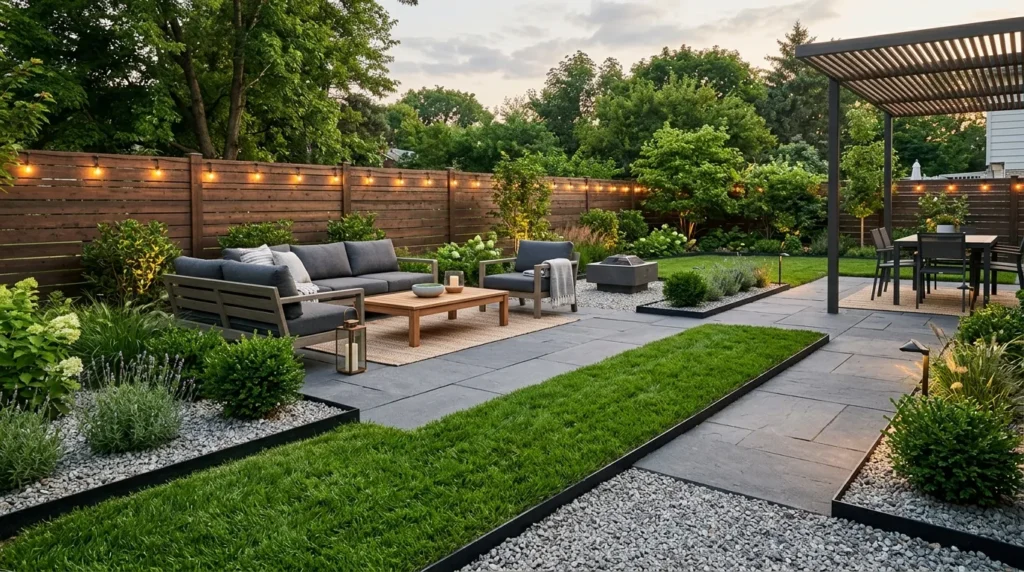
- Uses grass as a soft frame around patios, flower beds, gravel areas, fences, and outdoor living zones.
- Works with steel edging, brick borders, stone strips, mulch beds, low hedges, and clean mowing lines.
- Helps connect hardscape and planting so the backyard feels softer and more balanced.
- Makes patios, walkways, and seating areas look more finished without adding too many decorative pieces.
- For a polished look, maintain crisp edges through trimming, edging tools, or permanent borders.
Grass garden edges can make the entire backyard feel softer, cleaner, and more connected. This idea works because grass is not always the main feature; sometimes it performs best as a frame. A narrow green edge around a patio, flower bed, gravel zone, or fence line can create contrast and make hard materials feel less harsh. That’s why many designers recommend planning edges carefully before adding more plants or decor. Clean lawn edges can do more for a backyard than extra accessories when the layout feels unfinished.
The transformation depends on keeping the border crisp and intentional. Use a half-moon edger, steel edging, brick strip, stone border, or concrete curb to separate grass from mulch, gravel, or paving. This prevents messy spreading and makes maintenance easier. Grass edges look especially good around modern patios, raised beds, pool areas, and outdoor dining spaces because they create a soft green outline. The final result feels neat, balanced, and visually fresh while making the backyard easier to understand and enjoy from every viewing angle.