
11 Mudroom Makeovers That Transform Your Space
Mudroom Makeovers can completely change the way a home feels the moment you walk in. A mudroom is not just a place for shoes, coats, backpacks, dog leashes, and sports gear; it is the transition zone between busy outside life and the comfort of home. For USA families, especially in homes with garages, side entries,…
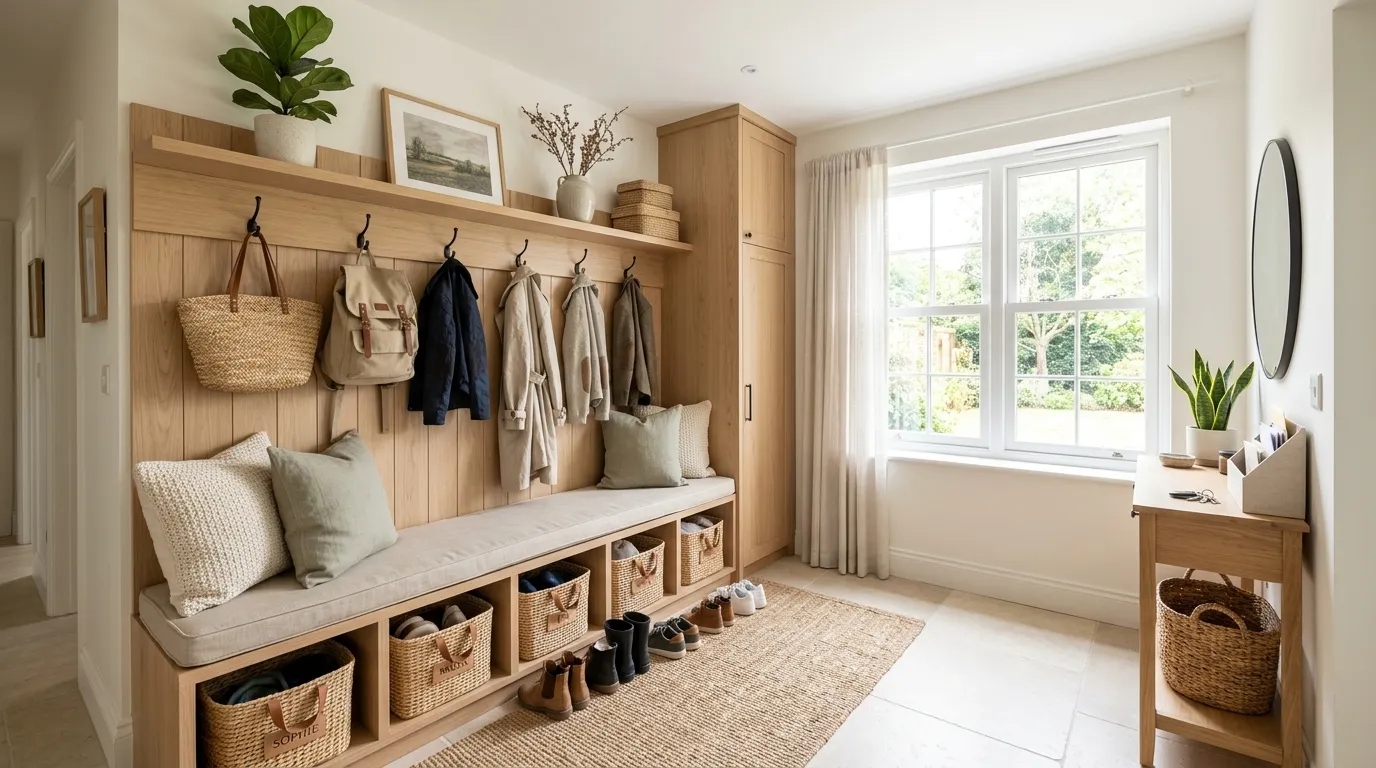
Mudroom Makeovers can completely change the way a home feels the moment you walk in. A mudroom is not just a place for shoes, coats, backpacks, dog leashes, and sports gear; it is the transition zone between busy outside life and the comfort of home. For USA families, especially in homes with garages, side entries, laundry rooms, basements, or back doors, a better mudroom can make daily routines feel calmer and more organized.
A beautiful mudroom should work hard without looking chaotic. The right bench, hooks, cubbies, flooring, baskets, paint color, and storage layout can turn a messy drop zone into one of the most practical and stylish areas in the house. These ideas are designed to help you create a welcoming, Pinterest-worthy mudroom that handles real life beautifully.
1. Built-In Bench
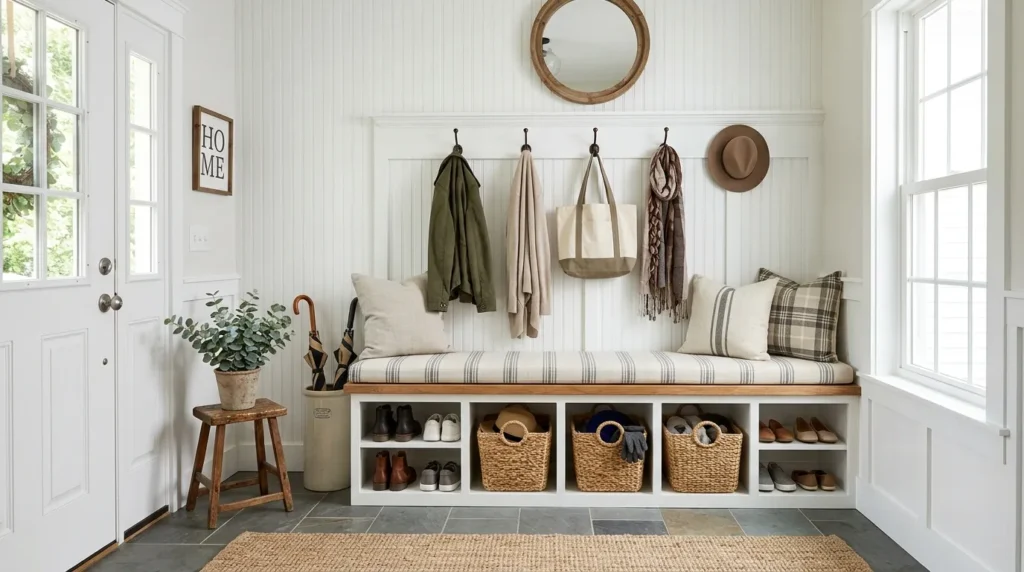
- A built-in bench creates a comfortable landing spot for shoes, bags, and daily routines. It makes the mudroom feel more finished and intentional.
- Use wood, painted cabinetry, beadboard, shiplap, cushions, hooks, and lower cubbies. These materials bring storage and style together.
- This idea works beautifully in garage entries, laundry mudrooms, and family drop zones. It gives everyone a clear place to sit and reset.
- Add storage underneath the bench for shoes, baskets, or seasonal accessories. Hidden or semi-hidden storage keeps clutter from spreading.
A built-in bench gives a mudroom instant structure and purpose. Instead of shoes and bags landing wherever they fall, the bench creates one obvious place for putting things down, tying sneakers, and getting ready to leave. In my experience, this is often the feature that makes a mudroom feel like a real room instead of a hallway. A painted bench with wood accents can look warm, while a simple white built-in feels clean, bright, and classic.
The transformation is practical because the bench supports everyday movement through the home. Add a washable cushion for comfort, cubbies underneath for shoes, and hooks above for coats or backpacks. If your mudroom is narrow, keep the bench shallow so walking space stays open. If the area is wide, add drawers or basket shelves below for more storage. This setup works especially well for busy American households where school mornings, sports bags, and grocery trips all pass through the same door.
2. Wall Hooks
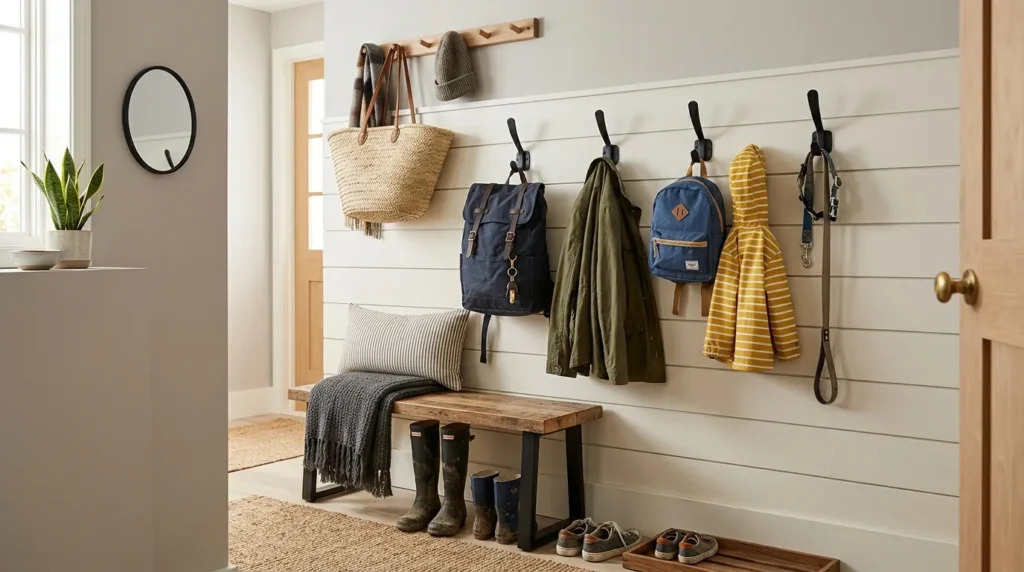
- Wall hooks keep coats, backpacks, hats, and bags off the floor. They make the mudroom easier to use for every family member.
- Use metal hooks, wood peg rails, brass hooks, black hooks, or labeled hook rows. The finish can match your home’s style.
- This idea is budget-friendly and easy to install compared with full cabinetry. It can refresh a mudroom quickly.
- Place hooks at different heights for adults and children. Lower hooks help kids take responsibility for their own belongings.
Wall hooks are one of the simplest ways to make a mudroom more functional. A row of hooks can instantly reduce floor clutter because coats, totes, and backpacks finally have a clear place to land. I’ve noticed that hooks work best when they are easy to reach and not overloaded. A beautiful hook rail can also become a design feature, especially when mounted on painted beadboard, shiplap, or a warm wood back panel. The mudroom feels organized without needing a complicated system.
The results show up in daily routines because everyone can hang items quickly when entering the house. Use sturdy hooks for heavy winter coats, double hooks for backpacks and jackets, and smaller hooks for keys or dog leashes. Labeling each hook can help larger families avoid confusion. Keep a little open wall space between hooks so bags are not crushed together. This idea is perfect for small Mudroom Makeovers because it offers major function with limited space and a manageable budget.
3. Shoe Cubbies
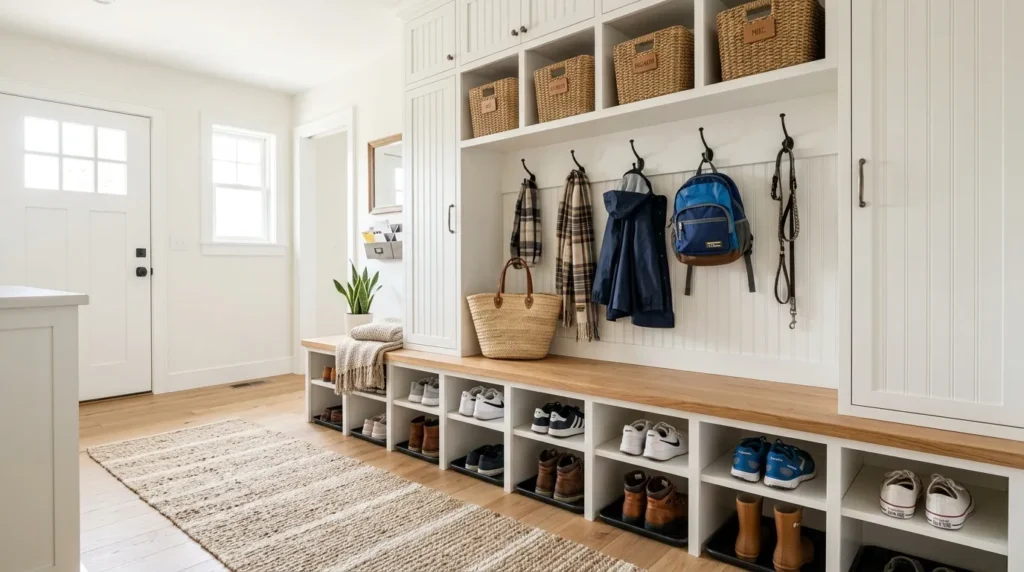
- Shoe cubbies keep footwear contained and visible. They prevent piles of sneakers, boots, sandals, and slippers from spreading across the entry floor.
- Use open cubbies, baskets, pull-out trays, boot shelves, or labeled bins. The right system depends on family size and shoe volume.
- This idea makes cleaning easier because shoes have one defined zone. It also helps protect floors from dirt, snow, and mud.
- Leave taller space for boots if your home gets rain or snow. Seasonal footwear needs more height than everyday sneakers.
Shoe cubbies can make a mudroom feel cleaner within minutes. Shoes are often the first thing to create mess near an entry, especially in homes with kids, pets, sports schedules, or changing seasons. A cubby system gives each pair a place to go, which makes the whole space feel calmer. In my experience, open cubbies work best for shoes used daily because people are more likely to put items away when the storage is easy and visible.
The transformation is especially useful in USA homes where weather changes bring wet boots, muddy sneakers, and winter gear into the house. Add washable trays inside cubbies for messy shoes, or use baskets if you prefer a softer look. Give each family member a section, then keep overflow shoes in closets so the mudroom does not become crowded. A top shelf can hold gloves or shoe care supplies. This idea keeps the entry practical, tidy, and much easier to maintain.
4. Tile Flooring
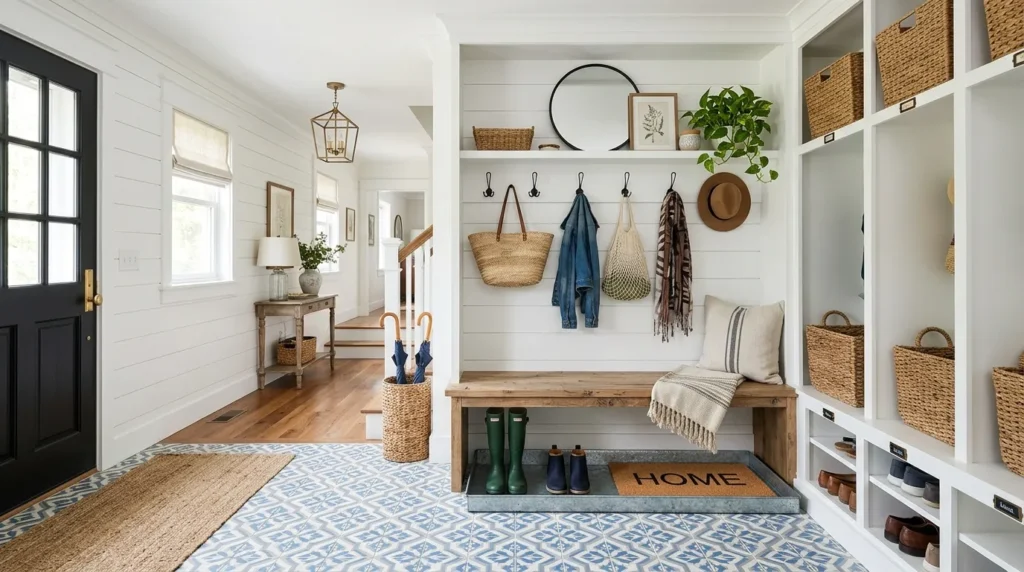
- Durable tile flooring makes a mudroom easier to clean and more resistant to daily wear. It handles dirt, water, and heavy traffic better than delicate surfaces.
- Use porcelain tile, ceramic tile, slate-look tile, brick tile, or patterned cement-look tile. Each option creates a different style.
- This idea adds visual impact while improving function. A beautiful floor can become the design anchor of the whole mudroom.
- Choose grout color carefully because mudrooms collect dirt. Medium-toned grout is often more forgiving than bright white grout.
Tile flooring can completely change the performance and appearance of a mudroom. This is the place where wet shoes, muddy paws, grocery bags, and sports equipment often land first, so the floor needs to be tough. That’s why many designers recommend durable, easy-clean flooring in hardworking entry areas. A patterned tile can add personality, while slate-look porcelain creates a more natural and understated feel. The floor becomes both a design choice and a practical upgrade.
The finished space feels more polished and easier to care for. A tile floor can define the mudroom even when it is part of a laundry room, hallway, or garage entry. Add a washable rug or boot tray for extra protection during rainy or snowy months. Choose slip-resistant finishes where possible, especially if kids or pets use the space often. This idea works beautifully because it makes the mudroom more durable while giving the whole area a stronger visual foundation.
5. Cabinet Storage
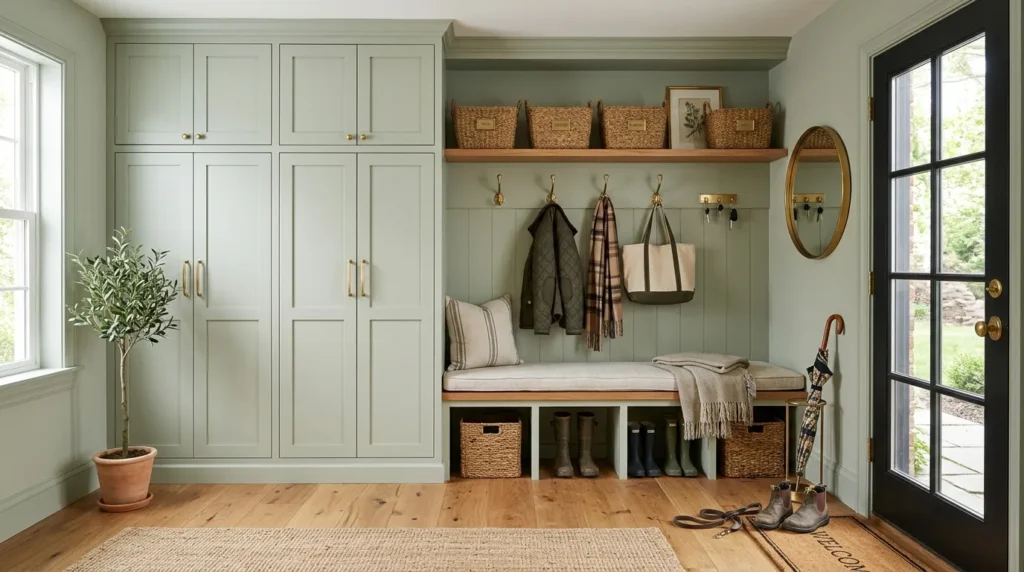
- Cabinet storage hides visual clutter and gives the mudroom a cleaner look. It works well for families with many bags, shoes, and seasonal items.
- Use tall cabinets, upper cabinets, closed drawers, locker-style storage, or slim utility cabinets. Closed storage keeps the space looking calm.
- This idea is ideal for storing items that are useful but not pretty. Cleaning supplies, pet gear, sports items, and backup accessories can stay hidden.
- Mix closed cabinets with open hooks or baskets for balance. Too many doors can feel heavy if the mudroom is small.
Cabinet storage can make a mudroom feel instantly more organized and custom. While open hooks and baskets are practical, some items simply look better behind doors. Tall cabinets can hide backpacks, coats, umbrellas, pet supplies, reusable shopping bags, and out-of-season gear. I’ve seen this work well in many homes because closed storage reduces visual noise, especially near kitchens or living areas. Painted cabinets can also make the mudroom feel connected to the rest of the house.
The transformation is both stylish and functional when the storage is planned around real routines. Put frequently used items at easy heights and less-used items in upper cabinets. Add drawers for gloves, sunscreen, hats, and keys so small objects do not disappear. If the space is narrow, use shallow cabinets to avoid blocking movement. This idea is especially helpful for families who want a mudroom that looks clean from nearby open living spaces while still handling everyday clutter behind the scenes.
6. Laundry Combo
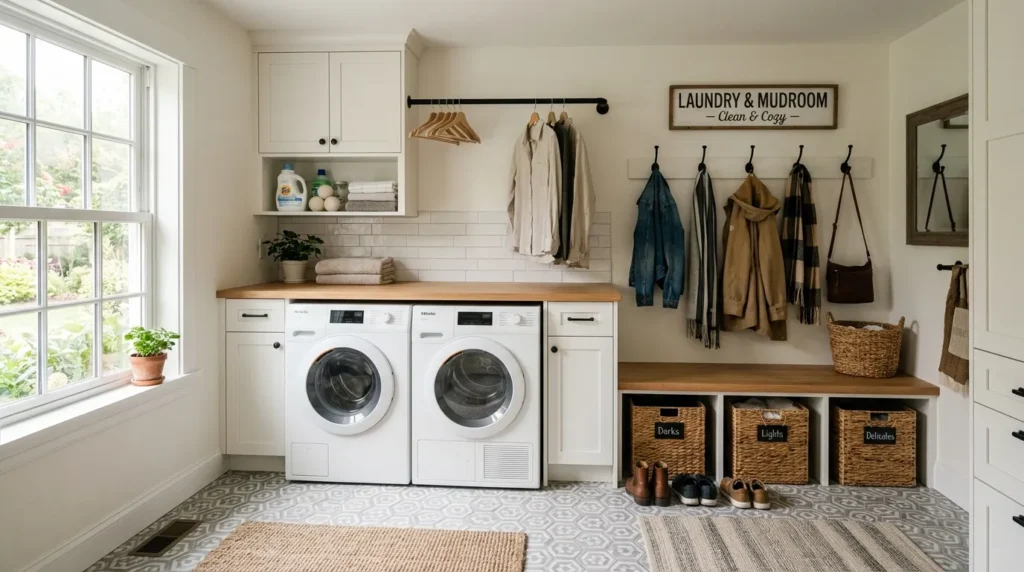
- A laundry combo makes the mudroom work harder by combining washing, sorting, storage, and entry organization in one space.
- Use washer-dryer units, folding counters, hooks, hampers, cabinets, drying racks, and durable flooring. Every element should support real chores.
- This idea works well in homes where the laundry room sits near the garage or back door. It turns traffic flow into practical function.
- Keep zones clear for dirty items, clean laundry, and outdoor gear. Good separation prevents the room from feeling chaotic.
A laundry mudroom combo can become one of the most useful spaces in the home. Wet jackets, muddy sports uniforms, pet towels, and dirty socks can go straight into the wash instead of traveling through the house. In my experience, this layout works best when the room has clear zones for entry storage and laundry tasks. Hooks near the door, hampers below a counter, and cabinets above the machines can make the whole space feel efficient.
The transformation saves time because the room supports multiple routines in one place. Add a folding surface over front-load machines, a hanging rod for air-drying clothes, and labeled hampers for sorting. Use waterproof flooring and washable rugs to handle moisture. If the room is small, choose vertical storage with shelves or wall hooks instead of bulky furniture. This idea is perfect for practical Mudroom Makeovers because it improves organization, laundry flow, and daily cleanup without needing a separate room for every task.
7. Pet Station
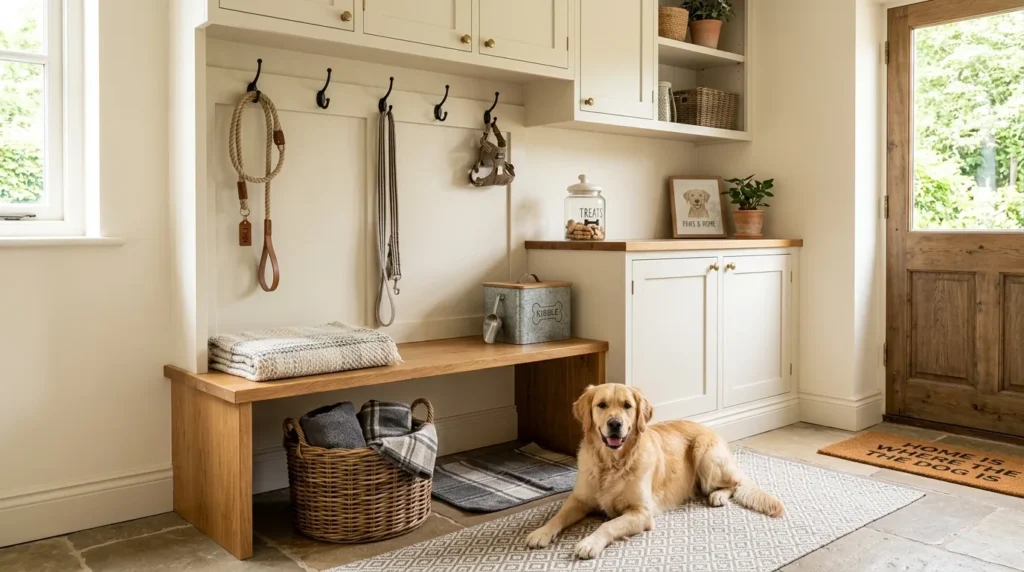
- A pet station keeps leashes, treats, towels, food, and walking supplies organized near the door. It makes daily pet routines easier.
- Use hooks, labeled bins, washable mats, food containers, dog towel baskets, and wall-mounted leash holders. These details keep supplies contained.
- This idea works especially well for dog owners who use the mudroom after walks. Wet paws and muddy gear can be handled quickly.
- Add a small towel zone for rainy days. Keeping towels nearby protects floors and furniture throughout the rest of the house.
A pet station makes a mudroom feel more prepared for real family life. Dogs, especially in rainy or snowy regions, bring dirt and moisture inside quickly, so having supplies near the door makes a big difference. I’ve noticed that pet areas work best when every item has a clear home. Leashes hang on hooks, treats sit in a sealed jar, towels stay in a basket, and waste bags fit in a small drawer. The setup feels simple but incredibly useful.
The finished station reduces stress because walks, feedings, and cleanups become easier. Add a washable mat where your pet can pause before entering the main house. If you have space, include a lower drawer or basket for toys and grooming supplies. Use attractive containers so the station blends with the rest of the mudroom instead of looking messy. This idea is practical for USA households with pets because it keeps outdoor routines organized, cleaner, and easier to manage every day.
8. Family Lockers
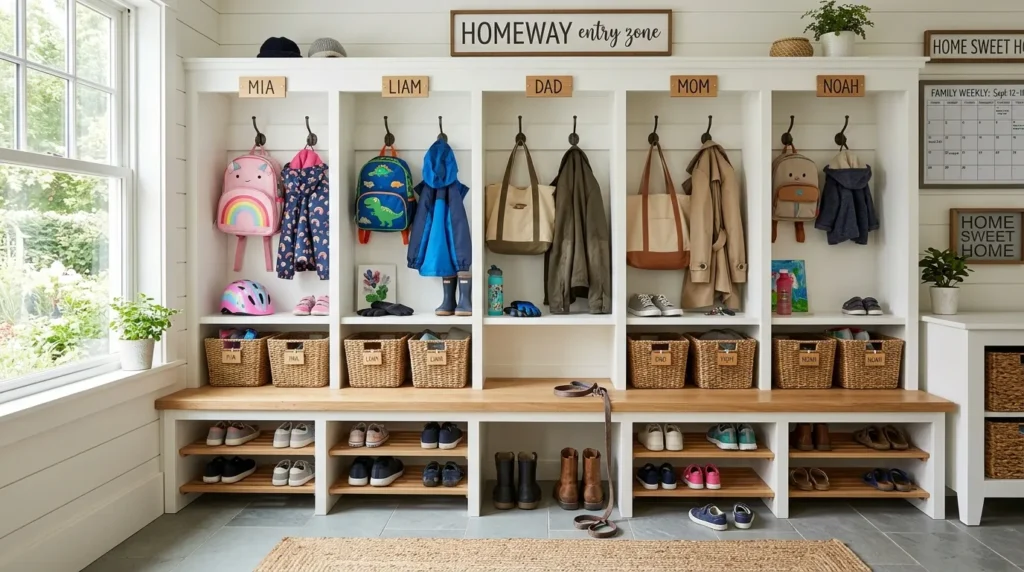
- Family lockers give each person a dedicated storage zone. They are ideal for coats, backpacks, shoes, sports gear, and school items.
- Use vertical cubbies, dividers, hooks, name labels, baskets, and lower shoe storage. Clear sections reduce confusion during busy mornings.
- This idea works best for families with children, teens, or shared entry spaces. Everyone gets responsibility for their own area.
- Add labels or initials for a polished look. Labels also help younger kids understand where their belongings belong.
Family lockers can turn a chaotic entry into a calm and organized system. Instead of everyone dropping items in one shared pile, each person gets a defined section for daily essentials. In my experience, this is one of the most effective layouts for school-age families because it supports routines without constant reminders. Each locker can include a hook for bags, a shelf for hats, a lower cubby for shoes, and a basket for small accessories. The setup makes organization visible.
The transformation becomes noticeable during school mornings, sports nights, and weekend errands. Kids can grab their own backpacks, jackets, and shoes without searching through piles. Adults can keep work bags, keys, and reusable totes in their own zones too. Choose painted wood for a custom built-in look or freestanding lockers for a more flexible option. Keep each section from becoming overloaded by doing quick weekly resets. This idea brings order, fairness, and structure to the busiest entry points in the home.
9. Statement Wallpaper
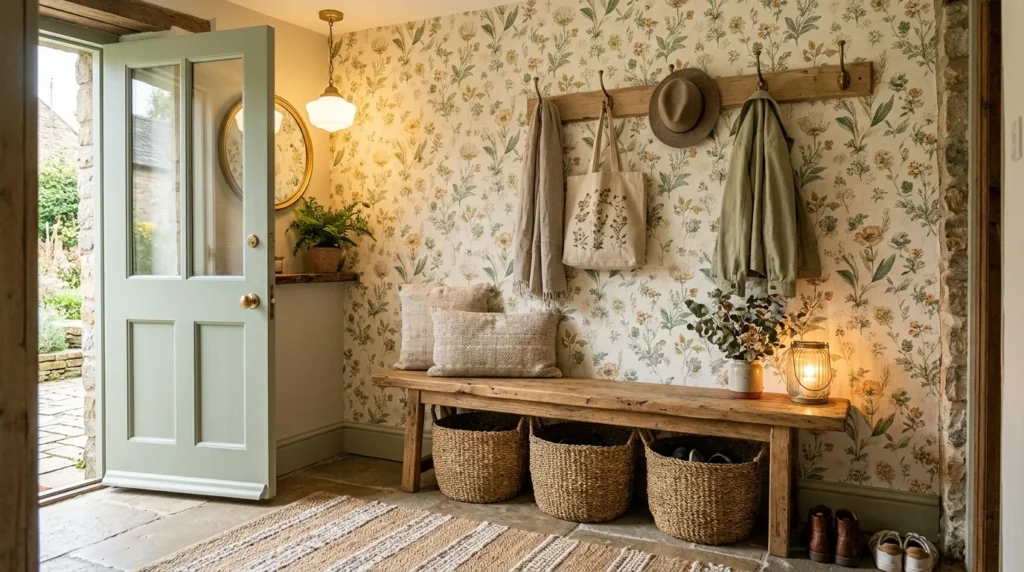
- Statement wallpaper adds personality to a mudroom without taking up floor space. It turns a practical room into a design moment.
- Use peel-and-stick wallpaper, floral prints, plaid patterns, botanical designs, stripes, or washable wallpaper. Durability matters in high-traffic spaces.
- This idea works well behind benches, above beadboard, inside cubbies, or on one accent wall. Small areas can still make a big impact.
- Pair bold wallpaper with simple storage pieces. The pattern should feel stylish, not overwhelming or cluttered.
Statement wallpaper can make a mudroom feel charming, colorful, and custom. Because mudrooms are usually smaller than living rooms, they can handle bolder pattern without overwhelming the whole home. I’ve seen this work well in many houses where the owners want personality but do not want to commit to wallpaper in a larger space. A floral print can feel cottage-inspired, a plaid pattern feels classic, and a botanical design brings fresh outdoor energy into the entry.
The transformation is powerful because wallpaper changes the mood without changing the layout. Install it above a bench, behind hooks, or on the back wall of cubbies for a more subtle effect. Peel-and-stick options are useful for renters or homeowners who like seasonal updates. Choose washable or durable finishes when possible because mudrooms collect dust, bags, and daily contact. Keep baskets, hooks, and cushions in colors pulled from the wallpaper so the final design feels coordinated and visually polished.
10. Drop Zone
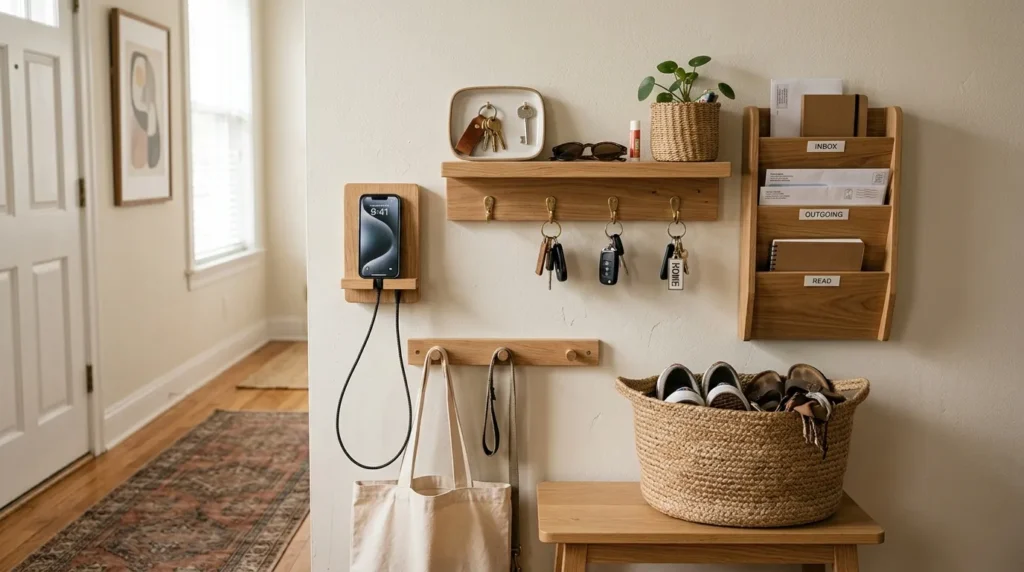
- A drop zone creates a clear place for keys, mail, sunglasses, wallets, and daily grab-and-go items. It reduces entryway clutter quickly.
- Use a small counter, tray, wall pocket, mail sorter, key hooks, charging station, and drawer organizers. Small systems make a big difference.
- This idea works well in compact mudrooms, apartment entries, garage entrances, and hallway corners. It does not require a large space.
- Keep only current items in the drop zone. Old mail, receipts, and random clutter should be cleared regularly.
A drop zone can make leaving and entering the house much smoother. Small items like keys, mail, sunglasses, earbuds, and wallets often create the most annoying clutter because they do not have a consistent home. That’s why many organizers recommend a landing area near the door. A tray, key rail, and mail slot can create a simple system that works every day. The goal is not to store everything, but to catch the essentials before they scatter.
The finished drop zone feels practical and polished when it is edited carefully. Use a small tray for wallets and glasses, hooks for keys, and a wall pocket for mail that needs attention. Add a charging spot if phones or tablets often land in the mudroom. Keep the surface clear enough that it does not become a junk pile. This idea works beautifully for small homes because it delivers major routine improvement without needing built-ins, large cabinets, or a full renovation.
11. Hidden Storage
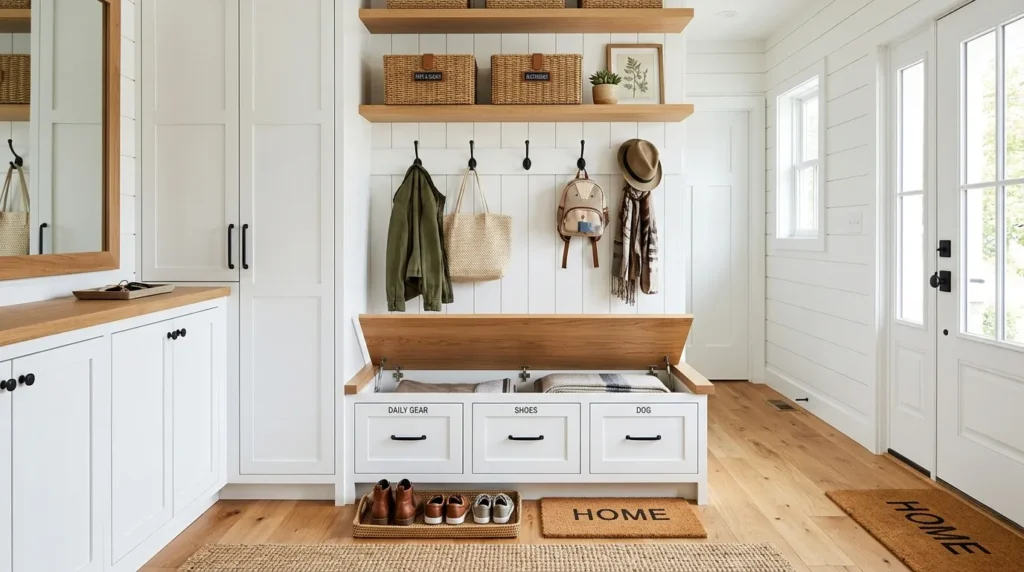
- Hidden storage keeps the mudroom looking clean while still holding everyday essentials. It is perfect for smaller or open-concept homes.
- Use bench drawers, lift-up seats, closed baskets, cabinet doors, sliding panels, and concealed shelves. Hidden compartments reduce visual clutter.
- This idea works well for seasonal items, pet supplies, shoes, cleaning products, and rarely used accessories. Everything stays nearby but out of sight.
- Combine hidden storage with a few open details. Hooks, baskets, or a small bench keep the room from feeling too closed off.
Hidden storage makes a mudroom feel calm even when life is busy. Not every item needs to be visible, especially in an entry that connects to the kitchen, living room, or hallway. In my experience, the most successful mudrooms hide the mess but keep the most-used items easy to reach. A bench with drawers, baskets behind doors, or a lift-up seat can hold shoes, scarves, gloves, dog gear, and seasonal extras without making the room feel crowded.
The final result is streamlined, useful, and easy to live with. Use hidden storage for items that create visual clutter, then reserve open hooks for coats and bags used every day. Add labels inside drawers or baskets so things do not disappear. If the mudroom is small, choose furniture that serves two purposes, like a bench with storage or a cabinet with a charging drawer. This final idea creates a cleaner-looking entry while still supporting the real routines of a busy home.