10 Mud Kitchen Ideas for Messy Play
There’s something incredibly freeing about letting kids get messy outside. No strict rules, no perfect outcomes—just pure imagination mixed with dirt, water, and creativity. That’s exactly why Mud Kitchen Ideas have become such a popular backyard addition across the USA. They turn ordinary outdoor spaces into hands-on play zones where kids can explore, experiment, and…
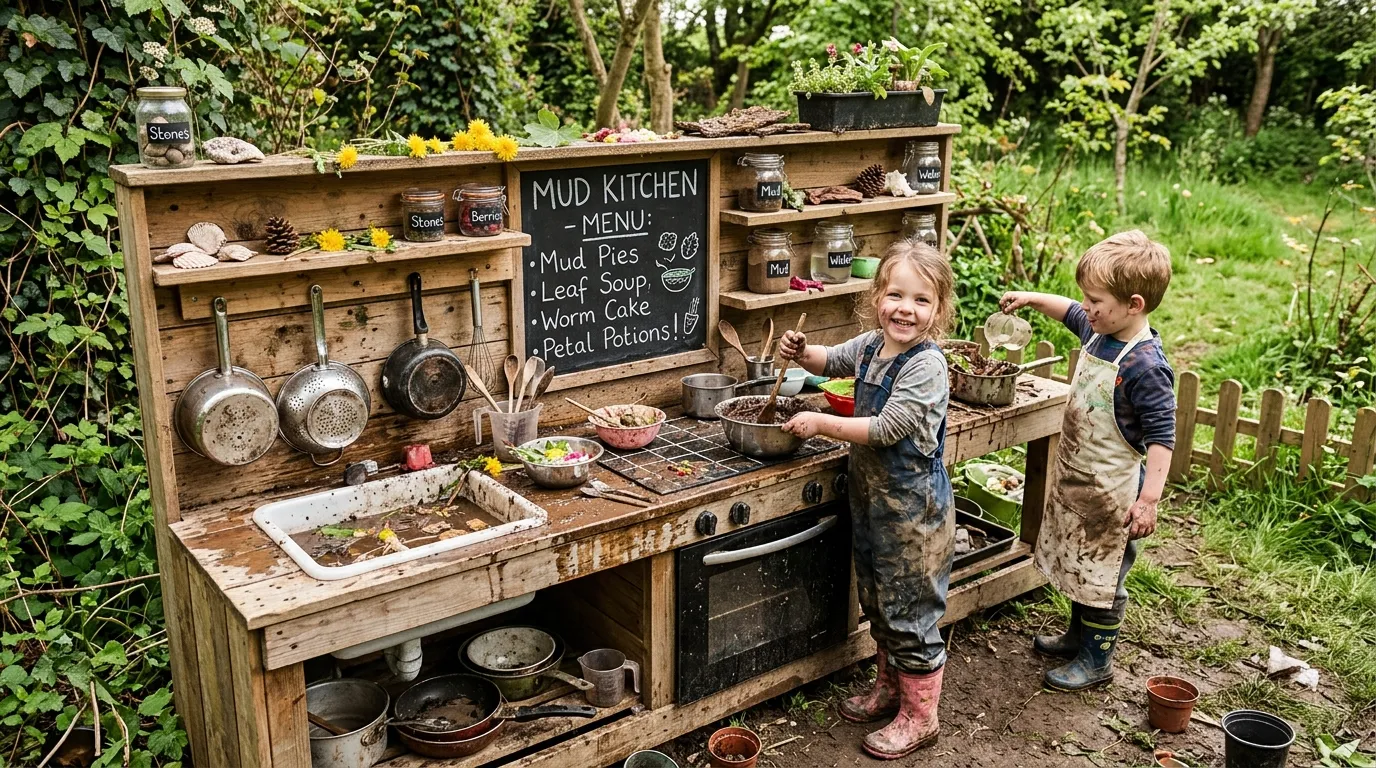
There’s something incredibly freeing about letting kids get messy outside. No strict rules, no perfect outcomes—just pure imagination mixed with dirt, water, and creativity. That’s exactly why Mud Kitchen Ideas have become such a popular backyard addition across the USA. They turn ordinary outdoor spaces into hands-on play zones where kids can explore, experiment, and enjoy hours of screen-free fun.
Messy play isn’t just about entertainment—it’s essential for development. It encourages creativity, sensory exploration, and even problem-solving skills, all while kids are simply “playing.” And the beauty of these setups is that they don’t require expensive materials or complicated designs. With a little planning and a few smart choices, you can create a backyard feature that kids will use every single day.
In this guide, you’ll discover 10 practical and highly engaging mud kitchen ideas designed specifically for messy play. Each one focuses on usability, durability, and creativity—helping you build a space that’s both fun and functional.
1. Open Mud Mixing Zone
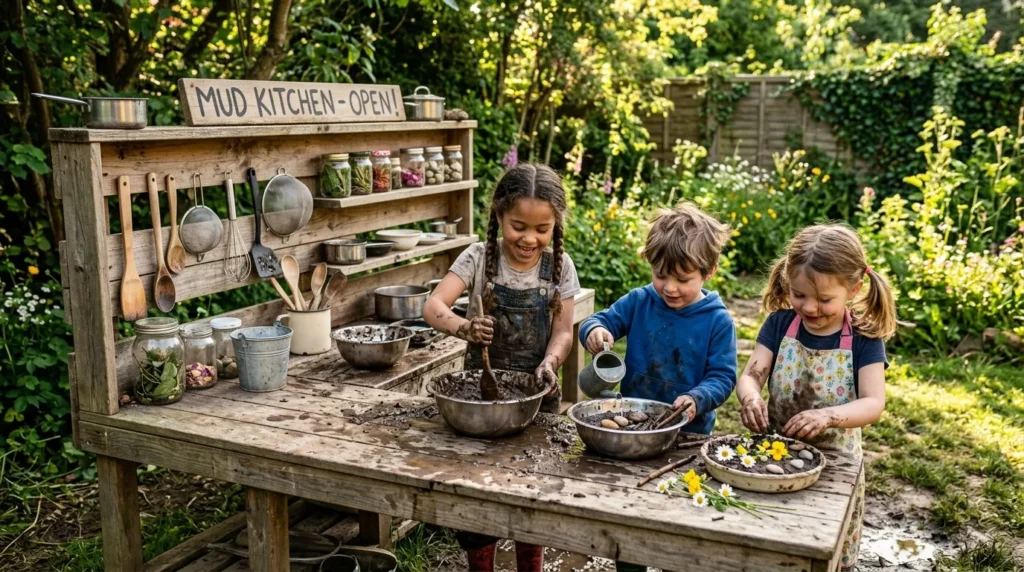
- Provides large workspace
- Encourages group play
- Keeps activities organized
- Allows freedom of movement
The most exciting mud kitchens always start with space to actually get messy. An open mixing zone gives kids a wide surface to spread out, combine materials, and experiment freely. In my experience, this kind of setup immediately invites longer play sessions because it removes limitations. Kids aren’t confined to a small area—they can move, explore, and create without feeling restricted.
I’ve seen this work well in many backyards where the mixing zone becomes the main attraction. It’s where all the action happens, from “cooking” mud pies to building creative mixtures. The openness also makes it easier for multiple kids to play together without bumping into each other, which adds to the overall enjoyment.
2. Water Flow Station
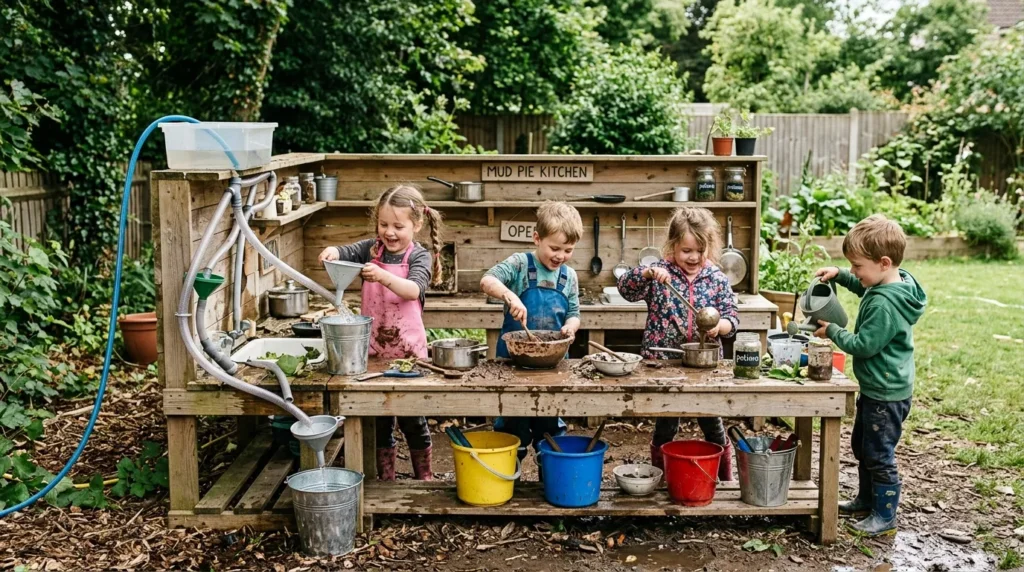
- Adds continuous water play
- Enhances sensory experience
- Easy bucket or container setup
- Encourages experimentation
Water completely transforms a mud kitchen from simple play to an immersive experience. A water flow station—whether it’s a bucket, container, or small spout—gives kids the ability to control and explore how water interacts with dirt. That’s why many designers recommend including a dedicated water source.
In my experience, kids spend the majority of their time at this station. I’ve noticed that pouring, mixing, and refilling becomes an ongoing cycle that keeps them engaged for hours. It adds movement and unpredictability, which is exactly what makes messy play so exciting and rewarding.
3. Multi-Level Counters
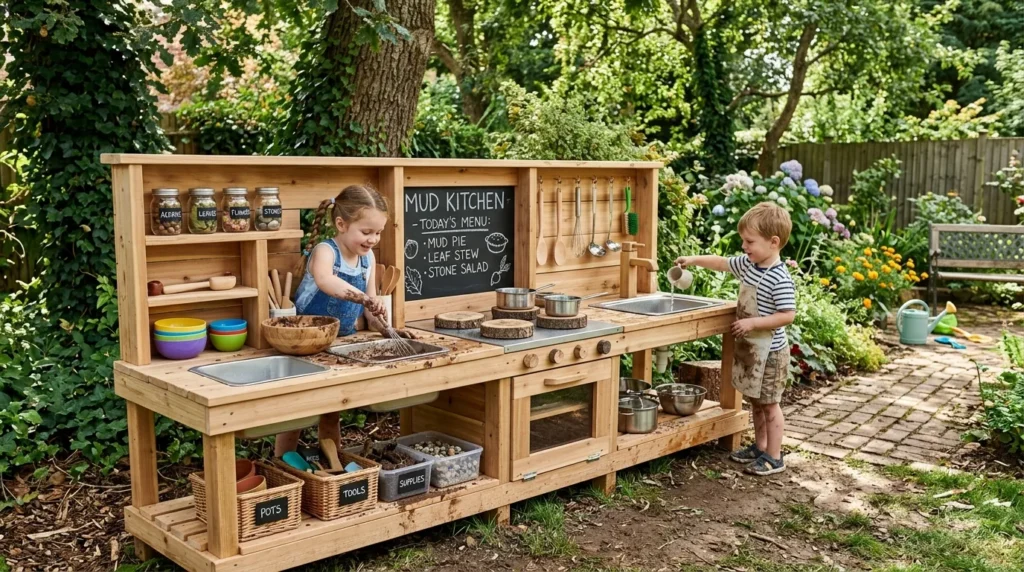
- Separates play activities
- Adds structure to layout
- Improves usability
- Creates realistic kitchen feel
Having different counter heights creates distinct zones for different activities. One level can be used for mixing, another for “serving,” and another for storage. In my experience, this layout makes the entire setup feel more organized without limiting creativity.
I’ve seen this work beautifully in many backyard designs where kids naturally move between levels. It creates a flow that keeps play dynamic and engaging. Instead of everything happening in one spot, the space feels more interactive and thoughtfully designed.
4. Mud Pie Station
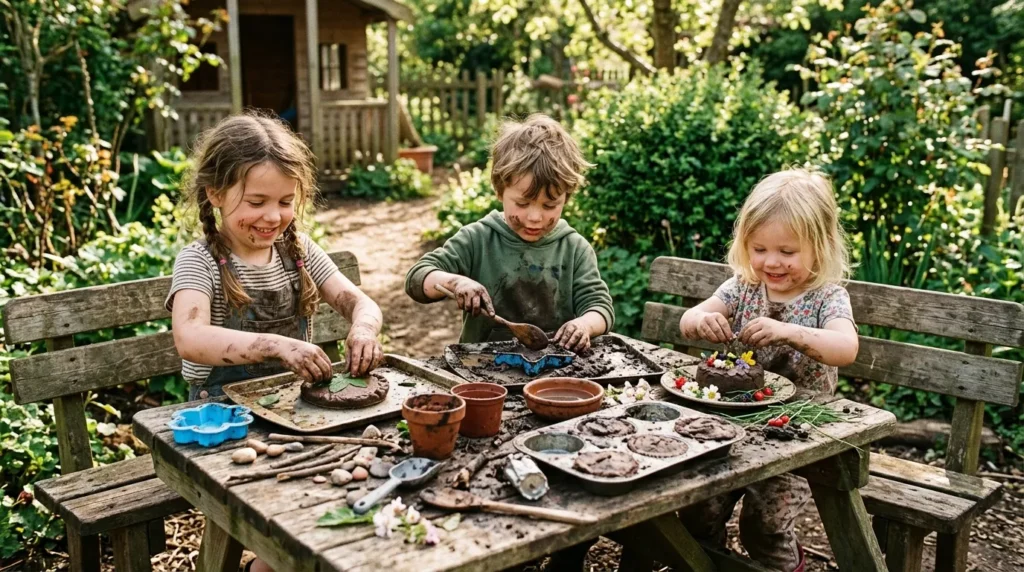
- Focuses on creative play
- Uses trays or molds
- Encourages imaginative cooking
- Easy to set up
A dedicated mud pie station turns messy play into a creative activity. Simple tools like trays, cups, or molds allow kids to shape and present their creations. In my experience, this feature quickly becomes a favorite because it gives kids a clear goal within their play.
I’ve noticed that it encourages storytelling as well. Kids often pretend they’re baking or serving dishes, which adds another layer of imagination. It’s a simple addition that makes the entire setup feel more engaging and purposeful.
5. Hanging Tool Rack
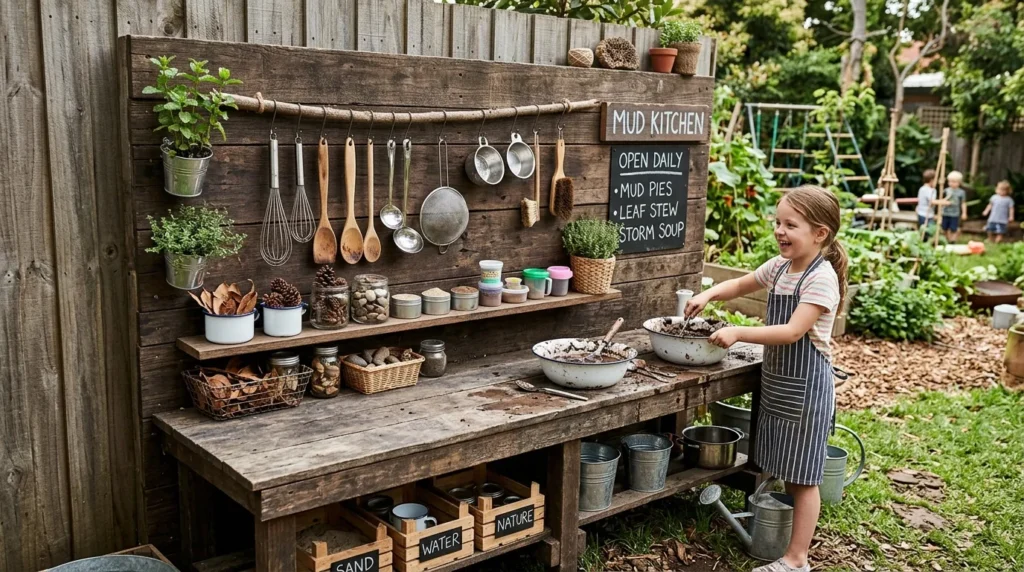
- Keeps tools organized
- Saves counter space
- Adds visual interest
- Easy to install
Organization might not seem important in messy play, but it actually makes a big difference. A hanging rack allows kids to easily access and store their tools without cluttering the workspace.
In my experience, this setup works well because it becomes part of the play itself. I’ve seen kids enjoy hanging and rearranging their tools just as much as using them. It keeps the area tidy while adding a functional and decorative element.
6. Natural Ground Base
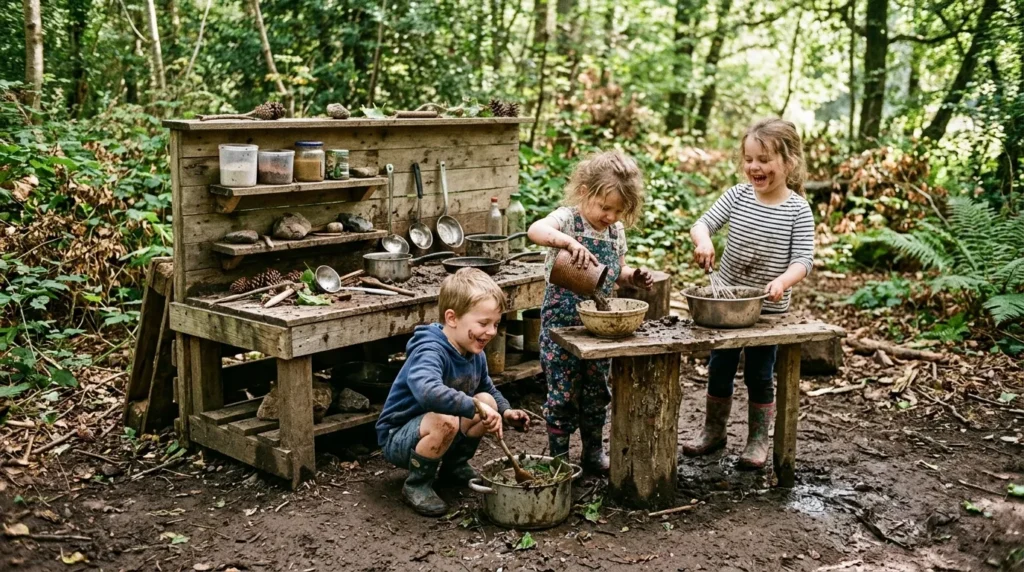
- Uses dirt or sand foundation
- Enhances sensory play
- Easy to maintain
- Blends with environment
The ground beneath the kitchen is just as important as the structure itself. A natural base of dirt or sand makes cleanup easier and enhances the messy play experience.
I’ve noticed that kids are more comfortable getting fully involved when the environment feels natural. In my experience, this setup reduces worry about mess while encouraging more creative exploration. It also blends beautifully into the backyard, making the space feel cohesive and inviting.
7. Repurposed Kitchen Parts
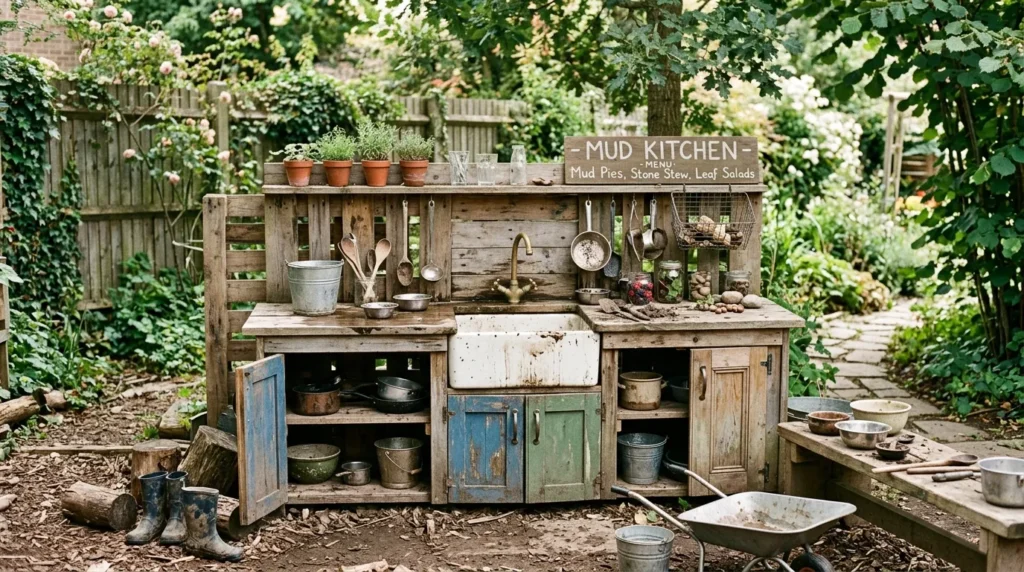
- Uses old sinks or cabinets
- Budget-friendly option
- Adds realism
- Easy to customize
Repurposing old kitchen items adds authenticity to a mud kitchen. Sinks, drawers, or even cabinet doors can be reused to create a realistic play environment.
I’ve seen this work well in many homes where old materials find a second life outdoors. In my experience, these elements make the setup feel more interactive and engaging while keeping costs low. It’s a practical and creative solution that adds character.
8. Splash Zone Area
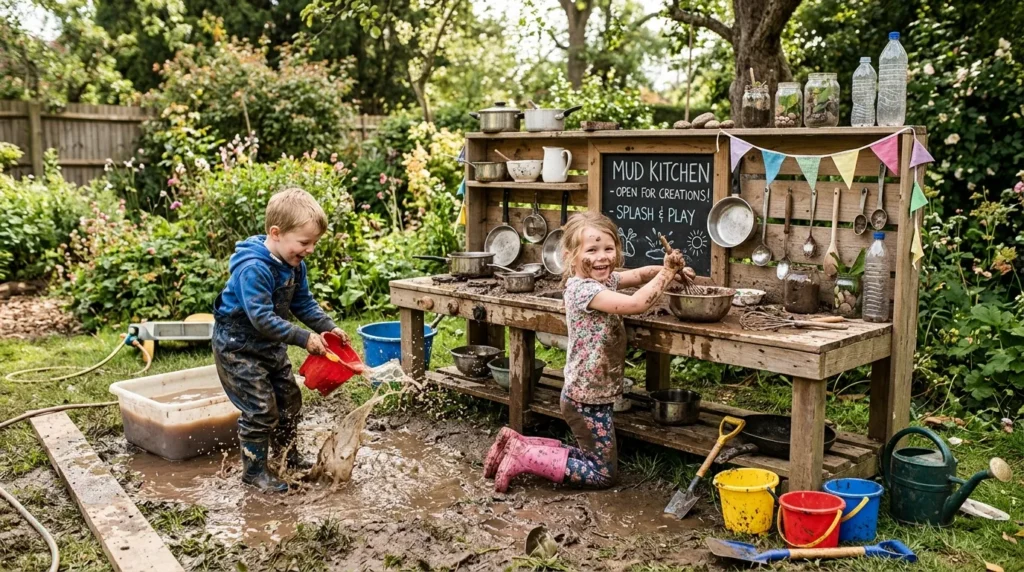
- Contains water mess
- Keeps main area clean
- Encourages active play
- Adds fun element
A designated splash zone helps manage water play while still allowing kids to have fun. This can be as simple as a small area with containers or a shallow basin.
In my experience, separating this zone keeps the main workspace more usable. I’ve noticed that it also adds variety to the play experience, giving kids a space to focus purely on water-based activities.
9. Herb And Nature Add-Ons
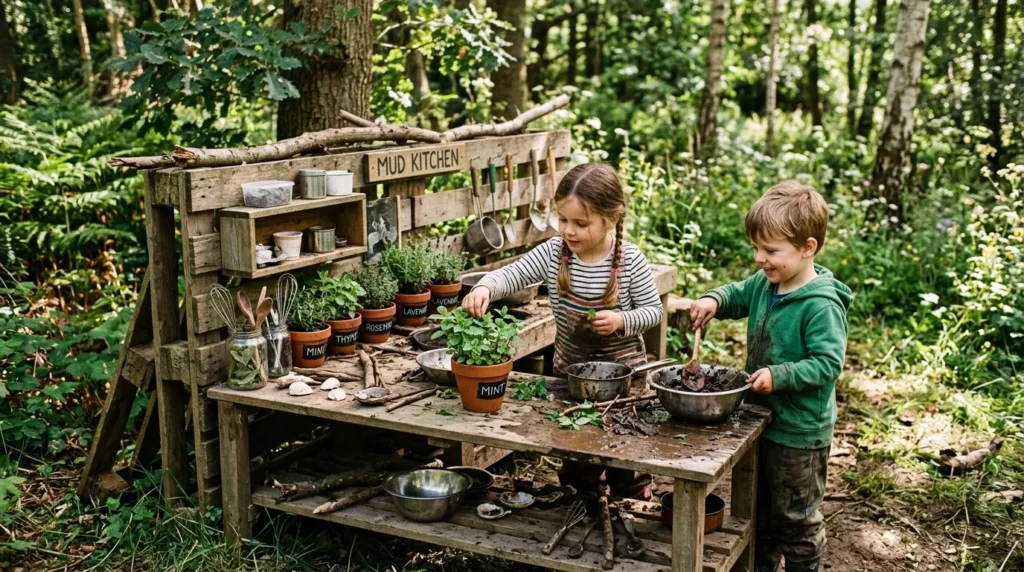
- Adds learning element
- Encourages outdoor exploration
- Enhances play value
- Connects with nature
Adding natural elements like herbs or leaves introduces a new layer of creativity. Kids can pick and use them in their pretend cooking, making the experience more immersive.
I’ve seen this work beautifully in many setups where nature becomes part of the play. In my experience, it encourages curiosity and makes the space feel more alive and interactive.
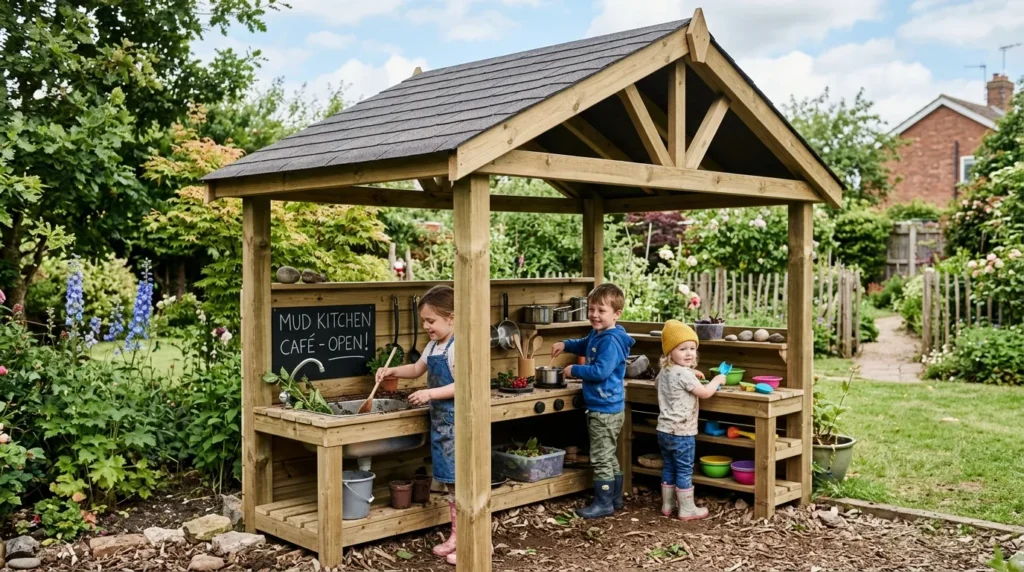
10. Weather-Ready Setup
- Protects from rain
- Extends usability
- Keeps materials durable
- Adds structure
Outdoor setups need to handle changing weather. Adding a simple cover or choosing weather-resistant materials ensures the kitchen stays usable over time.
In my experience, this is one of the most practical upgrades. I’ve noticed that protected setups last longer and remain inviting, which means kids continue to use them regularly instead of losing interest.