12 Mid Century Modern Kitchen Ideas to Try
Mid century modern kitchens feel warm, clean, nostalgic, and surprisingly practical for today’s USA homes. This style works because it blends simple lines, natural wood, smart storage, bold accents, and timeless materials without making the kitchen feel cold or overly trendy. These mid century modern kitchen ideass will help you create a space that feels…
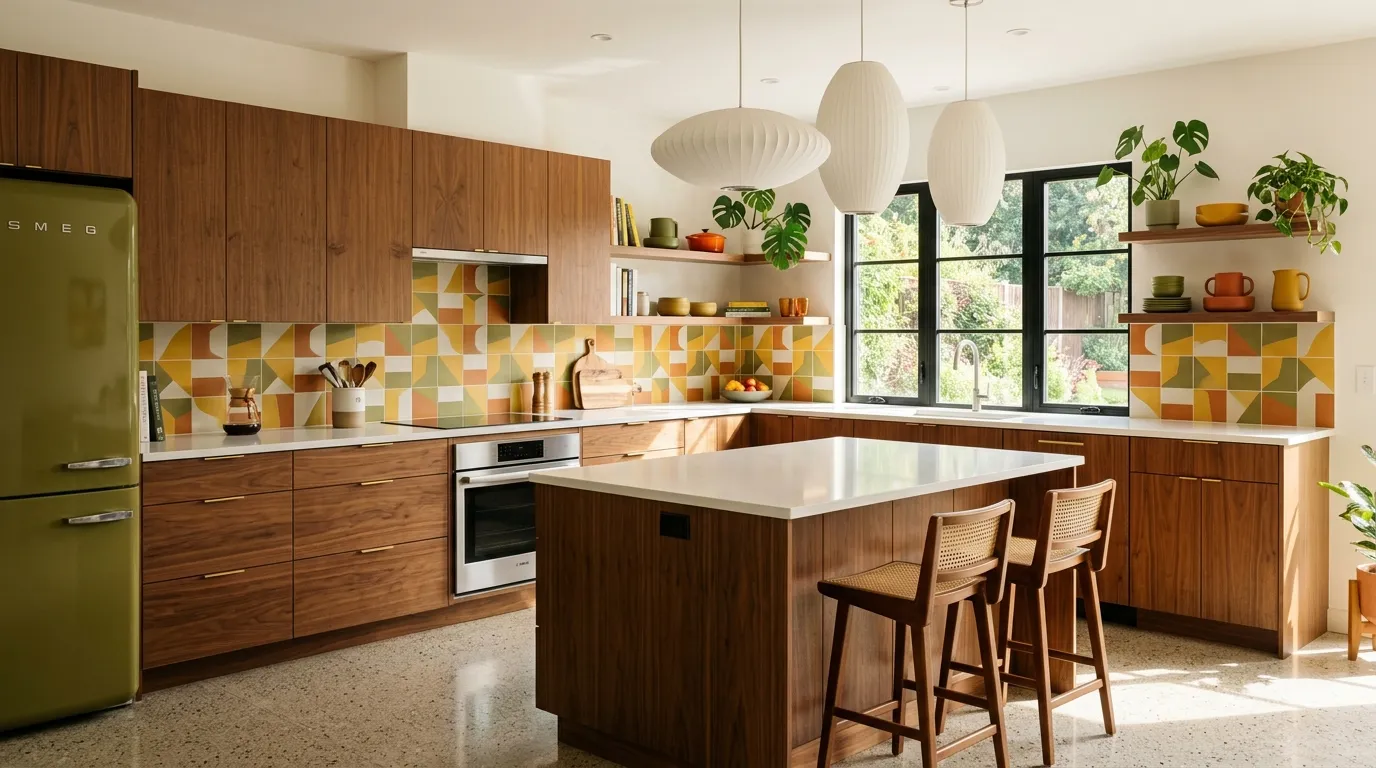
Mid century modern kitchens feel warm, clean, nostalgic, and surprisingly practical for today’s USA homes. This style works because it blends simple lines, natural wood, smart storage, bold accents, and timeless materials without making the kitchen feel cold or overly trendy. These mid century modern kitchen ideass will help you create a space that feels stylish, livable, and full of personality.
A good kitchen should feel beautiful during quiet mornings and functional during busy dinners. Mid century design makes that possible with open layouts, honest materials, graphic details, and a balance of vintage charm and modern comfort. This guide shares practical, Pinterest-friendly ideas you can use for small updates, full remodels, rentals, and family kitchens.
1. Walnut Cabinets
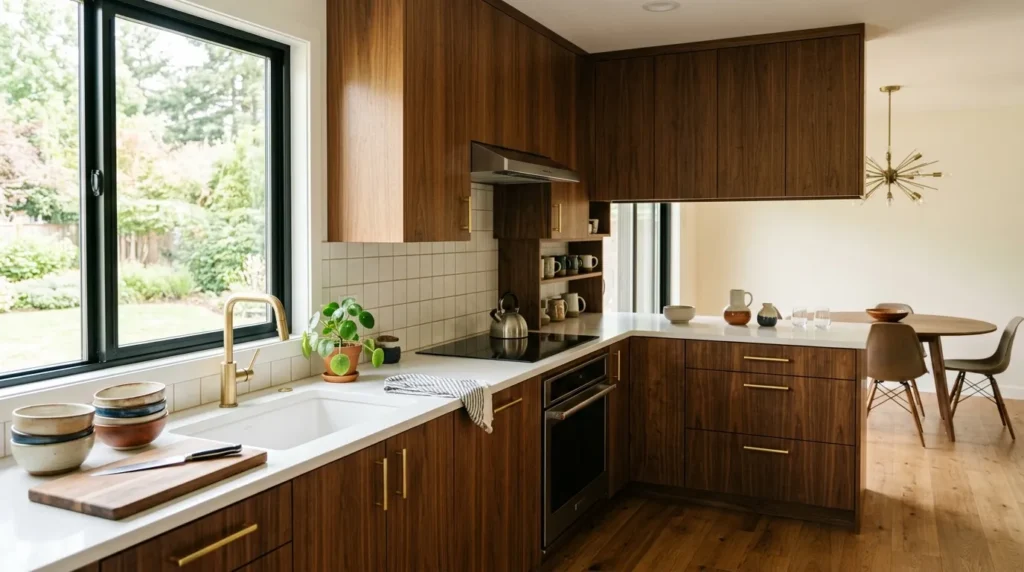
- Walnut cabinets create instant warmth and vintage character. The natural grain gives the kitchen depth without needing heavy decoration.
- Flat-panel doors work especially well for this style. They keep the look clean, simple, and true to mid century design.
- Pair walnut with white counters, brass hardware, terrazzo, or matte black accents. These materials create contrast without feeling too busy.
- This idea works in large kitchens, small condos, ranch homes, and open layouts. The wood brings personality while still feeling polished.
- Choose a satin finish instead of a high-gloss look. A softer sheen makes the cabinets feel warmer and more authentic.
Walnut cabinets can make a kitchen feel rich, grounded, and beautifully timeless. The warm brown tones bring depth to the room, while the straight cabinet lines keep everything clean and modern. In my experience, walnut works best when the surrounding materials stay simple. White quartz, cream tile, or pale terrazzo can brighten the wood and keep the kitchen from feeling too dark. The beauty comes from letting the grain show naturally instead of covering the space with too many competing finishes.
The transformation feels warm but still practical for everyday cooking. Flat-panel walnut doors are easy to wipe down, and the smooth surface supports a clutter-free look. Add slim brass pulls for a softer vintage touch, or choose matte black hardware for stronger contrast. If a full cabinet remodel is not realistic, try walnut open shelves, a walnut island face, or wood-look cabinet fronts. This approach gives the kitchen mid century warmth without requiring every surface to match perfectly.
2. Terrazzo Counters
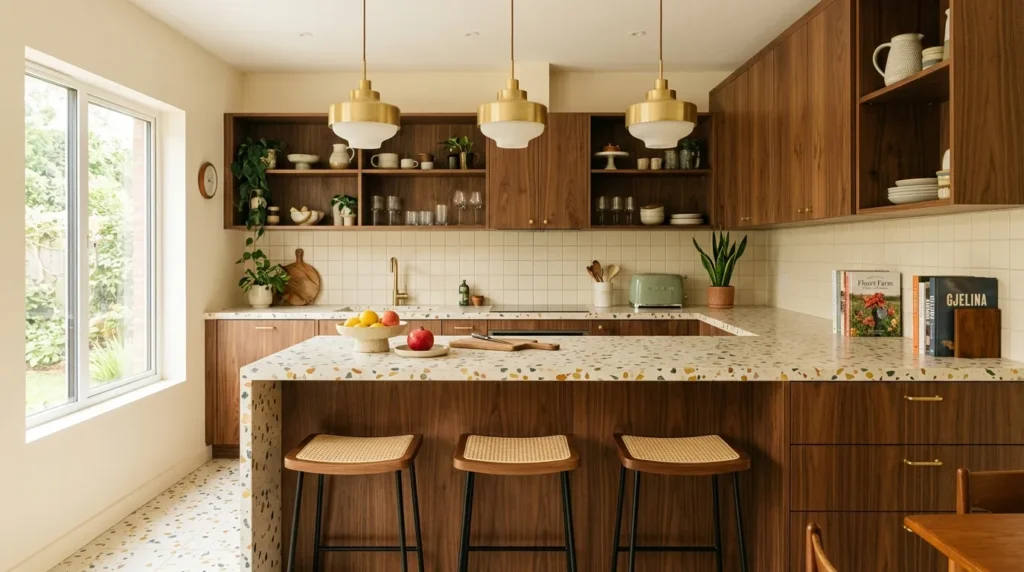
- Terrazzo counters add color, pattern, and playful vintage energy. They make the kitchen feel lively without relying on busy decor.
- Small chips create a softer look, while large chips feel bold and graphic. Choose the scale based on how much pattern you want.
- Terrazzo pairs beautifully with wood cabinets, white walls, and simple tile. It adds movement while still feeling clean and polished.
- This material works well for counters, backsplashes, islands, and small accent zones. Even one terrazzo surface can change the whole mood.
- Use colors carefully for a balanced design. Warm beige, cream, muted green, blush, and charcoal flecks feel especially stylish.
Terrazzo counters bring a cheerful design detail into a mid century kitchen. The speckled surface feels retro, artistic, and fresh at the same time, which is why it has become so popular in modern renovations. I’ve noticed terrazzo works best when it is treated as the statement material rather than one pattern among many. Pair it with smooth cabinets, simple lighting, and minimal hardware so the surface can shine. The result feels playful without becoming overwhelming.
The kitchen becomes more memorable because terrazzo adds personality to an everyday work surface. It can brighten a small galley kitchen, soften a dark wood cabinet run, or give a plain island a custom look. For easier maintenance, many homeowners choose terrazzo-look quartz or porcelain instead of traditional poured terrazzo. These options can offer a similar visual effect with simpler care. Keep accessories simple with ceramic bowls, wood cutting boards, and neutral stools. The whole space feels fun, practical, and very Pinterest-ready.
3. Globe Lighting
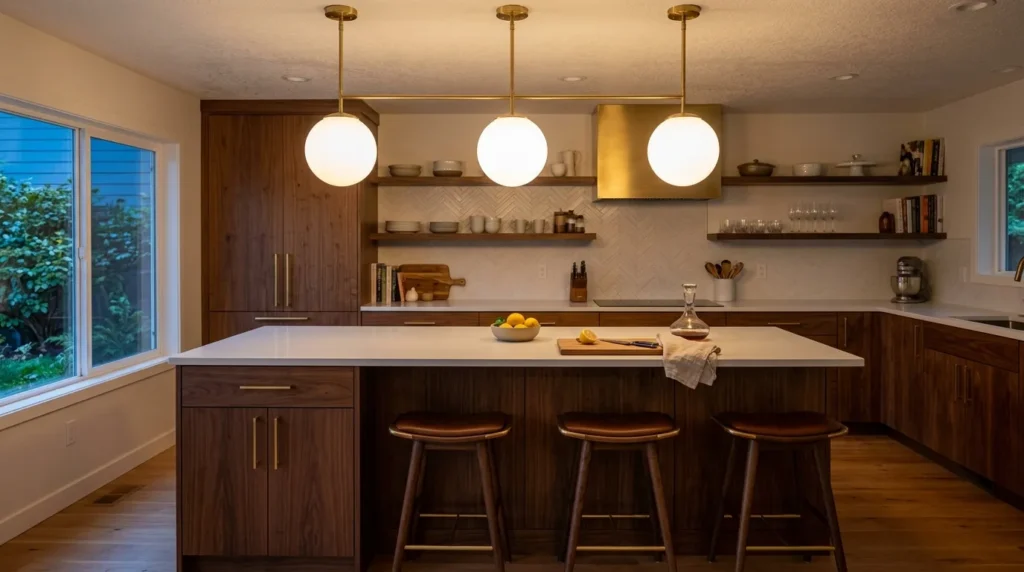
- Globe lighting adds a soft, sculptural mid century touch. Round shades balance the straight lines of cabinets, counters, and appliances.
- Use pendants over islands, flush mounts in small kitchens, or sconce-style globes near open shelving. The shape works in many layouts.
- Opal glass creates a gentle glow, while clear glass feels lighter and more modern. Both can suit the style depending on the room.
- Brass, black, chrome, or aged bronze finishes can change the mood. Match the finish to your hardware for a cohesive look.
- This idea gives high visual impact without changing cabinets or counters. It is a strong update for rentals and budget refreshes.
Globe lighting can instantly make a kitchen feel more designed. The rounded glass shape is one of the easiest ways to bring mid century character into a room without making permanent structural changes. That’s why many designers recommend lighting as a first upgrade when a kitchen feels plain. A pair of globe pendants over an island adds symmetry, while a single globe flush mount can soften a small kitchen. The shape feels nostalgic, but the clean finish keeps it current.
The transformation is especially noticeable at night when the lighting creates warmth and atmosphere. Choose warm bulbs so the kitchen does not feel harsh, and make sure the fixture scale matches the room. Oversized globes can look dramatic over a large island, while smaller shades suit breakfast nooks or compact spaces. If your kitchen already has strong wood tones, opal glass can add softness. If the room feels too traditional, black or chrome globe lighting can bring a cleaner modern edge.
4. Colorful Backsplash
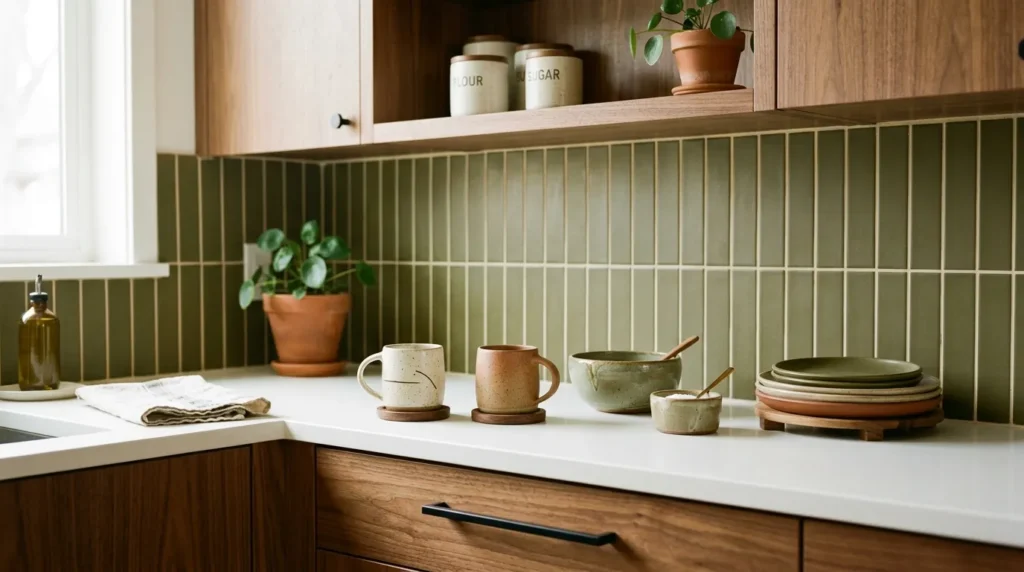
- A colorful backsplash adds energy and personality. It lets you bring mid century color into the kitchen without painting every cabinet.
- Muted orange, olive green, mustard, teal, and soft blue work beautifully. These shades feel retro but still livable.
- Tile shape matters as much as color. Squares, rectangles, stacked tile, and geometric patterns all support the style.
- This idea works for full walls, stove zones, coffee bars, and small accent areas. A limited area can still create major impact.
- Pair bold tile with simple counters and cabinets. The backsplash should feel intentional, not visually crowded.
A colorful backsplash can completely shift the mood of a kitchen. Mid century design is known for warm and earthy color, so tile is a natural place to bring that personality in. Instead of using loud modern shades, choose grounded colors like avocado, burnt orange, mustard, dusty teal, or clay. I’ve seen this work well in many homes where the cabinets are neutral but the owners want more life. The backsplash becomes the room’s cheerful design moment.
The finished kitchen feels more personal and layered without losing function. Tile is durable, cleanable, and perfect for areas behind the sink or stove. Stack rectangular tiles vertically for a fresh look, or use square tiles for a more authentic vintage feel. If you want a smaller project, tile only the range wall or coffee bar. Keep grout simple so the color remains the focus. This is one of the best mid century modern kitchen ideass for homeowners who want a bold but manageable update.
5. Open Shelving
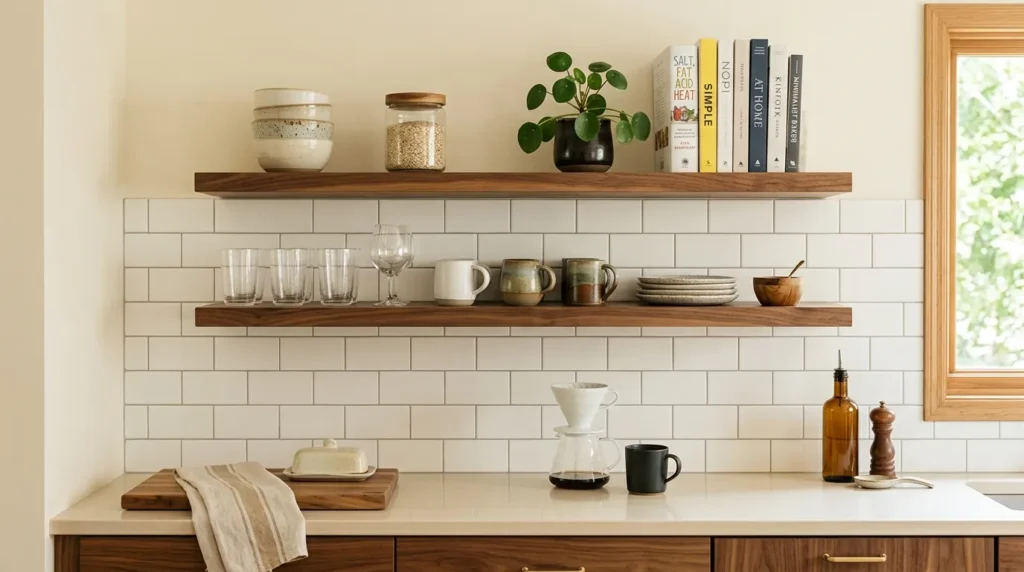
- Open shelving keeps the kitchen feeling light and casual. It breaks up heavy cabinet walls and gives everyday pieces a place to shine.
- Wood shelves work especially well with this style. Walnut, teak, oak, and warm stained wood all add natural texture.
- Use shelves for ceramics, glassware, cookbooks, plants, or coffee supplies. Keep the display useful so it does not become clutter.
- This idea works above coffee bars, beside windows, or on short empty walls. It creates storage while adding visual breathing room.
- Limit the color palette on the shelves. A focused display looks more intentional and easier to maintain.
Open shelving gives a mid century kitchen a relaxed, lived-in feeling. The style celebrates function and clean design, so shelves work best when they hold items you actually use. Warm wood shelves can soften white walls, frame a backsplash, or connect with wooden cabinets. In my experience, open shelving looks most successful when it is edited carefully. A few stacks of bowls, simple glasses, and one plant often look better than crowded rows of mixed objects.
The transformation makes the kitchen feel more open and personal. Shelves can turn a blank wall into a useful display area, especially in smaller kitchens where upper cabinets feel heavy. Use hidden brackets for a cleaner look, or slim black brackets for a stronger vintage-modern detail. Keep heavier dishes on lower shelves and lighter decor higher up. This idea is practical for renters too, because a small shelf above a coffee station can bring style without a full renovation.
6. Checkerboard Floors
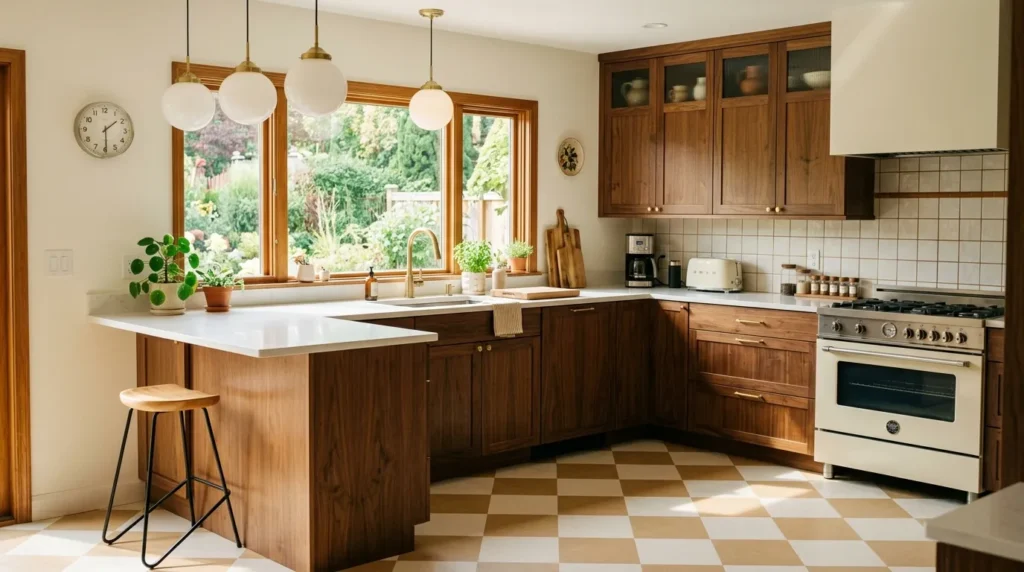
- Checkerboard floors add graphic charm and vintage energy. They make the kitchen feel fun, structured, and visually memorable.
- Black and white feels classic, while cream and tan feels softer. Olive, terracotta, or blue combinations create a more playful look.
- This idea works with vinyl tile, ceramic tile, linoleum, or peel-and-stick options. Budget and durability can guide the best choice.
- A diagonal layout feels dynamic, while a straight layout feels cleaner and calmer. Both can suit mid century interiors.
- Keep the rest of the kitchen balanced. Strong floors pair best with simple cabinets, counters, and wall colors.
Checkerboard floors bring instant personality to a mid century kitchen. The repeating pattern adds movement without needing extra decor, which makes the whole room feel more intentional. This look is especially strong in ranch homes, retro kitchens, breakfast nooks, and small spaces that need visual interest. Choose black and white for a crisp classic style, or soften the look with cream and taupe. The pattern feels nostalgic, but it still works beautifully with modern appliances and clean cabinetry.
The transformation is bold, practical, and full of charm. Durable flooring matters in a kitchen, so consider vinyl composition tile, porcelain, linoleum, or quality peel-and-stick tiles depending on your budget. A checkerboard floor can also hide small crumbs better than a solid white floor, which is helpful in busy family homes. Keep rugs minimal so the pattern can show. Pair the floor with walnut cabinets, globe lighting, and simple counters for a balanced look that feels retro without becoming costume-like.
7. Slim Hardware
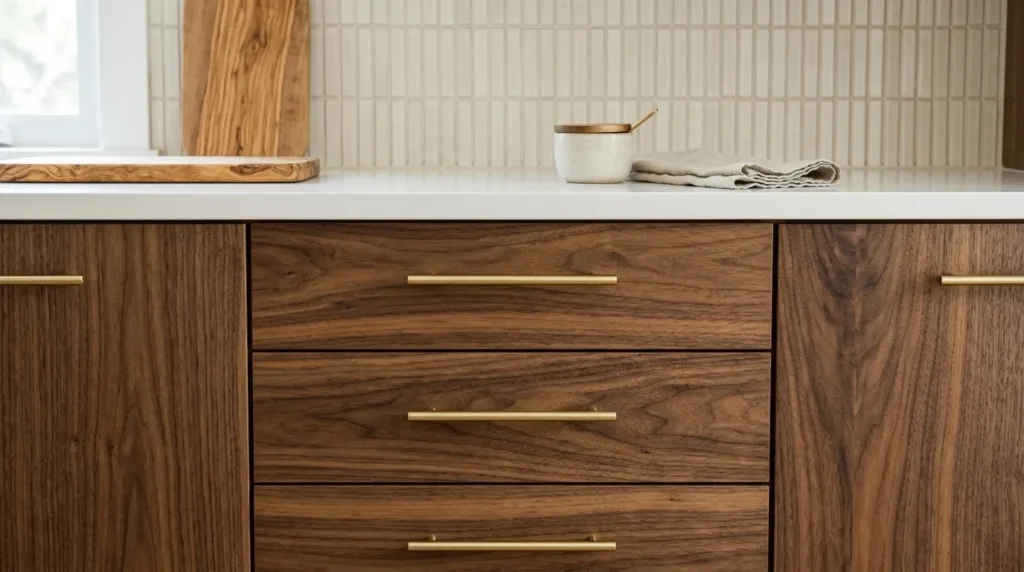
- Slim hardware keeps cabinets clean and understated. It supports the streamlined look that mid century kitchens are known for.
- Long pulls, small knobs, recessed grips, and edge pulls all work well. The choice depends on how minimal you want the cabinets to feel.
- Brass adds warmth, chrome feels authentic and sleek, and matte black creates contrast. Hardware finish can shift the whole mood.
- This idea is budget-friendly and beginner-friendly. Changing hardware can refresh a kitchen without replacing cabinets.
- Measure existing holes before buying new pulls. Matching the spacing can make the project faster and cleaner.
Slim hardware can make older cabinets feel cleaner almost immediately. Mid century design often favors simple forms, so bulky decorative pulls can make a kitchen feel busier than necessary. Replacing them with narrow brass bars, chrome pulls, or discreet black handles helps the cabinetry look more streamlined. I’ve noticed that hardware changes are especially helpful in USA homes where cabinets are structurally fine but stylistically dated. The update is small, but the visual difference can be surprisingly strong.
The kitchen becomes easier to style because the cabinet lines feel calmer. Slim hardware allows wood grain, tile color, and lighting to stand out instead of competing for attention. Choose longer pulls for wide drawers and smaller knobs for upper cabinets if you want variety. For a more seamless look, use edge pulls that almost disappear. This idea is practical for DIY weekends because it requires simple tools, careful measuring, and patience. It gives the room a polished refresh without a full remodel.
8. Breakfast Nook
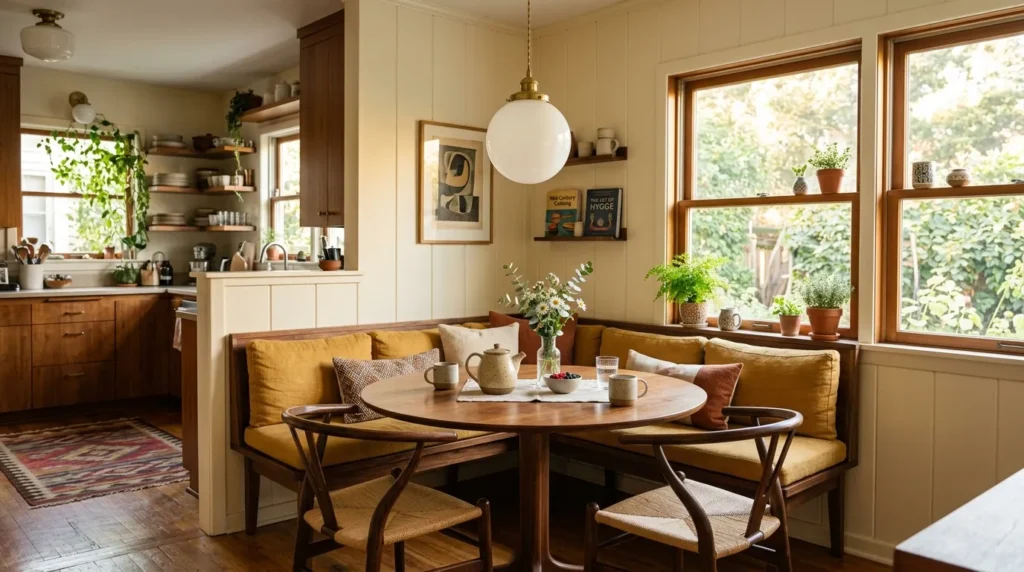
- A breakfast nook adds comfort and everyday function. It creates a cozy place for coffee, quick meals, homework, and casual conversations.
- Built-in benches work beautifully in mid century kitchens. They save space and create a custom look in corners or window areas.
- Use warm wood, vinyl cushions, rounded tables, and simple pendant lighting. These details give the nook vintage charm.
- This idea works in eat-in kitchens, open layouts, and small dining corners. It makes unused space feel intentional.
- Add hidden storage under the bench if possible. It keeps placemats, games, or seasonal items tucked away neatly.
A breakfast nook brings softness and daily comfort into a mid century kitchen. The style is practical because it turns a corner or window area into a place people actually use. A built-in bench with warm wood trim, a small round table, and simple upholstery can feel both nostalgic and fresh. In my experience, nooks work best when they are designed for real life, not just photos. Choose wipeable fabrics, easy-clean surfaces, and seating that feels comfortable for everyday meals.
The transformation makes the kitchen feel more welcoming and complete. A nook gives kids a homework spot, guests a place to chat, and homeowners a slower morning coffee corner. Add a globe pendant or cone-shaped light above the table for style and function. Use cushions in olive, rust, cream, or mustard to bring in subtle retro color. If space is tight, choose a pedestal table so legs do not crowd the bench. The result feels cozy, useful, and beautifully connected to the kitchen.
9. Retro Appliances
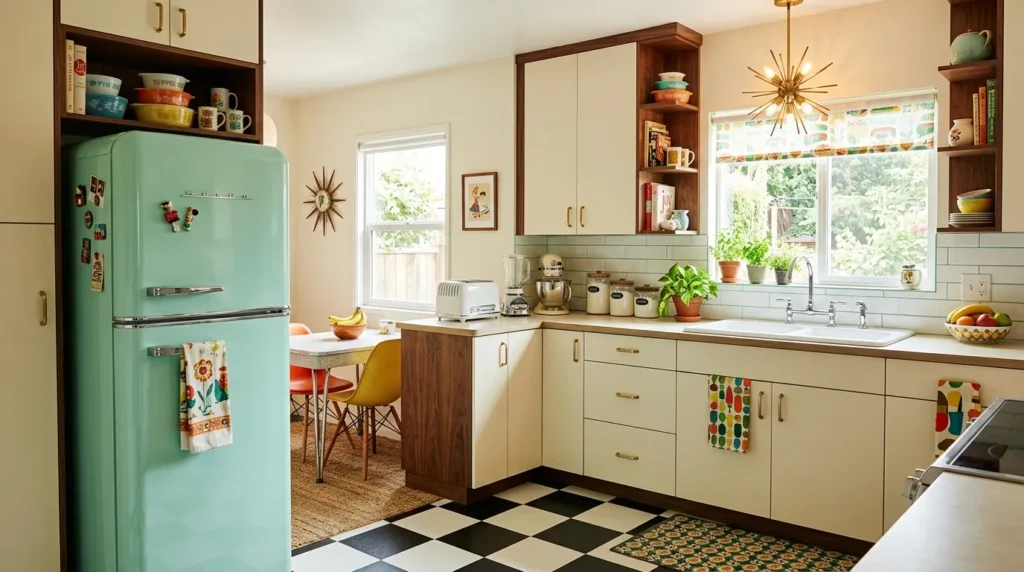
- Retro appliances add nostalgic charm without sacrificing modern performance. They can make the kitchen feel playful, personal, and memorable.
- Choose one statement appliance if a full set feels too bold. A colorful fridge, toaster, or range can be enough.
- Soft blue, cream, mint, red, and butter yellow all work well. These colors bring vintage personality into the room.
- This idea works especially well with simple cabinets and neutral counters. The appliance becomes the main accent instead of visual clutter.
- Check measurements, energy ratings, and features before buying. Style should still support everyday cooking and storage needs.
Retro appliances can give a kitchen instant personality. A colorful refrigerator, rounded toaster, or vintage-inspired range adds charm in a way that feels joyful rather than forced. The key is balancing nostalgia with function. Modern retro-style appliances often offer updated performance while keeping the curved lines and cheerful colors associated with older kitchens. That’s why many designers recommend choosing one standout appliance if the space already has strong wood, tile, or flooring details.
The finished room feels fun, memorable, and easier to personalize. A mint fridge can brighten a white kitchen, a cream range can soften walnut cabinets, and a red toaster can create a small but cheerful accent. If you rent or have a limited budget, start with countertop appliances before investing in larger pieces. Keep surrounding accessories simple so the appliance does not compete with too many colors. This approach gives the kitchen a vintage wink while still keeping the space practical for modern American cooking.
10. Wood Island
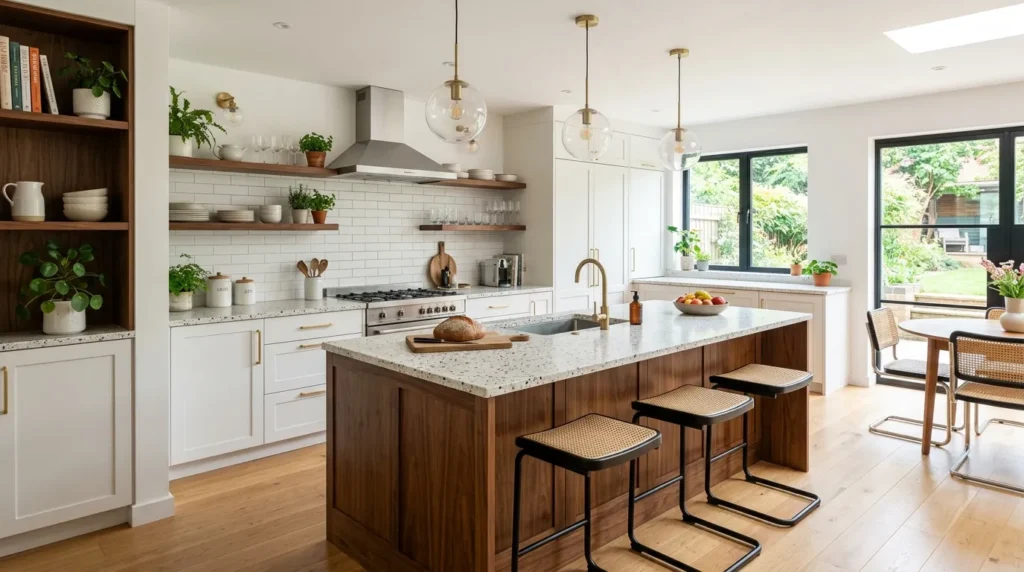
- A wood island adds warmth, prep space, and a strong central feature. It can make the kitchen feel more grounded and useful.
- Waterfall wood panels, slatted fronts, or simple flat fronts all support the style. Each option creates a different visual effect.
- Pair the island with simple stools, warm lighting, and durable counters. The island should serve both cooking and gathering.
- This idea works in open kitchens, ranch homes, and remodels where extra storage is needed. It creates function and style together.
- Keep proportions comfortable for walking paths. A beautiful island should never make the kitchen difficult to use.
A wood island can become the heart of a mid century kitchen. It adds warmth at the center of the room while also increasing storage, prep space, and casual seating. Walnut, teak, and oak all work beautifully because their natural grain connects with the style’s love of organic materials. I’ve seen this work well in many homes where white perimeter cabinets need a warmer focal point. The island balances the room and makes the kitchen feel more complete.
The transformation improves both design and daily function. Use the island for chopping, serving, school lunches, coffee breaks, and casual meals. Add tapered-leg stools or low-profile counter stools to support the vintage-modern look. A simple quartz or terrazzo countertop can keep the surface durable, while the wood base adds character. If your space is small, consider a narrow island or movable wood cart. This is one of the most useful mid century modern kitchen ideass for combining beauty with everyday practicality.
11. Geometric Details
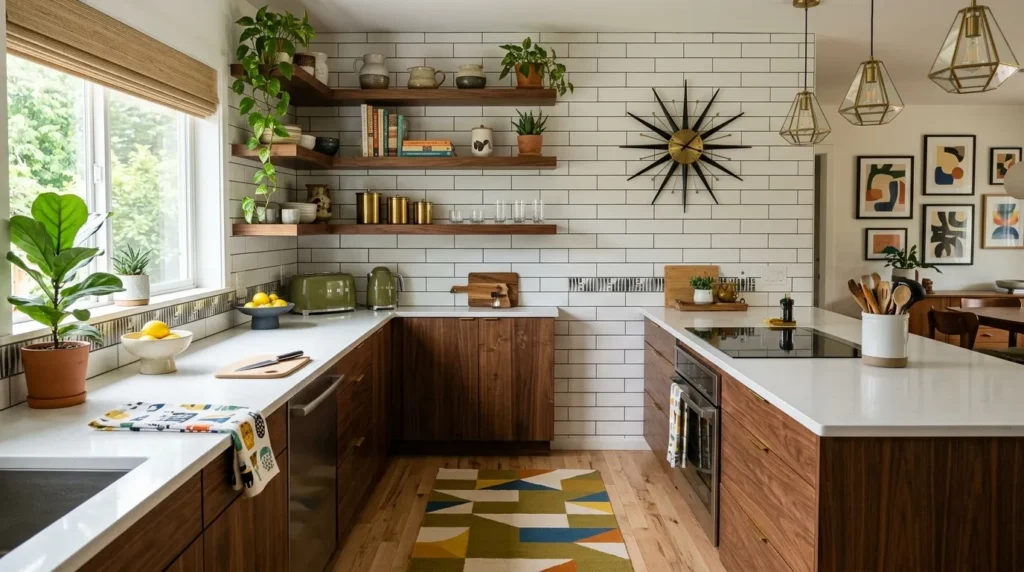
- Geometric details bring graphic energy into the kitchen. They reflect the playful shapes often seen in mid century design.
- Use patterns on tile, rugs, art, cabinet panels, or lighting. Small doses often feel more stylish than covering every surface.
- Diamonds, circles, starbursts, grids, and angled lines all work well. Choose one shape family for a more cohesive look.
- This idea is great for renters because art, rugs, and accessories can be changed easily. It adds style without permanent renovation.
- Balance patterns with calm materials. Wood, white walls, and simple counters keep the look from feeling overwhelming.
Geometric details make a kitchen feel playful, structured, and visually interesting. Mid century spaces often use strong shapes, so this is a natural way to bring the style in without relying only on wood cabinets. A starburst clock, patterned runner, graphic tile, or circular pendant can add personality quickly. In my experience, the best geometric accents feel intentional because they repeat a shape or color already present in the room. Random patterns can look busy, but coordinated ones feel designed.
The transformation depends on restraint and placement. Choose one or two areas for pattern, such as a backsplash and rug, or wall art and lighting. Keep everything else calmer so the shapes can stand out. A black-and-white grid tile feels crisp, while mustard and cream patterns feel warmer. For small kitchens, use a geometric runner or framed print instead of permanent tile. This idea works well for homeowners and renters who want a stylish update that feels creative but not overwhelming.
12. Warm Palette
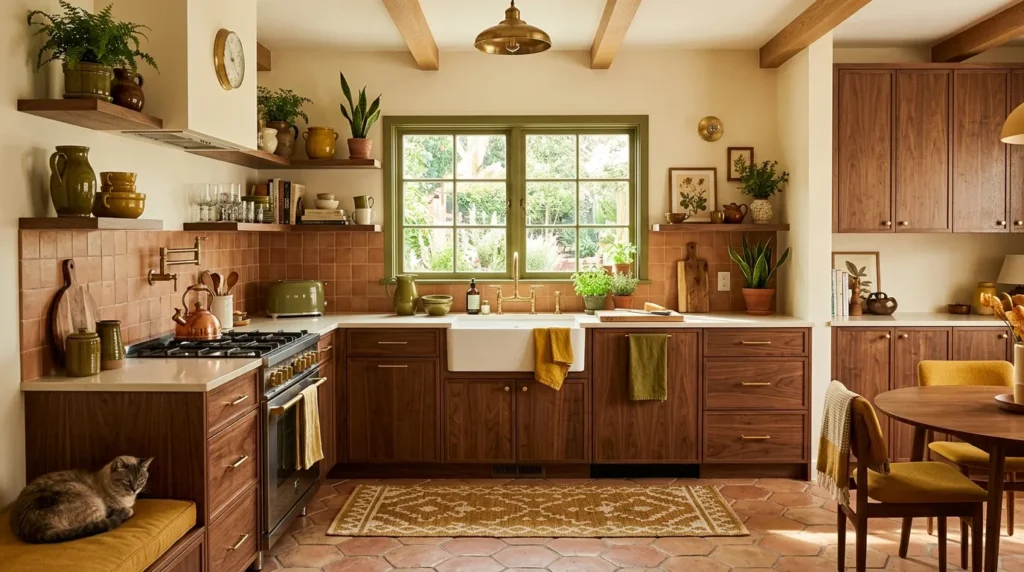
- A warm palette brings the whole kitchen together. It uses earthy colors that feel cozy, nostalgic, and easy to live with.
- Terracotta, mustard, olive, walnut, cream, tan, and burnt orange all fit the style. These shades feel vintage without looking outdated.
- Use color through paint, tile, rugs, stools, dishware, or art. Small layers can create depth without a major remodel.
- This idea works with both light and dark kitchens. The key is choosing tones that complement existing cabinets and floors.
- Keep metals consistent for a cleaner finish. Brass, chrome, or black hardware can all work when used with intention.
A warm palette is the finishing layer that makes a mid century kitchen feel cohesive. The style shines when earthy tones work together instead of fighting for attention. Think walnut cabinets, cream walls, olive accents, terracotta tile, and mustard textiles. These colors feel grounded, friendly, and connected to vintage design without feeling like a movie set. I’ve noticed warm palettes are especially effective in American homes with open layouts because they help the kitchen feel connected to nearby living areas.
The final effect is welcoming, balanced, and easy to refresh over time. You can start small with a runner, bar stools, dish towels, or framed art before committing to paint or tile. If the room already has dark cabinets, use cream and tan to soften it. If the kitchen feels too plain, add olive, rust, or golden yellow accents. This final idea ties the entire design together, creating a kitchen that feels cozy, practical, and stylish enough to enjoy every day.