10 Shoe Storage Entryway Ideas
An entryway has to work hard every single day. It welcomes guests, catches backpacks, holds keys, receives packages, and somehow becomes the place where every pair of shoes wants to land. In many USA homes, especially apartments, townhomes, split-level houses, small ranch homes, and busy family mudrooms, the entry area is not large enough for…
An entryway has to work hard every single day. It welcomes guests, catches backpacks, holds keys, receives packages, and somehow becomes the place where every pair of shoes wants to land. In many USA homes, especially apartments, townhomes, split-level houses, small ranch homes, and busy family mudrooms, the entry area is not large enough for bulky furniture or complicated organizing systems. That is why smart shoe storage matters so much.
The best entry shoe solutions are not only about hiding clutter. They help your mornings feel smoother, protect your floors from mud and rain, and make your home look more pulled together the moment someone walks through the door. A pretty foyer can still be practical, and a practical foyer can still look warm, styled, and Pinterest-worthy.
The key is choosing storage that matches your real routine. If your family kicks off shoes quickly after school, baskets may work better than closed cabinets. If you want the entry to feel polished for guests, a slim cabinet or console with hidden storage might be the better choice. If your home gets snow, rain, or muddy sports cleats, a boot tray can save your floors and your sanity.
Below are 10 practical, beautiful, and realistic ideas for organizing shoes near the front door. Each one includes styling logic, material suggestions, and everyday tips so your entry feels clean, welcoming, and easy to maintain.
1. Storage Bench
Bullet Points
- Adds seating and shoe storage in one compact piece.
- Works well in foyers, mudrooms, hallways, and apartment entries.
- Helps family members sit comfortably while removing shoes.
- Looks best with baskets, cushions, hooks, or open cubbies.
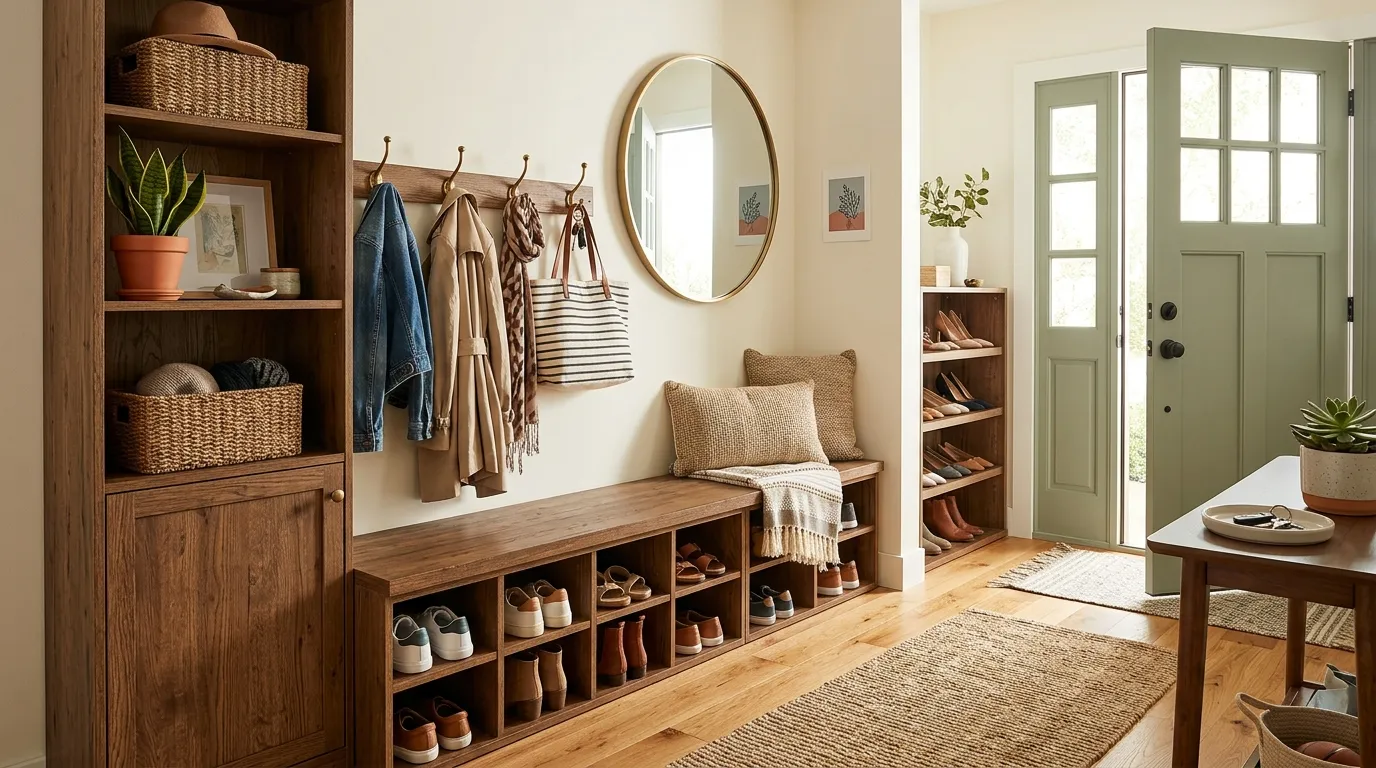
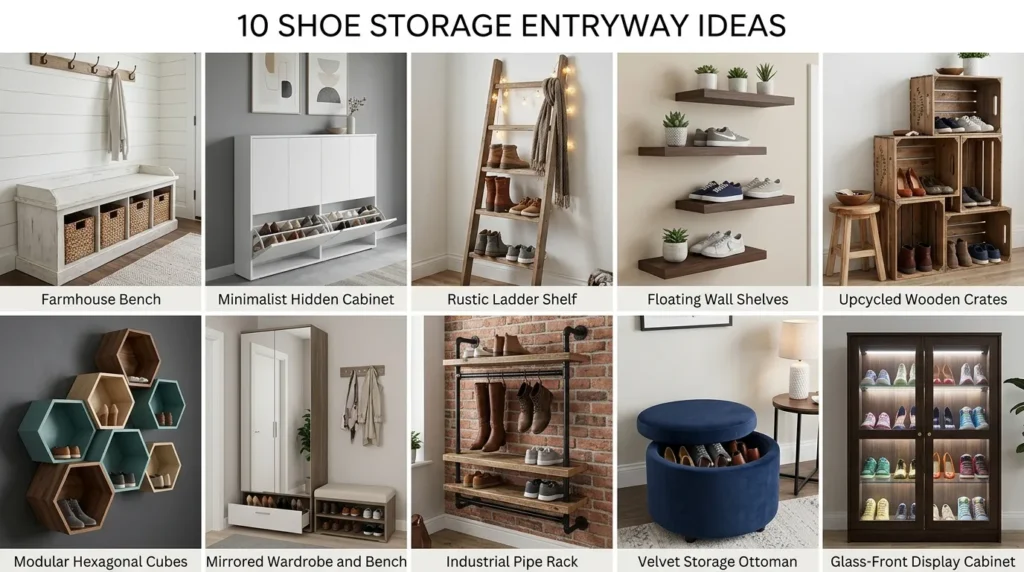
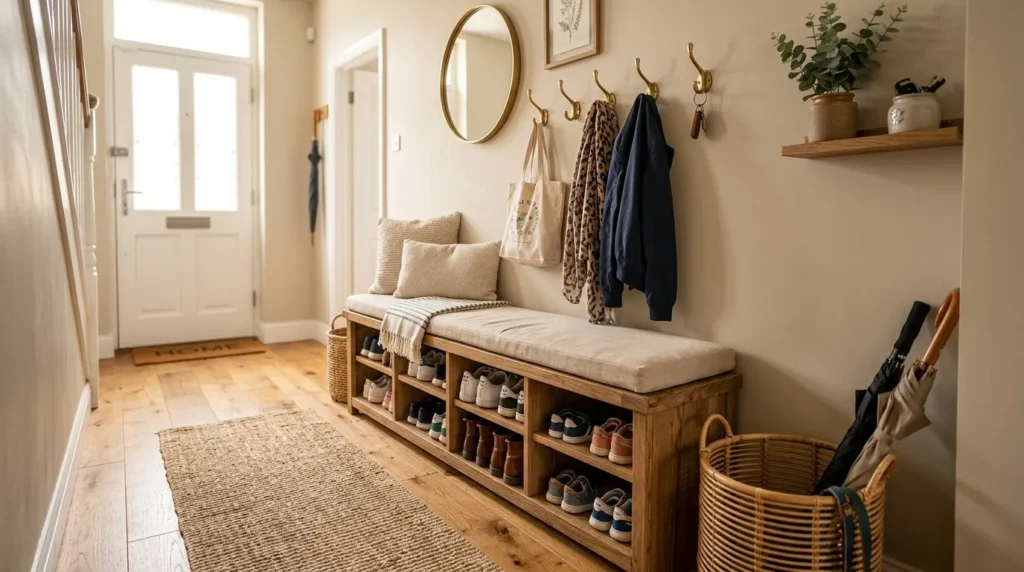
A storage bench solves two entryway problems at once: where to sit and where to hide shoes. It gives family members a clear place to pause, remove sneakers, and tuck pairs away before they scatter across the floor. For small foyers, choose a bench with a narrow depth, open shelves, or lift-top storage. In my experience, benches with visible cubbies work best for daily shoes because everyone can see where their pair belongs without opening drawers or digging through a dark basket after a long, rushed day at home again.
The finished look depends on keeping the top surface calm and the lower storage practical. Add one washable cushion, two hooks above the bench, and labeled baskets underneath if several people use the entry. Wood, bamboo, metal-frame benches, and painted finishes all work, but the material should match your home’s traffic level. A busy family entry may need wipeable surfaces, while a quieter front hall can handle woven bins. The result feels welcoming, organized, and realistic for weekday mornings, school drop-offs, errands, and guests arriving with wet coats in hand.
2. Slim Cabinet
Bullet Points
- Hides shoes behind clean doors for a polished entry look.
- Ideal for narrow foyers, apartments, townhomes, and small hallways.
- Keeps visual clutter contained without using much floor space.
- Works with tilt-out compartments, cane doors, or shallow shelves.
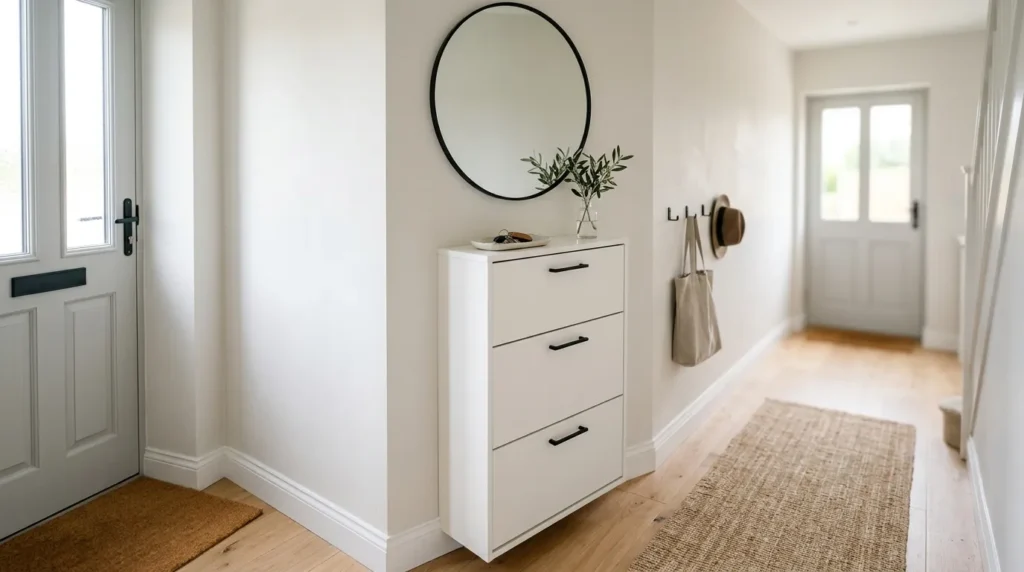
A slim cabinet gives scattered footwear a polished home without making the entry feel crowded. This idea works beautifully in apartments, townhomes, narrow foyers, and older houses where closet space is limited. Look for tilt-out shoe cabinets, shallow cupboards, or narrow vertical units that sit close to the wall. The door fronts hide visual clutter, which helps the entry feel calmer from the moment someone walks in. Measure depth carefully, because even a few extra inches can interrupt traffic near the front door during busy arrivals. This small measurement step prevents awkward daily frustration.
The best cabinet is one that matches both your shoe count and your daily habits. A couple may need two tilt-out compartments, while a family may need a taller unit with assigned sections. Add a small tray on top for keys, sunglasses, or mail, but avoid piling it with decor. Materials like painted MDF, solid wood, cane-front panels, and metal handles can suit modern farmhouse, cottage, transitional, or minimalist homes. Closed storage makes the entrance look cleaner, especially when guests arrive without warning on weeknights. It also photographs beautifully because everything stays behind smooth fronts.
3. Basket Station
Bullet Points
- Makes daily shoe cleanup quick and family-friendly.
- Adds warmth through woven textures and natural materials.
- Works well under benches, beside consoles, or inside closet nooks.
- Best for casual shoes, kids’ sneakers, slippers, and sandals.
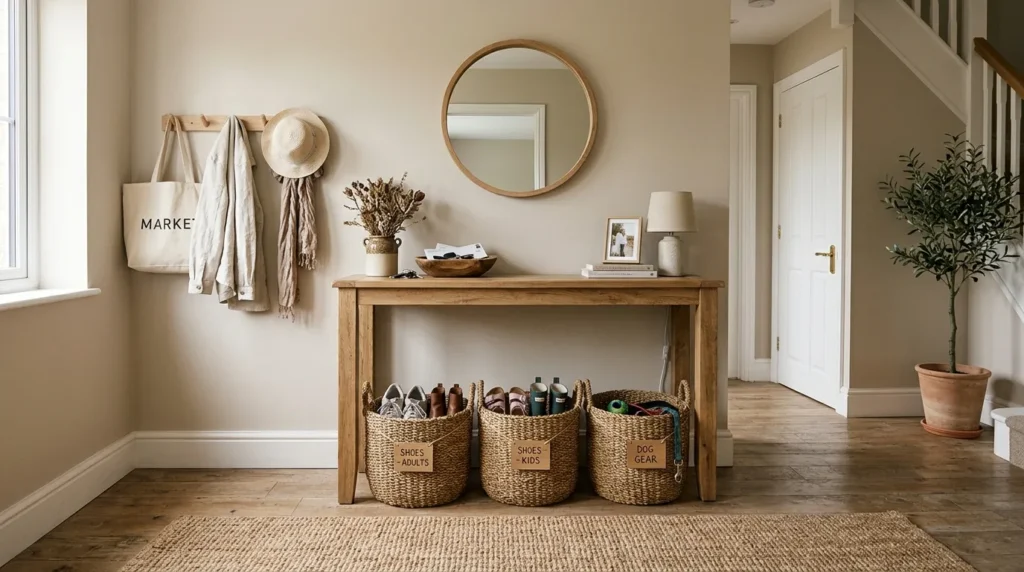
A basket station makes shoe cleanup feel easy enough for everyone to follow. Instead of expecting each pair to be perfectly lined up, give daily shoes a soft, forgiving landing spot. Use one large basket for the household, or assign individual baskets to each family member. Woven materials like seagrass, rattan, water hyacinth, and wire baskets add texture while controlling clutter. I’ve noticed this setup works especially well for kids because the system is simple, visual, and fast during busy mornings before school. Even toddlers can understand where their sneakers should go.
To keep the look intentional, choose baskets with similar tones or matching labels. Place them under a bench, beside a console, inside a closet nook, or along a mudroom wall. Avoid baskets that are too deep, because shoes at the bottom become difficult to find. A liner can protect delicate woven materials from wet soles, while a boot tray nearby can handle muddy pairs. This idea creates a relaxed entry that still feels styled, especially in homes where perfect organization is not realistic every day for families. The softness also keeps the doorway from feeling overly utilitarian.
4. Wall Cubbies
Bullet Points
- Uses vertical space when floor space is limited.
- Gives each pair or person a clear storage spot.
- Works in mudrooms, narrow halls, garage entries, and family foyers.
- Can be customized with paint, labels, baskets, or trim.
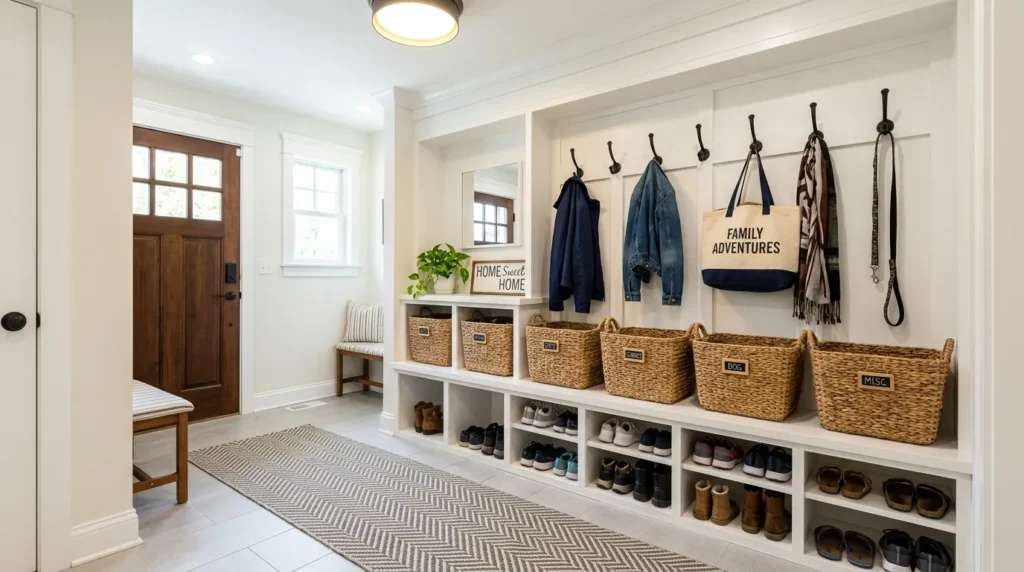
Wall cubbies turn vertical space into a tidy shoe zone without taking over the floor. They are especially useful in small entries where a full bench or cabinet will not fit. Choose shallow box cubbies, modular shelves, or built-in compartments placed low enough for daily use. Each cubby can hold one or two pairs, which makes it easier to see what is available. That’s why many designers recommend open storage for high-use footwear, because hidden systems often become forgotten or overfilled after a few weeks. Open compartments also make quick exits easier for everyone.
The key is keeping the cubbies balanced and not overloading every opening. Use the lower sections for shoes and the upper sections for baskets, hats, gloves, or small decor. Painted wood, plywood, metal grids, and modular cube units can all work depending on the home style. For a custom look, paint the cubbies the same color as the wall or trim. This setup gives the entry a built-in feeling while still offering daily practicality for sneakers, flats, sandals, and school shoes near the door. It feels structured without looking stiff or overly formal.
5. Boot Tray
Bullet Points
- Protects floors from rain, snow, salt, mud, and grass.
- Ideal for family homes, cold climates, pets, and sports gear.
- Works near front doors, garage entries, mudrooms, and side doors.
- Looks best with metal, rubber, copper, or stone-look finishes.
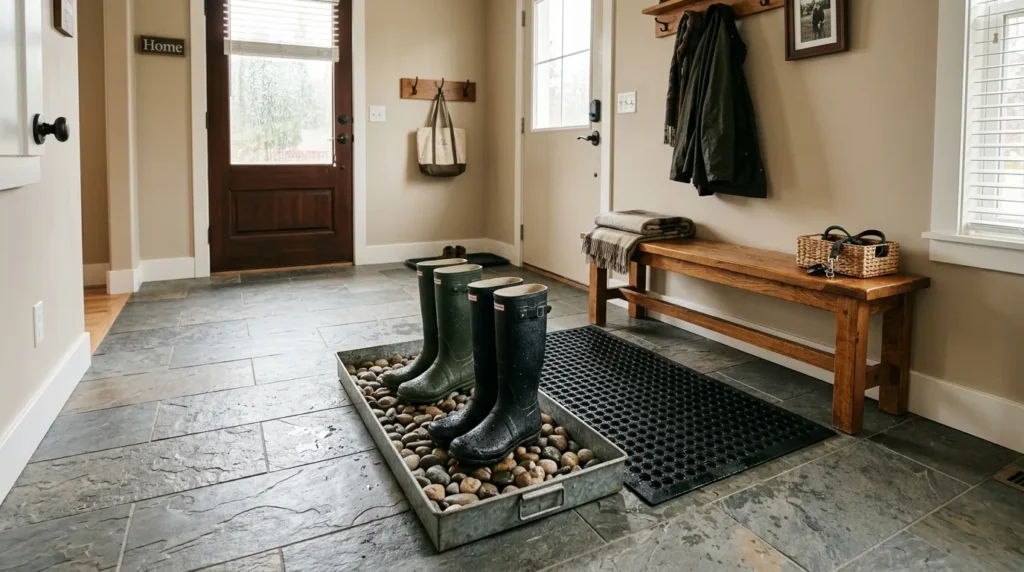
A boot tray is the quiet hero of a messy entry, especially in rainy or snowy states. It catches water, mud, salt, leaves, and grass before they spread across hardwood, tile, or carpet. Choose a tray that fits the doorway without becoming a tripping hazard. Galvanized metal, black rubber, copper, resin, and stone-look trays can all look stylish when paired with the right decor. In colder climates, this is one of the most practical entry upgrades a household can make through winter. It protects flooring while still looking neat and deliberate.
Make the tray feel designed by adding a simple insert or texture layer. Smooth river stones help wet soles drain, while a raised rubber grid keeps shoes from sitting in puddles. Place the tray near the door, but leave enough clearance for people carrying groceries, backpacks, or packages. During dry seasons, use it for gardening clogs, sports shoes, or pet-walking footwear. The entry instantly feels cleaner because wet shoes have a clear destination instead of forming a random pile by the threshold every afternoon. Cleanup becomes faster, and the floor stays safer underfoot.
6. Under Stairs
Bullet Points
- Uses awkward under-stair space for practical shoe storage.
- Works well in split-level homes, townhomes, and compact foyers.
- Can include shelves, bins, pull-outs, or a small built-in bench.
- Helps keep shoes tucked away without wasting usable square footage.
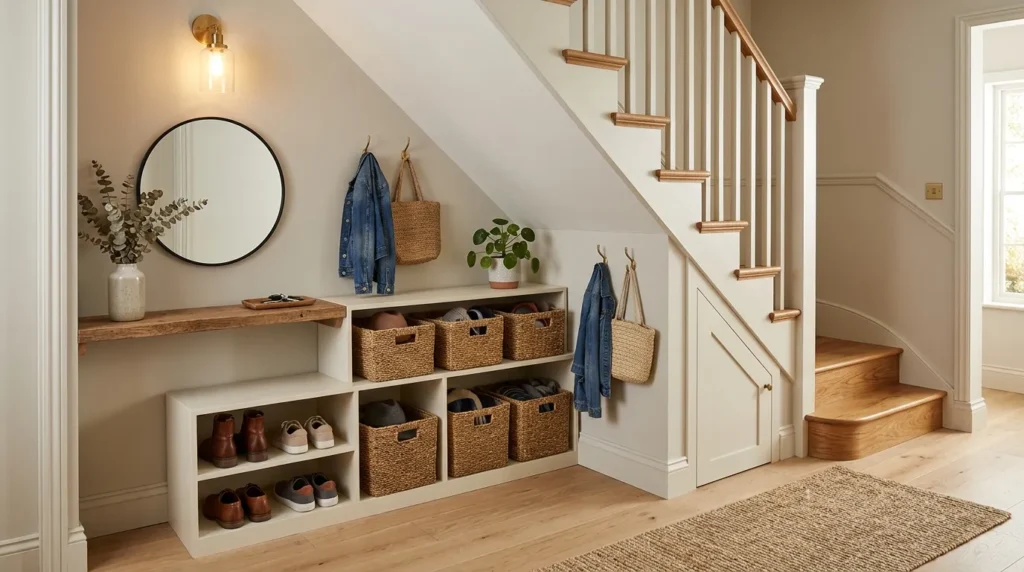
Under-stairs storage can turn an awkward entry corner into a hardworking shoe area. Many homes have dead space near the stairs, especially split-level houses, townhomes, and traditional suburban layouts. Add low shelves, pull-out bins, or a small built-in bench beneath the staircase to keep everyday footwear close but contained. The sloped wall naturally creates a cozy niche, so the storage feels tucked away rather than exposed. Measure height carefully and reserve the deepest area for seasonal shoes or less-used pairs. This is especially helpful near busy family entrances during rushed weekdays.
This idea works best when the storage follows the shape of the architecture. Use custom shelves for a polished look, or place modular cubes and baskets under the slope for a budget-friendly version. Add a small wall light, peel-and-stick wallpaper, or painted trim to make the nook feel finished. Keep the front edge open so shoes are easy to grab before leaving. The result is a clever entry solution that uses space most families ignore, especially in homes without a proper mudroom. It makes the hallway feel intentional instead of unfinished.
7. Console Drawers
Bullet Points
- Combines shoe storage with everyday entry organization.
- Helps manage keys, mail, sunglasses, leashes, and small accessories.
- Works with baskets, lower shelves, or hidden racks underneath.
- Makes the entry feel more like a styled foyer than a utility area.
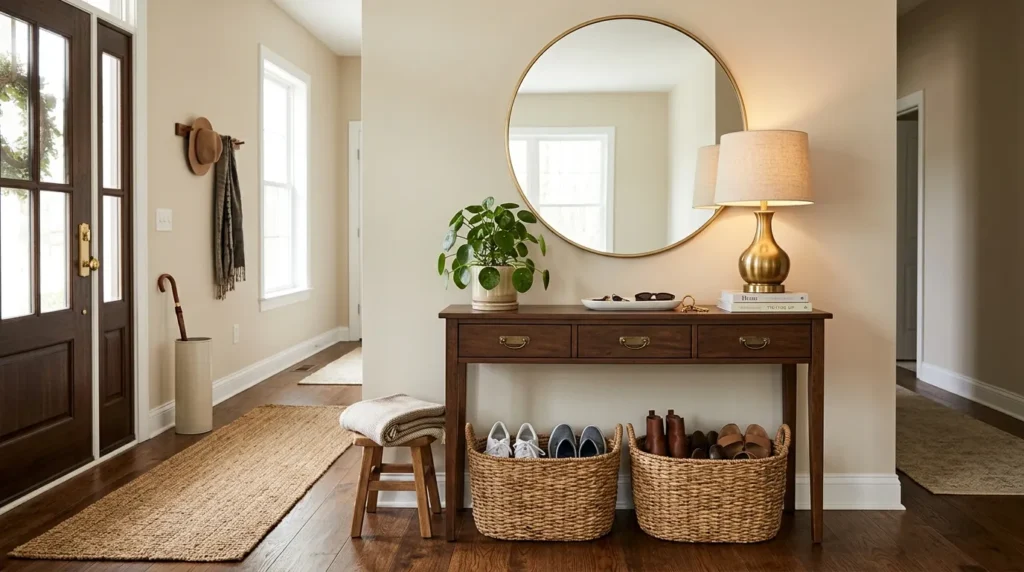
A console with drawers keeps shoes from becoming the only thing organized in the entry. While the lower area handles footwear, drawers can catch keys, sunglasses, mail, dog bags, and small accessories that usually clutter the surface. Choose a narrow console with open shelving below or baskets that slide underneath. This style works well when you want the entrance to feel more like a decorated foyer than a utility zone. It balances practical storage with a softer, more finished furniture look. Guests see a welcoming piece instead of a shoe pile.
To make it work, keep the shoe storage limited to the pairs used most often. Place baskets under the console, add a tray for slippers, or use a low rack behind the front legs if it stays hidden. Style the top with a lamp, mirror, small plant, or bowl, but leave space for real life. Wood, painted finishes, cane drawers, and metal pulls can match many decor styles. The entry feels more adult, polished, and functional because daily clutter finally has assigned places. Small homes benefit because one piece handles several daily needs.
8. Floating Shelves
Bullet Points
- Keeps shoes organized without bulky floor furniture.
- Works well in apartments, small hallways, and narrow entry walls.
- Creates an airy look when styled with clean spacing.
- Best for lightweight shoes, sandals, flats, and everyday sneakers.
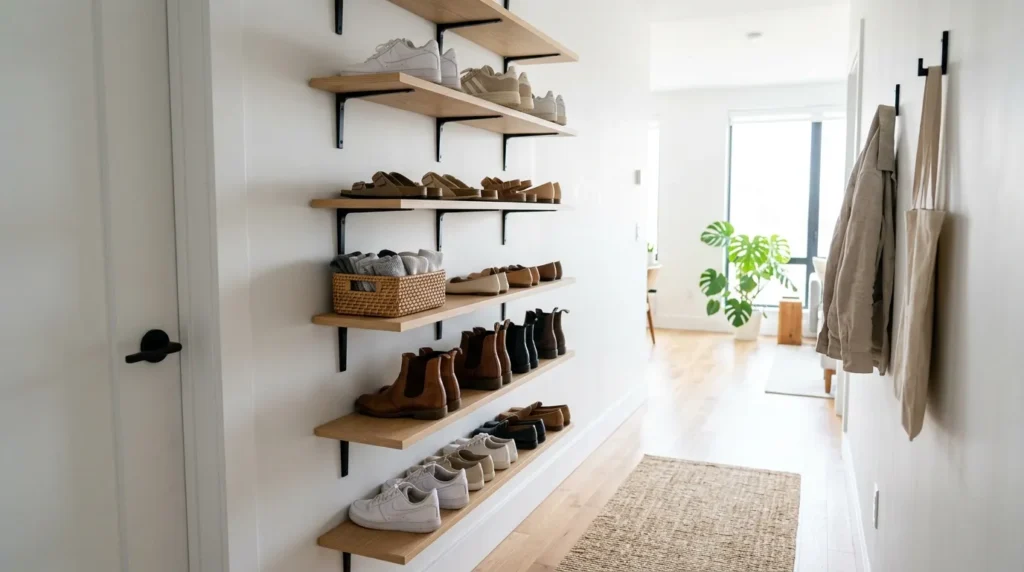
Floating shelves create a light, airy shoe display when floor space is limited. They work best for clean, attractive shoes like everyday flats, sandals, children’s shoes, or neatly arranged sneakers. Install shelves low on the wall, close to the door, so they function like open cubbies without bulky furniture. Use sturdy brackets or hidden supports rated for the weight. I’ve seen this work well in apartments because it creates storage while keeping the floor easier to sweep, vacuum, and mop. The raised design also makes the doorway feel visually lighter.
The styling should stay simple so the shelves do not look like a store display gone wrong. Limit each shelf to a few pairs and leave breathing room between them. Wood shelves feel warm, white shelves blend into walls, and black metal brackets add a modern edge. Add a small basket at one end for shoe care items or socks. Floating shelves are especially helpful in narrow entries because they organize footwear vertically while preserving visual openness and a clean walking path. It feels practical without closing in the entry.
9. Mudroom Hooks
Bullet Points
- Creates a complete entry system for shoes, coats, and bags.
- Works in mudrooms, garage entries, laundry entrances, and family foyers.
- Helps each person keep daily essentials in one place.
- Best with durable hooks, washable rugs, labels, and low shoe storage.
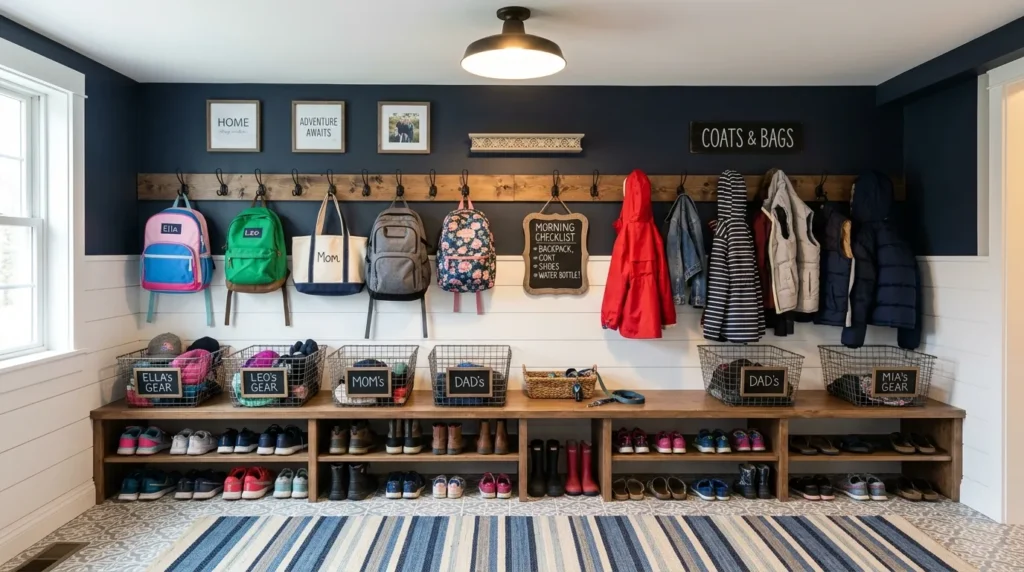
Mudroom hooks paired with shoe storage create a complete grab-and-go entry system. Even if you do not have a true mudroom, a wall with hooks, a low rack, and a washable mat can act like one. Hang coats, backpacks, hats, and dog leashes above the shoe area so everything needed for leaving the house stays together. That’s why many designers recommend grouping storage by routine, not just by item type, because real households move quickly in the morning. This creates one dependable landing zone for everyone by the door daily.
To keep the wall from becoming messy, assign each person one hook and one shoe spot. Use name labels, simple baskets, or color-coded tags if the entry serves kids. Add a bench if space allows, or keep the bottom area open with a low metal rack. Durable materials matter here: washable rugs, powder-coated hooks, wipeable paint, and plastic or wire bins hold up better to mud, snow, and sports gear. This setup saves time and makes daily departures feel smoother. It also reduces last-minute searching for missing items before school.
10. Closet Nook
Bullet Points
- Hides shoe clutter behind closed doors for a cleaner entry.
- Works with shelves, stackable boxes, tiered racks, or door organizers.
- Ideal for homes with small entry closets or hall closets.
- Helps separate daily shoes from seasonal or dress footwear.
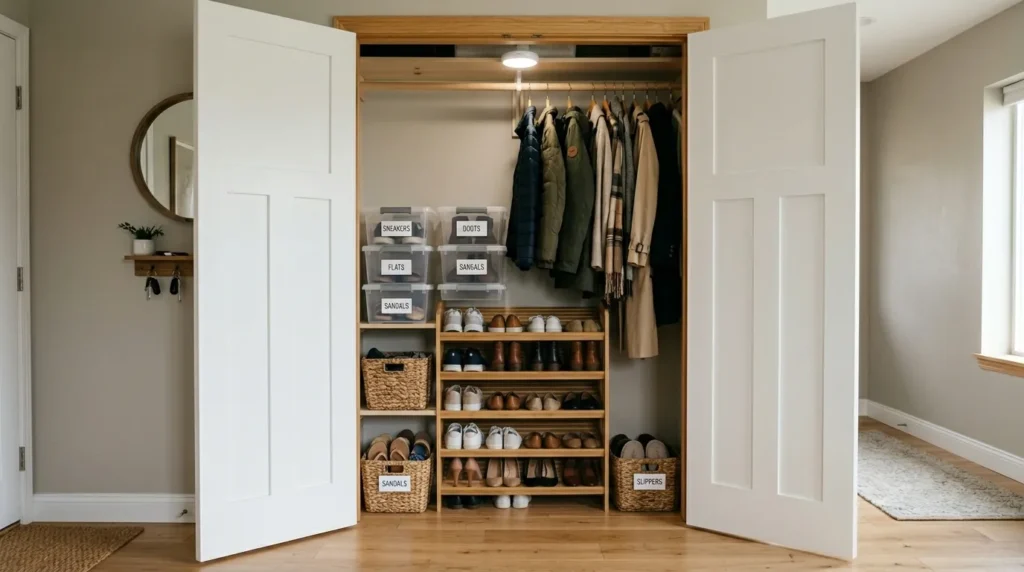
A closet nook can become the cleanest shoe zone when it is planned carefully. Many entry closets are packed with coats while shoes pile on the floor in a dark heap. Remove unused items, then add stackable shelves, labeled bins, or a tiered rack that fits the closet width. Good lighting also matters, even if it is only a battery puck light. In my experience, people use closet storage more consistently when they can actually see every pair inside. This simple visibility upgrade prevents forgotten shoes and duplicate purchases later.
The best closet nook keeps daily shoes at eye or hand level and seasonal pairs higher or lower. Use clear boxes for dress shoes, open racks for sneakers, and baskets for flip-flops or slippers. Add labels if several family members share the space. If the closet has a standard swinging door, consider over-the-door pockets for sandals, shoe care, or accessories. This hidden system gives the entry a cleaner look from outside while still keeping footwear close, organized, and easy to reach. The whole foyer feels calmer because clutter stays behind closed doors.