10 DIY Mud Kitchens for Backyard Fun
There’s something magical about watching kids turn a simple backyard into a world of imagination. Give them a little dirt, water, and a place to “cook,” and suddenly you have hours of creative, screen-free play. That’s exactly why DIY Mud Kitchens have become such a favorite across the USA—they’re simple to build, budget-friendly, and incredibly…
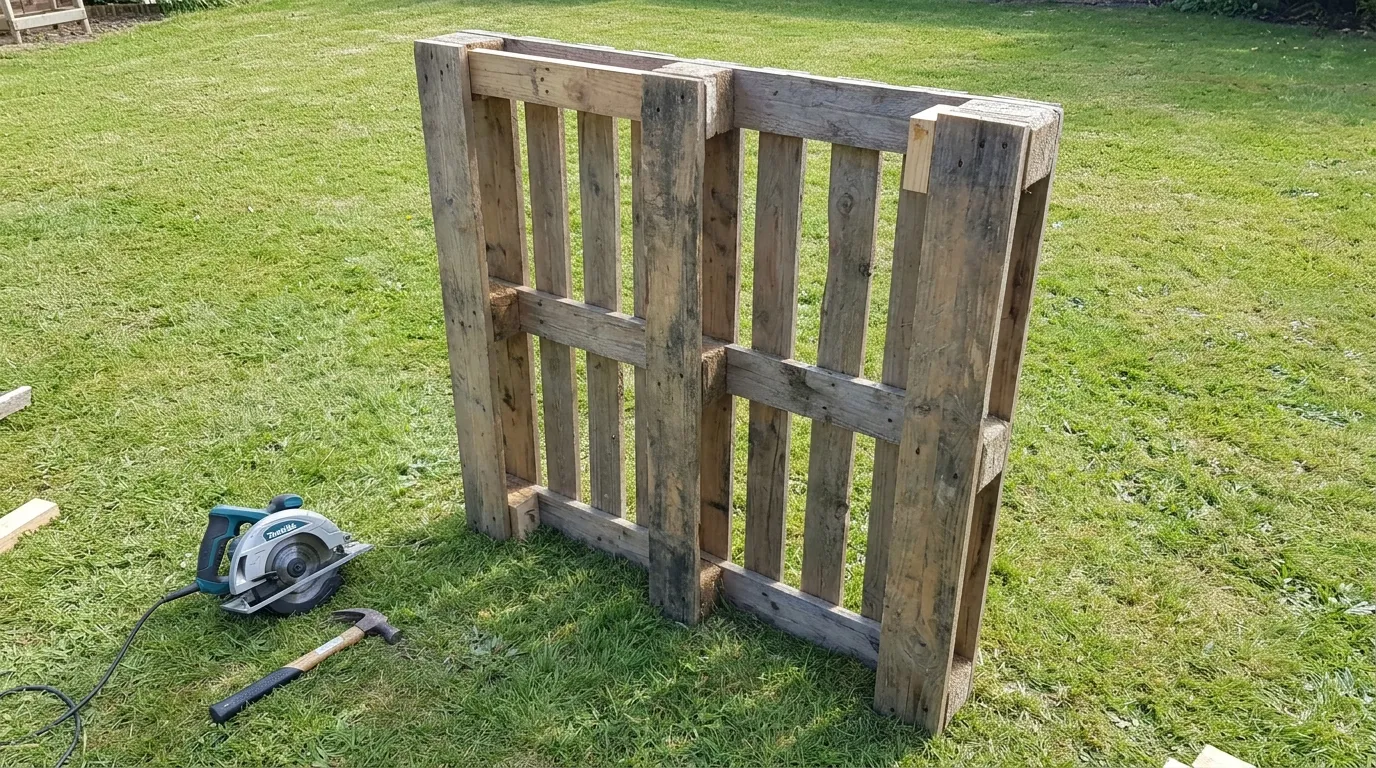
There’s something magical about watching kids turn a simple backyard into a world of imagination. Give them a little dirt, water, and a place to “cook,” and suddenly you have hours of creative, screen-free play. That’s exactly why DIY Mud Kitchens have become such a favorite across the USA—they’re simple to build, budget-friendly, and incredibly rewarding for both kids and parents.
A mud kitchen isn’t about perfection. It’s about creating a playful space where kids can explore textures, experiment with pretend cooking, and enjoy being outdoors. And the best part? You don’t need expensive materials or professional skills to build one. Many of the most charming setups come from repurposed wood, old sinks, and a bit of creativity.
In this guide, you’ll discover 10 unique and practical backyard mud kitchen ideas. Each one is designed to be achievable, fun to build, and endlessly enjoyable to use. Whether you’re starting from scratch or upgrading an existing play area, these ideas will help you create a space kids will absolutely love.
1. Pallet Base Setup
- Uses recycled wooden pallets
- Budget-friendly and accessible
- Easy to customize size
- Creates sturdy foundation
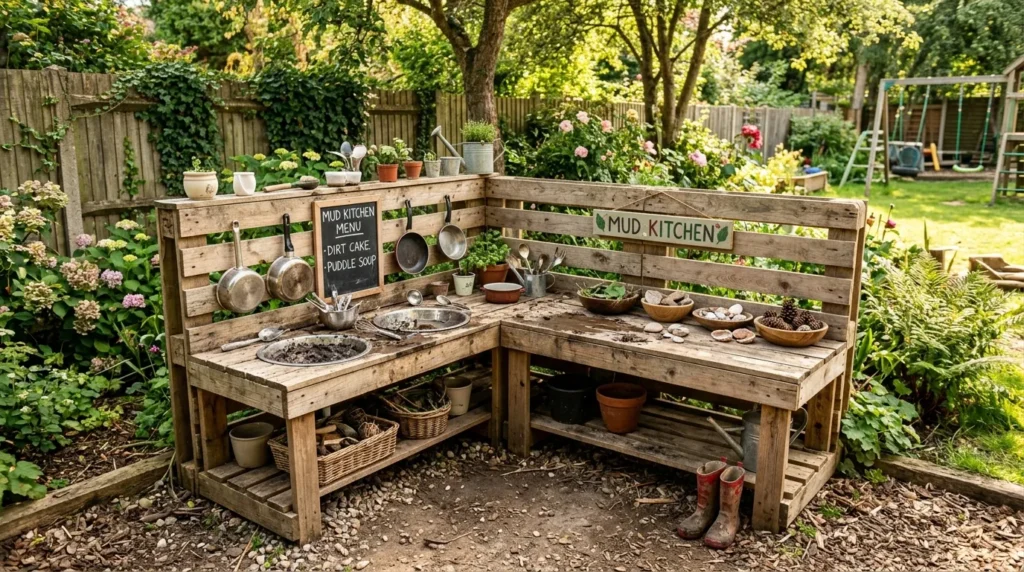
A pallet base is one of the easiest ways to start building a backyard play kitchen. Pallets are widely available and can be transformed into a functional workspace with minimal effort. In my experience, sanding the wood properly and securing it tightly makes a big difference in both safety and durability. You can stack or cut pallets depending on the height you want, making it adaptable for different age groups.
Once assembled, the structure feels solid and surprisingly professional. I’ve seen this work well in many backyards where a simple pallet setup becomes the centerpiece of outdoor play. Add a countertop surface, and suddenly you have a fully usable kitchen area that kids can gather around and enjoy together.
2. Old Sink Feature
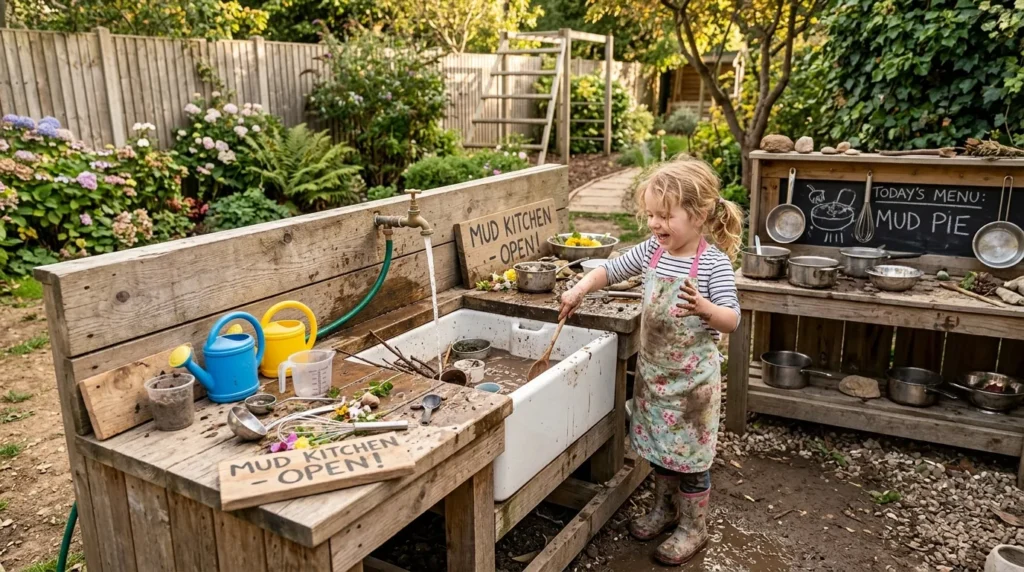
- Adds realistic play element
- Encourages water play
- Easy to install
- Enhances creativity
Adding an old sink instantly makes a mud kitchen feel more interactive. You don’t need plumbing—just placing a basin where kids can pour water is enough to create that “real kitchen” experience. That’s why many designers recommend sourcing secondhand sinks for this purpose.
In my experience, kids are naturally drawn to water play, and a sink becomes the most used part of the setup. I’ve noticed that it encourages longer play sessions and more imaginative activities. It transforms the space from simple dirt play into a full sensory experience that feels engaging and fun.
3. Open Shelf Storage
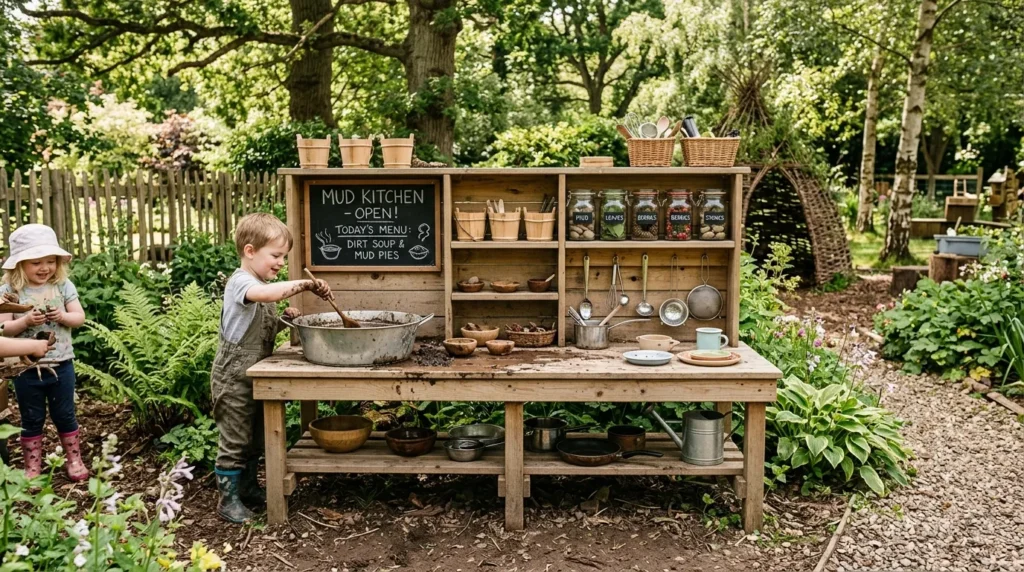
- Keeps tools organized
- Easy access for kids
- Adds visual structure
- Maximizes space
Storage is just as important as the play area itself. Open shelves allow kids to easily grab and return their tools, which helps keep the space organized. Using simple wooden planks or repurposed crates works perfectly for this setup.
I’ve seen this work well in many backyard designs where everything has a place. In my experience, when items are visible and accessible, kids are more likely to stay engaged and tidy up afterward. It also makes the setup look more complete and thoughtfully designed.
4. Hook Hanging Station
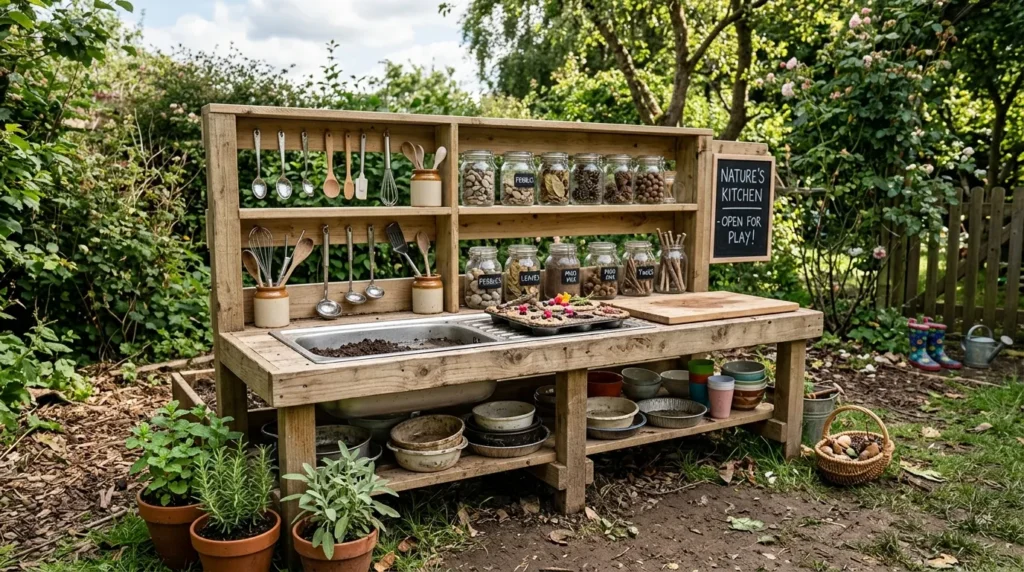
- Stores utensils neatly
- Saves counter space
- Adds realistic kitchen feel
- Easy to install
Hooks are a small detail that make a big difference. Hanging spoons, cups, and small tools creates a functional and visually appealing setup. That’s why many designers include a hook station in their builds.
In my experience, this feature adds both organization and charm. I’ve noticed that kids enjoy hanging and rearranging items, which becomes part of the play itself. It’s a simple addition that enhances usability while keeping the area clutter-free.
5. Chalkboard Back Panel
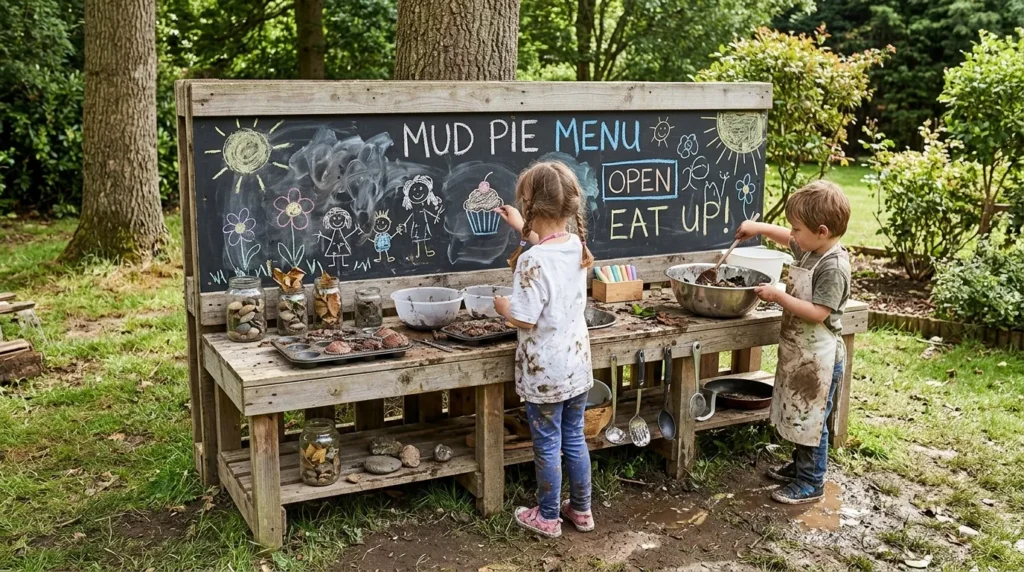
- Encourages creativity
- Adds interactive element
- Easy to clean
- Customizable design
A chalkboard panel adds a fun, creative touch to any mud kitchen. Kids can draw menus, write recipes, or simply doodle while they play. Using chalkboard paint on a wooden board is a quick and affordable way to create this feature.
I’ve seen this work beautifully in many setups where it becomes a favorite spot for expression. In my experience, it adds another layer of engagement, turning the kitchen into a more dynamic play area that evolves over time.
6. Natural Wood Finish
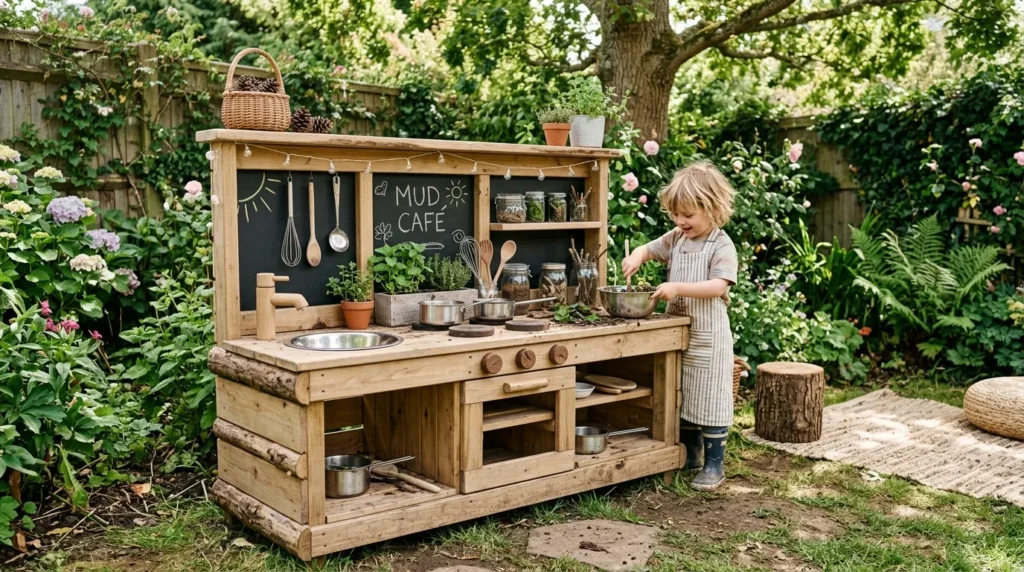
- Blends with outdoor space
- Creates rustic look
- Durable and weather-friendly
- Easy to maintain
Leaving the wood in its natural state gives the kitchen a warm, rustic feel that fits perfectly in a backyard setting. That’s why many builders choose a simple sealant instead of paint.
In my experience, natural finishes age beautifully and require less upkeep. I’ve noticed that they also make the structure feel more organic and connected to the environment, enhancing the overall look of the play area.
7. Water Bucket Station
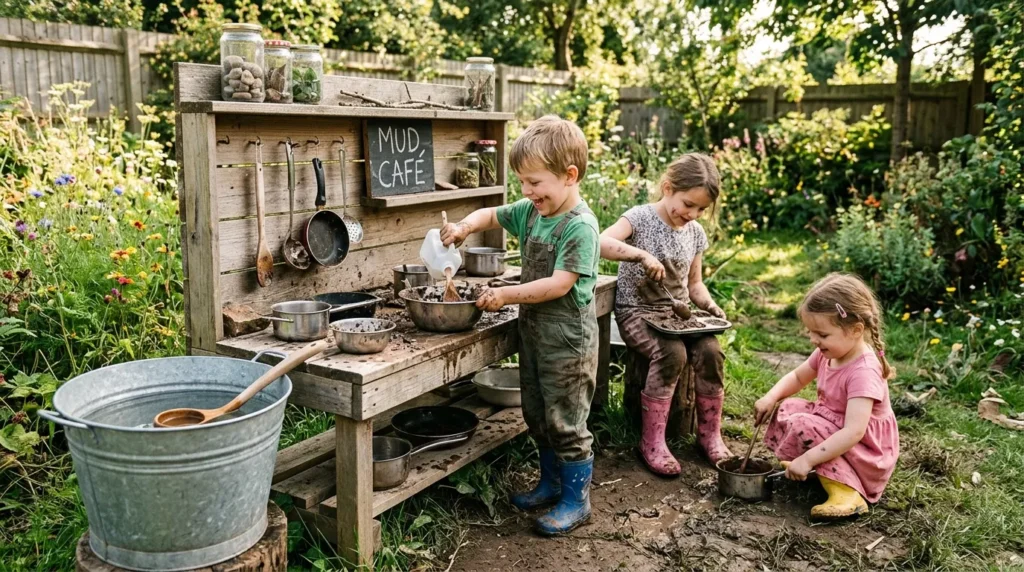
- Provides easy water access
- No plumbing required
- Portable and simple
- Encourages sensory play
A water bucket is one of the easiest ways to add functionality without complexity. Placing a sturdy bucket near the sink area allows kids to pour and refill as needed.
I’ve seen this work well in many backyard setups where simplicity is key. In my experience, it keeps the play area flexible and easy to maintain while still offering all the benefits of water play.
8. Mini Stove Detail
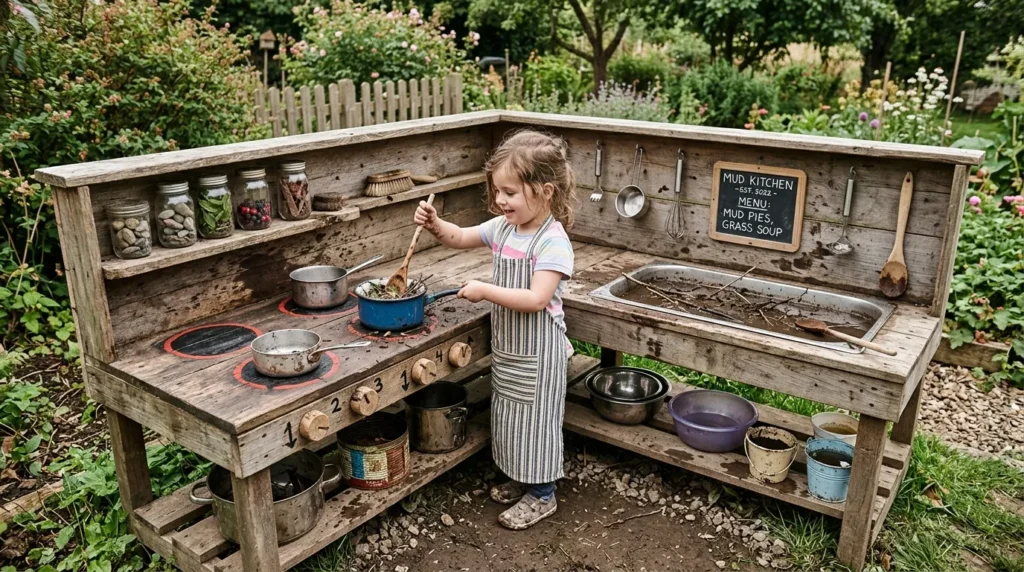
- Adds pretend cooking feature
- Uses painted circles or burners
- Enhances realism
- Simple DIY addition
Creating a mini stove area is as simple as painting circles on the countertop or attaching old knobs. This detail makes the kitchen feel complete and encourages imaginative play.
I’ve noticed that kids naturally gravitate toward “cooking” activities. In my experience, adding this feature increases engagement and makes the setup feel more like a real kitchen, even with minimal effort.
9. Herb Garden Add-On
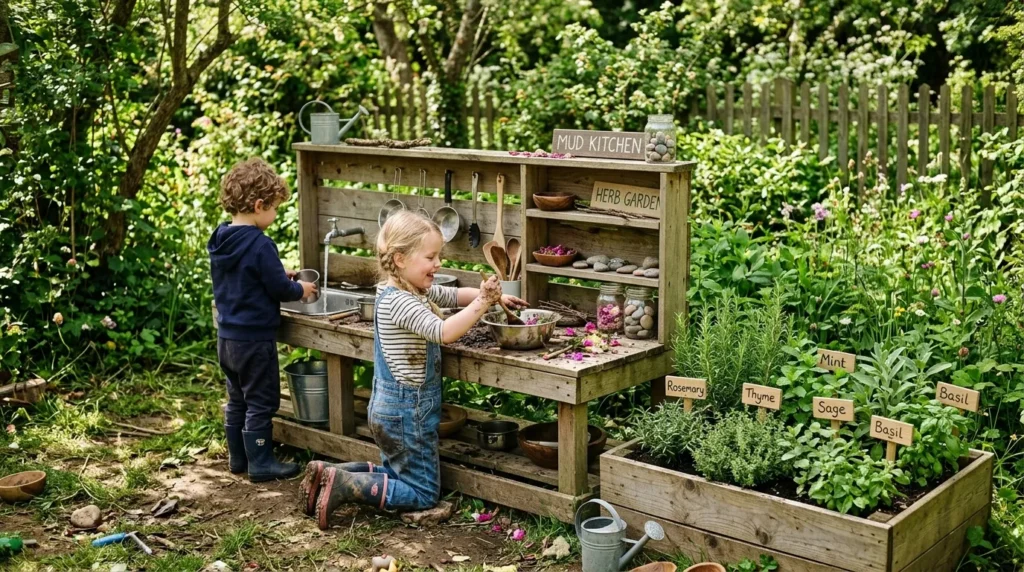
- Teaches basic gardening
- Adds natural element
- Encourages exploration
- Enhances play value
Adding a small herb garden next to the mud kitchen introduces a learning element. Kids can pick leaves and incorporate them into their pretend recipes.
I’ve seen this work beautifully in many homes where outdoor play meets education. In my experience, it encourages curiosity and makes the space feel more interactive and alive.
10. Weather Cover Setup
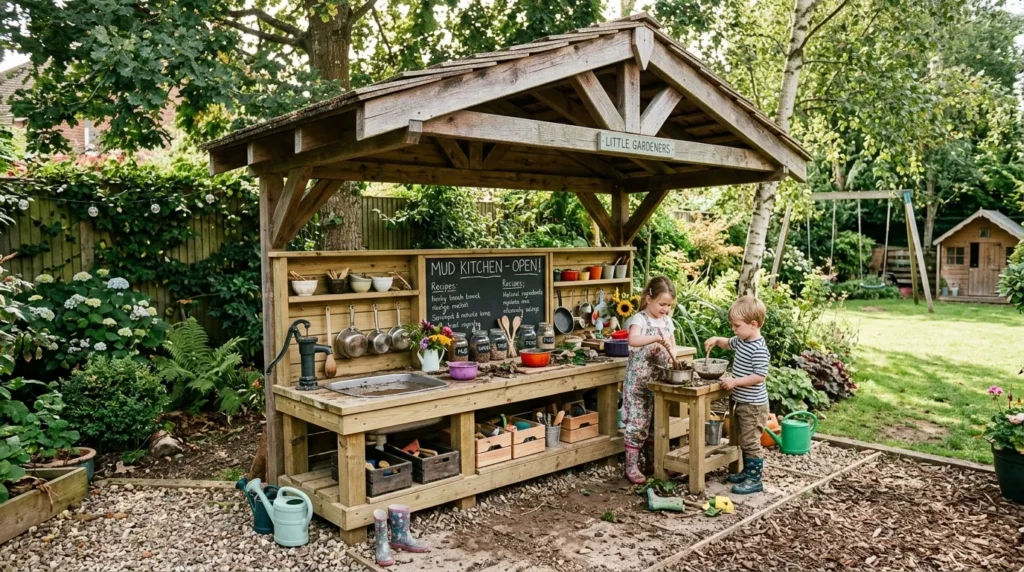
- Protects from rain
- Extends usability
- Adds structure
- Keeps materials dry
A simple cover or small roof helps protect the kitchen from weather damage. Using basic materials like wood and fabric can create a durable shelter.
In my experience, this addition makes a big difference in longevity. I’ve noticed that covered setups stay cleaner and more usable throughout different seasons, making them a worthwhile upgrade.