12 School Hallway With Lockers Ideas
A locker-lined corridor is one of the most recognizable parts of an American school. It is where students gather before class, swap books, organize backpacks, check schedules, meet friends, and move through the rhythm of the day. Because lockers take up so much visual space, they can either make the hallway feel plain and crowded…
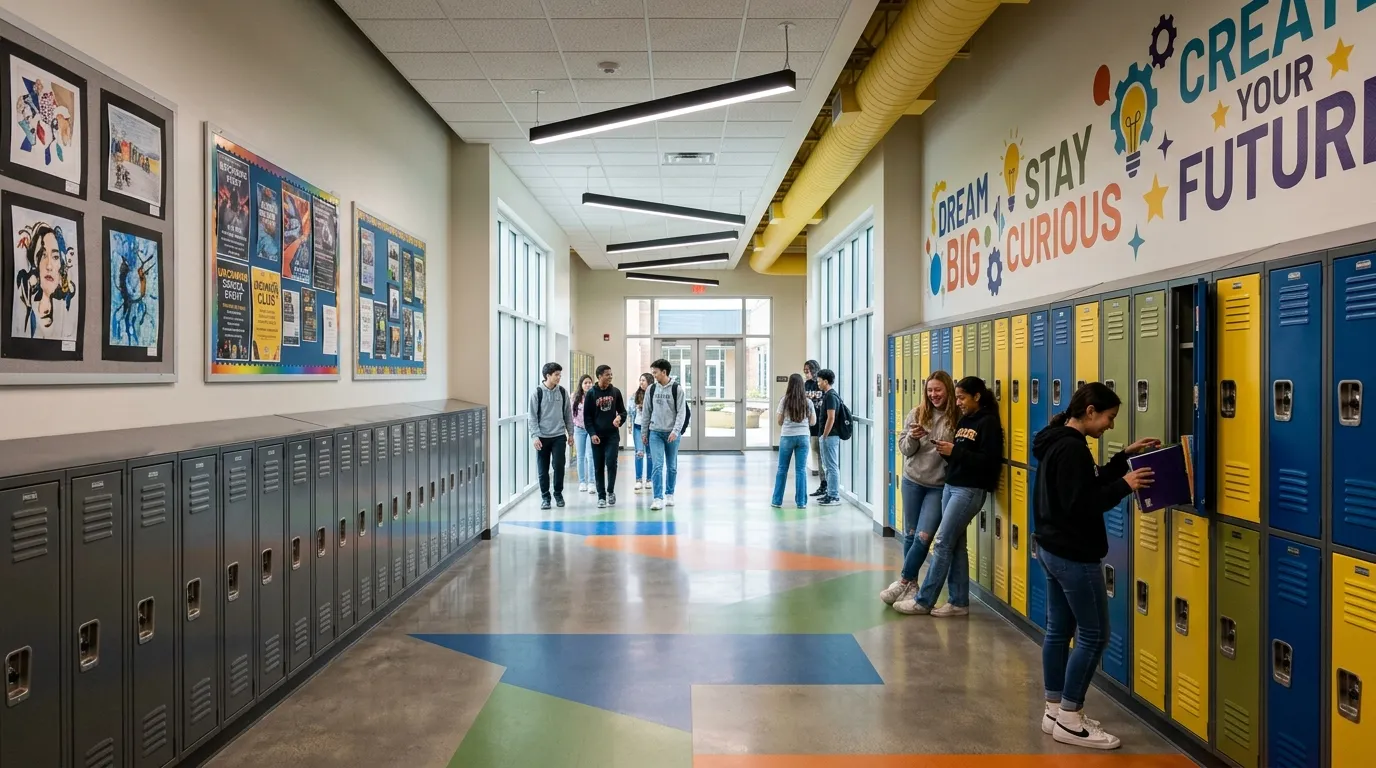
A locker-lined corridor is one of the most recognizable parts of an American school. It is where students gather before class, swap books, organize backpacks, check schedules, meet friends, and move through the rhythm of the day. Because lockers take up so much visual space, they can either make the hallway feel plain and crowded or become a polished part of the school’s design.
A thoughtful School Hallway with lockers should balance function, safety, student pride, and visual appeal. The goal is not to cover every locker with decorations or create more clutter. The strongest designs use color, labels, lighting, signage, displays, and practical systems that make the space easier to use while still feeling energetic and welcoming.
These ideas are created for real USA middle schools, high schools, and upper elementary campuses where lockers are part of daily life. Each concept is practical, Pinterest-friendly, and school-appropriate, with materials and styling logic that teachers, administrators, student councils, and parent volunteers can actually maintain.
1. Color Zones
Bullet Points
- Helps organize locker areas by grade, team, wing, or school house.
- Makes long locker rows easier for students and visitors to navigate.
- Adds visual order without permanent construction or expensive updates.
- Works with magnetic strips, vinyl decals, painted panels, or signs.
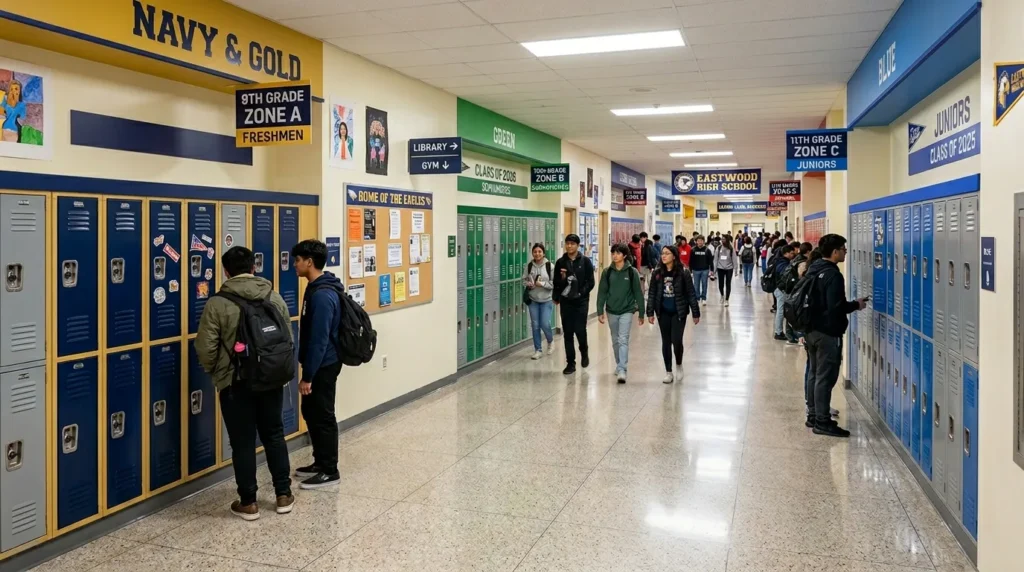
A color-zoned locker area instantly makes a long corridor feel more organized. Instead of one endless row of identical metal doors, students see clear visual sections that help them understand where they are. Use colors by grade level, advisory group, team, or school house system. Navy, gold, green, red, or blue can connect to school branding while still feeling clean. In my experience, color zones work best when the accent appears in the same place on every locker, such as the top corner, nameplate, or nearby wall sign.
The finished look should feel structured, not chaotic. Use removable magnetic strips, laminated labels, vinyl shapes, or painted wall panels above the locker rows to define each area. Avoid covering locks, handles, vents, or official locker numbers. This idea improves navigation during passing periods and helps new students, substitutes, and visitors feel less confused. It also gives each section a sense of identity, which can support school spirit without adding bulky decorations. A simple color system can make the entire corridor feel calmer and more intentional.
2. Name Labels
Bullet Points
- Personalizes locker assignments without damaging metal surfaces.
- Helps students quickly identify their space during busy passing periods.
- Works well for homerooms, grade levels, teams, or advisory groups.
- Looks best with consistent size, font, placement, and color.
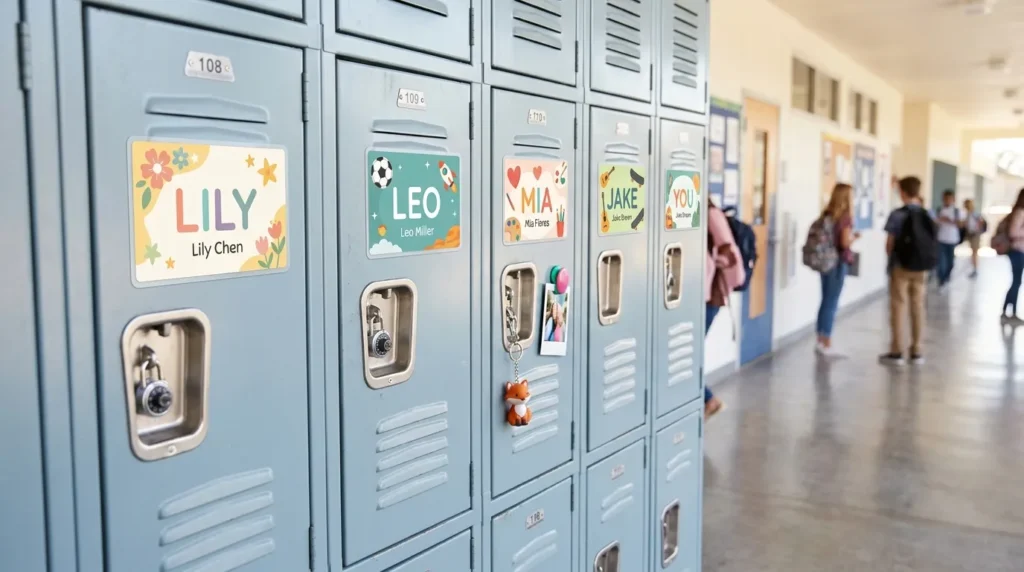
Name labels make locker rows feel more personal while staying organized. A small magnetic name card can help students find their assigned space quickly, especially during the first weeks of school when routines are still forming. Use printable templates, laminated cardstock, magnetic sleeves, or dry-erase magnetic strips. Keep fonts large enough to read from a short distance and avoid overly busy designs. I’ve noticed that labels look much more polished when every card is the same size and placed in the same spot on each locker.
This idea is practical because the labels can change whenever schedules or assignments change. Teachers can group cards by advisory, grade level, club, or hallway section. Add small icons, school colors, or simple border accents to make the labels attractive without making them distracting. Materials like magnet tape, laminating sheets, printable cardstock, and reusable sleeves are affordable and easy to store. The result is a locker area that feels student-centered, easy to manage, and visually cleaner than paper signs taped randomly across metal doors.
3. Spirit Rows
Bullet Points
- Adds school pride to locker areas before events and games.
- Works for homecoming, pep rallies, rivalry weeks, and tournaments.
- Can include mascot icons, pennants, banners, magnets, and colors.
- Helps the corridor feel exciting without blocking locker use.
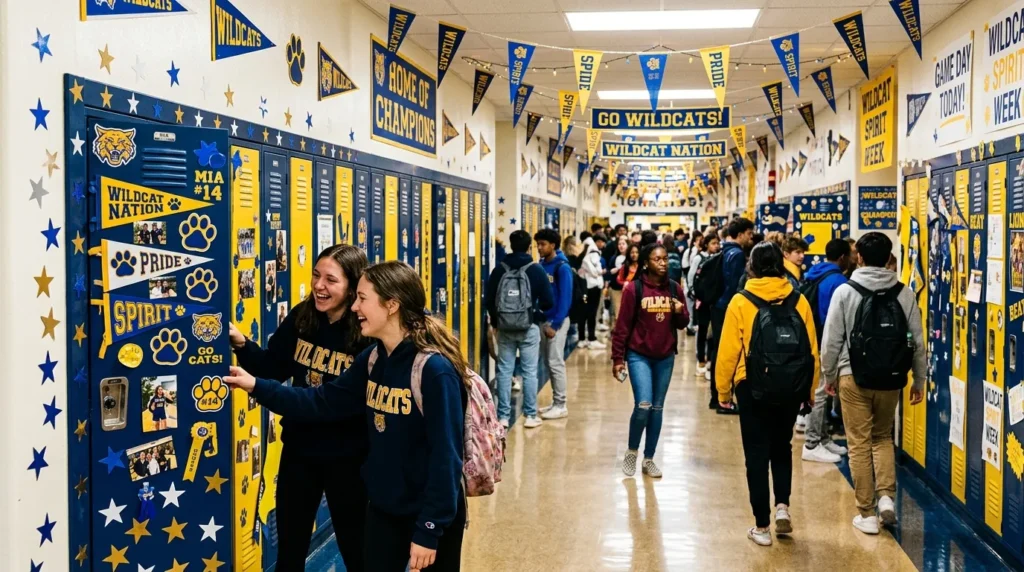
Spirit rows turn ordinary lockers into a celebration of school pride. This idea works especially well during homecoming week, playoff games, pep rallies, senior nights, or major campus events. Use repeating mascot icons, team colors, laminated pennants, magnetic stars, or removable banners across selected locker sections. The key is rhythm. Instead of decorating each locker differently, repeat a few strong pieces so the entire row feels coordinated. That’s why many designers recommend visual repetition in long corridors where students are moving quickly.
The setup should be festive but still practical. Keep locks, vents, numbers, and handles completely clear so students can use their lockers without frustration. Store reusable pieces in labeled bins by event or season so student council or staff can redecorate quickly. Materials like cardstock, magnet tape, removable vinyl, ribbon, and laminated cutouts hold up well when reused. A spirited locker row makes the building feel energized and connected, giving students a visual reminder that school events belong to the whole community.
4. Senior Spotlights
Bullet Points
- Celebrates graduating students in a meaningful hallway display.
- Works with photos, future plans, activities, quotes, and memories.
- Creates a strong visual feature during spring and graduation season.
- Best with matching templates, school colors, and removable materials.
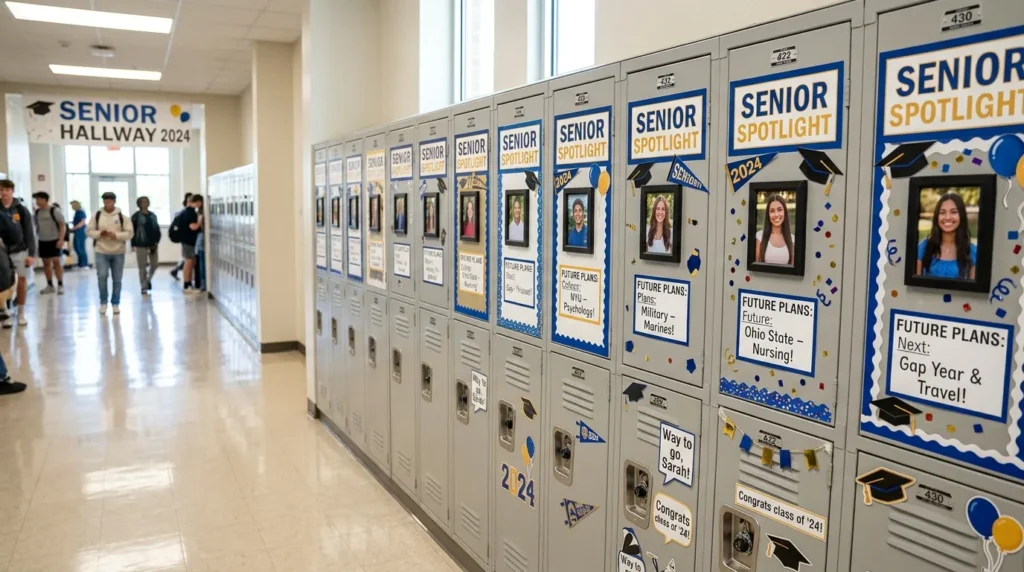
Senior spotlights make locker areas feel meaningful during the final months of the school year. Instead of limiting graduation recognition to one bulletin board, each senior can have a polished display card on or near their locker. Include a photo, name, activity, favorite memory, future plan, or short quote if students choose to share. Keep the template consistent so the row looks respectful and organized. This idea works beautifully during senior week, graduation countdowns, award nights, and spring family events.
The display should celebrate students while protecting privacy and locker access. Allow seniors to approve what appears on their card, especially when listing colleges, jobs, military plans, trades, or personal goals. Use magnetic photo sleeves, laminated profile cards, school-color borders, and removable accents. Keep decorations flat against the locker surface so they do not fall during passing periods. Younger students often enjoy seeing these displays because they show future possibilities. The hallway becomes a walk-through celebration of growth, achievement, and the next chapter.
5. Club Badges
Bullet Points
- Highlights student involvement outside the classroom.
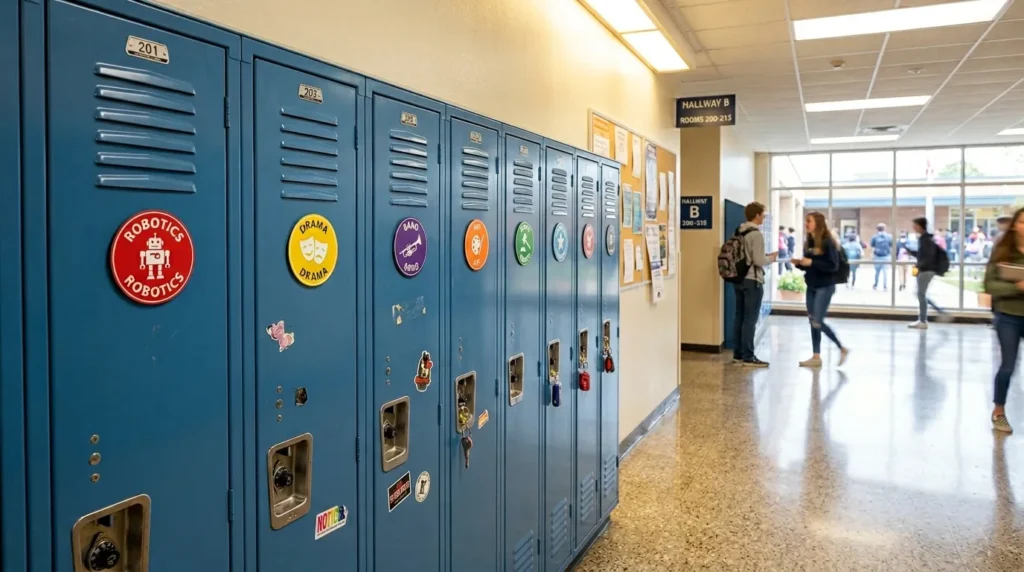
- Works for robotics, drama, band, art, debate, service, and student council.
- Helps clubs gain visibility during recruitment seasons.
- Looks best with small matching icons or magnetic badge shapes.
Club badges turn locker rows into a quiet map of student life. Many students participate in activities that are not always visible during the regular school day, and small locker badges can help celebrate those commitments. Use icons for band, theater, robotics, debate, art club, yearbook, student council, service groups, or academic teams. Place each badge in the same area on the locker so the display feels neat. In my experience, this idea works especially well around club fairs and activity sign-up weeks.
This approach does more than decorate. It helps students discover shared interests and makes involvement feel valued across the building. A student who sees a robotics badge or drama icon nearby may feel more comfortable asking questions or joining. Use laminated circles, magnet-backed icons, ribbon strips, or small printed badges that club sponsors can collect and reuse. Keep colors coordinated so the row does not become visually noisy. The locker area becomes more personal, connected, and representative of the many ways students contribute to campus life.
6. Photo Memories
Bullet Points
- Celebrates school events, field trips, clubs, sports, and performances.
- Makes locker areas feel warmer and more personal.
- Works with magnetic frames, caption cards, and school-color borders.
- Should always follow school photo permission and privacy guidelines.
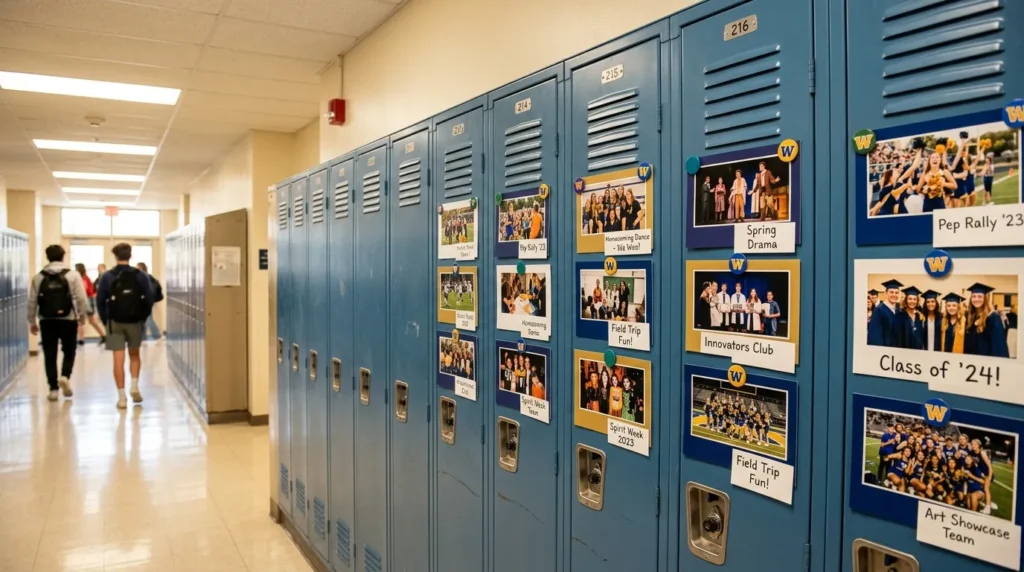
Photo memory rows make lockers feel connected to real school experiences. Instead of leaving metal surfaces plain, use magnetic frames or nearby display strips to show snapshots from spirit days, concerts, field trips, assemblies, sports events, clubs, and classroom celebrations. Arrange photos in a clean row or grid so the display feels intentional rather than scattered. Always follow school media permission rules before posting student images. This matters because a beautiful display should also respect student privacy and family expectations.
The best photo displays include short captions so people understand what they are seeing. Add dates, event names, grade levels, or club labels in a consistent format. Use magnet-backed frames, laminated captions, removable strips, and school-color borders for durability. Rotate photos monthly or seasonally so the display stays fresh. Students enjoy seeing familiar faces and moments, while families get a quick glimpse of campus life during visits. A photo row adds warmth, memory, and community without requiring permanent changes to the locker area.
7. Clean Numbers
Bullet Points
- Makes locker assignments easier to read and manage.
- Gives old locker rows a sharper, more updated appearance.
- Helps students, office staff, custodians, and substitutes identify spaces.
- Works with vinyl numbers, magnetic tags, plaques, or printed labels.
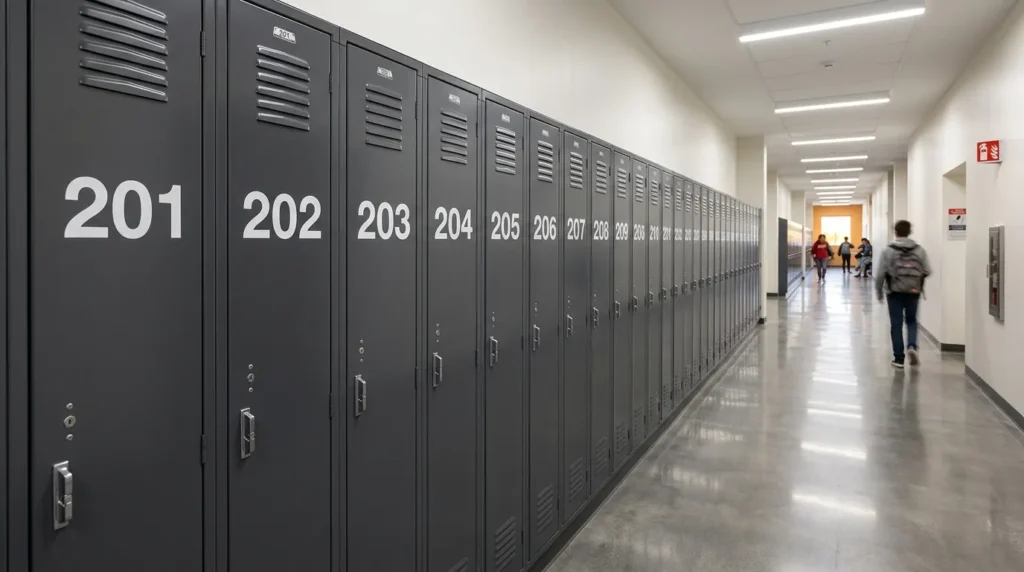
Clean locker numbers can make an older corridor look surprisingly refreshed. Faded, tiny, mismatched, or peeling numbers make a locker area feel neglected and harder to use. Replacing or covering them with consistent labels creates order immediately. Choose a readable font, strong contrast, and a size that can be seen from the walkway. That’s why many designers recommend treating numbers as part of the design system, not just a maintenance detail. Small visual choices can change how organized the entire row feels.
This update is useful for students, teachers, office staff, substitutes, custodians, and maintenance teams. Clear numbers help with assignments, repairs, lost items, hallway supervision, and schedule changes. Use vinyl decals, magnetic labels, printed tags, or small plaques depending on school policy and locker material. Align each number in the same position for a clean, professional result. Pair labels with school colors or neutral tones to avoid clutter. A simple numbering refresh makes the locker area feel newer, calmer, and easier to manage every day.
8. Kindness Notes
Bullet Points
- Encourages positive peer recognition in a daily student space.
- Works with magnetic note cards, compliment pockets, or dry-erase squares.
- Supports counseling programs, advisory themes, and school culture goals.
- Best when monitored and refreshed regularly by staff or student leaders.
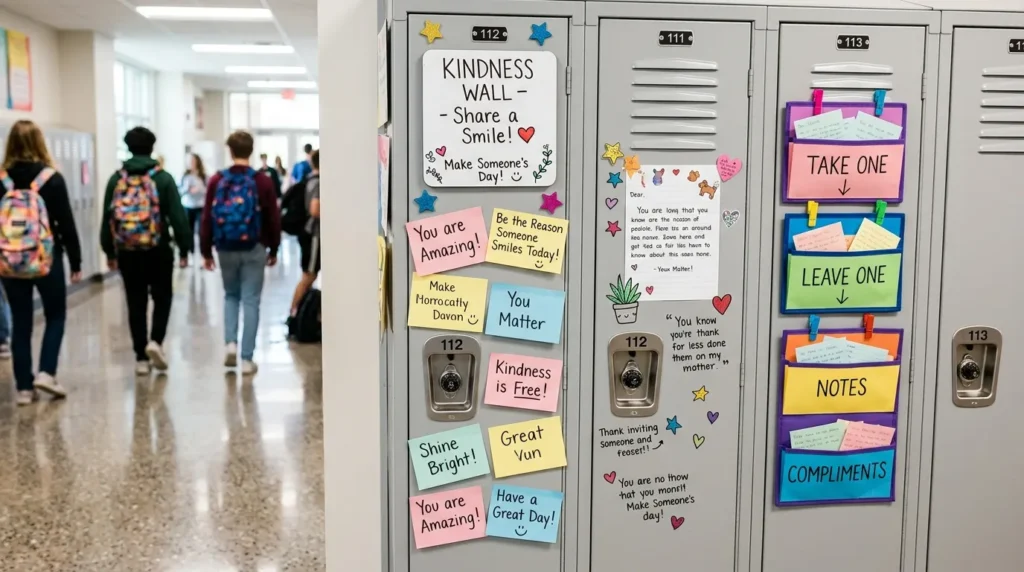
Kindness notes bring encouragement into a space students use every day. Add small magnetic cards, compliment pockets, or reusable dry-erase squares where students can leave positive messages for classmates. Clear prompts help keep notes thoughtful, such as “You helped,” “I appreciate,” or “Great job on.” A counselor, teacher, or leadership group should monitor the display so it stays appropriate and meaningful. The design should be cheerful but structured, with enough guidelines to prevent the area from becoming messy.
This idea works because it places positivity exactly where students pause between classes. A short note can change the mood of a stressful day, especially in middle and high school environments where students may not always hear encouragement openly. Use laminated cards, magnet tape, small envelopes, marker clips, and a posted kindness guideline. Refresh the notes weekly so the display remains clean. The locker row becomes more than storage; it becomes a small culture-building tool that supports empathy, recognition, and connection.
9. Seasonal Accents
Bullet Points
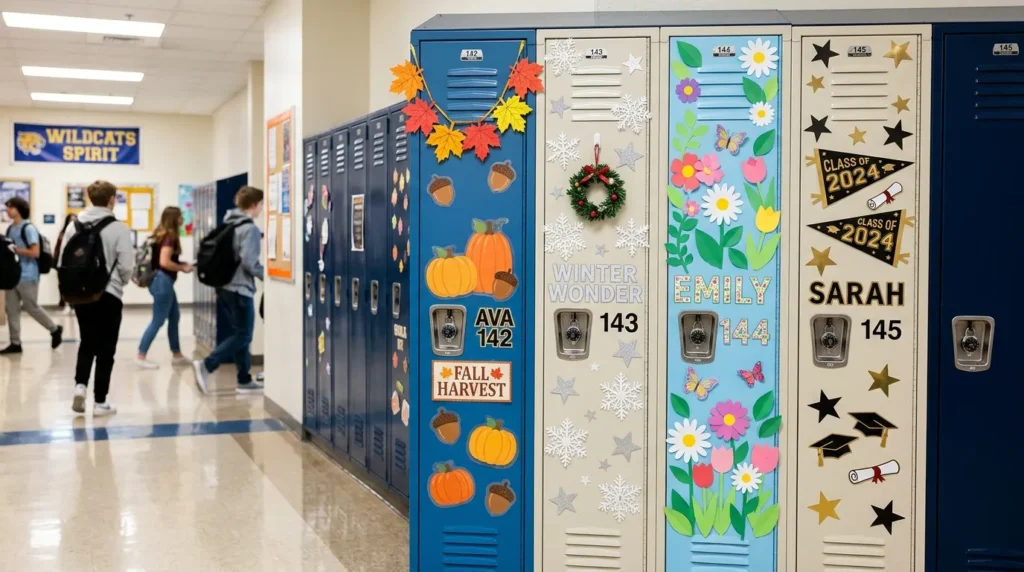
- Keeps locker areas fresh for holidays, seasons, and school events.
- Works with fall leaves, winter snowflakes, spring flowers, or graduation details.
- Uses removable materials so lockers stay functional and damage-free.
- Best when decorations are repeated and limited to selected sections.
Seasonal accents help locker areas feel fresh without overwhelming the entire corridor. Instead of covering every locker, decorate selected sections, end panels, or grade-level rows with repeated seasonal details. Fall leaves, winter snowflakes, spring flowers, testing motivation, kindness month hearts, and graduation stars can all work beautifully. In my experience, partial decorating looks more polished than full locker covers because it keeps the space functional and easier to maintain. A focused display also reduces cleanup when the season changes.
Use removable materials that will not damage paint or leave residue. Laminated cutouts, magnet-backed shapes, removable vinyl, cardstock banners, and approved painter’s tape can all work depending on school rules. Keep locks, vents, handles, and official numbers visible. Store reusable decorations in labeled folders so staff can repeat successful displays each year. Seasonal accents make the corridor feel current and cared for, while still respecting the everyday function of lockers. The hallway feels more cheerful, but students can still move quickly and use their spaces easily.
10. Display Ends
Bullet Points
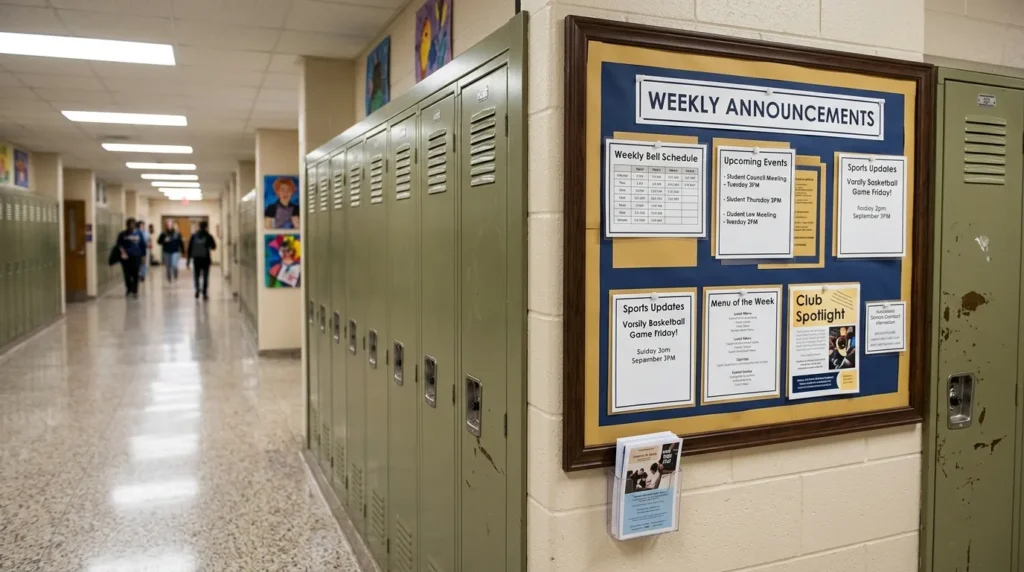
- Uses the end of locker rows as strong visual focal points.
- Works for announcements, schedules, sports posters, or grade-level themes.
- Keeps decor organized without covering every locker door.
- Best with framed boards, magnetic panels, or removable signs.
Locker row ends are valuable design space because they naturally catch attention. Instead of spreading announcements across many locker doors, use the end panels for focused displays. Add a small bulletin board, magnetic panel, framed sign, sports schedule, grade-level message, or monthly theme. This keeps information easy to find and prevents visual clutter across the full row. I’ve noticed that students are more likely to read announcements when they are grouped in one predictable location.
This idea also protects locker surfaces from constant taping and rearranging. Use durable display boards, acrylic sign holders, magnetic panels, laminated posters, or school-color backing paper. Keep the layout simple with one title, one main message, and a few supporting details. Display ends work well for club reminders, testing schedules, lunch updates, spirit week themes, and athletic events. They create a polished focal point while letting the rest of the locker row stay clean, functional, and visually calm.
11. Supply Lockers
Bullet Points
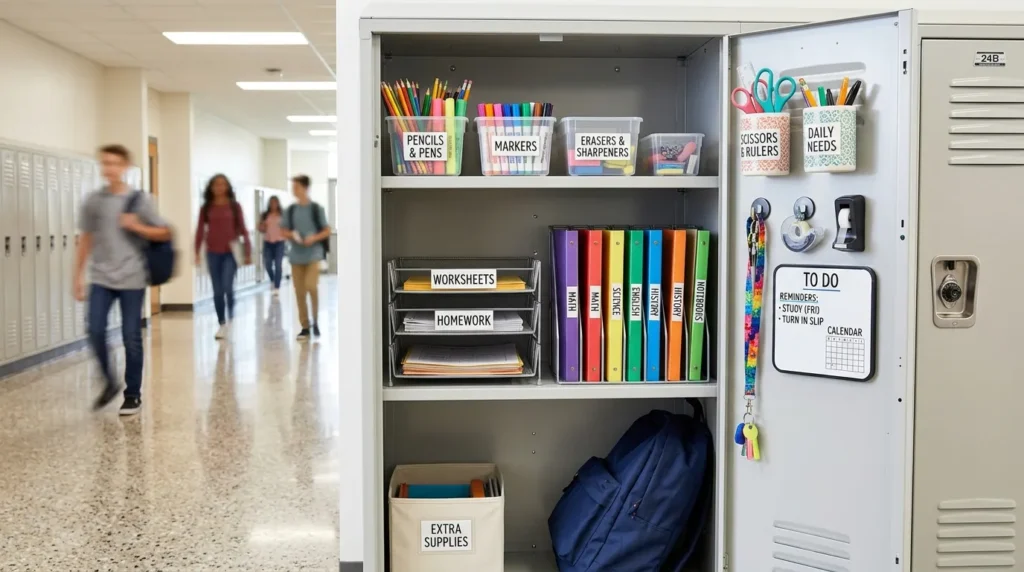
- Turns unused lockers into practical student support stations.
- Works for pencils, paper, chargers, tissues, folders, or hall passes.
- Helps reduce classroom interruptions and last-minute stress.
- Best with labels, bins, shelves, and teacher-managed access.
Supply lockers make hallway storage more useful when managed thoughtfully. If a school has unused or designated lockers, they can become small support stations for pencils, notebook paper, tissues, folders, calculators, chargers, or project materials. This is especially helpful near team classrooms, media centers, art rooms, or intervention areas. The key is organization. Use labeled bins, small shelves, magnetic cups, and a clear access routine so the locker does not become a cluttered catchall.
The visual design should make the station look intentional. Add a clean label on the outside, a simple color theme inside, and an inventory checklist for restocking. Teachers can assign student helpers to check supplies weekly. Use plastic bins, drawer organizers, magnetic hooks, folders, and label tape for durability. A supply locker supports independence because students know where to find basic materials quickly. It also turns an unused locker into a practical feature that improves daily routines while keeping the corridor neat.
12. Lighting Highlights
Bullet Points
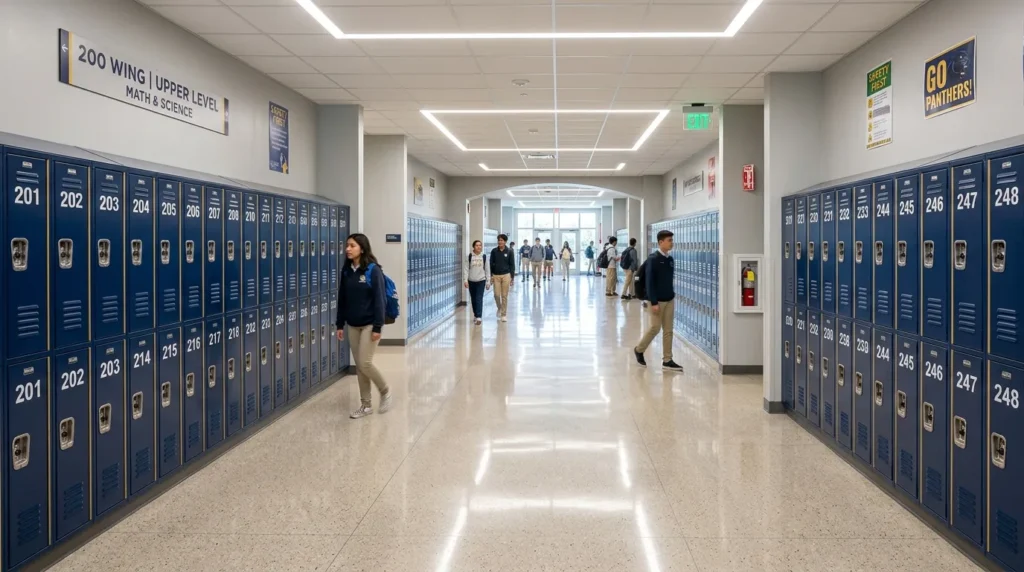
- Makes locker areas feel brighter, safer, and more polished.
- Helps improve visibility near numbers, signs, displays, and intersections.
- Works with ceiling upgrades, LED strips, display lighting, or brighter bulbs.
- Best when lighting is even, school-approved, and glare-free.
Lighting highlights can change how locker rows feel during the school day. Long corridors with metal lockers can look dark, cold, or flat if the lighting is uneven. Better light improves visibility, makes numbers easier to read, and helps displays look more professional. Start by checking dim sections, shadowed corners, and areas near intersections or stairwells. A bright, balanced corridor feels safer and more welcoming, especially during morning arrival, evening events, and winter months when natural light is limited.
Use school-approved lighting solutions that meet safety and maintenance rules. Ceiling fixture upgrades, LED strips inside display cases, brighter bulbs, or targeted lights near mural and announcement areas can all help. Avoid exposed cords, harsh glare, or temporary lights that create hazards. Good lighting also makes school colors, locker accents, photos, and signs look cleaner. A well-lit locker area supports supervision, improves the overall atmosphere, and gives the entire corridor a more polished, cared-for appearance that students and visitors notice immediately.