11 School Hallway Side View Ideas
A side-view hallway concept can make an ordinary school corridor look more polished, spacious, and visually interesting. Instead of showing only a straight-on view, a side angle highlights lockers, classroom doors, bulletin boards, windows, floor lines, student displays, and lighting in a way that feels more dynamic. This matters for Pinterest posts, school blogs, yearbook…
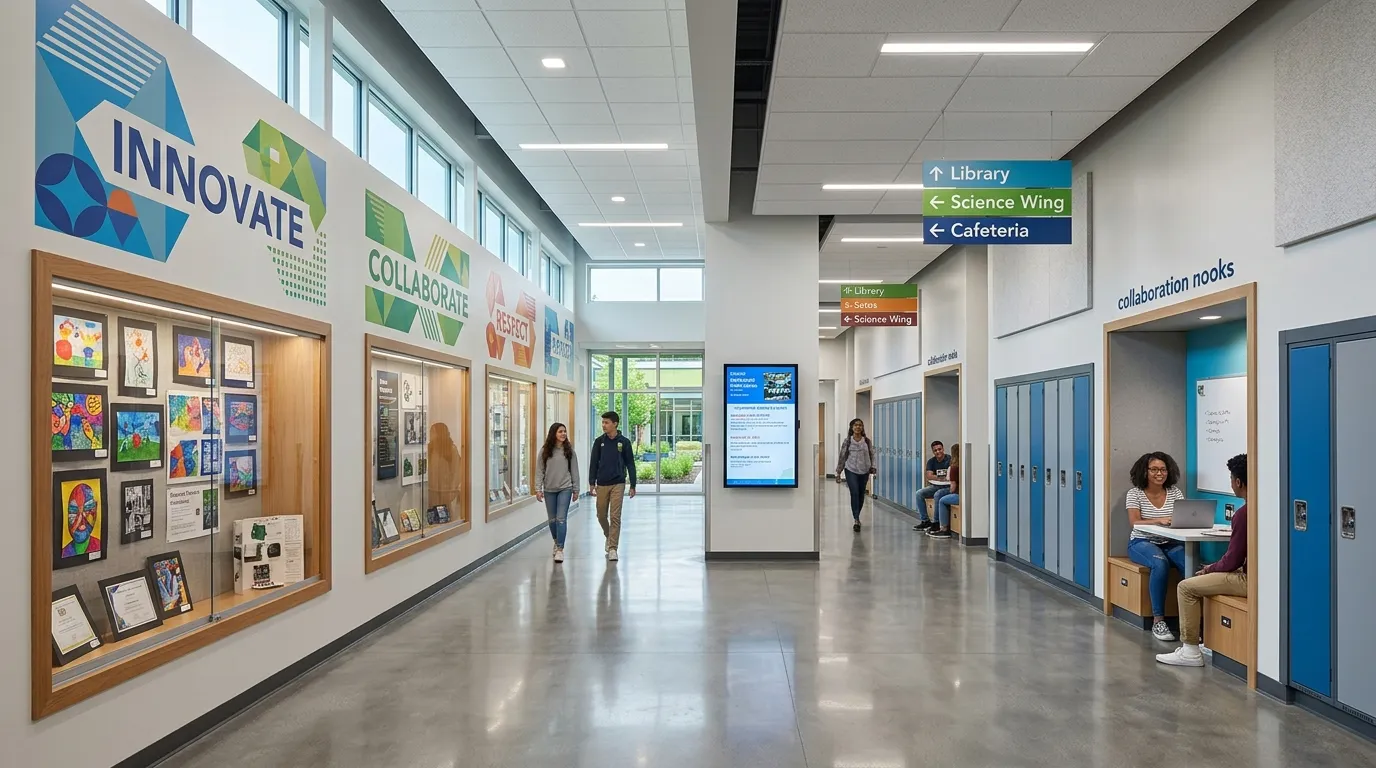
A side-view hallway concept can make an ordinary school corridor look more polished, spacious, and visually interesting. Instead of showing only a straight-on view, a side angle highlights lockers, classroom doors, bulletin boards, windows, floor lines, student displays, and lighting in a way that feels more dynamic. This matters for Pinterest posts, school blogs, yearbook layouts, classroom decor inspiration, digital backgrounds, and visual planning for real campus spaces.
A strong School Hallway side view should feel clean, safe, and easy to understand. The best images or design concepts are not crowded with random details. They use one clear focal area, such as a locker row, reading wall, art display, or window light, then support it with good spacing, repeated shapes, and practical school-friendly details.
These 11 ideas are created for USA schools, where hallways often need to work for student traffic, photography, displays, open house events, and everyday campus routines. Each idea includes useful styling guidance, materials where relevant, and visual logic that helps the corridor look organized, realistic, and Pinterest-ready.
1. Locker Side Row
Bullet Points
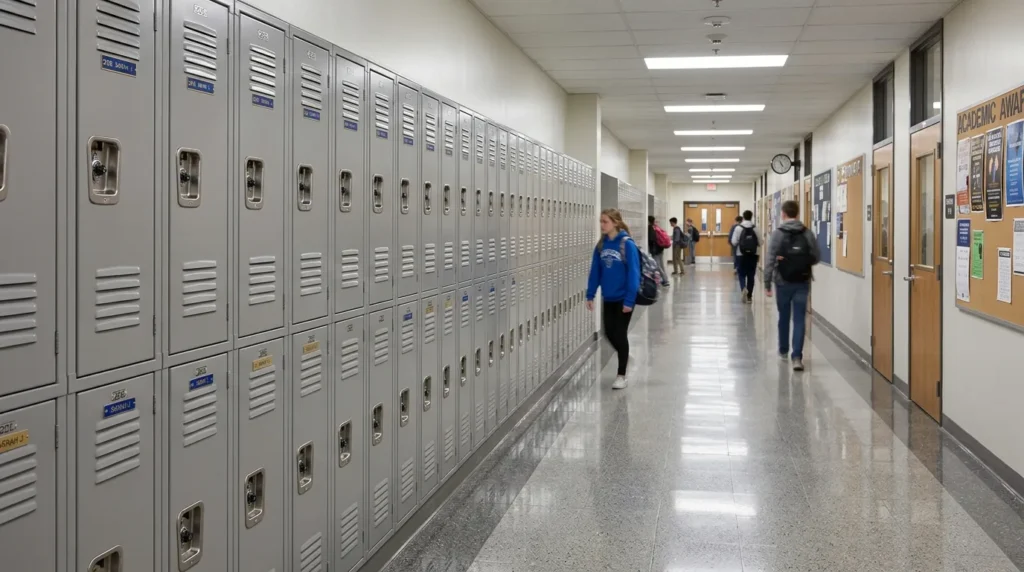
- Creates strong depth with repeated locker doors and clean hallway lines.
- Works well for middle school, high school, and yearbook-style visuals.
- Highlights locker colors, labels, vents, handles, and floor reflections.
- Looks best when the walkway is clear and the camera angle stays level.
A locker side row gives the hallway instant rhythm and visual structure. When you view lockers from the side, the repeated doors naturally guide the eye down the corridor, making the space feel longer and more organized. This idea works beautifully for photography, drawing references, school website visuals, or hallway design planning. In my experience, the best side views happen when locker decorations are consistent, the floor is clean, and the angle is low enough to show depth without making the corridor look distorted.
To make this concept practical, start by clearing loose papers, backpacks, carts, or temporary signs from the walkway. If the lockers have magnetic name tags, number labels, or school-color accents, align them neatly so the row feels intentional. Materials like vinyl numbers, magnetic labels, laminated signs, and subtle spirit decals photograph well from the side. This style can feel modern, nostalgic, or energetic depending on lighting. The final look is polished and familiar, making it perfect for campus visuals with strong perspective.
2. Classroom Door Line
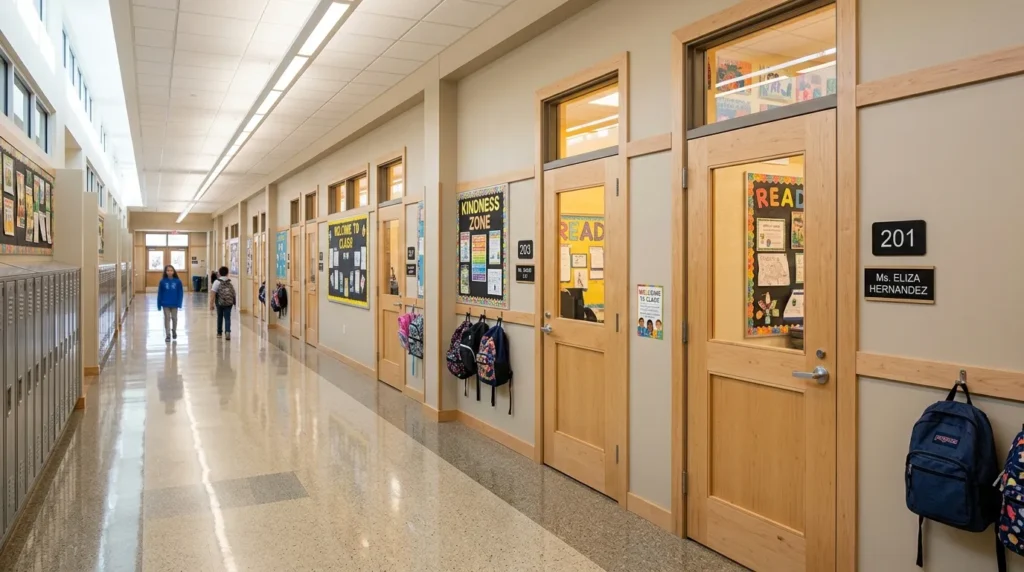
Bullet Points
- Shows repeated classroom doors from a clean side perspective.
- Works for elementary, middle, and high school corridor inspiration.
- Highlights nameplates, room numbers, welcome signs, and door decor.
- Helps create a friendly, organized view of the learning environment.
A classroom door line makes a corridor feel active even when no students are present. From the side, repeated door frames create rhythm, while each doorway can show a little personality through nameplates, room numbers, windows, student work, or seasonal decorations. This is especially helpful for schools that want a welcoming but orderly hallway image. I’ve noticed that classroom doors photograph best when the first door has the most visible detail and the farther doors become simpler as they move into the background.
This idea is useful because it shows how the school is organized without needing a busy scene. Straighten door signs, remove old tape, and make sure displays do not block windows or safety information. Materials such as laminated teacher nameplates, vinyl room numbers, paper wreaths, bulletin borders, and removable decals help the doors look finished. A side view also makes the hallway feel longer and more connected. The result is warm, structured, and ideal for open house visuals, school blogs, and Pinterest-style inspiration.
3. Bulletin Board Strip
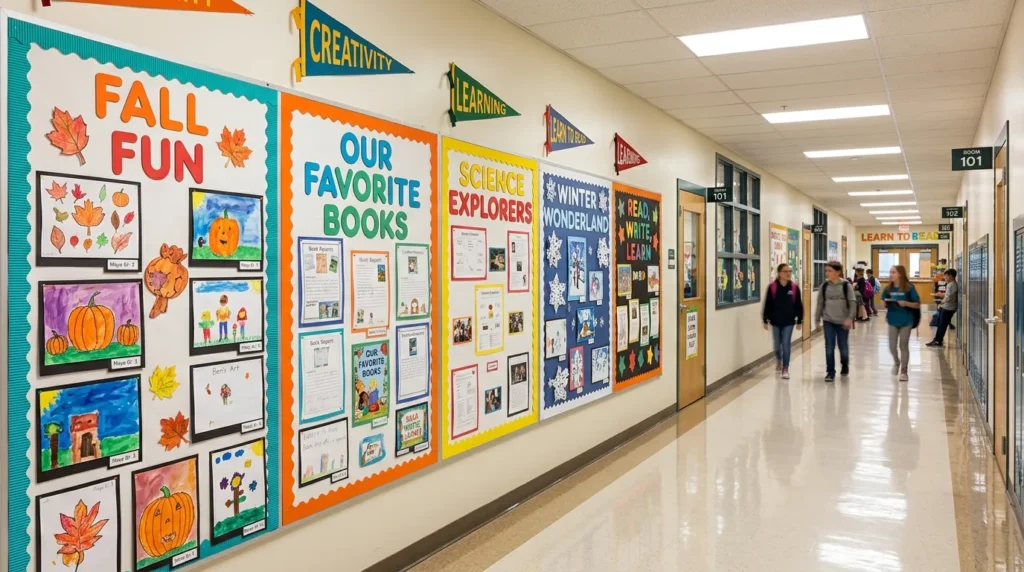
Bullet Points
- Turns hallway displays into a colorful side-view feature.
- Works with student work, announcements, seasonal themes, and class projects.
- Adds depth by showing multiple boards along one wall.
- Looks best with consistent borders, readable titles, and clean spacing.
A bulletin board strip creates a colorful side view that feels full of learning and school personality. Instead of photographing or designing one display straight-on, show several boards continuing down the corridor. This angle highlights the rhythm of student work, title letters, borders, and seasonal pieces while still showing the hallway’s depth. That’s why many school content creators use side angles for display walls; they make a corridor feel active, creative, and visually layered without requiring students in the frame.
To make the view look polished, choose boards with coordinated colors or similar border styles. Smooth wrinkled paper, straighten title letters, and leave breathing room around each display so the wall does not feel crowded. Useful materials include fadeless bulletin paper, laminated letters, scalloped borders, binder clips, and matching title cards. From a side perspective, even simple boards can feel more impressive because the eye follows them down the hallway. This idea works well for newsletters, teacher blogs, classroom decor posts, and seasonal school inspiration.
4. Window Wall
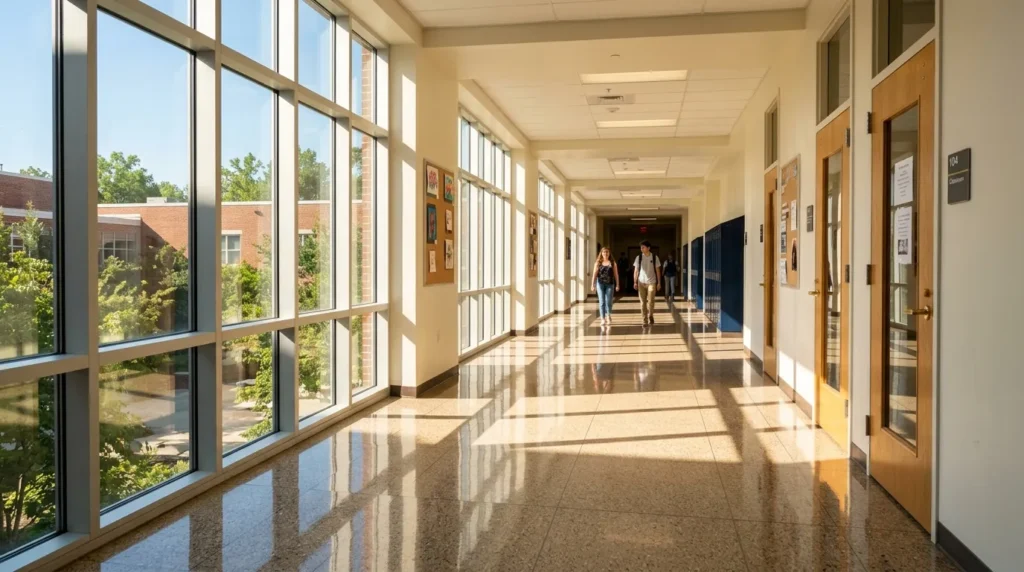
Bullet Points
- Uses natural light to create soft shadows and reflections.
- Works beautifully with polished tile floors and clean corridor lines.
- Adds warmth without needing extra decorations or props.
- Best during morning or late afternoon for gentle side lighting.
A window wall side view can make a school corridor feel calm, bright, and almost cinematic. When sunlight enters from one side, it creates long shadows, floor reflections, and soft highlights on lockers, doors, or display walls. This idea is perfect when you want the hallway to feel peaceful instead of busy. In my experience, natural light works best when the space is tidy, because sunlight can make dust, streaks, and clutter more visible than normal overhead lighting.
For the strongest result, shoot or style the corridor when the sun is lower, usually in the morning or late afternoon. Keep the frame simple so the light becomes the main feature. Polished tile, clean windows, neutral walls, and subtle display boards all support the mood. If the corridor has blinds or window grids, use them to create pattern on the floor. This side-view idea is useful for school websites, Pinterest backgrounds, design planning, or calm campus imagery that feels open and welcoming.
5. Art Gallery Wall
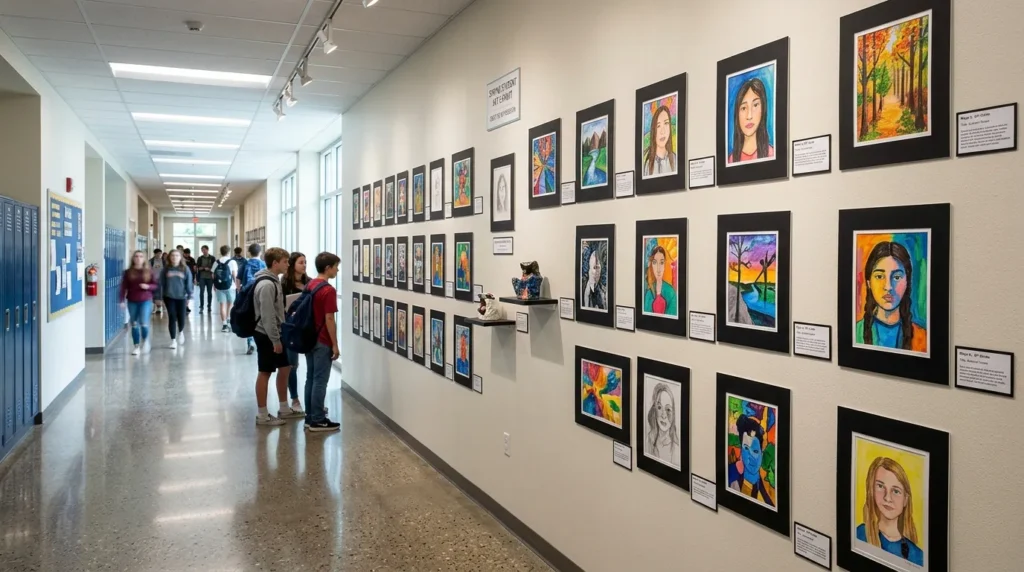
Bullet Points
- Showcases student creativity from a polished side angle.
- Works for art rooms, elementary wings, media centers, and event halls.
- Adds color, authenticity, and community pride to corridor visuals.
- Looks best with matching mats, labels, clips, and organized spacing.
An art gallery wall makes a hallway side view feel personal and creative. When student work is arranged in a neat row along the wall, the side perspective shows both the artwork and the corridor depth. This is more visually interesting than a flat close-up because it places the display inside the school environment. I’ve seen this work well in many schools because families naturally stop to look at student art when the presentation feels organized, bright, and easy to understand.
The key is consistency. Use matching black mats, white labels, clipboards, binder clips, or simple frames to make every piece feel valued. Avoid overcrowding the wall, because a little blank space makes the gallery look more professional. Before photographing or planning the design, check student privacy rules if names appear on labels. This idea works for art shows, parent nights, school newsletters, and Pinterest posts. The finished side view feels warm, authentic, and visually rich while still showing the hallway as a functional school space.
6. Trophy Case View
Bullet Points
- Adds school pride, history, and achievement to the hallway scene.
- Works well for athletic halls, alumni areas, and main corridors.
- Highlights glass, metal trophies, plaques, banners, and reflections.
- Best photographed from a slight side angle to reduce glare.
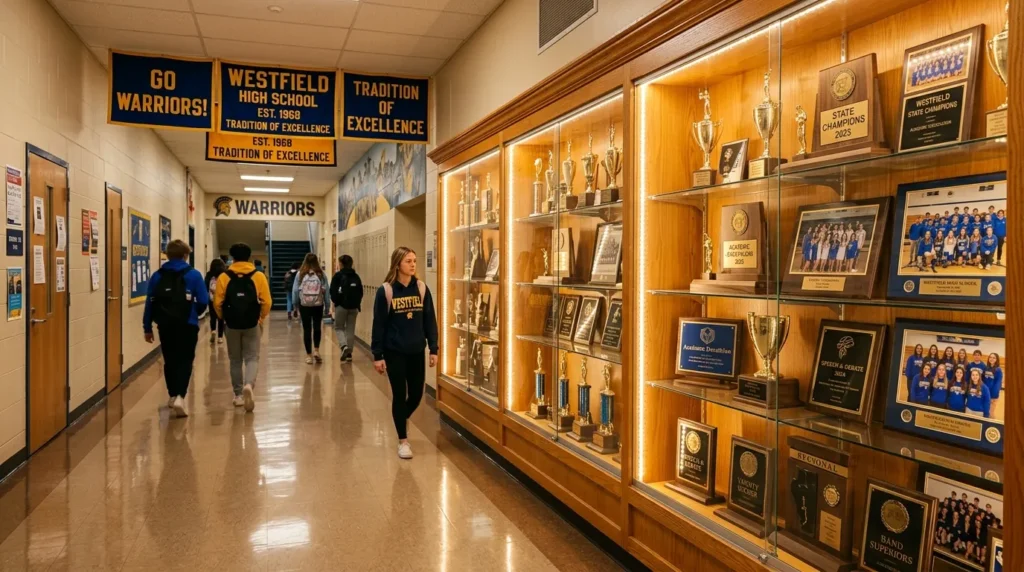
A trophy case side view adds tradition and pride to a corridor without needing extra styling. Glass displays can be difficult to photograph straight-on because they reflect lights, windows, and people, so a side angle is often more flattering. This perspective lets the viewer see the shelves, trophies, plaques, team photos, and hallway depth together. That’s why many photographers angle slightly when shooting glass cases; it reduces glare and makes the display feel more dimensional instead of flat.
To make the scene look polished, clean the glass, arrange visible items neatly, and avoid harsh reflections from overhead fixtures. Gold, silver, bronze, dark wood, and school-color banners photograph beautifully when the lighting is balanced. If the case is crowded, focus on one strong section rather than trying to show everything. This idea works for athletic pages, alumni features, open house visuals, and school pride posts. The side view gives the display context, making the corridor feel established, meaningful, and connected to student achievement.
7. Reading Corner Angle
Bullet Points
- Creates a cozy literacy-focused hallway scene.
- Works near libraries, elementary wings, and intervention spaces.
- Can include book bins, low shelves, benches, rugs, and quote signs.
- Looks best when books are tidy and the walking path stays open.
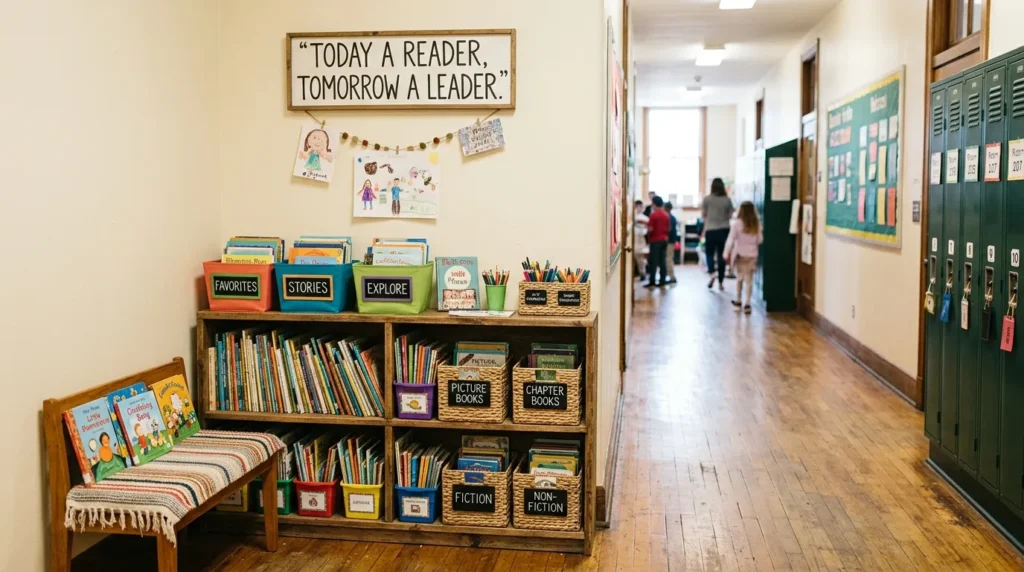
A reading corner angle turns a hallway into a warm literacy moment. From the side, you can show book bins, shelves, a small bench, labels, and the open walkway all in one frame. This matters because the space should look inviting but still safe and practical for student traffic. A cozy reading area should never feel like furniture has been squeezed into a corridor. The side view helps prove the layout works because it shows both the decorative details and the usable path.
Before photographing or designing this setup, organize the books so covers face forward and labels are easy to read. Use low wooden shelves, plastic book bins, woven baskets, laminated signs, and a small rug only where school rules allow. A reading quote or simple wall graphic can help define the area without crowding it. This concept works especially well for library promotions, classroom inspiration, and Pinterest visuals. It makes the hallway feel calmer, softer, and more connected to student learning.
8. Side Light Shadows
Bullet Points
- Uses dramatic shadows to add mood and depth.
- Works with windows, doorway light, overhead fixtures, or glass panels.
- Helps simple corridors feel more artistic and visually memorable.
- Best with clean floors, uncluttered walls, and balanced exposure.
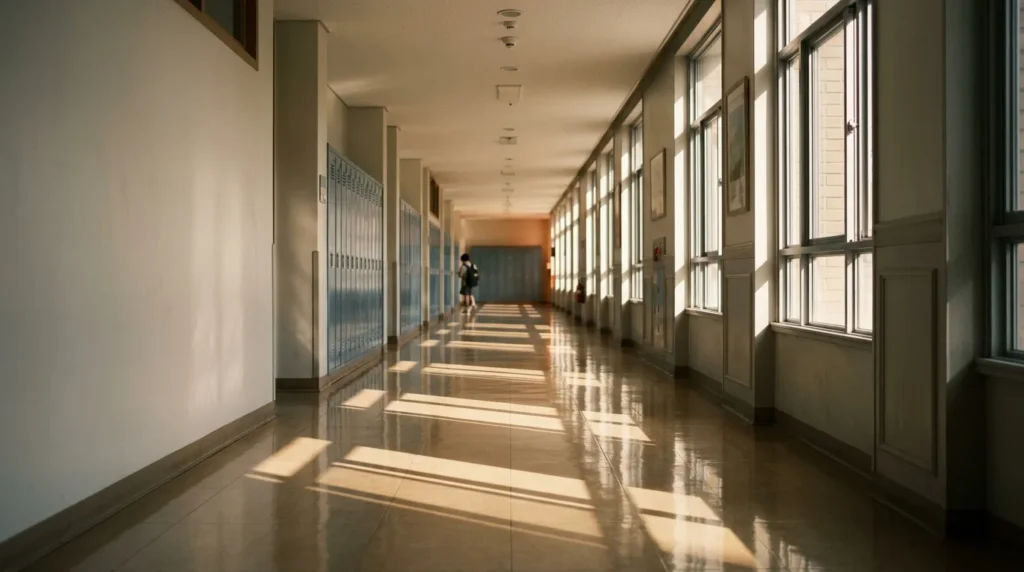
Side light shadows can turn a plain corridor into a dramatic visual composition. When light enters from one side, it creates angles, reflections, and contrast that make walls and floors feel more dimensional. This idea works well for photography, drawing references, digital backgrounds, or school design inspiration. In my experience, even a simple hallway can look beautiful when the lighting is strong and the frame is clean. The trick is letting shadow and light become the main design elements.
To make this work, remove unnecessary clutter and keep the color palette simple. Polished tile floors, neutral walls, locker rows, and classroom doors all respond well to side lighting. Adjust the angle so shadows lead the eye down the corridor instead of cutting awkwardly across the frame. Avoid overexposing bright windows, and keep the darker areas detailed enough to feel soft rather than harsh. The final image feels calm, artistic, and professional, making it useful for websites, Pinterest posts, and editorial-style school visuals.
9. Student Movement
Bullet Points
- Adds energy while still keeping the side-view composition clear.
- Works for arrival, dismissal, passing periods, and candid school-life visuals.
- Can show backpacks, walking feet, locker use, and natural hallway motion.
- Best when privacy permissions and school photography rules are followed.
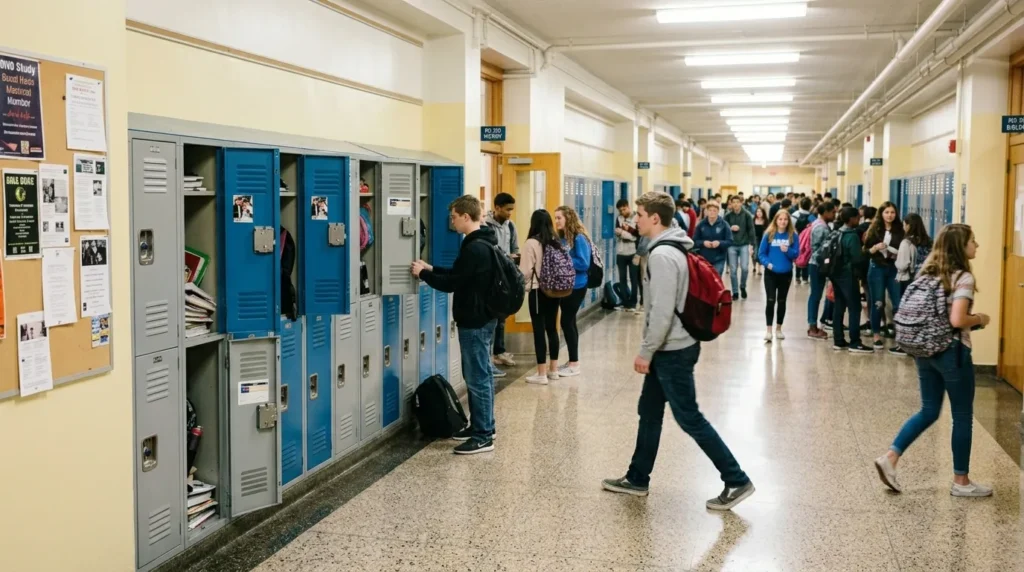
A student movement side view captures the real energy of a school day. Instead of posing a scene, this idea shows students walking, opening lockers, carrying backpacks, or moving between classes. The side angle helps create motion because people pass across the frame while the hallway lines move into the distance. If students appear in the image, always follow school privacy and media permission rules. A beautiful picture is never worth ignoring safety, consent, or district guidelines.
For a polished result, choose one section of the hallway with clean lines and good lighting. Use a wider view to show movement without focusing too closely on individual faces, or capture motion blur if privacy rules allow abstract student forms. Backpacks, sneakers, locker doors, and hallway signs add realism. This idea is useful for yearbooks, school websites, newsletters, and blog visuals because it feels active and honest. The corridor becomes more than architecture; it becomes a space filled with everyday student life.
10. Event Backdrop Side
Bullet Points
- Shows a decorated photo area from a practical hallway angle.
- Works for open house, spirit week, awards, book fairs, and graduation.
- Can include banners, balloons, murals, props, and school colors.
- Best when decor stays off the walking path and lighting is flattering.
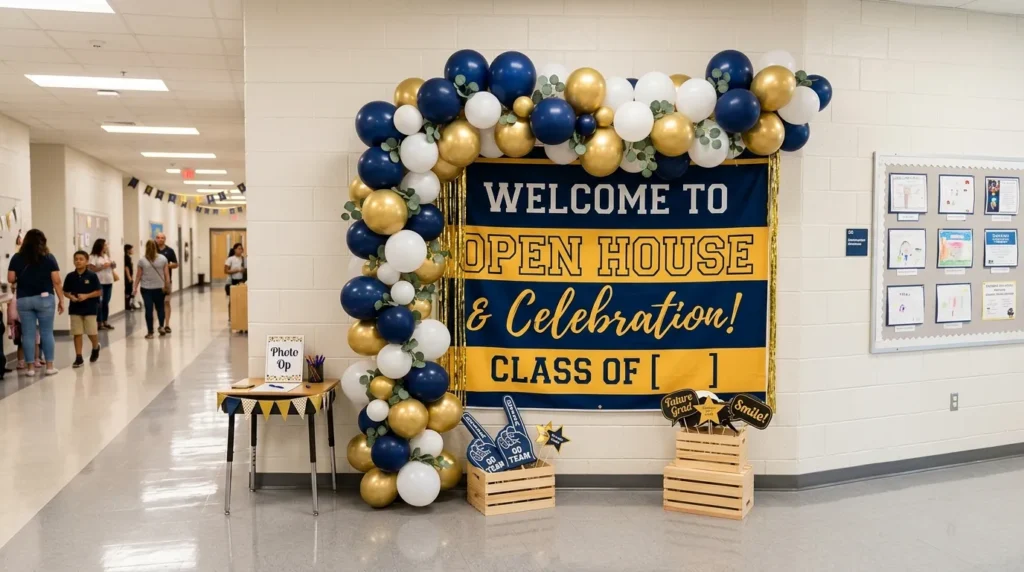
An event backdrop side view shows both the decorated moment and the hallway space around it. This is helpful because schools often create photo areas for open house, spirit week, book fairs, concerts, awards, and graduation events. A straight-on backdrop picture can look pretty, but a side angle shows whether the setup fits safely in the corridor. It also reveals how the decor relates to lockers, walls, doors, and nearby traffic flow, which is useful for planning future events.
To make the backdrop look polished, start with a clean wall, mural section, fabric panel, or school-color banner. Add balloons, pennants, signs, or props without placing items where students might trip. Good lighting is important, especially if families will take phone photos. Keep a labeled bin for reusable props so staff can set up quickly. This side-view idea works well for event recaps, Pinterest inspiration, and school communication because it looks festive while still showing practical layout awareness.
11. Empty Hallway Line
Bullet Points
- Creates a clean, privacy-friendly visual without students in the frame.
- Works for websites, backgrounds, newsletters, and school design posts.
- Highlights architecture, flooring, doors, lockers, and hallway length.
- Best during quiet times before school, after dismissal, or during class.
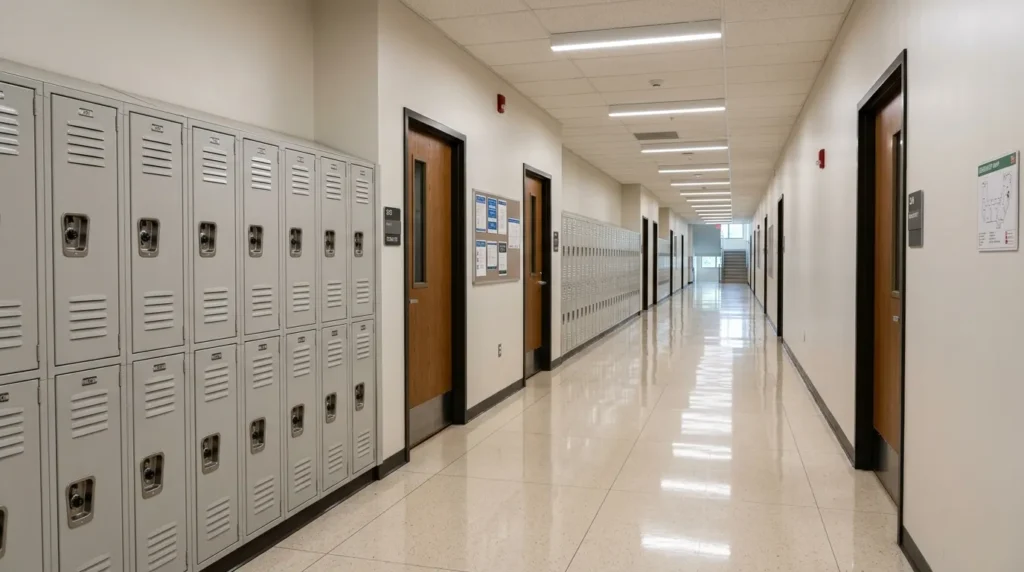
An empty hallway line can feel simple, calm, and professional. Without students in the frame, the viewer notices the architecture, lighting, floor shine, locker rhythm, and classroom doors. This is a great option when privacy rules make student photography difficult or when the goal is a clean background image. A side view adds more depth than a flat wall shot because the hallway seems to stretch naturally across the frame. The result feels useful for many school communication needs.
Before capturing or styling this view, tidy the corridor carefully. Close classroom doors, remove loose papers, straighten display edges, and check that no private information is visible. Use the side lines of lockers, baseboards, tile patterns, or ceiling lights to guide the eye. A School Hallway shown this way can feel orderly, safe, and welcoming without needing extra decor. This idea works beautifully for website banners, Pinterest graphics, brochures, and neutral campus images that need to feel polished and timeless.