Polished Chrome vs Satin Nickel: Which Matches Stainless Steel Appliances?
Deciding between polished chrome vs satin nickel when you have stainless steel appliances is a classic design dilemma for any kitchen renovation. Choosing the right metal finish impacts the entire visual flow of your space, often determining whether your room feels cohesive or cluttered. While stainless steel is the standard for modern refrigerators and ovens,…
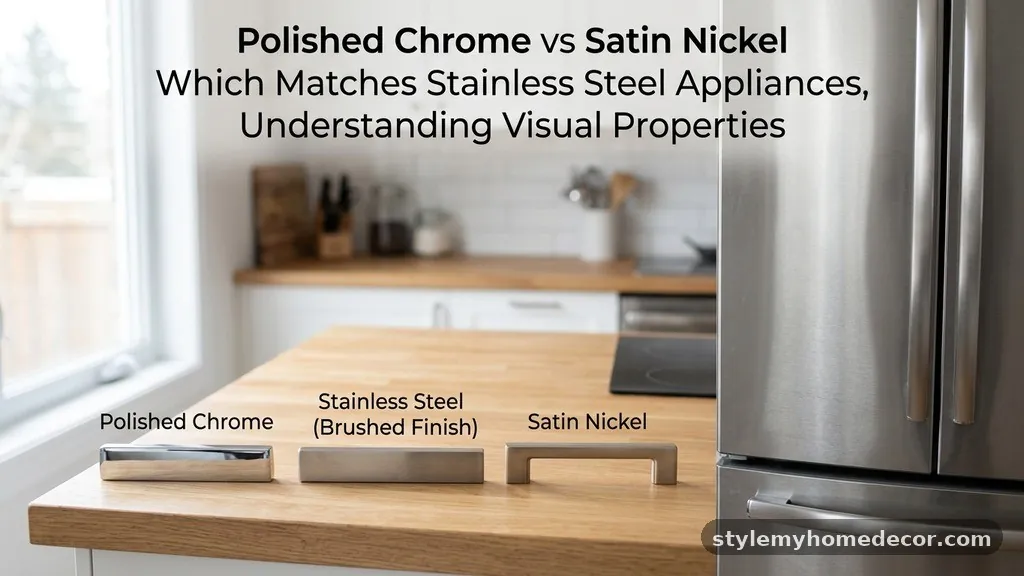
Deciding between polished chrome vs satin nickel when you have stainless steel appliances is a classic design dilemma for any kitchen renovation. Choosing the right metal finish impacts the entire visual flow of your space, often determining whether your room feels cohesive or cluttered. While stainless steel is the standard for modern refrigerators and ovens, the hardware and fixtures you select act as the supporting cast.
Understanding the subtle undertones of these metals helps you avoid common aesthetic mistakes. By evaluating how light reflects off different surfaces, you can select a finish that complements your high-end appliances rather than clashing with their distinct industrial gray hue.
The short answer is that satin nickel is generally the safer, more harmonious choice for pairing with stainless steel appliances. Because stainless steel has a muted, brushed texture, the softer sheen of satin nickel mimics that same matte quality, creating a balanced look.
Polished chrome, by contrast, is highly reflective and contains blue undertones that can make standard stainless steel appear dirty or dull by comparison. While chrome is a classic choice for high-contrast, traditional designs, it rarely provides the seamless, integrated appearance that most modern homeowners seek when matching their cabinet hardware and plumbing fixtures to their appliance suite.
Understanding the Visual Properties of Stainless Steel
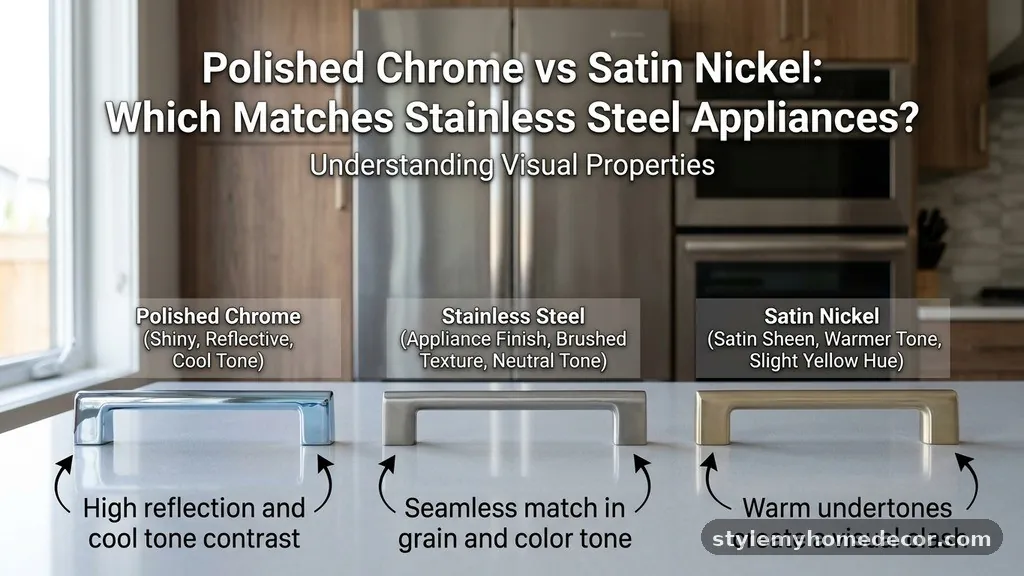
Stainless steel is an alloy primarily composed of iron, chromium, and nickel, which gives it that signature industrial silver appearance. It is almost never perfectly uniform; most appliances have a directional grain created during the manufacturing process.
This grain is what makes stainless steel look “brushed” or matte rather than mirror-like. When you place a highly reflective object next to it, the contrast highlights the inherent texture of the appliance.
Most stainless steel surfaces possess cool, neutral undertones that lean toward gray. Because of this, the metal acts as a neutral base for your kitchen design. You can treat it as a blank canvas, but you must be careful with the finishes you introduce alongside it.
If you introduce a finish that is too warm, like unlacquered brass, the appliances may look cold and clinical. If you introduce a finish that is too bright, like polished chrome, the appliances might appear lackluster.
The Case for Satin Nickel
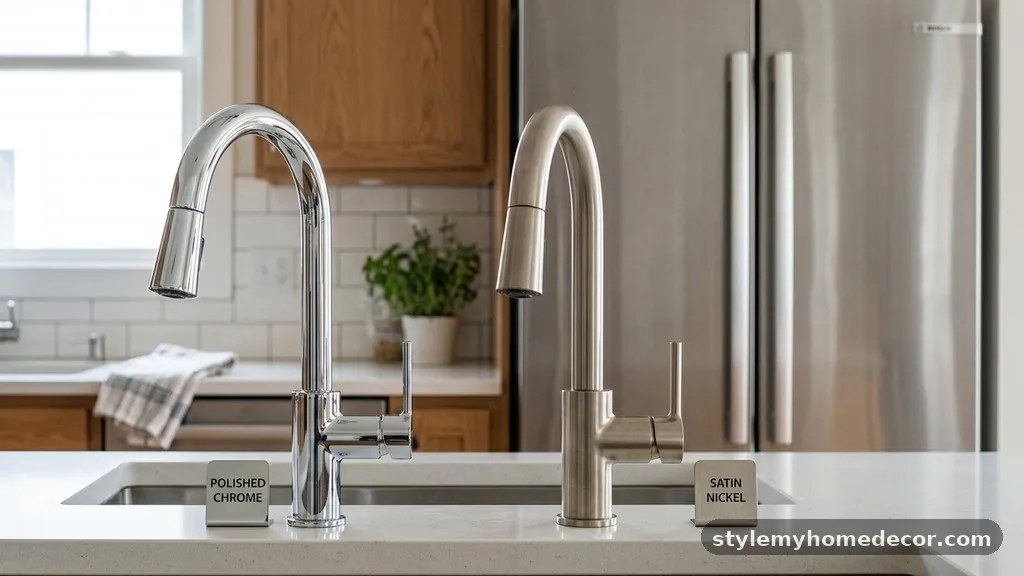
Satin nickel is widely considered the best companion for stainless steel because it shares a similar low-gloss profile. It features a soft, frosted appearance that hides water spots and fingerprints much better than polished alternatives.
This makes it a practical choice for high-traffic areas like the kitchen sink or frequently used cabinet pulls. Because it lacks a mirror-like finish, it doesn’t compete with the stainless steel for attention.
When you install satin nickel fixtures, they tend to blend into the background, allowing the stainless steel appliances to remain the focal point of the kitchen. This creates a sense of unity, as the eye isn’t constantly jumping between a bright, shiny faucet and a dull, brushed refrigerator.
Many designers prefer this “tone-on-tone” approach because it feels sophisticated and intentional. It suggests that the kitchen was designed as a cohesive unit rather than assembled from mismatched parts.
Why Polished Chrome Creates High Contrast
Polished chrome is a classic, timeless choice that has been used in bathrooms and kitchens for decades. It is achieved through electroplating, which leaves a hard, reflective surface that is incredibly durable and easy to clean.
Unlike nickel, which can sometimes have a warm, slightly yellow or gold undertone, chrome is strictly cool-toned. It reflects light intensely, which can make a small or dim kitchen feel larger and brighter.
However, this high reflectivity is precisely why it often clashes with stainless steel. When you look at a polished chrome faucet next to a stainless steel dishwasher, the difference in light refraction is jarring. The chrome will look like a bright, white-silver, while the stainless steel will look like a soft, gray-silver.
This contrast can make the stainless steel appear dingy, even if it is perfectly clean. If you love the look of chrome, you should use it in areas where it can stand alone, such as in a powder room, rather than directly adjacent to your major appliances.
Comparing Durability and Maintenance
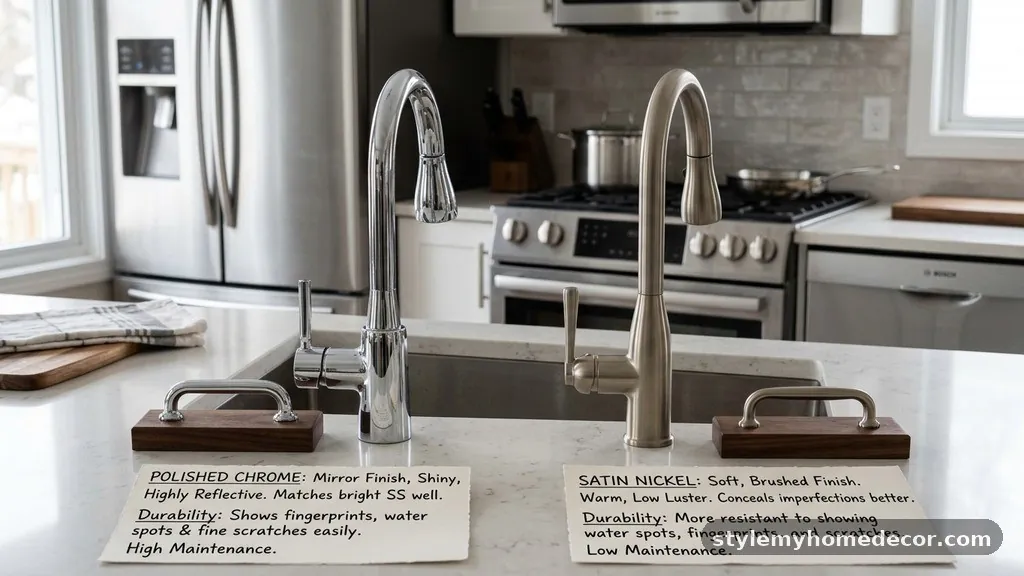
When you are choosing between these finishes, maintenance should be a primary factor in your decision. Polished chrome is arguably the easiest metal to clean because it is non-porous and resists staining.
However, it shows every single water droplet, soap scum buildup, and fingerprint because of its reflective surface. You will find yourself wiping down chrome fixtures daily if you want them to maintain that “sparkling” look.
Satin nickel, on the other hand, is a champion of hiding daily wear. Its semi-matte finish is designed to mask the inevitable imperfections that come with a busy kitchen.
While it is slightly more prone to corrosion in extremely humid environments compared to chrome, it is perfectly suited for standard indoor kitchen use. For more information on the long-term wear of different materials, you can visit the National Park Service guide on metal preservation to understand how different alloys react to their environment.
The Role of Lighting in Your Kitchen
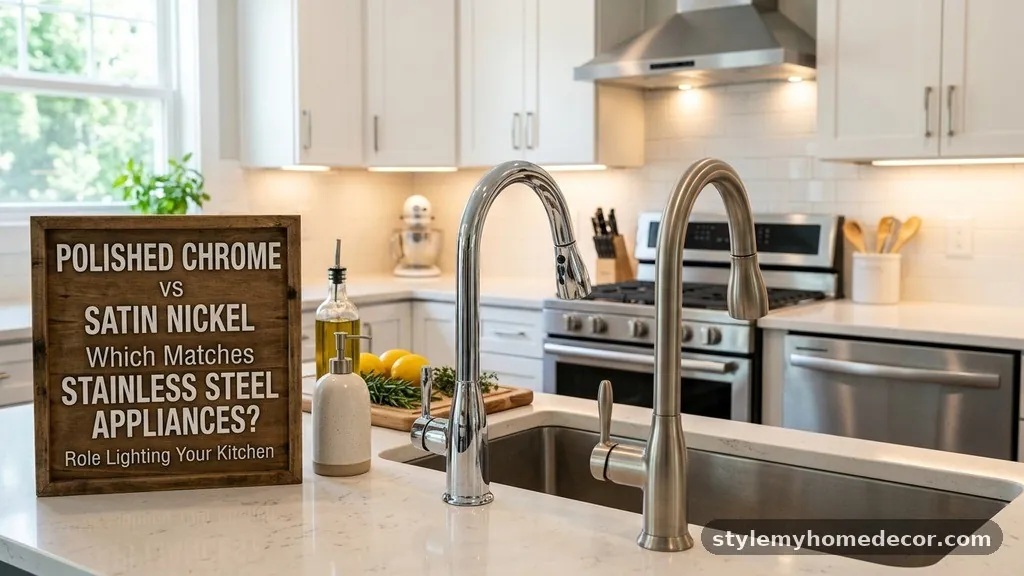
Lighting plays a massive role in how these finishes appear in your home. In a kitchen with abundant natural light, polished chrome will catch the sun and create bright highlights throughout the room.
This can be a beautiful effect, but it can also make the room feel colder. If your kitchen has large windows and a lot of natural light, the subtle, muted glow of satin nickel often feels more grounded and cozy.
In darker kitchens with limited natural light, polished chrome can actually help by reflecting whatever light is available. If you have an enclosed kitchen with few windows, chrome might brighten the space.
However, you must be prepared for the contrast it will create with your appliances. If you decide to go with chrome in a darker space, consider pairing it with warmer cabinetry or wood tones to offset the coolness of the metal.
Design Styles and Historical Context
The choice between these two finishes often depends on the overall style of your home. Polished chrome is a staple of mid-century modern, retro, and traditional design aesthetics.
If you are aiming for a classic, clean look that mimics the kitchens of the 1950s, chrome is the authentic choice. It feels sharp, precise, and historical.
Satin nickel fits better within transitional, farmhouse, and contemporary design schemes. It feels softer and more approachable, which aligns with modern trends that prioritize comfort and warmth.
If your kitchen features shaker-style cabinets and neutral paint colors, satin nickel is usually the preferred option. It provides a subtle layer of detail without overwhelming the room with metallic shine.
Mixing Metals Successfully
Many homeowners feel paralyzed by the idea that they must stick to one finish throughout the entire house. This is an outdated design rule that rarely applies to modern, eclectic homes.
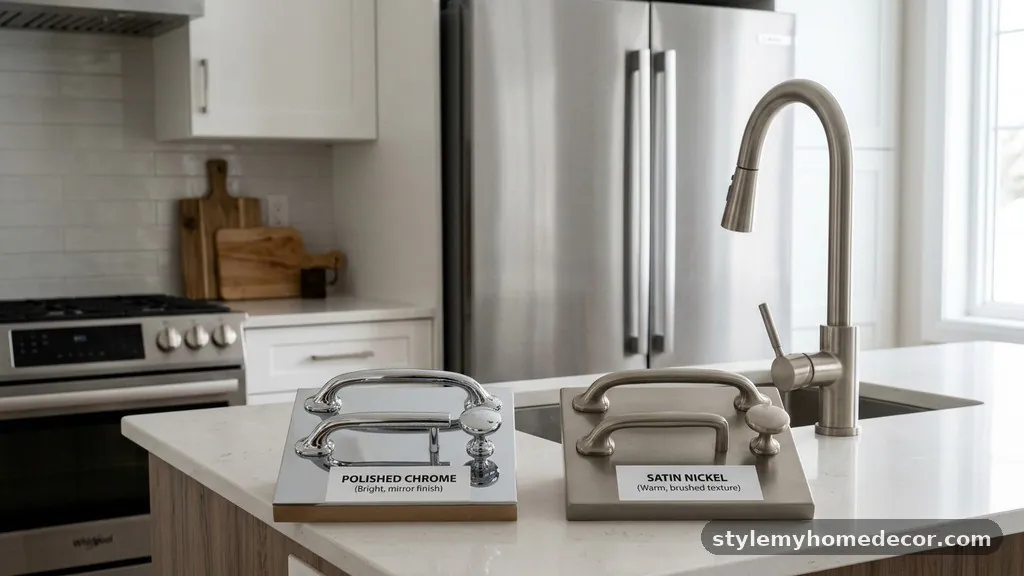
You can absolutely mix metals, provided you do so with intention and balance. For example, you might choose satin nickel for your kitchen cabinet hardware and faucet to match the stainless steel appliances.
At the same time, you could incorporate polished chrome in a nearby light fixture or a decorative element like a bar stool base. The key is to ensure that the dominant metal—the one that makes up the majority of the fixtures—is the one that matches the appliances.
Once you have established that base, you can introduce a secondary metal as an accent. This adds character and prevents the kitchen from feeling like a showroom catalog.
Common Mistakes to Avoid
One of the biggest mistakes people make is choosing a finish based solely on a photograph online. Finishes like “satin nickel” and “brushed nickel” can vary significantly between manufacturers.
One brand’s satin nickel might look almost gold, while another brand’s might look like flat gray paint. Always order a physical sample of the hardware before purchasing a full set for your entire kitchen.
Another common error is ignoring the undertones of the metal. If you have “warm” stainless steel appliances that lean slightly toward a gold or copper hue, a cool-toned polished chrome will look especially out of place.
Similarly, if your kitchen is full of cool, blue-toned grays, avoid nickel finishes that have a heavy yellow undertone. Pay attention to how the metal looks under your specific kitchen lighting, not just in the store.
Summary Comparison Table
This table provides a quick look at how these two finishes compare across key categories that homeowners typically prioritize when making a renovation decision.
| Feature | Polished Chrome | Satin Nickel |
|---|---|---|
| Reflectivity | High (Mirror-like) | Low (Satin/Matte) |
| Maintenance | Easy to clean, but shows spots | Easy to clean, hides spots |
| Tone | Cool (Blue/White) | Neutral (Soft Silver) |
| Appliance Match | High Contrast | Seamless/Cohesive |
| Best Style | Retro/Traditional | Transitional/Modern |
Frequently Asked Questions
Does brushed nickel or chrome go better with stainless steel?
Brushed nickel is almost always the better choice for matching stainless steel. Because stainless steel has a brushed, non-reflective surface, the texture of brushed or satin nickel feels like a natural extension of the appliance finish. Chrome creates a high-contrast look that can make stainless steel appear dull by comparison.
Is polished nickel the same as polished chrome?
No, they are quite different. Polished nickel has a warmer, slightly golden or brassy undertone compared to the cool, blue-white tone of polished chrome. While polished chrome is very hard and reflective, polished nickel is often considered a “living finish” that can develop a slight patina over time, making it feel more luxurious and traditional.
Can I mix chrome and stainless steel in the same kitchen?
You can, but it requires careful planning. If you want to use chrome, try to use it for items that are not directly touching or immediately adjacent to your stainless steel appliances. For instance, use chrome for pendant lighting or cabinet hardware in a different part of the room, while keeping the main sink and appliance hardware in a brushed or satin finish.
What is the difference between satin nickel and brushed nickel?
The terms are often used interchangeably, but there is a subtle difference in the manufacturing process. Brushed nickel is created by using a wire brush to create fine, visible lines on the metal, giving it a textured look. Satin nickel is created through a chemical process that results in a smoother, more uniform, and slightly more matte appearance without the visible “brushed” lines.
Conclusion
Selecting the right hardware for your kitchen is a balancing act of texture, tone, and practical maintenance. While polished chrome offers a sharp, clean aesthetic, the muted, professional look of satin nickel remains the most reliable partner for stainless steel appliances. By choosing a finish that mirrors the matte nature of your appliances, you create a space that feels unified, intentional, and high-end.
Ultimately, your kitchen should reflect your personal taste, but keeping these material properties in mind will help you avoid common design conflicts. Before finalizing your selection, bring home samples and view them in your own lighting to ensure the undertones align with your space. Whether you prioritize the ease of maintenance or the specific visual impact of your fixtures, understanding the nuances of polished chrome vs satin nickel will guide you toward a beautiful, cohesive final result.