
Concealed Soft-Close Hinges vs Traditional Butt Hinges: Which Lasts Longer?
Deciding between concealed soft-close hinges vs traditional butt hinges often comes down to balancing modern mechanical convenience with long-term structural reliability. While soft-close mechanisms offer a premium, silent user experience, their internal components introduce points of failure that simple, rugged butt hinges avoid. If you are prioritizing sheer longevity and repairability, traditional butt hinges generally…
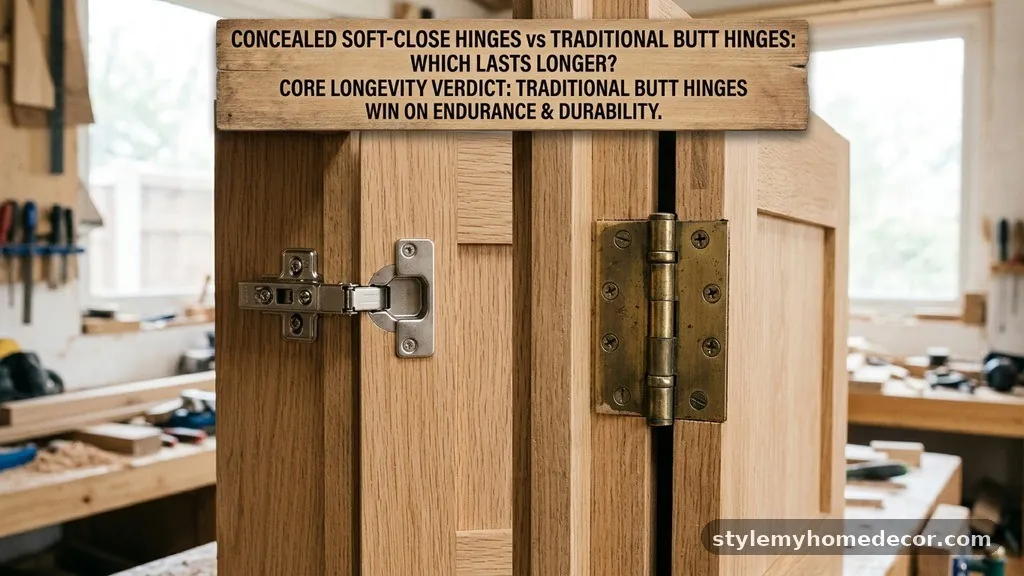
Deciding between concealed soft-close hinges vs traditional butt hinges often comes down to balancing modern mechanical convenience with long-term structural reliability. While soft-close mechanisms offer a premium, silent user experience, their internal components introduce points of failure that simple, rugged butt hinges avoid. If you are prioritizing sheer longevity and repairability, traditional butt hinges generally outlast their concealed counterparts because they lack complex hydraulic or spring-loaded parts.
However, the choice depends heavily on your specific application, the weight of your doors, and your tolerance for periodic maintenance. This analysis explores the mechanical differences, durability profiles, and practical trade-offs you need to consider before finalizing your hardware selection for your next home project.
The Core Longevity Verdict
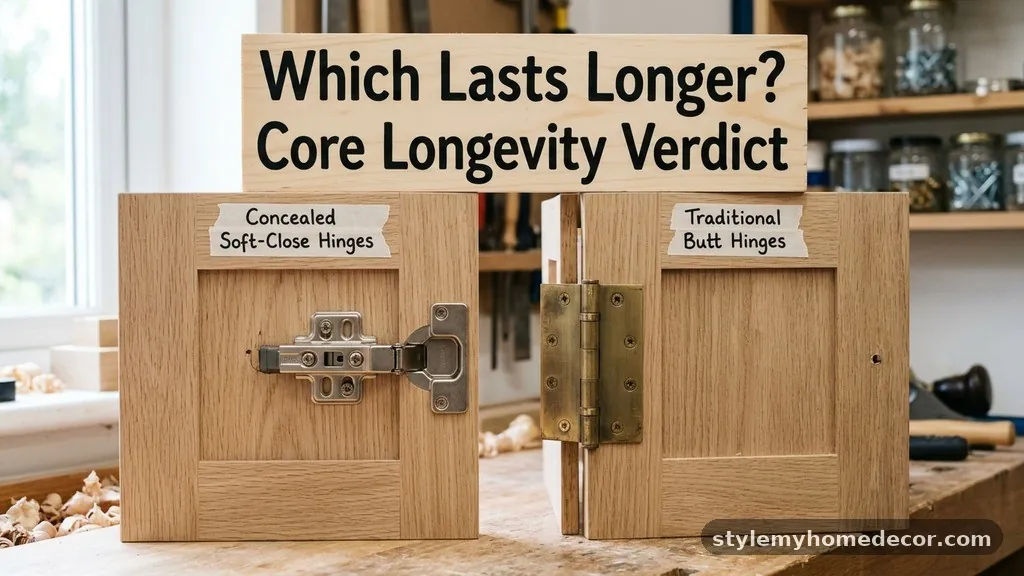
When evaluating concealed soft-close hinges vs traditional butt hinges, the traditional butt hinge is the undisputed winner in terms of raw lifespan. A high-quality solid brass or steel butt hinge can easily function for 50 to 100 years with nothing more than an occasional drop of lubricant. Because these hinges are essentially two metal plates connected by a simple pin, there are no internal seals, springs, or dampeners to degrade over time.
In contrast, even the highest-end soft-close concealed hinges are mechanical assemblies with a finite cycle life. Most manufacturers rate these hinges for approximately 50,000 to 100,000 cycles, which translates to about 15 to 20 years of heavy daily use.
The failure point for a soft-close hinge is almost always the integrated hydraulic piston or the tension spring. Once the internal fluid leaks or the spring loses its calibrated resistance, the soft-close feature fails, and the hinge often becomes “sloppy” or refuses to hold the door in proper alignment.
While you can replace a bad soft-close hinge, the process is more involved than simply oiling a squeaky butt hinge. If you want a “fit and forget” solution that will outlive your kitchen cabinets or room doors, the minimalist design of the butt hinge remains the superior engineering choice.
Mechanical Differences and Complexity
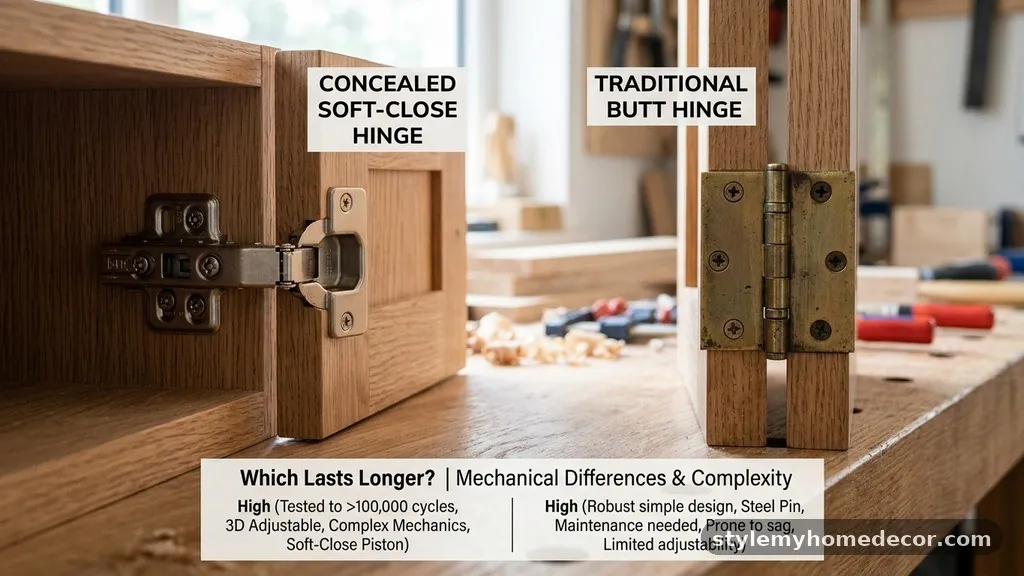
The structural simplicity of the butt hinge is its greatest strength. It is a surface-mounted or mortised piece of hardware that acts as a hinge pivot point, distributing the weight of the door directly into the frame.
There is no hidden mechanism to manage the speed of the door; the kinetic energy of closing is absorbed entirely by the door stop or the frame itself. This makes the butt hinge incredibly tolerant of heavy, solid-wood doors that might otherwise warp or sag over time.
Concealed hinges, conversely, rely on a complex multi-pivot system that allows the door to swing inward while hiding the hardware from view. This design requires precise milling of the door and the cabinet box, which creates a larger footprint in the wood compared to a standard butt hinge.
Because they are hidden, these hinges must incorporate adjustment screws to allow for three-dimensional alignment. While these adjustments are a significant advantage for achieving a perfect flush fit, they also introduce more loose parts that can vibrate or shift over years of use.
Load Capacity and Heavy Door Performance
When dealing with heavy, solid-core doors, the load-bearing capacity of your hardware becomes the primary concern. Butt hinges are frequently used in commercial settings precisely because they can be scaled up in size and thickness to handle massive weight.
A heavy-duty ball-bearing butt hinge can support doors weighing several hundred pounds without breaking a sweat. The metal-on-metal contact is designed to withstand high torque and consistent downward pressure over decades.
Soft-close concealed hinges have specific weight limits, and exceeding them is the fastest way to shorten their lifespan. Even “heavy-duty” versions of concealed hinges struggle to match the sheer physical robustness of a traditional hinge.
If you install a soft-close hinge on a door that is slightly too heavy, the hydraulic mechanism will work overtime, leading to premature failure of the internal dampener. If you are hanging a heavy pantry door or a solid oak interior door, you should always verify the manufacturer’s weight specifications before opting for concealed hardware.
Installation and Maintenance Requirements
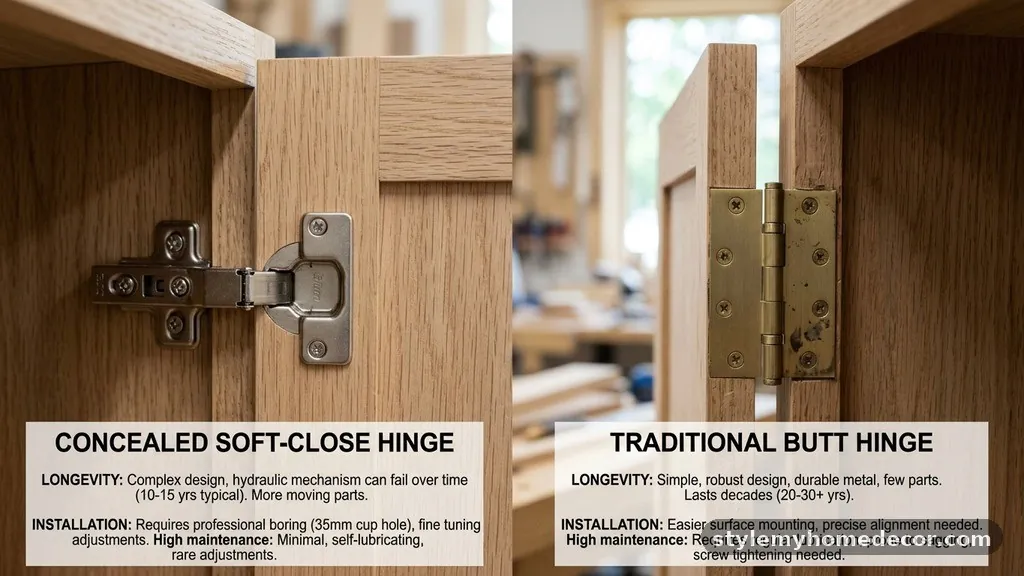
Installing traditional butt hinges is a skill that has been refined over centuries, requiring only a chisel, a hammer, and a drill. If the door sags after a few years, a simple adjustment to the hinge pin or a slightly tighter screw is often all that is required to fix the issue.
Maintenance is infrequent and usually limited to ensuring the pin remains seated and the hinge stays lubricated. Because the hardware is visible, you can easily inspect the condition of the metal and the integrity of the mounting screws without removing the door.
Concealed hinges require a specialized drill bit—usually a 35mm Forstner bit—to create the large circular pocket in the door. This process removes a significant amount of material from the edge of the door, which can weaken the wood if the door is constructed from cheap particleboard or thin veneer.
Once installed, these hinges are difficult to inspect because they are tucked inside the cabinet cavity. Furthermore, if you encounter a misalignment, you must understand the specific adjustment screws for depth, height, and lateral movement.
Aesthetics and Modern Design Trends
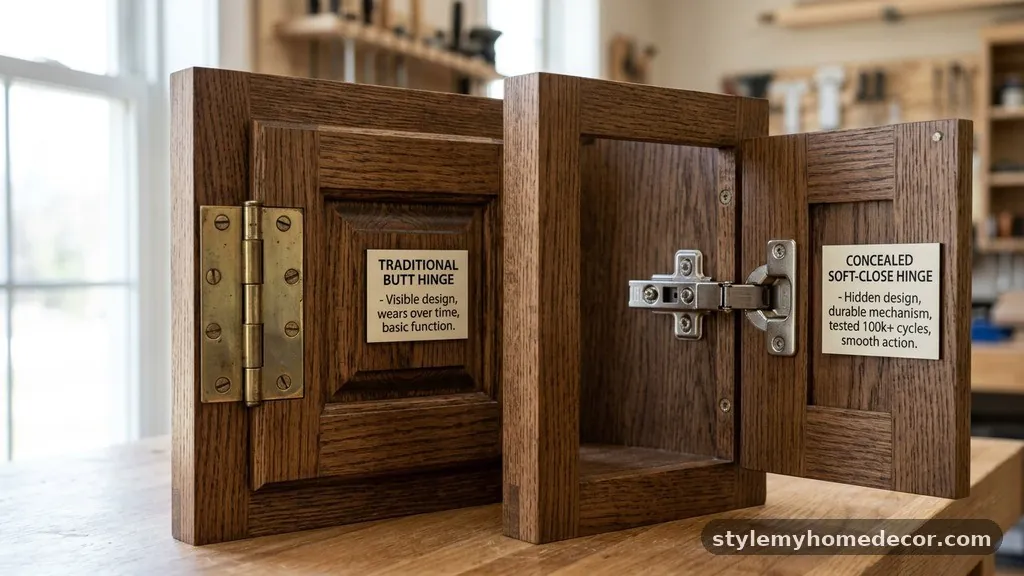
The primary reason homeowners choose concealed soft-close hinges is the clean, modern aesthetic they provide. When the door is closed, the hardware is completely invisible, allowing the cabinet or door design to take center stage without the distraction of visible metal plates.
This is a hallmark of contemporary minimalist design and is considered a requirement for high-end custom cabinetry. The “soft-close” feature also provides a premium feel, preventing the jarring “slam” associated with traditional cabinetry.
Traditional butt hinges are inherently visible, which can be a design feature or a drawback depending on your preference. In historic homes or farmhouse-style interiors, exposed brass or iron butt hinges are often seen as a decorative element that adds character to the space.
You can choose from various finishes, such as oil-rubbed bronze, brushed nickel, or polished brass, to complement your decor. However, if you are striving for a sleek, handleless, or ultra-modern look, the visible nature of a butt hinge will likely clash with your design goals.
Common Problems and Failure Modes
Every type of hinge has its own set of potential issues that can arise over time. For butt hinges, the most common problem is “hinge binding” or the wood around the screws stripping out.
This usually happens when the door is installed improperly or the wood frame settles, putting uneven stress on the screws. These issues are easily remedied with wood filler, longer screws, or a light sanding of the door edge.
Soft-close hinges face different risks, primarily related to the internal dampening fluid. Over time, the seals can dry out or the fluid can leak, leading to the “bouncy” door effect where the soft-close feature stops working entirely.
Another common issue is the “pop-off,” where the clip-on mechanism that attaches the hinge to the mounting plate fails due to vibration or poor manufacturing quality. Once the plastic or thin-metal internal catch wears down, the door may become loose or detach from the cabinet box, requiring a full hinge replacement.
Comparative Data Analysis
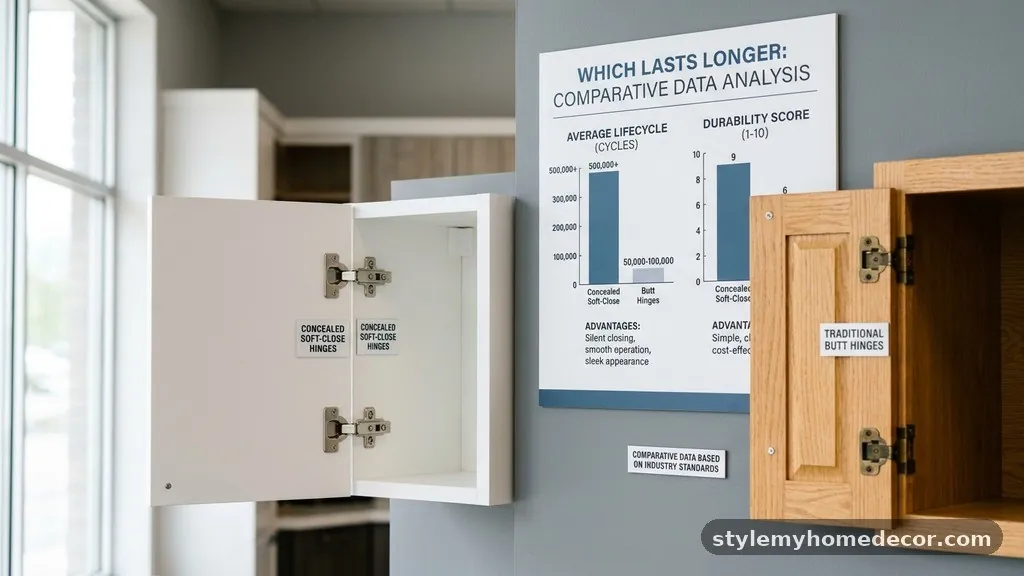
To help visualize the trade-offs between these two systems, the following table breaks down the core performance metrics.
| Feature | Traditional Butt Hinge | Concealed Soft-Close Hinge |
|---|---|---|
| Lifespan | 50+ years | 15–20 years |
| Maintenance | Minimal (lubrication) | Moderate (adjustment/cleaning) |
| Installation Difficulty | Low (manual tools) | Moderate (requires router/drill) |
| Weight Capacity | High (scales with size) | Limited (by spring/piston) |
| Aesthetic Impact | Visible (decorative) | Hidden (minimalist) |
Choosing the Right Hardware for Your Project
Selecting the right hinge depends on the specific room and the intended use of the door. For high-traffic areas like a kitchen, the convenience of a soft-close mechanism is difficult to ignore.
The ability to push a heavy drawer or door and have it close silently is a significant upgrade in quality of life. In these spaces, you are essentially paying for comfort and a modern look, accepting that you may need to replace a few hinges every two decades.
For doors in a basement, a garage, or a classic study, the reliability of a butt hinge is usually the better investment. These areas often benefit from the industrial, long-lasting nature of traditional hardware.
If you are building heirloom-quality furniture, you should look into proper hinge selection and installation techniques to ensure your project stands the test of time. Always consider the thickness and density of the wood you are using, as thin materials may not support the large cutouts required for concealed hinges.
Frequently Asked Questions
How often should I lubricate my traditional butt hinges to ensure they last?
For most interior doors, a light application of a silicone-based lubricant or a dry graphite spray once every two to three years is sufficient. Avoid thick greases that can attract dust and grime, which will eventually act as an abrasive inside the hinge pivot.
Can I upgrade my existing cabinets from standard hinges to soft-close?
Yes, but it requires careful measurement. You must ensure the new hinge matches the existing hole pattern or that you have the tools to drill new holes in the cabinet face frame. Many manufacturers offer “adapter plates” that allow you to retrofit soft-close technology onto existing door bores, though these can sometimes change the door’s alignment slightly.
Why do my soft-close doors sometimes fail to close completely?
This is usually caused by the tension setting being too low or a build-up of debris in the dampening mechanism. First, check if your hinge has an adjustment screw for the closing speed; increasing the tension can often solve the issue. If that fails, clean the area around the hinge to ensure no dust or grease is obstructing the movement of the piston.
Are there any heavy-duty concealed hinges available for larger doors?
Yes, high-end manufacturers produce specialized concealed hinges designed for doors up to 100 pounds or more. These units feature reinforced metal arms and larger mounting plates to distribute the load, but they come at a significant price premium compared to standard cabinet hinges.
Is it possible to repair a broken soft-close mechanism?
Generally, no. The internal hydraulic chambers are factory-sealed, and once the seal is breached or the fluid leaks, the unit cannot be “repaired” in the traditional sense. It is almost always more cost-effective and reliable to replace the entire hinge unit rather than attempting to disassemble the housing.
Conclusion
When evaluating concealed soft-close hinges vs traditional butt hinges, the decision rests on whether you prioritize long-term durability or modern convenience. Traditional butt hinges are the clear choice for longevity, offering a simple, robust design that can last for generations with minimal upkeep.
They remain the standard for heavy-duty applications where structural integrity is the primary concern. Conversely, concealed soft-close hinges offer a sleek, silent, and sophisticated user experience that defines modern interior design.
While the mechanical complexity of soft-close systems inevitably introduces a shorter service life, the daily comfort they provide is often worth the trade-off for many homeowners. Assess the weight of your doors, the frequency of use, and your aesthetic goals before making a final commitment.
If you choose the path of concealed hardware, prioritize high-quality brands to maximize your cycle count, and if you choose the path of traditional butt hinges, ensure you use high-quality materials that will age gracefully. Whether you are aiming for a classic look or a contemporary finish, choosing the right hardware ensures your doors perform perfectly for years to come.