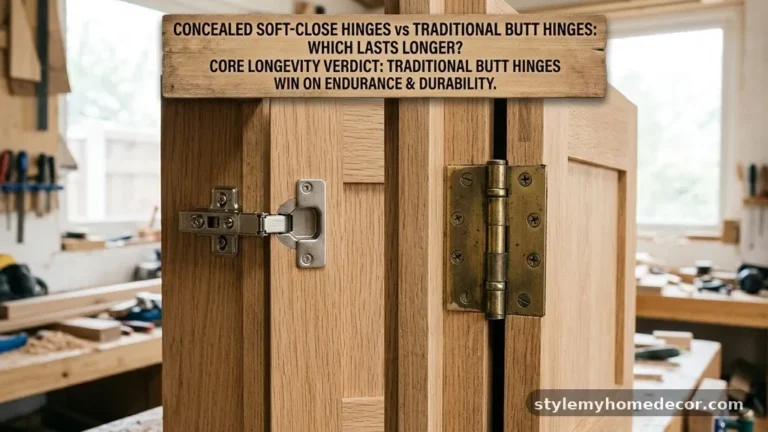
How to Stop Kitchen Cabinet Doors from Banging into Adjacent Walls
Addressing the issue of stopping Kitchen Cabinet Doors from Banging into Adjacent Walls is a common home maintenance task that prevents long-term damage to your paint and cabinetry. Whether you have just installed new custom units or are dealing with older hardware that has loosened over time, the constant impact creates unsightly dents and chips….
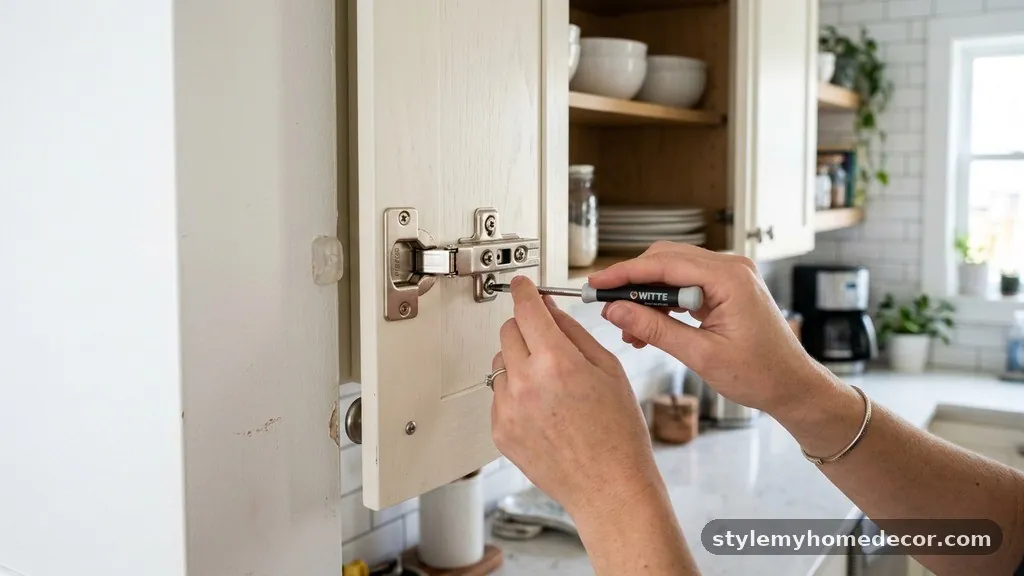
Addressing the issue of stopping Kitchen Cabinet Doors from Banging into Adjacent Walls is a common home maintenance task that prevents long-term damage to your paint and cabinetry. Whether you have just installed new custom units or are dealing with older hardware that has loosened over time, the constant impact creates unsightly dents and chips. By implementing simple mechanical adjustments or adding small protective accessories, you can easily protect your surfaces.
This process requires minimal tools and can often be completed in under twenty minutes. You will find that these small, proactive changes significantly extend the lifespan of your kitchen finishes while eliminating the noise of slamming doors.
Adjusting the Hinge Opening Angle
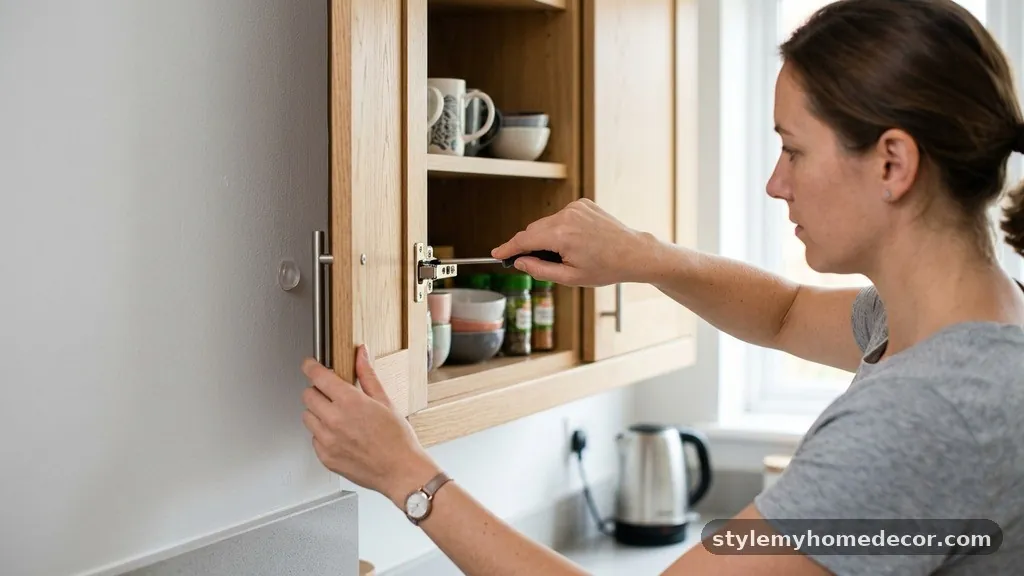
Most modern kitchen cabinet doors are mounted using European-style cup hinges that feature built-in adjustment screws. These screws allow you to calibrate the depth, height, and side-to-side position of the door with precision.
Many of these hinges also include an integrated stop feature that allows you to reduce the maximum swing of the door. By turning the adjustment screw, you can physically restrict the door opening angle so it never reaches the point of contact with the adjacent wall.
Locate the adjustment screw on the hinge arm closest to the cabinet box. You will typically need a Phillips head screwdriver to manipulate this mechanism.
As you turn the screw, watch the door movement carefully to ensure you do not restrict it so much that it becomes difficult to access the interior of the cabinet. This method is the most professional way to address the problem because it requires no extra parts and leaves the interior of your cabinets looking clean and original.
Installing Hinge Restrictor Clips
If your existing hinges do not have a built-in adjustment range that is sufficient for your needs, you can install a hinge restrictor clip. These small plastic or metal pieces snap directly into the hinge mechanism to limit how far the door can open.
Most manufacturers design these clips to reduce the opening angle from the standard 110 degrees down to 86 or 90 degrees. This is often enough to keep a door from hitting the wall entirely.
You should identify the brand of your hinges before purchasing these clips, as they are rarely universal. Look for a stamp on the hinge arm that indicates the manufacturer name, such as Blum, Salice, or Grass.
Once you have the correct model, installation is as easy as snapping the clip into the designated slot on the hinge arm. These clips are inexpensive and provide a permanent, reliable solution for high-traffic kitchens where doors are frequently opened with force.
Applying Adhesive Bumper Pads
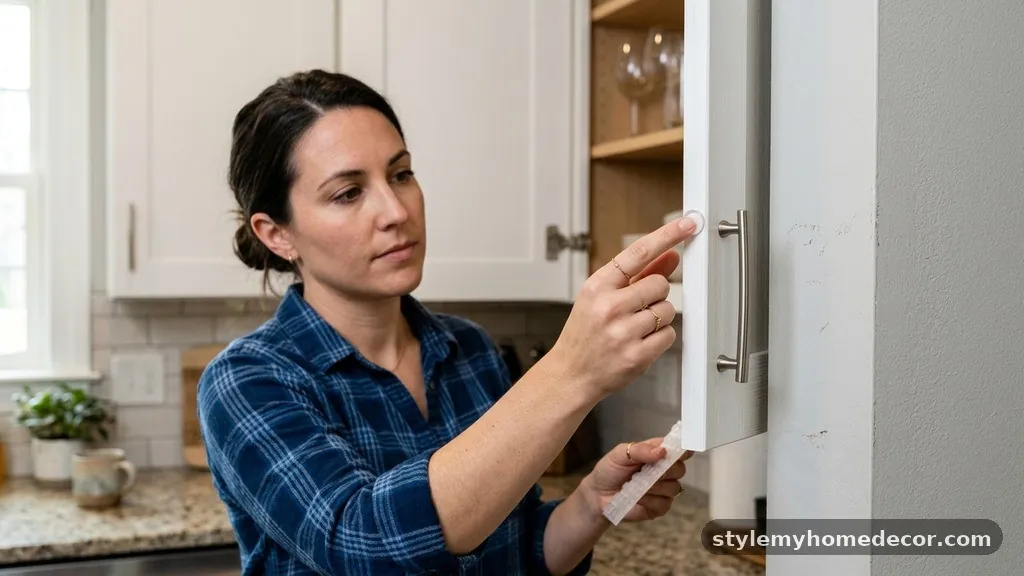
Adhesive bumpers are the most straightforward solution for protecting walls from door knobs or the edge of a cabinet door. These small, clear, or colored silicone dots act as a buffer between the hard surface of the door and the drywall.
They are available in various thicknesses and diameters, allowing you to choose the perfect size for your specific clearance requirements. When a door swings open, the bumper absorbs the kinetic energy, preventing the door knob from ever making contact with the wall paint.
To apply these effectively, clean the wall surface thoroughly with rubbing alcohol to remove any grease or dust. Peel the backing off the bumper and press it firmly onto the wall at the exact point where the door or knob makes contact.
While these are highly effective, they are a cosmetic fix rather than a mechanical one. If the door is hitting with significant force, you might consider a larger, foam-based wall protector that offers more cushion than a standard silicone dot.
Installing Wall-Mounted Door Stops
In scenarios where the cabinet door is particularly heavy or the clearance is very tight, a wall-mounted door stop may be necessary. These are typically small, rubber-tipped cylinders that are screwed directly into the wall or the trim.
They provide a much more robust physical barrier than adhesive bumpers. Because they are anchored into the wall, they are unlikely to fall off over time, even with daily use.
When choosing a wall-mounted stop, consider the aesthetic of your kitchen. Many options are available in finishes like brushed nickel, oil-rubbed bronze, or white to match your existing hardware or baseboards.
You must ensure you are screwing into a solid surface, such as a stud or a solid wood trim piece, to prevent the stop from pulling out of the drywall. This is a heavy-duty approach that is ideal for households with children who may not always open cabinets gently.
Using Cabinet Door Restraint Cables
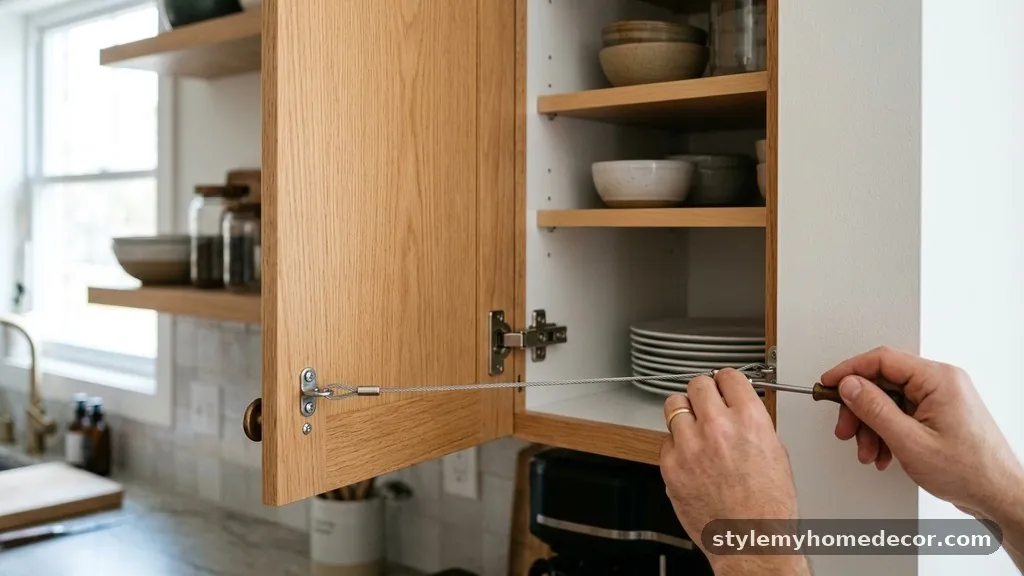
For specialized cabinet configurations, such as doors that swing in a way that makes standard hinge adjustment impossible, a restraint cable might be the answer. This is a small, flexible wire or cord that attaches to the inside of the cabinet box and the back of the door.
It acts like a leash, preventing the door from opening past a specific point. These are often used in custom cabinetry or corner units where space is at a premium.
Installing these requires careful measurement to ensure the door opens far enough for you to reach inside comfortably. You will need to screw small brackets into the interior frame of the cabinet and the rear of the door panel.
While this is a more involved installation process, it is invisible when the cabinet is closed. It effectively solves the problem of a door swinging too wide in tight corners where no other stop can be placed.
Comparing Solutions for Cabinet Protection
Choosing the right method depends on the weight of your doors, your budget, and your comfort level with basic tools. The following table provides a quick comparison of the most common ways to handle a door hitting a wall.
| Method | Ease of Use | Visibility | Durability |
|---|---|---|---|
| Adhesive Bumpers | Very Easy | Low | Moderate |
| Hinge Restrictor Clips | Moderate | None (Hidden) | High |
| Wall-Mounted Stops | Moderate | Medium | Very High |
| Hinge Adjustments | Easy | None (Hidden) | High |
Managing Tight Corner Cabinets
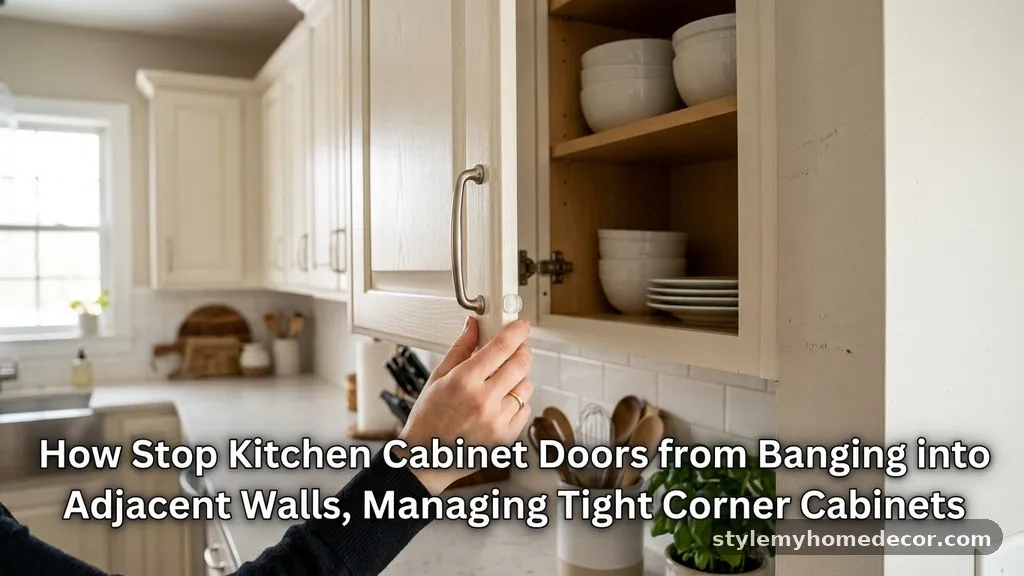
Corner cabinets are notorious for causing damage because their doors often swing toward a perpendicular wall or another cabinet unit. If your cabinet door is hitting the wall, you are likely dealing with a layout that lacks sufficient filler pieces.
A filler is a narrow strip of wood placed between the cabinet and the wall to provide extra clearance. If your kitchen is already finished, adding a filler is rarely an option, so you must rely on the mechanical stops mentioned above.
You should prioritize internal hinge restrictors for these corners to keep the door from reaching the wall in the first place. If the door knob is the culprit, a wall-mounted stop is usually the best choice.
Placing a stop on the wall at the height of the knob prevents the metal hardware from leaving a hole in the plaster. Always test the range of motion multiple times after installation to ensure the door does not exert pressure on the hinges when closed.
Selecting the Right Materials
When you shop for these items, you will find a wide variety of materials ranging from cheap plastic to high-end metal. For hinge restrictor clips, stick to the brand that matches your hinges to ensure a secure fit.
For adhesive bumpers, look for high-quality silicone that will not yellow or harden over time. You can find these items at most hardware stores or through online retailers like Amazon, where customer reviews can help you gauge the quality of specific brands.
Avoid using makeshift solutions like folded cardboard or tape, as these will fail quickly and look unsightly. Investing in a proper, purpose-built stop is a small price to pay for maintaining the condition of your home.
If you are unsure about the size or type of hardware you need, take a photo of your hinge and bring it to a local hardware store. The staff can often identify the specific hinge model and provide the exact restrictor clips required for your setup.
Common Mistakes to Avoid
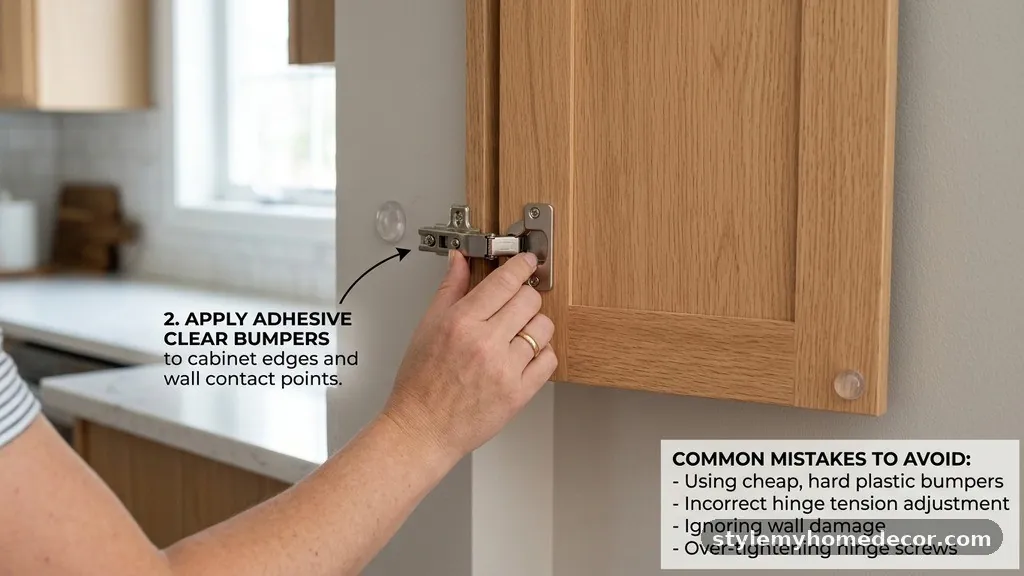
Many homeowners make the mistake of trying to force a door to open wider than the hinge was designed for, which can lead to damaged wood or bent hinge plates. Never attempt to bend the metal of the hinge to create more room; this will permanently compromise the structural integrity of the cabinet attachment.
Another common error is placing adhesive bumpers in the wrong location. If the bumper is not placed at the exact contact point, the door will still strike the wall or the knob will hit the surface.
Always verify the contact point by slowly opening the door until it touches the wall, then marking that spot with a pencil. This ensures your bumper or stop is placed exactly where it is needed. Finally, do not ignore loose hinges.
If your cabinet door is sagging, it may be hitting the wall because the alignment has shifted. Tightening the mounting screws first can sometimes resolve the issue without needing any additional hardware.
Maintaining Your Cabinet Hardware
Regular maintenance is key to ensuring your kitchen remains in top condition. Every six months, take a few minutes to check that all hinge screws are tight and that your bumpers are still firmly in place.
If you notice a bumper has fallen off, replace it immediately to prevent the door from causing a dent in the wall. A small amount of attention now prevents expensive repairs later.
You should also keep an eye on the finish of your cabinet doors. Frequent impact can wear away paint or wood finish, leaving the material vulnerable to moisture.
If you notice chips, touch them up with matching paint to prevent the wood from swelling. By staying proactive, you preserve the value and appearance of your kitchen for years to come.
Frequently Asked Questions
How do I know which hinge restrictor clip will fit my cabinet?
Check the metal arm of the hinge for a manufacturer’s logo or a model number. Most major brands, such as Blum or Salice, have specific clips designed for their hinge series. You can search for the model number online to find the exact compatible part.
Can I use a wall-mounted stop if I have a baseboard?
Yes, you can install a wall-mounted stop directly into the baseboard or the trim. Ensure the stop is long enough to reach the door or the knob before the cabinet strikes the wall. Using a long-stemmed stop is often necessary for baseboard mounting.
Are adhesive bumpers safe for all wall surfaces?
Most high-quality silicone bumpers are safe for painted drywall, wood, and tile. However, test the adhesive on a small, inconspicuous area if you are concerned about the finish. Avoid using them on extremely textured or porous surfaces where the adhesive may not bond well.
What if my cabinet door still hits the wall after adjusting the hinge?
If the hinge adjustment and restrictor clips do not provide enough clearance, you must use a physical stop. A wall-mounted bumper or a floor-mounted door stop will provide the necessary barrier to prevent further damage. Sometimes, a combination of a hinge restrictor and a wall bumper is the most effective approach.
Is it better to adjust the hinge or add a wall bumper?
Hinge adjustments are preferred because they are invisible and permanent. However, if the door knob is the part hitting the wall, a hinge adjustment won’t help. In that case, an adhesive bumper or wall-mounted stop is the necessary solution.
Final Considerations
Taking the time to address the issue of stopping Kitchen Cabinet Doors from Banging into Adjacent Walls ensures your home remains in pristine condition. Whether you choose to adjust your hinges for a seamless look or install a wall-mounted stop for extra protection, these methods are effective and long-lasting. You do not need to be a professional contractor to achieve great results with these simple hardware fixes.
Focus on identifying the specific contact point and choosing the solution that best fits your kitchen’s aesthetic and your cabinet’s mechanical design. By following these steps, you can eliminate the noise and damage associated with swinging doors once and for all.
If you have questions about specific hinge models, consult the manufacturer’s website or visit a local hardware specialist. Start your repair today and protect your investment.