10 Fresh Stylish Garden Ideas
A beautiful garden can change the way your whole home feels before guests even step inside. A layered entry planting, a polished patio corner, or a simple path framed with greenery can make an ordinary yard feel calm, cared for, and personal. Garden style today is less about perfection and more about usable beauty: spaces…
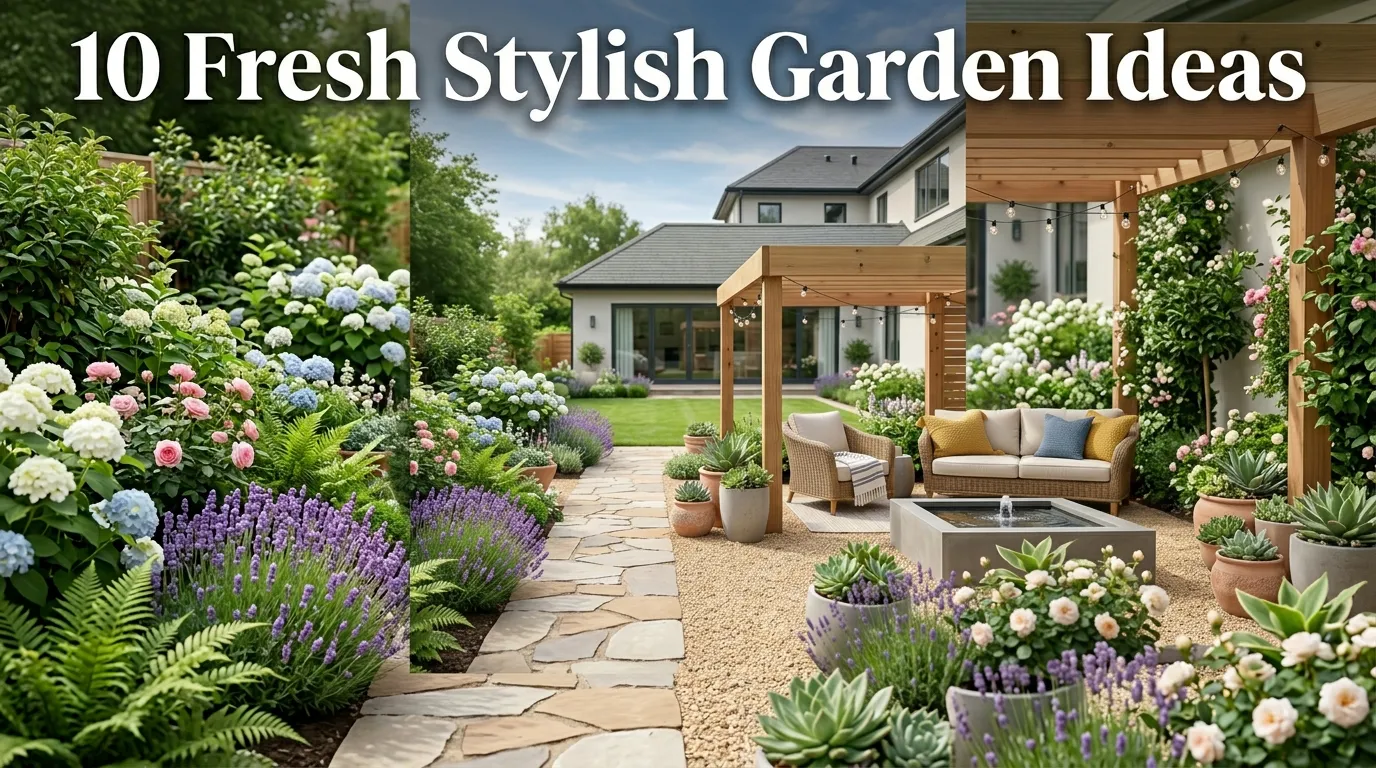
A beautiful garden can change the way your whole home feels before guests even step inside. A layered entry planting, a polished patio corner, or a simple path framed with greenery can make an ordinary yard feel calm, cared for, and personal. Garden style today is less about perfection and more about usable beauty: spaces that look great in photos, survive real weather, and support everyday life. Whether you have a suburban backyard, a narrow side yard, or a small porch, the right design choices can make everything feel more intentional.
The best garden upgrades begin with a clear job for the space. Maybe you need a prettier front walkway, a weekend dining corner, an herb station near the kitchen, or a cozy place to sit after work. Once the purpose is clear, colors, plants, materials, and furniture become easier to choose. This guide is built for USA homeowners, renters, and garden lovers who want practical ideas with strong Pinterest appeal. The goal is not a high-maintenance showcase, but an outdoor space that feels fresh, useful, stylish, and welcoming.
Good garden design also respects real life. Many American homeowners deal with hot summers, cold winters, HOA rules, small lots, clay soil, deer pressure, busy schedules, and limited weekends for maintenance. That is why the strongest ideas are not only pretty; they are practical. A container cluster can brighten a porch without digging. A gravel lounge can fix a dead lawn patch. A trellis can add privacy where a fence feels too heavy. These changes are simple, but they can completely shift how the yard looks and functions.
For Pinterest, the most shareable garden spaces usually have clear visual structure. They show a defined area, a balanced color palette, attractive textures, and one idea that viewers can imagine recreating at home. That might be a curved bed, a cozy dining nook, a wildflower corner, or a glowing patio at dusk. The following ten ideas are written to help readers picture the transformation and understand how to apply it. Each section includes practical materials, styling logic, and real-life guidance for a garden that feels beautiful without becoming overwhelming.
1. Entry Planters
Bullet Points:
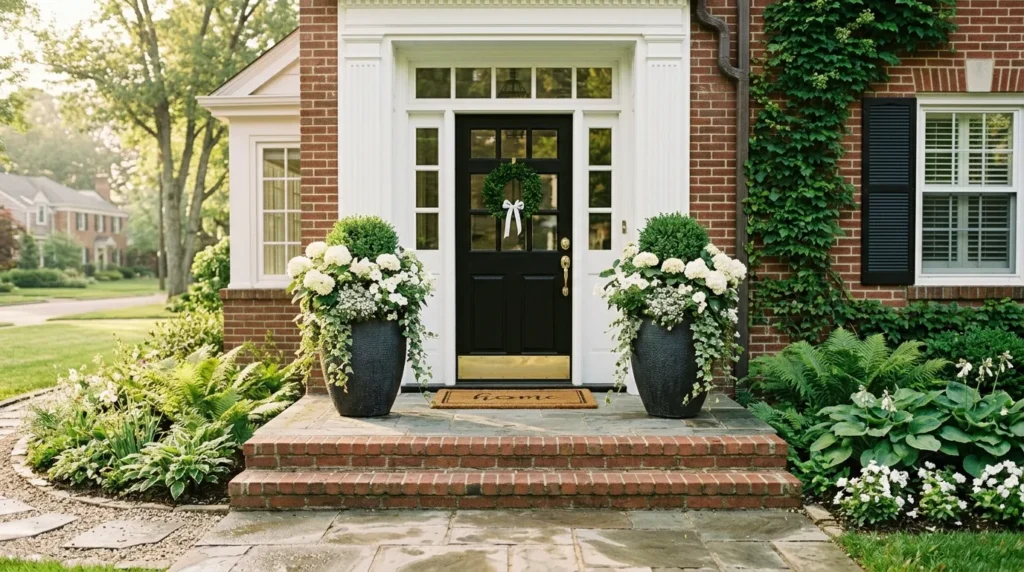
- Use matching planters on both sides of the front door for a clean, balanced look that instantly improves curb appeal.
- Choose large containers because they hold moisture better, look more expensive, and feel more intentional from the street.
- Mix upright plants, soft fillers, and trailing greenery so each planter has height, fullness, and movement.
- Repeat colors from the front door, house trim, porch rug, or exterior hardware for a polished design.
- Refresh plants seasonally with flowers, evergreens, branches, pumpkins, or winter greenery for year-round style.
Entry planters instantly make a home feel more welcoming because they frame the first view with color and shape. Use matching pots on both sides of the front door, or create an asymmetrical cluster near the steps for a relaxed designer look. Tall grasses, boxwood, dwarf evergreens, seasonal flowers, and trailing vines all work beautifully depending on sunlight. I’ve noticed that homeowners get the strongest impact when planters repeat colors from the door, shutters, porch rug, or exterior trim instead of introducing too many competing shades across a small entry.
For everyday success, choose containers large enough to hold moisture and stay stable in wind. Lightweight plastic may be easy to move, but ceramic, concrete, resin, or fiberglass often looks more polished near an entrance. Add good potting mix, drainage holes, and a simple thriller, filler, spiller planting recipe. In colder states, swap summer blooms for evergreens, branches, pinecones, or ornamental cabbage. The entry becomes easier to refresh through the year, and the whole exterior feels more cared for without changing the architecture at all or committing to major landscaping work.
2. Curved Garden Beds
Bullet Points:
- Add curved beds along fences, driveways, patios, or walkways to soften hard lines and make the yard feel more natural.
- Use a garden hose before digging so you can test the shape and view it from windows, sidewalks, and seating areas.
- Layer taller shrubs in the back, medium perennials in the center, and low edging plants near grass or pathways.
- Finish the border with mulch, stone, brick, or metal edging to keep the curve neat and easy to maintain.
- Choose repeated plant groups instead of random singles so the bed feels calm, full, and professionally planned.
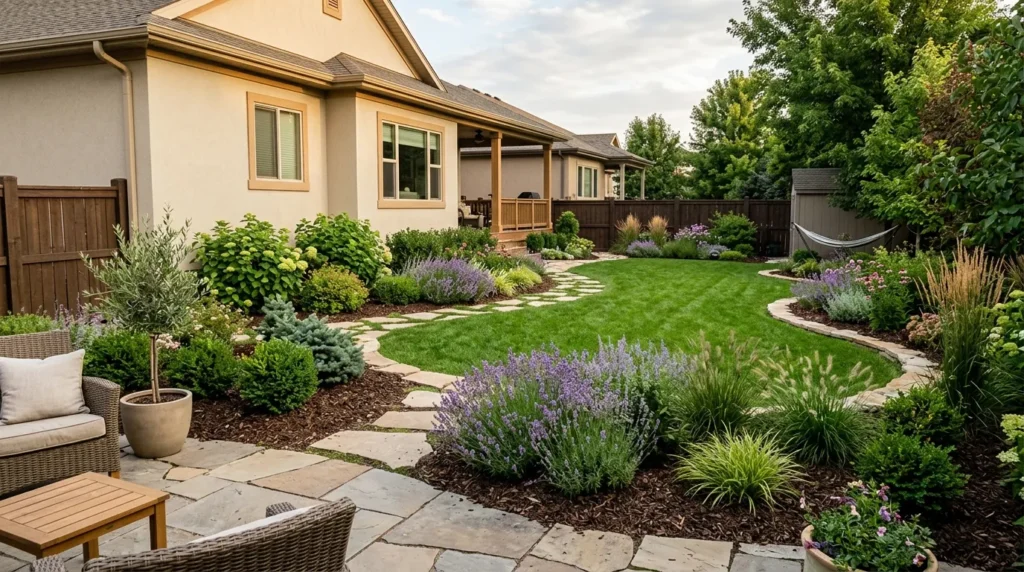
Curved garden beds soften a yard because they break up harsh lawn edges and create natural movement. Instead of placing plants in straight strips, use a gentle curve along a fence, walkway, patio, or driveway. The shape helps the eye travel slowly through the landscape, which makes even a small yard feel more layered. That’s why many designers recommend curved beds for suburban homes with large flat lawns, because they add interest without requiring expensive hardscaping or a full backyard renovation right away for busy homeowners while keeping maintenance simple and affordable.
To build the look, mark the curve with a garden hose before digging so you can adjust the shape from different viewpoints. Keep the deepest part of the bed wide enough for layered planting, not just one thin row. Place taller shrubs or grasses toward the back, medium perennials in the middle, and low edging plants near the lawn. Mulch, stone edging, or steel borders keep the curve clean. The result feels graceful, easier to mow around, and more intentional from windows, patios, sidewalks, and neighboring street views without making the layout feel stiff or overdesigned.
3. Herb Patio
Bullet Points:
- Place herbs close to the kitchen door so cooking with fresh basil, rosemary, mint, parsley, and thyme feels easy.
- Use terracotta pots, cedar troughs, galvanized tubs, or tiered stands to keep the herb area organized and attractive.
- Group herbs by water needs, keeping mint separate and placing drier herbs like rosemary and thyme together.
- Add plant labels, a small watering can, and garden scissors so the setup feels practical and charming.
- Choose a sunny location because most culinary herbs grow best with several hours of direct light each day.
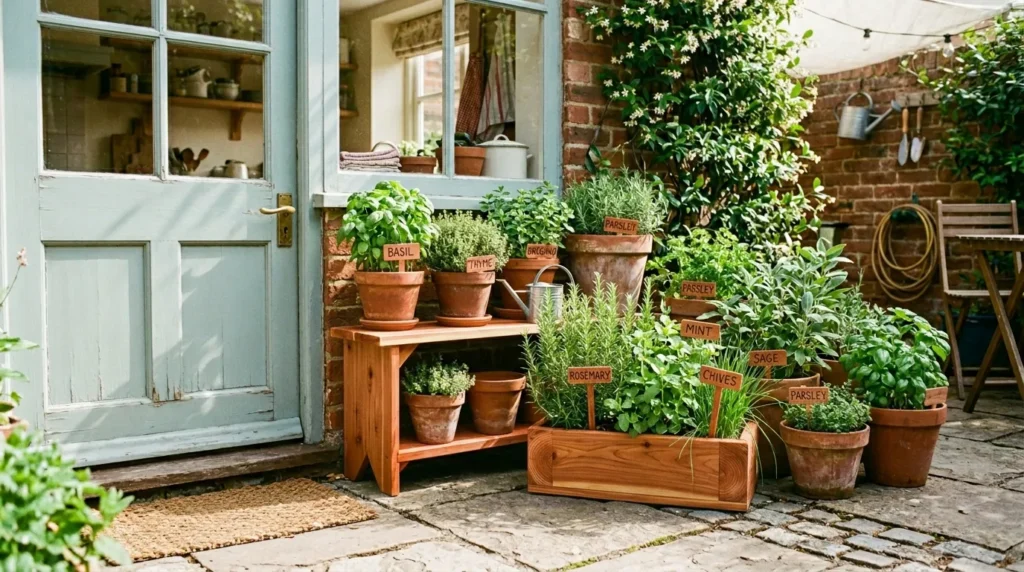
A herb patio adds beauty and usefulness in one small, satisfying garden zone. Instead of hiding herbs in a far corner, place basil, rosemary, mint, parsley, thyme, chives, oregano, and sage near the kitchen door or outdoor dining area. The plants look lush, smell wonderful, and make weeknight cooking feel more connected to the garden. In my experience, herbs are perfect for beginners because many varieties grow well in containers, raised boxes, or narrow beds, and they reward regular trimming with fuller growth throughout the season even in compact outdoor spaces and rental-friendly patios.
Design the area like a mini outdoor workstation. Use terracotta pots, cedar troughs, galvanized tubs, or tiered plant stands to keep everything organized and easy to reach. Group herbs by watering needs, keeping thirsty mint separate from drier Mediterranean herbs like rosemary and thyme. Add plant labels, a small watering can, and a nearby shelf for garden scissors. The space becomes practical, fragrant, and charming, especially on patios, balconies, and small decks where every square foot needs to earn its place and stay attractive daily through every season of cooking and casual entertaining.
4. Pergola Seating
Bullet Points:
- Use a pergola to create a defined seating zone that feels like an outdoor room without fully closing the space.
- Choose wood, vinyl, aluminum, or steel depending on your home style, budget, and local weather conditions.
- Add lounge chairs, a dining table, or a compact sofa based on how your family actually uses the yard.
- Soften the frame with curtains, climbing vines, shade panels, string lights, or large planters at the corners.
- Place the pergola near the kitchen for dining or farther into the yard for a quiet retreat.
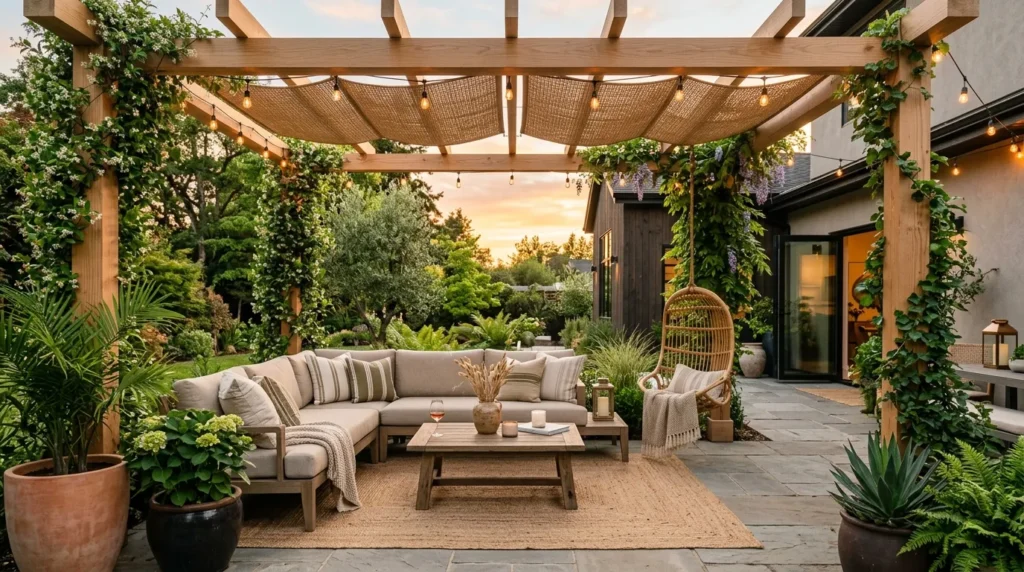
Pergola seating creates a clear outdoor destination that feels structured without closing off the yard. A pergola gives height, shade potential, and architectural detail, making a simple patio or deck feel more like an outdoor room. Wood, vinyl, aluminum, or steel can all work, depending on the home’s style and climate. Add a dining table, lounge chairs, or a small sofa underneath, then soften the structure with climbing plants, curtains, string lights, or woven shade panels for comfort during bright afternoons and warm evenings while adding a strong focal point to the landscape.
Before installing one, think about sun direction, furniture size, and how people will move around the space. A pergola near the kitchen works well for dining, while one tucked into the yard can become a quiet reading area. Use gravel, pavers, decking, or concrete as the base so chairs stay level. Add planters at the corners to connect the structure with the garden. The finished seating zone feels polished, comfortable, and ready for weekend brunches, evening conversations, or relaxed summer gatherings with friends and family without feeling crowded, unfinished, or disconnected from the home.
5. Gravel Lounge
Bullet Points:
- Turn a bare, muddy, or struggling lawn patch into a low-care lounge with gravel, edging, and simple seating.
- Use pea gravel, decomposed granite, or crushed stone depending on the look and comfort level you want.
- Add solid pavers under chairs or tables so furniture sits evenly and feels comfortable for everyday use.
- Frame the lounge with grasses, lavender, boxwood, or container plants to soften the stone texture.
- Keep the layout flexible so you can move chairs, add a fire bowl, or adjust the space later.
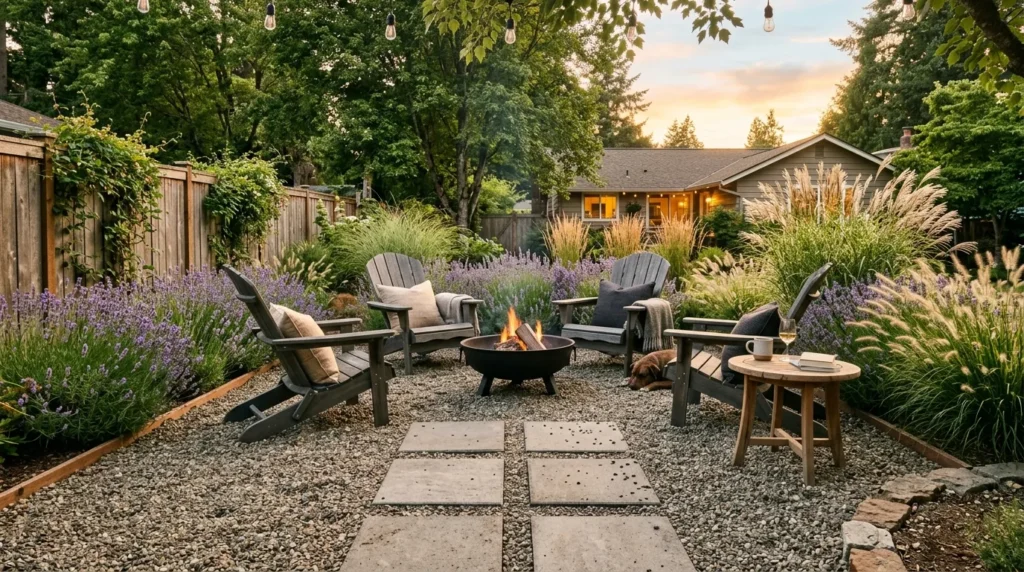
A gravel lounge turns an unused patch of yard into a clean, low-care sitting area. This idea works especially well where grass struggles, such as shaded corners, dry side yards, or spots with heavy foot traffic. Pea gravel, decomposed granite, or crushed stone creates texture and drainage while keeping the look casual and current. I’ve seen this work well in many homes because it gives homeowners a defined gathering place without the cost or permanence of a poured concrete patio or large deck and it can be completed in a single weekend.
Start with a compacted base, landscape fabric if needed, and strong edging to keep the gravel contained. Add a few large pavers where chair legs sit, especially if you want more stability for dining or lounging. Furniture can be simple: Adirondack chairs, a small fire bowl, a bistro table, or a weather-resistant bench. Surround the area with grasses, lavender, boxwood, or container plants for softness. The space becomes useful quickly and can be reshaped later as the garden grows or family needs change over time without needing complicated construction or professional design help.
6. Wildflower Corners
Bullet Points:
- Use sunny corners, fence edges, mailbox areas, or slopes for wildflowers that add color and movement.
- Choose regional seed mixes or starter plants that suit your local climate, soil, and rainfall patterns.
- Prepare the soil well before planting so flowers do not struggle against thick grass or aggressive weeds.
- Add a mowed edge, stone border, or simple path so the planting looks intentional instead of messy.
- Include native flowers and grasses where possible to support bees, butterflies, and seasonal wildlife.
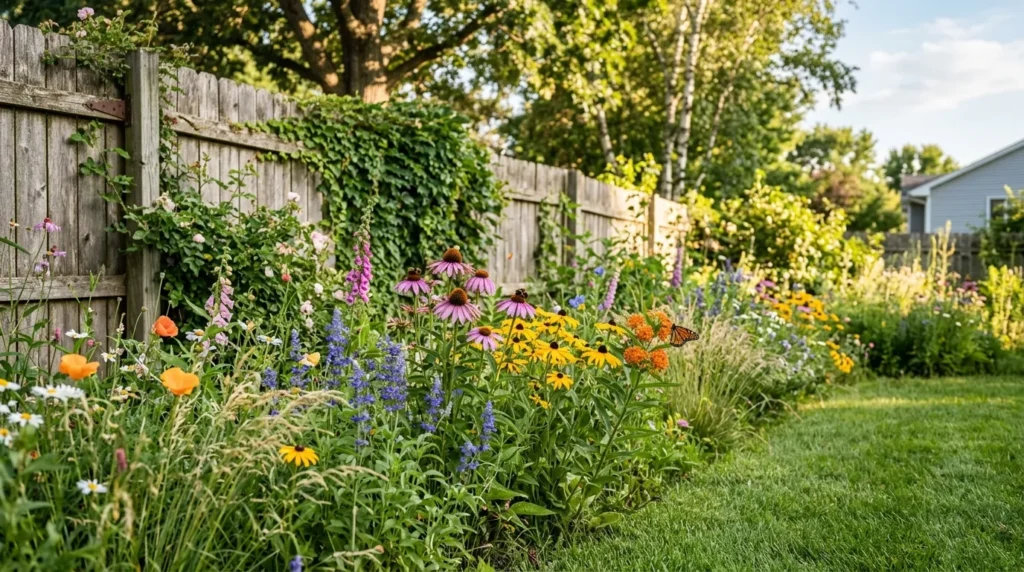
Wildflower corners bring color, movement, and a relaxed meadow feeling to places that often look forgotten. A sunny fence edge, mailbox area, slope, or back corner can become a seasonal highlight with the right mix of flowers and grasses. Choose region-friendly seed blends or starter plants suited to your climate, especially if you want pollinators and lower watering needs once established. The look feels casual, but it becomes most attractive when the edges are clearly defined and the plant mix is intentional from the beginning instead of looking like random weeds near the fence.
Prepare the soil before planting so wildflowers do not have to compete with thick grass or weeds. Clear the area, loosen compacted soil, and follow seed depth instructions carefully because many wildflower seeds need light to germinate. Add a mowed edge, stone border, or narrow path so the patch feels designed rather than neglected. Over time, the corner can support bees, butterflies, and birds while giving the yard a soft, colorful view that changes naturally through spring, summer, and fall without constant replanting while still feeling easygoing, natural, and low pressure.
7. Statement Trees
Bullet Points:
- Choose one beautiful tree to create height, shade, seasonal color, and a strong garden focal point.
- Consider Japanese maple, dogwood, serviceberry, crape myrtle, magnolia, olive tree, or sculptural evergreens.
- Check mature size before planting so the tree does not crowd the house, sidewalk, roof, or power lines.
- Use mulch, low perennials, or groundcover around the base to protect roots and finish the design.
- Place the tree where it can be seen from windows, patios, walkways, or the street for maximum impact.
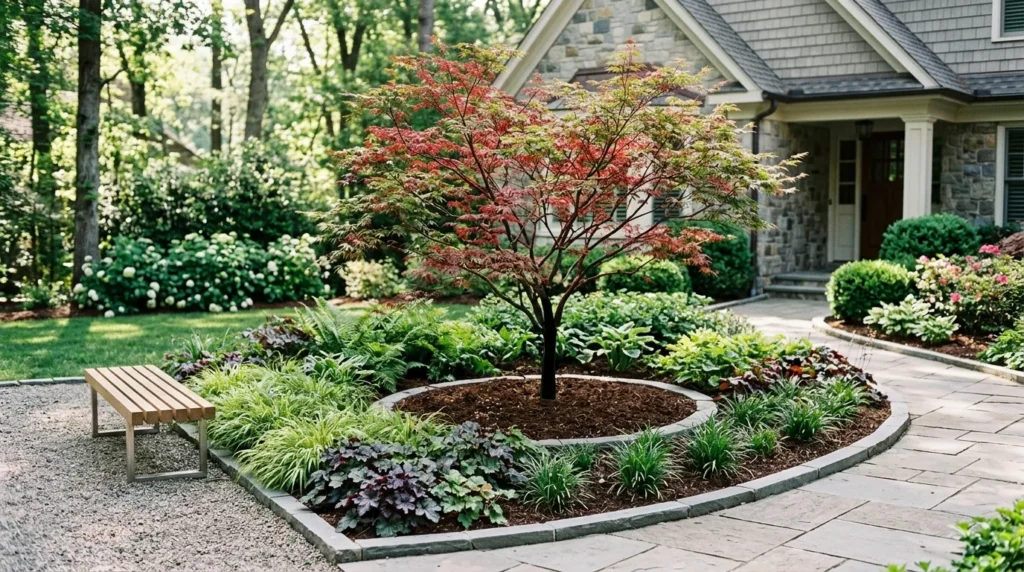
A statement tree gives a garden instant character because it adds height, shade, and a strong focal point. Japanese maple, serviceberry, crape myrtle, olive tree, magnolia, dogwood, or a sculptural evergreen can completely change a front yard or patio view. The right tree makes the landscape feel anchored, especially when smaller plants are arranged around it. That’s why many designers recommend choosing trees carefully by mature size, because a beautiful young tree can become a problem if it outgrows the space too quickly near walkways, windows, and outdoor seating areas.
Before planting, check sunlight, soil drainage, power lines, roof clearance, and root space. A tree near a patio can provide shade, but it should not drop messy fruit where people sit or walk. Create a simple planting circle with mulch, low perennials, or groundcover to protect the trunk and finish the look. In smaller yards, one well-chosen tree often has more impact than many scattered shrubs. The result feels elegant, seasonal, and long-lasting, adding beauty from spring blooms to autumn color and winter structure when the rest of the garden is quiet or dormant.
8. Modern Trellises
Bullet Points:
- Add trellises to fences, patios, side yards, and narrow beds for height, structure, and vertical greenery.
- Use black metal grids, cedar panels, arched frames, wire systems, or painted wood for a clean look.
- Grow vines such as clematis, jasmine, climbing roses, mandevilla, cucumbers, beans, or passionflower.
- Secure the structure properly, especially in windy areas or places with heavy climbing plants.
- Match trellis colors to railings, fences, planters, or exterior hardware for a more finished design.
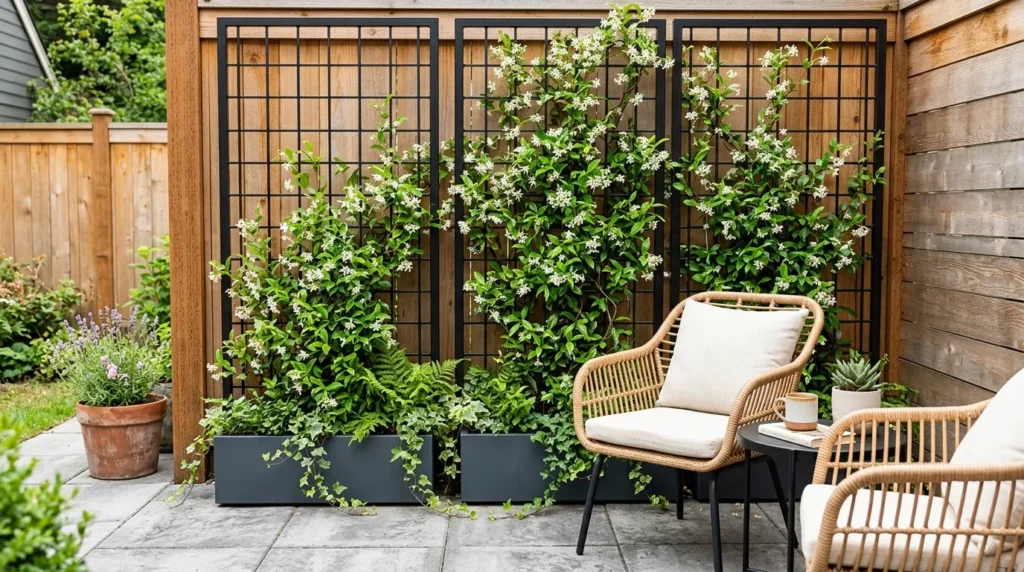
Modern trellises add vertical interest while making fences, blank walls, and narrow beds feel more designed. A simple black metal grid, cedar panel, arched frame, wire system, or painted wood trellis can support climbing plants and create a beautiful backdrop. Use clematis, jasmine, climbing roses, mandevilla, cucumbers, beans, or passionflower depending on your climate and purpose. The structure gives the garden height right away, even before the plants fully mature, which is helpful for small yards that need visual layers without losing floor space in patios, side yards, balconies, and compact gardens.
Place trellises where they solve a real design need, such as screening a neighbor’s view, softening a garage wall, or adding height behind a seating area. Secure them well, especially in windy regions, and leave space behind for airflow and plant maintenance. Match the material color to nearby railings, fences, or planters for a cleaner look. As vines grow, the space becomes greener, more private, and more interesting from multiple angles, making even a tight outdoor area feel thoughtfully finished and visually taller without adding bulky fences or heavy privacy screens.
9. Layered Lighting
Bullet Points:
- Combine path lights, uplights, sconces, lanterns, step lights, and string lights for a complete evening garden look.
- Use warm white bulbs because they flatter plants, wood, stone, furniture, and outdoor dining areas.
- Light safety areas first, including walkways, stairs, gates, grilling zones, and patio edges.
- Add accent lighting around trees, planters, walls, or water features for depth and atmosphere.
- Avoid overly bright fixtures that shine into neighbors’ windows or make the garden feel harsh.
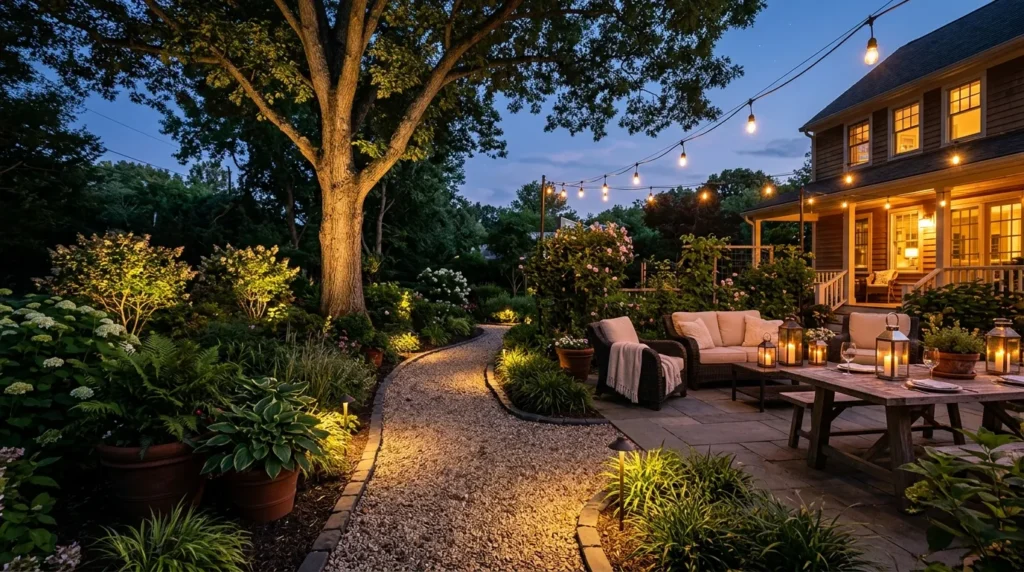
Layered lighting makes a garden feel magical after sunset while improving safety and function. Instead of relying on one bright porch light, combine path lights, step lights, uplights, sconces, lanterns, and string lights. Each layer has a job: guiding movement, highlighting plants, warming up seating areas, or creating a soft glow near dining spaces. Warm white bulbs are usually more flattering outdoors because they bring out the texture of wood, stone, leaves, and fabric without making the yard feel harsh or overly bright in photos, gatherings, and everyday evening use.
Begin with the areas people actually use at night, such as walkways, stairs, gates, grilling zones, and patio seating. Then add accent lighting around trees, planters, water features, or garden walls. Solar lights are easy for quick upgrades, while low-voltage lighting offers a more reliable permanent finish. Keep fixtures subtle and avoid shining lights directly into neighbors’ windows. The finished garden feels safer, more welcoming, and much more beautiful from inside the house, especially during dinner, gatherings, and quiet evenings after work when the rest of the neighborhood starts to go dark.
10. Cozy Dining
Bullet Points:
- Create an outdoor dining spot near the kitchen, patio, pergola, raised beds, or garden border for easy use.
- Choose weather-resistant furniture, washable cushions, and an easy-clean table that can handle regular meals.
- Define the dining area with gravel, pavers, decking, an outdoor rug, or a border of planters.
- Add shade with an umbrella, pergola, tree canopy, or shade sail for hot summer afternoons.
- Use herbs, flowers, lanterns, and string lights to make the table feel warm and inviting.
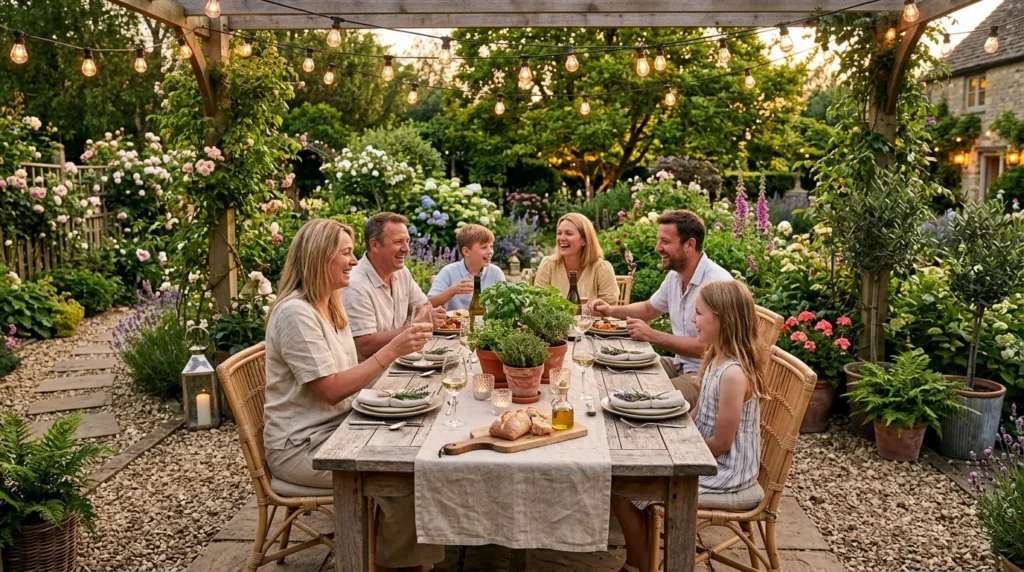
Cozy dining areas make the garden feel like a true extension of the home. A simple table under open sky, beside raised beds, or near a pergola can turn ordinary meals into relaxed outdoor moments. The best dining spaces balance comfort and durability, using weather-resistant chairs, an easy-clean table, shade, and enough room to pull seats out comfortably. I’ve noticed that outdoor dining works best when it is close enough to the kitchen to carry food without making hosting feel complicated for weeknights, holidays, and easy weekend meals outside comfortably.
Define the dining zone with pavers, gravel, decking, an outdoor rug, or a small border of planters. Add string lights overhead, lanterns on the table, and a few nearby herbs or flowers for atmosphere. In hot regions, include an umbrella, pergola shade, or tree canopy; in cooler climates, add cushions and a patio heater. The space becomes useful for family dinners, weekend breakfasts, and casual entertaining. It also photographs beautifully because furniture, plants, lighting, and table decor create a complete scene that feels inviting from every angle of the yard.