
Vessel Sinks vs Undermount Sinks: Which Splashes Less Water?
Choosing between vessel sinks vs undermount sinks often comes down to balancing aesthetic appeal against daily maintenance. While both options offer distinct visual impacts for a bathroom, the way they handle water flow differs significantly due to their mounting styles and basin depths. If you are primarily concerned with keeping your countertop dry, undermount sinks…
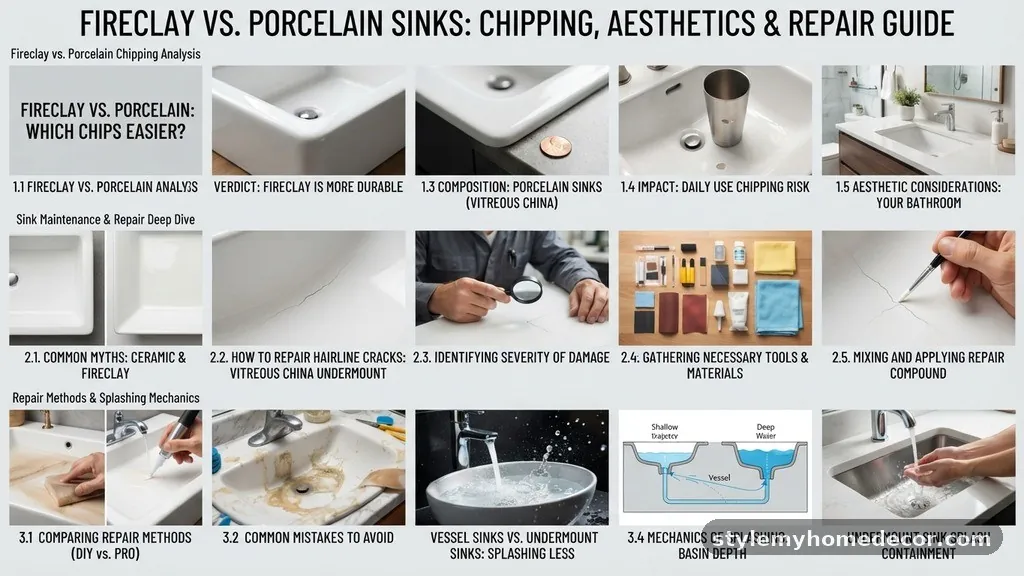
Choosing between vessel sinks vs undermount sinks often comes down to balancing aesthetic appeal against daily maintenance. While both options offer distinct visual impacts for a bathroom, the way they handle water flow differs significantly due to their mounting styles and basin depths. If you are primarily concerned with keeping your countertop dry, undermount sinks are the clear winner.
They sit beneath the counter, leaving no rim for water to pool on, while vessel sinks inherently raise the basin above the counter level. This height difference creates a greater potential for splashing, especially when paired with the wrong faucet.
The Mechanics of Splashing in Bathroom Sinks
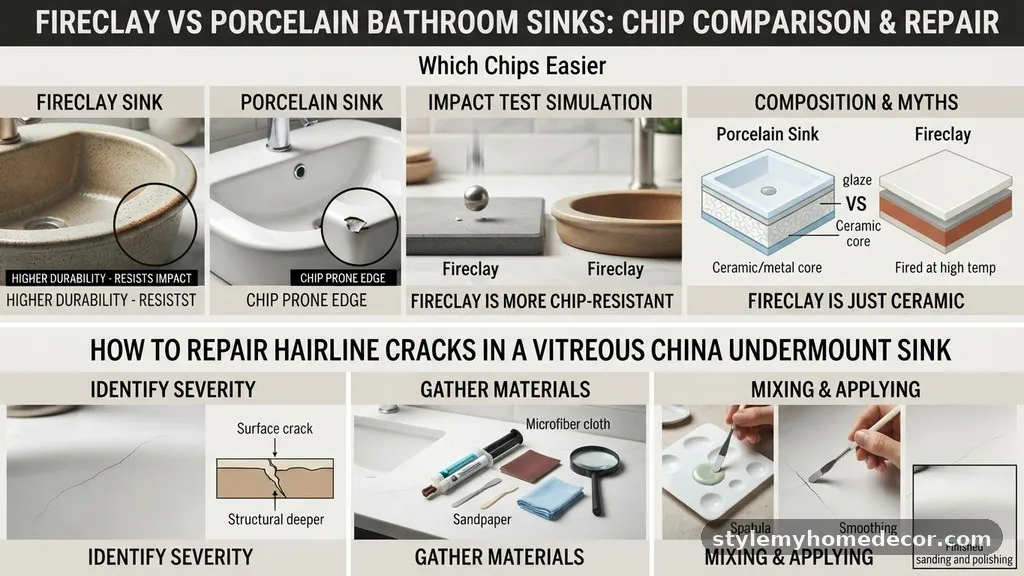
Splashing is rarely the fault of the sink basin alone; it is a result of the interaction between the faucet height, the water pressure, and the bowl’s geometry. When you use a vessel sink, the basin sits entirely or partially above the countertop.
This elevation means that any water bouncing off your hands or a hard surface has a longer distance to travel before hitting the basin floor. If the water hits the base of the basin at a sharp angle, it is more likely to spray outward.
Undermount sinks, conversely, are installed flush beneath the countertop cutout. Because the rim of the counter acts as a vertical boundary, it physically blocks water from easily escaping the sink area if it hits the side of the bowl.
This design creates a more contained environment for water usage. The lack of a raised rim also makes it easier to wipe stray droplets directly into the drain without hitting an obstruction.
Evaluating Vessel Sink Splash Factors
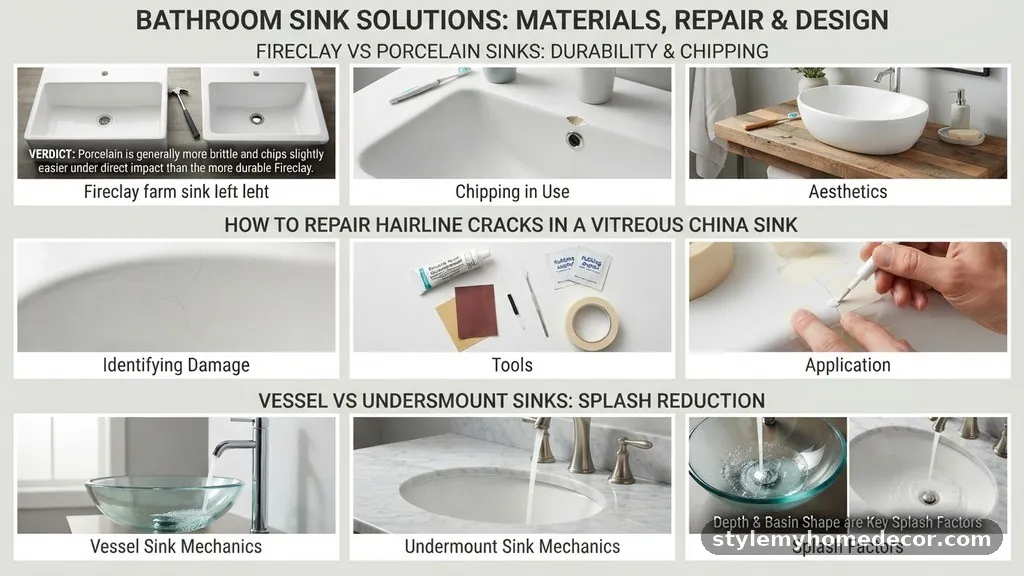
Vessel sinks are often criticized for being “messy,” but this reputation is largely due to improper installation. The most common mistake is pairing a tall vessel basin with a standard-height faucet or a faucet that lacks a proper aerator.
If the faucet spout is too high, the water gains more velocity before impact. This increased kinetic energy causes a more significant splash back when it strikes the porcelain, glass, or stone bottom of the vessel.
The shape of the vessel also plays a massive role in how much water hits your counter. A bowl with steep, vertical sides is much more prone to splashing than one with a gentle, sloped curve.
If you have a shallow vessel, the water has nowhere to dissipate its energy, forcing it to bounce out of the basin. Choosing a deeper bowl can mitigate this, but it requires a much longer faucet neck to ensure the stream lands in the center of the drain.
Why Undermount Sinks Offer Better Containment
Undermount sinks are the industry standard for high-traffic bathrooms because they prioritize function and ease of maintenance. The installation method involves sealing the sink to the underside of the countertop, leaving a smooth, continuous surface.
This design eliminates the gap where a rim would normally sit, which is a major benefit for keeping surfaces dry. When you wash your face or rinse your hands, you can simply push excess water off the counter and into the sink without worrying about it catching on a lip.
This style of sink is particularly effective in households with children or high-use guest baths. Because the basin is recessed, it is inherently more forgiving of vigorous water use.
Even if water does land on the rim of the sink, it is usually contained within the polished edge of the stone or quartz cutout. This creates a much more manageable cleaning routine compared to a vessel sink, which requires wiping down the exterior of the bowl as well as the counter.
Comparing Splash Potential by Material
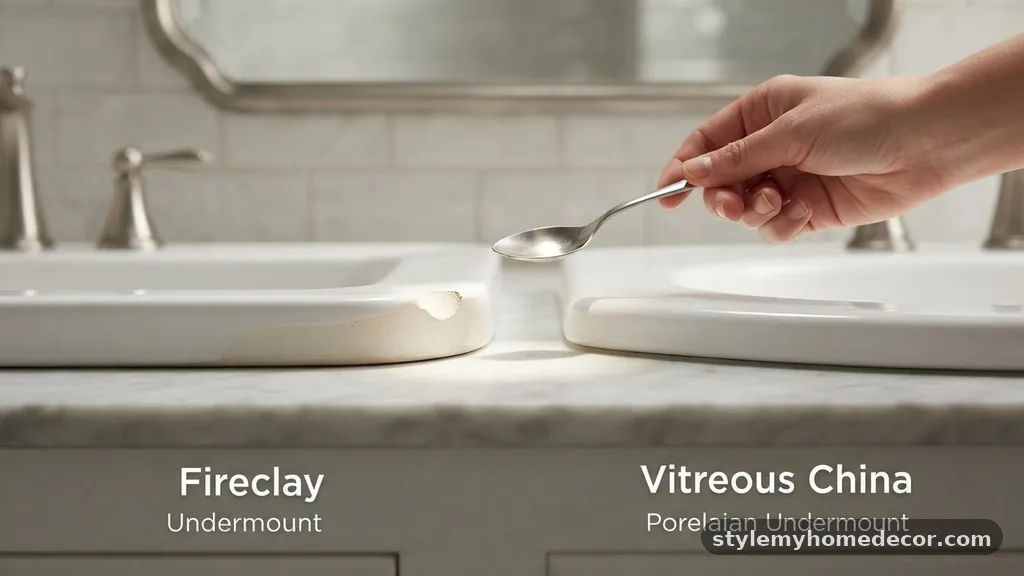
The material of your sink influences how water behaves upon impact. High-gloss surfaces like vitreous china or polished glass tend to cause more energetic splashing because they are hard and non-porous.
Water does not absorb into these materials; it reflects off them with high velocity. If you choose a vessel sink made of these materials, you must be extra careful about your faucet choice and water pressure settings.
In contrast, materials like copper or matte-finished concrete can sometimes dampen the sound and force of water. Because these materials are slightly more porous or have a textured surface, they can break up the surface tension of the water stream.
This does not eliminate splashing entirely, but it can soften the impact. Regardless of the material, the distance from the faucet to the basin floor remains the most critical variable in the vessel sinks vs undermount sinks debate.
The Role of the Faucet in Water Control
You cannot discuss sink splash without addressing the hardware. A faucet with a high-quality aerator is essential for any sink, but it is mandatory for a vessel installation.
An aerator mixes air into the water stream, creating a softer, more voluminous flow that is less prone to violent splashing. If your faucet does not have an adjustable or high-quality aerator, you will likely experience significant mess regardless of which sink you choose.
The flow rate of your faucet also matters. Many modern faucets are designed to limit flow to 1.5 gallons per minute, which is often sufficient for handwashing.
If you have a high-pressure system, you may need to partially close the shut-off valves under the sink to reduce the pressure at the faucet. This small adjustment can drastically reduce the amount of water that bounces out of a vessel sink.
Design Pros and Cons Table
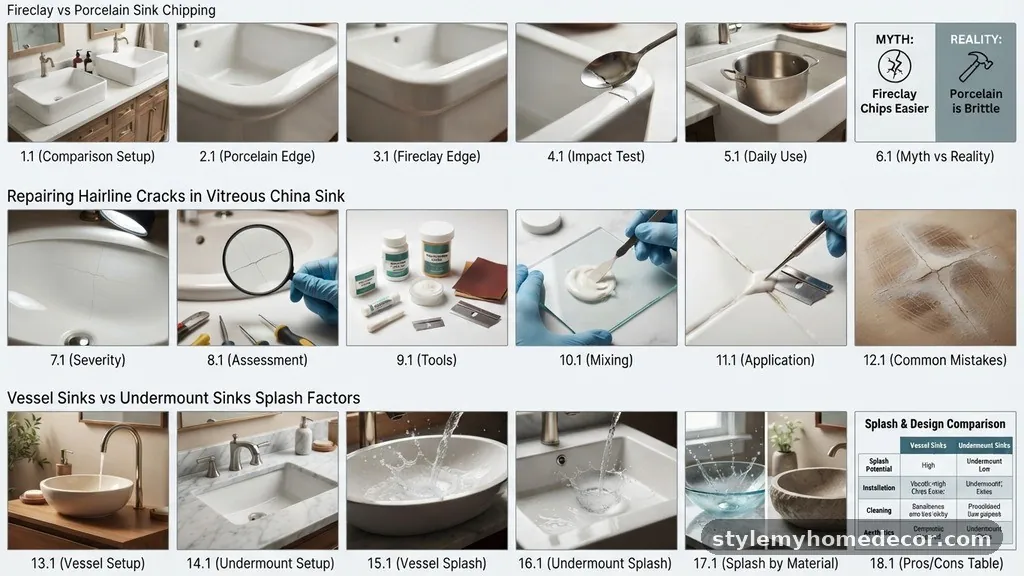
When deciding between these two styles, consider the following comparison of functional and aesthetic traits. This table summarizes how each type performs in a typical residential setting.
| Feature | Vessel Sink | Undermount Sink |
|---|---|---|
| Splash Potential | High | Low |
| Cleaning Ease | Moderate (requires exterior cleaning) | High (wipe into drain) |
| Installation Complexity | Low (sits on counter) | High (requires structural support) |
| Counter Space | Minimal impact | Maximizes available space |
| Visual Impact | Strong focal point | Minimalist/Integrated |
Installation Nuances and Countertop Compatibility
Installing an undermount sink requires a countertop material that can handle being cut, such as granite, marble, or engineered quartz. The edge of the stone must be finished and polished because it will be visible around the sink opening.
This adds to the cost of the project but provides a durable, waterproof edge that is easy to maintain. If you choose a natural stone, ensure it is properly sealed to prevent water absorption at the sink rim.
Vessel sink installation is generally more straightforward, as it usually only requires a hole for the drain and the faucet. However, you must ensure the countertop is at the correct height.
Because the vessel bowl adds several inches to the total height of the vanity, a standard 36-inch vanity might become too tall for comfortable use. Many designers recommend lowering the vanity cabinet height by 3 to 4 inches to accommodate the vessel bowl.
Common Maintenance Challenges
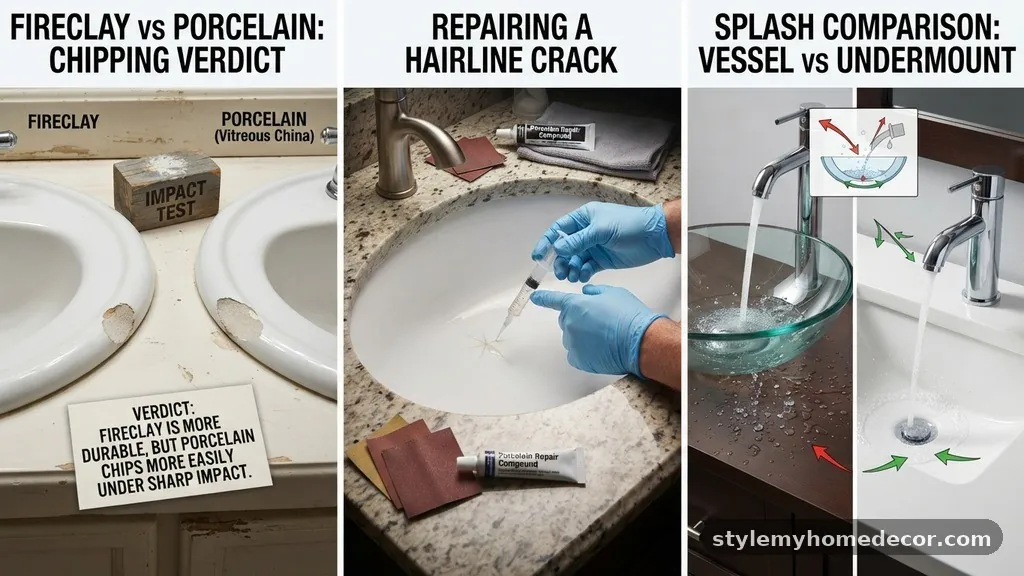
Maintenance is where the differences between these two styles become most apparent. With an undermount sink, the primary task is keeping the countertop clean.
Since there are no rims or elevated basins, you can wipe the entire counter area in one motion. This makes them ideal for busy bathrooms where quick cleanup is a priority.
Vessel sinks present more complex cleaning requirements. You must clean the inside of the bowl, the outside of the bowl, and the area of the countertop underneath the vessel. If the vessel has a narrow gap between its base and the counter, it can become a magnet for dust and soap scum.
For more information on maintaining bathroom fixtures, you can review the WaterSense guidelines from the U.S. Environmental Protection Agency.
Choosing the Right Sink for Your Lifestyle
Your choice should ultimately reflect your daily habits. If you are someone who splashes water when washing your face or if you have children who tend to play at the sink, an undermount model is the most practical choice.
It provides a contained, low-maintenance environment that effectively masks the realities of daily use. It is a functional, long-term investment that rarely disappoints in terms of utility.
If you prefer a statement piece and are willing to put in a little extra effort to keep it looking pristine, a vessel sink can be a stunning addition to a powder room or a master bath. These sinks act as art pieces, often becoming the focal point of the entire room. Just be prepared to manage the water flow carefully and keep a cloth nearby to wipe down the exterior of the bowl and the vanity top.
Frequently Asked Questions
Are vessel sinks considered out of style in 2026?
No, they are not out of style. While their popularity fluctuates, they remain a staple in high-end design and modern powder rooms where the goal is to create a unique, sculptural focal point.
Do vessel sinks always splash more than undermount models?
Generally, yes. Because they sit above the counter, they lack the containment benefits of an undermount installation. However, a deep, well-shaped vessel paired with a low-flow aerated faucet can significantly reduce this issue.
What is the biggest downside to an undermount sink?
The main drawback is that it requires a solid-surface countertop that can be cut and finished. You cannot use an undermount sink with a standard laminate vanity top because the exposed particleboard core would quickly absorb water and swell.
Can I replace an undermount sink with a vessel sink easily?
Not easily. You would likely need to replace the entire countertop because the hole cut for an undermount sink is usually larger and differently shaped than what is needed for a vessel drain. You would also need to change your faucet to a tall vessel-compatible model.
How do I stop my vessel sink from splashing?
Start by installing a high-quality aerator on your faucet to soften the water stream. If that doesn’t work, consider lowering your faucet pressure or opting for a deeper basin that prevents water from hitting the bottom at an aggressive angle.
Conclusion
Comparing vessel sinks vs undermount sinks reveals that while both serve the same basic purpose, they cater to very different priorities. Undermount sinks are the superior choice if your primary goal is minimizing water splash and simplifying your cleaning routine. Their integrated design and lack of raised edges make them highly efficient for busy households.
Conversely, vessel sinks offer a level of design flexibility and visual drama that is hard to match, provided you are willing to manage the increased risk of splashing. By carefully considering your faucet height, basin depth, and daily habits, you can select the perfect sink that balances your aesthetic preferences with the practical realities of your bathroom. If you prioritize function, stick to the undermount, but if you want a conversation piece, a carefully chosen vessel is a fantastic addition.