12 small hallway remodel ideas
A hallway may be one of the smallest areas in a home, but it quietly shapes the first impression of every room around it. In many USA homes, especially apartments, townhomes, ranch houses, and older suburban layouts, hallways are narrow, dim, or underused. They often become a pass-through space instead of a styled part of…
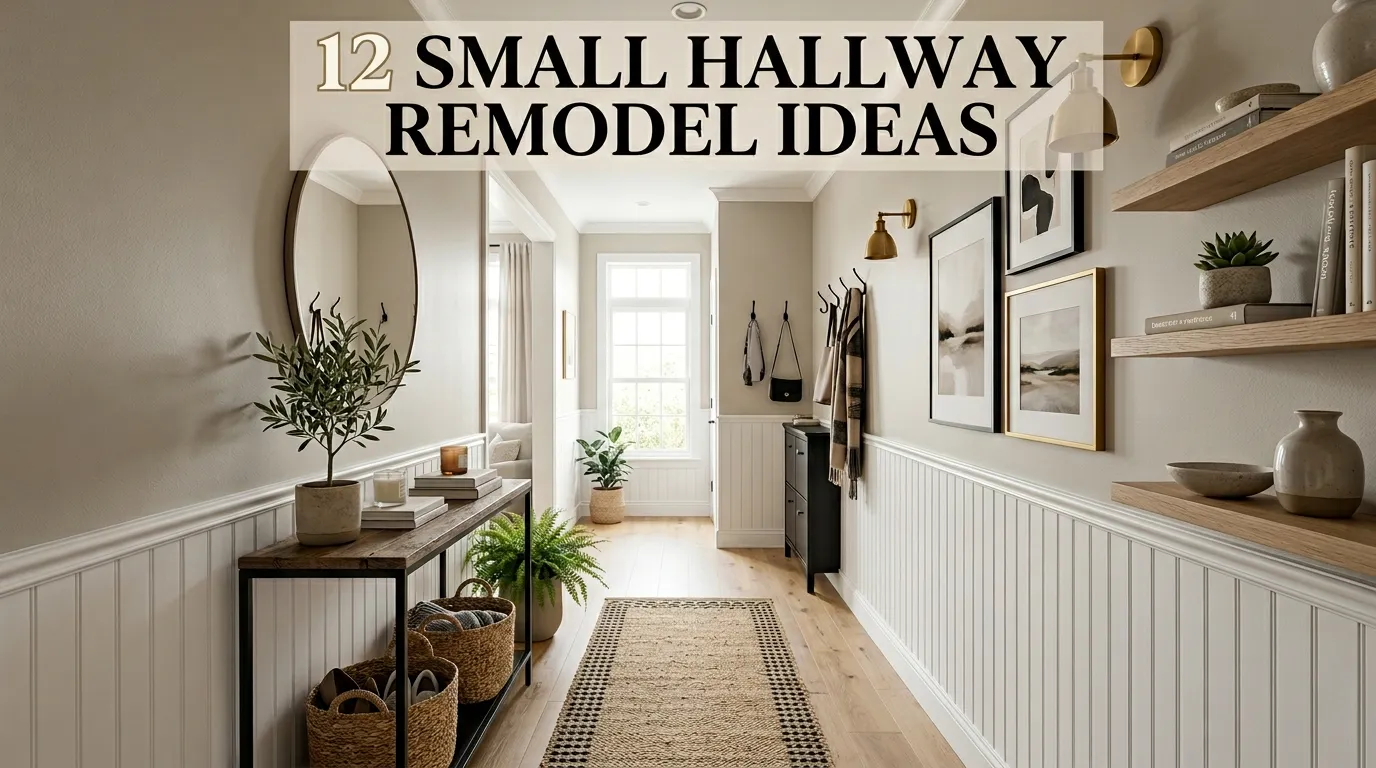
A hallway may be one of the smallest areas in a home, but it quietly shapes the first impression of every room around it. In many USA homes, especially apartments, townhomes, ranch houses, and older suburban layouts, hallways are narrow, dim, or underused. They often become a pass-through space instead of a styled part of the home. The good news is that even a small hallway can feel brighter, wider, cleaner, and more intentional with the right remodel choices.
A successful hallway remodel is not always about knocking down walls or spending thousands of dollars. Sometimes the biggest transformation comes from paint color, lighting, slim furniture, wall hooks, mirrors, runner rugs, built-in storage, or better trim details. These upgrades can make the space feel more functional while also giving it the Pinterest-worthy style people love saving for home inspiration boards.
The best hallway ideas balance beauty and practicality. You want a space that looks good in photos, but also works for everyday life: shoes, coats, keys, bags, kids’ backpacks, pet leashes, packages, and daily foot traffic. The ideas below are designed to help you create a hallway that feels finished, useful, and connected to the rest of your home without making the area feel crowded.
1. Light Paint Palette
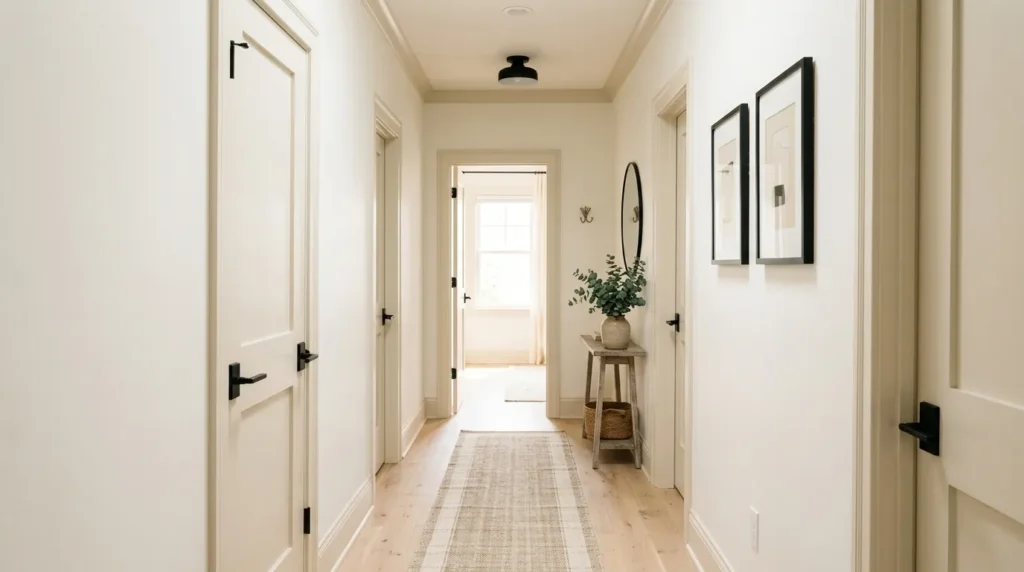
- Use warm white, soft beige, pale gray, or creamy greige to visually open the space.
- Choose satin or eggshell paint for easier cleaning in high-traffic areas.
- Paint doors and trim in a similar tone for a seamless, wider look.
- Add contrast only through decor, hardware, or a runner rug.
A lighter paint palette can instantly make a tight hallway feel calmer, cleaner, and more open. Dark walls are beautiful in large rooms, but narrow walkways often need reflective tones to bounce natural and artificial light. Soft white, creamy beige, warm greige, and pale gray are popular choices because they feel fresh without looking cold. In my experience, the best results come from painting the walls, doors, and trim in tones that are close together. This reduces visual breaks and helps the eye move smoothly through the hallway.
For a practical remodel, choose a washable eggshell or satin finish because hallways collect fingerprints, scuffs, and bag marks quickly. If the space connects multiple rooms, test paint samples at different times of day to see how the color reacts to shadows. A warm neutral usually feels more welcoming than a stark white in homes with limited light. Add depth with black hooks, brass hardware, woven baskets, or a patterned runner instead of heavy wall color. The result feels brighter, easier to maintain, and naturally more spacious.
2. Statement Runner Rug
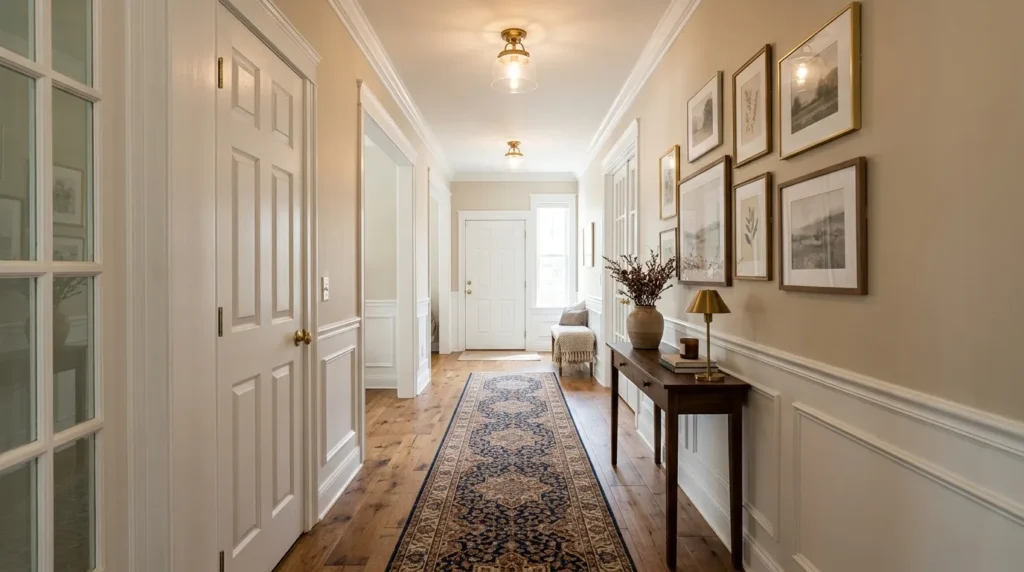
- Choose a long runner that fits the hallway without curling at the edges.
- Use vintage, geometric, striped, or washable patterns to add personality.
- Add a quality rug pad to prevent slipping and protect flooring.
- Pick colors that connect nearby rooms for a cohesive flow.
A statement runner rug gives a plain hallway instant warmth, texture, and direction. Without one, long narrow floors can feel empty or unfinished, especially when the walls are simple. A runner helps guide the eye forward while softening foot traffic and adding personality. Vintage-inspired patterns, subtle stripes, washable rugs, and muted geometric prints work beautifully in busy homes. I’ve noticed that a runner can make even builder-grade flooring look more intentional because it adds color, movement, and softness without taking up valuable wall space.
Measure carefully before buying so the rug leaves several inches of visible floor on each side. This border keeps the hallway from feeling squeezed and prevents the rug from looking too wide. Use a non-slip rug pad, especially on hardwood, laminate, tile, or vinyl plank flooring. For families with kids or pets, washable runners are practical and still stylish. Choose colors that repeat something from nearby rooms, such as cabinet tones, artwork, or sofa pillows. This makes the hallway feel connected instead of decorated as an afterthought.
3. Slim Console Wall
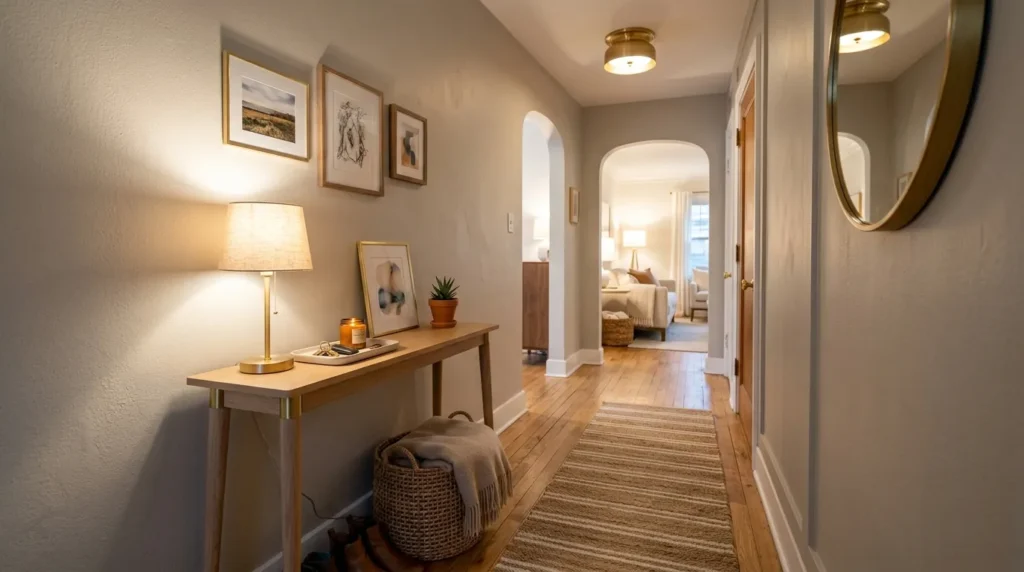
- Use a narrow console table that leaves enough walking clearance.
- Style with a lamp, tray, small bowl, framed art, or seasonal greenery.
- Choose drawers or lower shelves if you need hidden storage.
- Keep decor minimal so the walkway stays open and usable.
A slim console wall turns an empty pass-through into a useful landing zone without overwhelming the layout. The key is choosing a narrow table, usually around eight to twelve inches deep, so people can still walk comfortably. This works especially well near an entry, bedroom hallway, or staircase landing. Add a small lamp, a catchall tray, a framed print, or a vase with greenery for height. That’s why many designers recommend console styling when a hallway needs function, but full furniture would feel too bulky.
Look for a console with drawers if your hallway collects keys, mail, sunglasses, or chargers. A lower shelf can hold baskets for shoes, dog leashes, or winter accessories, but keep the baskets uniform so the area feels neat. If the hall is extremely narrow, try a wall-mounted ledge instead of a table. Keep decor edited to three or four pieces, not a crowded collection. The transformation feels polished because it creates a purpose for the space while still respecting the need for easy movement through the home.
4. Mirror Gallery Wall
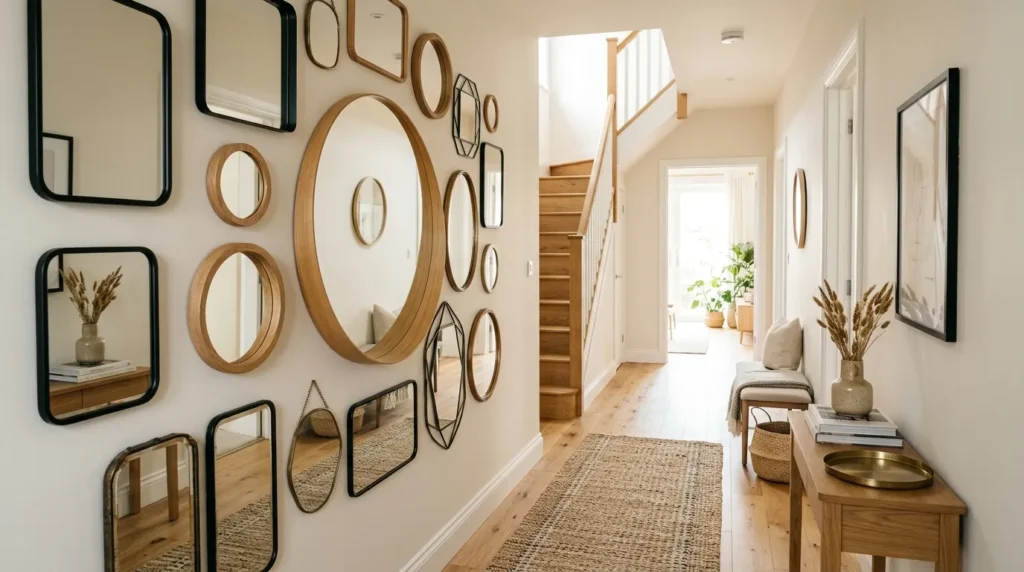
- Mix one large mirror with smaller framed prints for depth and reflection.
- Use mirrors across from windows or light fixtures to brighten the hallway.
- Keep frames consistent if you want a clean, designer look.
- Avoid placing mirrors where they reflect cluttered rooms or open storage.
A mirror gallery wall can make a narrow hallway feel brighter, deeper, and more decorated without adding bulky furniture. Mirrors reflect light, create visual movement, and help break up long blank walls. Instead of using only art, mix one larger mirror with smaller framed prints or family photos. This gives the wall a layered look while still serving a practical purpose. I’ve seen this work well in many homes because it adds style and function at the same time, especially in hallways with limited natural light.
Placement matters if you want the mirror to feel intentional rather than random. Hang it across from a window, a doorway with natural light, or a pretty light fixture so it reflects something attractive. Avoid reflecting laundry piles, open closets, or cluttered rooms. For a cohesive look, choose frames in similar finishes, such as black, oak, brass, or white. Lay the arrangement on the floor before hanging anything. This helps you balance sizes and spacing, creating a finished hallway feature that feels custom without requiring major construction.
5. Wall Hook Zone
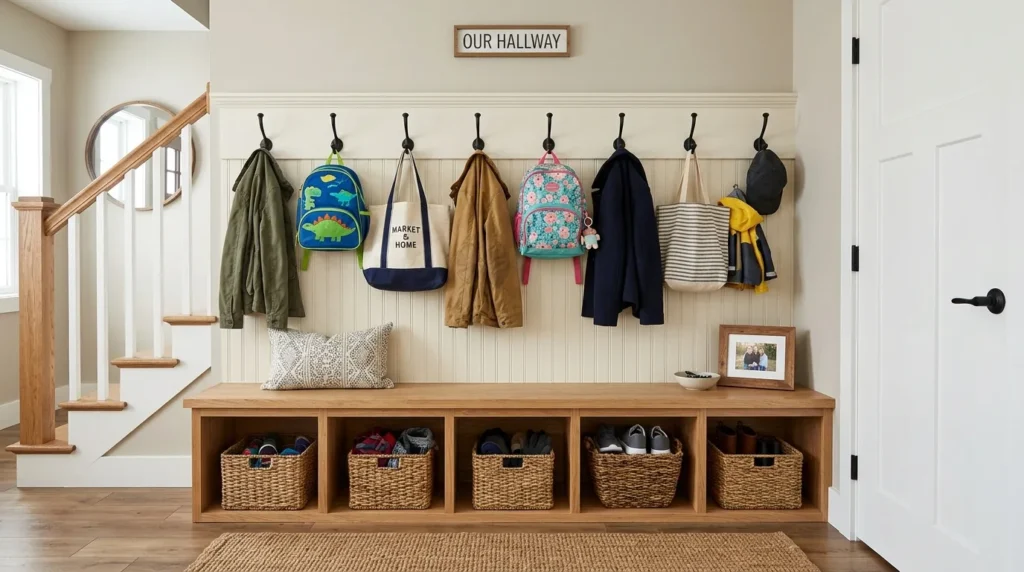
- Install sturdy hooks for coats, bags, hats, umbrellas, and dog leashes.
- Add a small shelf above hooks for decor or daily essentials.
- Use matching hooks for a clean, organized look.
- Place hooks at practical heights for adults, kids, or guests.
A wall hook zone is one of the most useful remodel upgrades for a busy hallway. It gives coats, bags, hats, umbrellas, and dog leashes a clear place to land instead of piling on chairs or floors. Hooks are especially helpful in homes without a large mudroom or entry closet. Choose sturdy metal, wood, or matte black hooks that match the rest of your hardware. When installed in an organized row, they create a clean rhythm along the wall while making everyday routines smoother for the whole household.
For a more finished look, mount the hooks on a painted board, beadboard panel, or wood rail instead of attaching them randomly to drywall. This protects the wall and makes the feature feel built-in. Add a shallow shelf above the hooks for small baskets, framed art, or seasonal decor. If children use the hallway, place a lower row of hooks where they can reach their backpacks and jackets. The space becomes easier to maintain because every item has a home, which reduces clutter and visual stress.
6. Built-In Shoe Storage
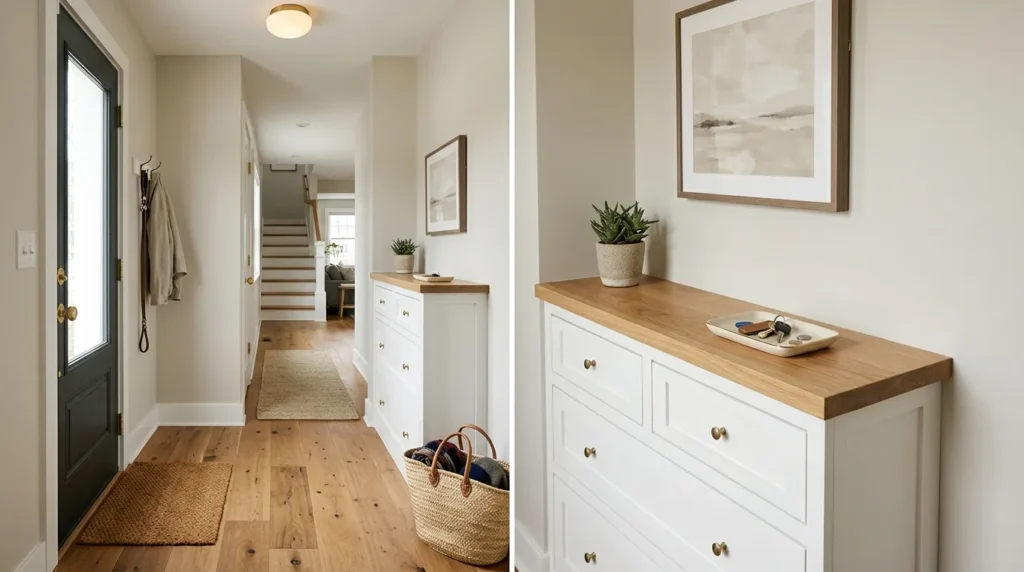
- Use shallow cabinets, cubbies, or tilt-out shoe organizers to save floor space.
- Choose closed storage if you want the hallway to look cleaner.
- Add labels or baskets for family members to keep shoes separated.
- Use the top surface for keys, mail, or a small decorative tray.
Built-in shoe storage can completely change the way a hallway functions, especially near an entry door. Shoes are one of the fastest things to make a narrow walkway feel messy, so giving them a proper storage system matters. Shallow cabinets, low cubbies, tilt-out organizers, and bench-style units all work depending on the available space. Closed storage creates the cleanest look, while open cubbies are easier for kids and guests. A thoughtful setup turns scattered footwear into an organized feature that supports daily routines instead of fighting them.
Before choosing a unit, measure the walking path and make sure doors or drawers can open comfortably. In a very tight space, wall-mounted shoe cabinets with slim profiles are often better than deep benches. Use baskets or labeled sections so each family member has a spot. If you choose a cabinet, style the top with a tray for keys, a small lamp, or a vase. The hallway becomes more practical and visually calm because the clutter is hidden, the floor stays clear, and leaving home feels easier.
7. Picture Ledge Display
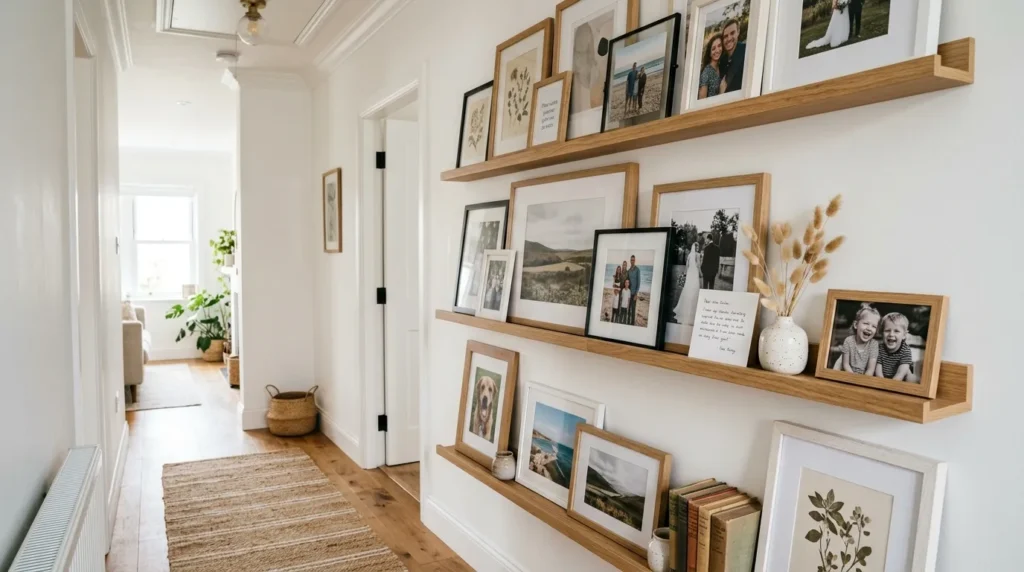
- Install slim picture ledges to display art without committing to permanent placements.
- Layer framed prints, family photos, small signs, or seasonal pieces.
- Keep ledges shallow so they do not interrupt walking space.
- Use matching frames for a clean and curated hallway design.
A picture ledge display is perfect when you want hallway art that can change with the seasons. Instead of hanging every frame separately, install one or two slim ledges and layer artwork along them. This gives the wall a collected look while making updates easy. You can swap family photos, printable art, holiday pieces, or travel memories without adding new nail holes. I’ve noticed this idea works especially well for renters and homeowners who like refreshing decor often without committing to one permanent gallery arrangement.
Choose ledges with a shallow depth so they do not interfere with the walkway. White, black, oak, or walnut finishes can match different home styles, from modern farmhouse to transitional and coastal. Keep frames in a consistent palette for a cleaner look, even if the art varies. Layer taller pieces in the back and smaller pieces in front for dimension. Add one tiny vase or decorative object if the ledge is wide enough. The result feels creative, flexible, and personal while keeping the hallway light and uncluttered.
8. Board Batten Walls
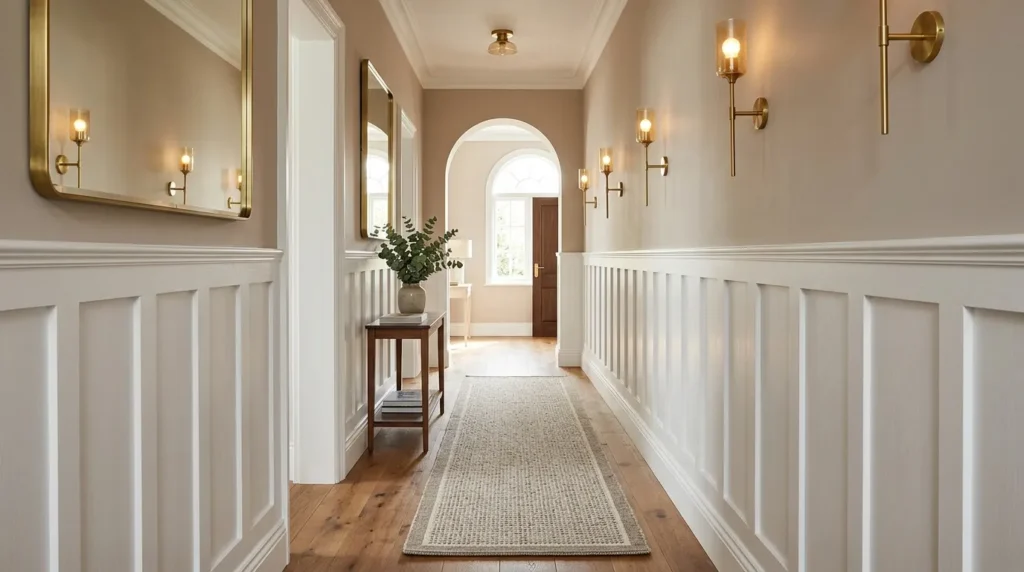
- Add vertical trim to create architectural interest in a plain hallway.
- Paint the wall and trim one color for a seamless built-in effect.
- Use durable paint because lower walls receive frequent scuffs.
- Keep spacing even for a clean and professional-looking finish.
Board and batten walls add instant architectural character to a hallway that feels flat or builder-basic. The vertical lines draw the eye upward, which can make the area feel taller and more finished. This remodel idea works beautifully in traditional, farmhouse, coastal, and transitional homes. Use MDF strips, pine boards, or pre-primed trim to create the pattern, then paint everything one color for a seamless effect. That unified finish makes the detail look like it has always belonged in the home rather than added later.
The best board and batten design starts with careful measuring. Mark the spacing before cutting any trim so the panels look balanced around doors, outlets, and corners. For most hallways, lower wall paneling works better than full-height treatment because it adds detail without feeling heavy. Use caulk along the seams and fill nail holes before painting for a professional finish. A durable satin paint helps protect against scuffs from bags, shoes, and daily traffic. The finished look feels custom, polished, and much more expensive than the materials usually cost.
9. Warm Lighting Layers
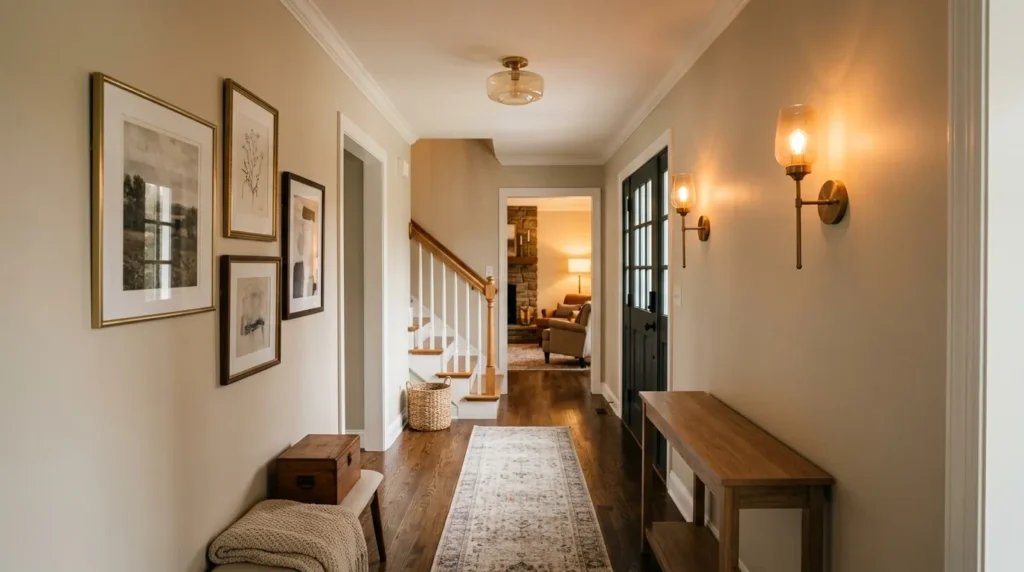
- Replace harsh overhead lights with warmer bulbs or updated fixtures.
- Add wall sconces, picture lights, or slim lamps where space allows.
- Use dimmers to create softer light in the evening.
- Choose finishes that match nearby hardware for a cohesive remodel.
Warm lighting layers can make a hallway feel welcoming instead of dark, flat, or forgotten. Many older homes have one harsh ceiling fixture that creates shadows and makes the space feel smaller. Swapping it for a flush mount, semi-flush fixture, or stylish ceiling light can instantly update the mood. Add warm white bulbs, usually around 2700K to 3000K, for a softer glow. In my experience, lighting is one of the most overlooked hallway upgrades, even though it changes the way paint, flooring, and decor appear.
If your hallway has enough wall space, consider sconces, picture lights, or a slim table lamp on a console. These layers create depth and make the area feel designed rather than purely functional. Dimmers are another smart upgrade because they let you soften the light at night or brighten it during cleaning. Choose fixture finishes that connect with door hardware, cabinet pulls, or nearby room accents. Brass, black, bronze, and polished nickel all work depending on your style. The space becomes more comfortable, safer, and visually appealing.
10. Arched Doorway Trim
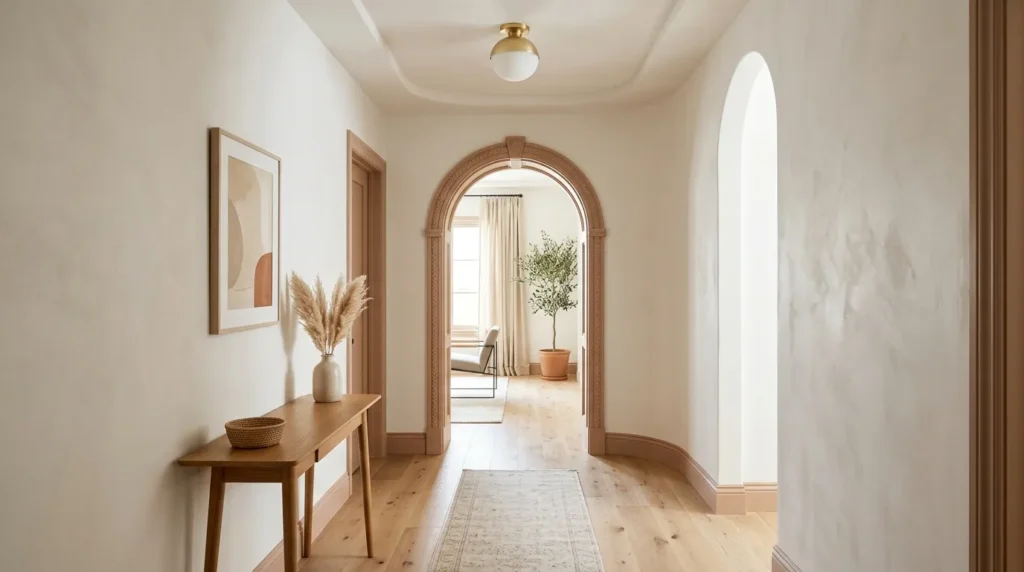
- Add arched trim details to soften square hallway openings.
- Paint trim in a warm neutral or subtle contrast color.
- Use this idea around entries, closet openings, or transition points.
- Keep nearby decor simple so the architectural detail stands out.
Arched doorway trim brings softness and architectural charm to a hallway with basic square openings. Even if the structure itself stays rectangular, decorative trim can create the illusion of a more custom transition. Arches are especially popular in Mediterranean, Spanish-inspired, cottage, and modern organic interiors, but they can work in many USA homes when styled simply. This idea adds personality without taking floor space, which makes it ideal for a compact hallway. The curved shape naturally breaks up straight lines from doors, walls, flooring, and trim.
For a subtle remodel, paint the arched trim the same color as the surrounding wall so it feels sculptural rather than busy. If you want more contrast, use a warm white wall with greige, taupe, or soft clay trim. Keep nearby artwork and shelves minimal so the arch remains the focal point. This detail works nicely at hallway entrances, closet openings, or transitions between living areas and bedrooms. The result feels more thoughtful and high-end because the hallway gains a design feature without sacrificing function or clearance.
11. Hidden Utility Nook
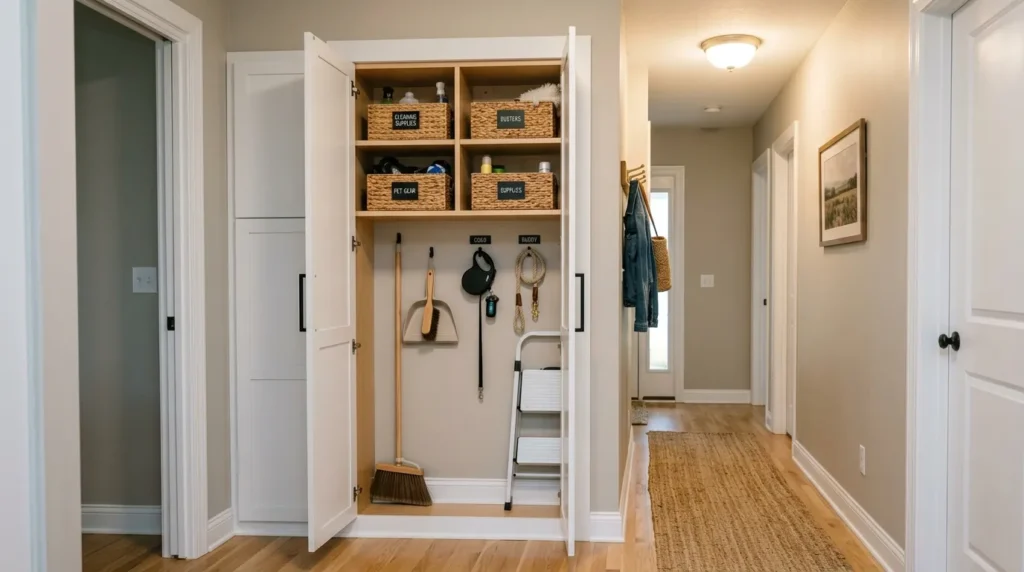
- Use a narrow cabinet or recessed area for cleaning supplies and daily tools.
- Add hooks, shelves, or bins inside to keep everything organized.
- Choose closed doors or curtains if you want a seamless hallway look.
- Store only frequently used items so the nook stays functional.
A hidden utility nook makes a small hallway work harder without making it look busier. Many homes need a place for cleaning supplies, pet items, reusable bags, batteries, or household tools, but these things often end up scattered. A shallow cabinet, recessed shelf, or converted closet can solve that problem. Use hooks for brooms, labeled bins for supplies, and narrow shelves for items you reach for often. When everything is behind a clean door or curtain, the hallway stays visually calm while still supporting real daily life.
Keep the nook focused rather than turning it into a catchall closet. Store only items that make sense near that part of the home, such as vacuum attachments, lint rollers, umbrellas, or pet leashes. Add battery-powered lighting inside if the area is dark. Use clear bins or labels so everyone knows where things belong. This remodel is not just pretty; it improves the way the home functions. A well-planned storage nook can reduce clutter in kitchens, laundry rooms, and entry areas while keeping the hallway simple.
12. Accent Ceiling Detail
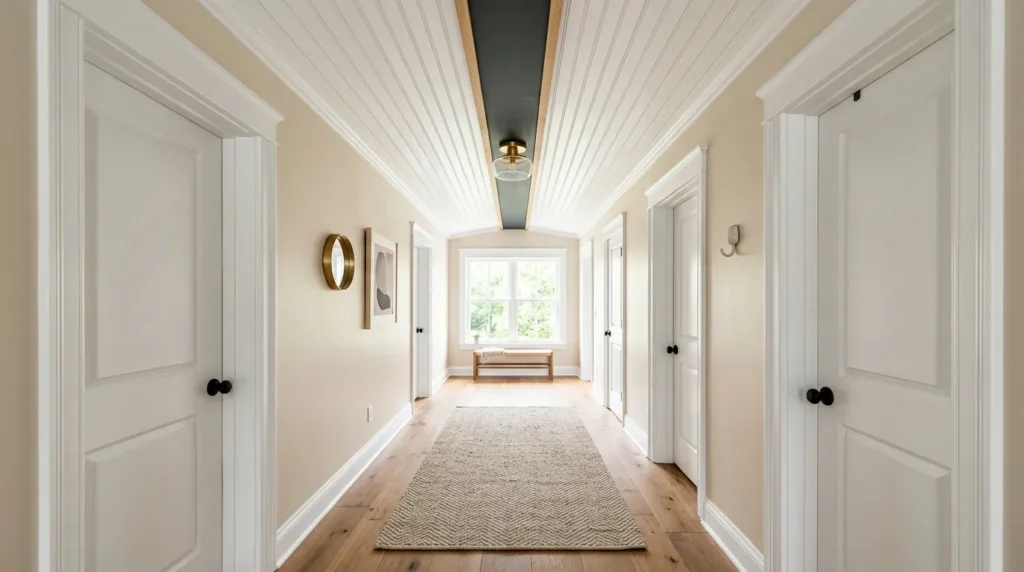
- Paint the ceiling a soft contrast color to add visual interest overhead.
- Add wood planks, beadboard, or simple trim for texture.
- Use ceiling detail when wall space is limited or already busy.
- Keep lighting simple so the ceiling feature remains balanced.
An accent ceiling detail is a smart way to add style when hallway walls are too narrow for much decor. Most people focus only on walls and floors, but the ceiling can become a beautiful design surface. Paint it a soft contrast color, add beadboard, install slim wood planks, or use simple trim for subtle texture. This works especially well in a small hallway because it draws attention upward without blocking movement. The effect feels custom and unexpected, which makes the entire area look more thoughtfully remodeled.
Choose a ceiling treatment that fits the height of the hallway. Low ceilings usually look best with light paint, narrow planks, or delicate trim, while taller ceilings can handle deeper color or stronger texture. If you add wood, keep the finish warm and natural for a cozy look. Pair the ceiling detail with simple lighting so the space does not feel crowded. This upgrade can make a plain passage feel like a designed transition zone, giving the home more character from room to room without adding clutter.