How to Align Hardware When Cabinet Doors and Drawers Are Uneven
Successfully aligning hardware when cabinet doors and drawers are uneven is a task that transforms the look of any kitchen. Most visual issues stem from minor shifts in hinges or slides rather than structural damage. You can typically restore a professional finish using only a standard screwdriver and a few minutes of patience. This process…
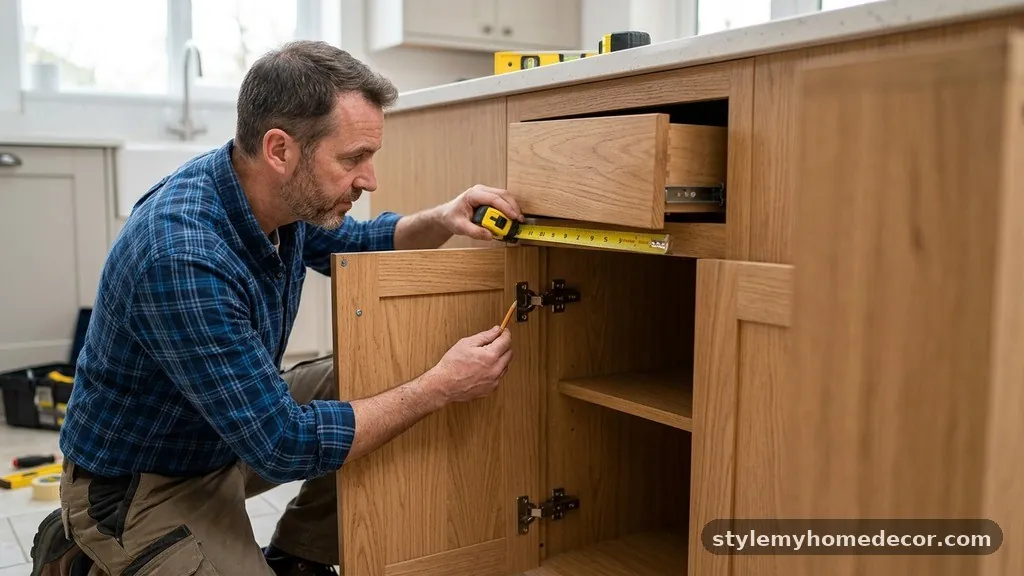
Successfully aligning hardware when cabinet doors and drawers are uneven is a task that transforms the look of any kitchen. Most visual issues stem from minor shifts in hinges or slides rather than structural damage. You can typically restore a professional finish using only a standard screwdriver and a few minutes of patience.
This process involves identifying whether the culprit is a sagging door hinge or a misaligned drawer slide. By following a systematic approach, you can restore symmetry to your cabinetry without needing expensive professional repairs or new components. Understanding these mechanical adjustments ensures your home remains functional and aesthetically pleasing for years to come.
Identifying the Root Cause of Misalignment
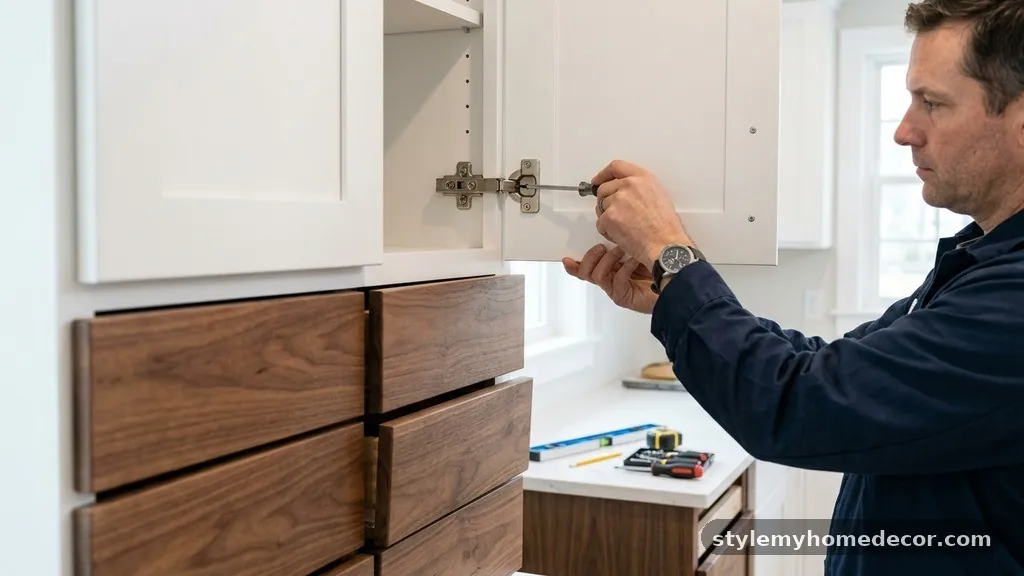
Before reaching for your tools, you must determine exactly why your cabinets look crooked. Misalignment often results from daily use, where the repetitive motion of opening and closing doors causes hinge screws to loosen over time. In other cases, the weight of heavy items stored inside a drawer can cause the slides to bend or sag.
You should start by checking the gaps between your doors and the frame. If one corner of a door sits lower than the other, the hinge is likely the primary point of failure. Conversely, if a drawer front looks tilted or rubs against the side, the issue usually lies within the slide mechanism.
Visual inspection is your most effective diagnostic tool during this phase. Use a level or a simple straight edge to see if the cabinet box itself has shifted or if the hardware is simply out of adjustment. If the cabinet box is level but the doors are not, you are looking at a hardware calibration issue.
If the box itself is sagging, you may need to shim the base, which is a much more intensive project. Always clear the contents of the cabinet or drawer before performing these checks to ensure you are seeing the true resting position of the hardware.
Adjusting Cabinet Door Hinges
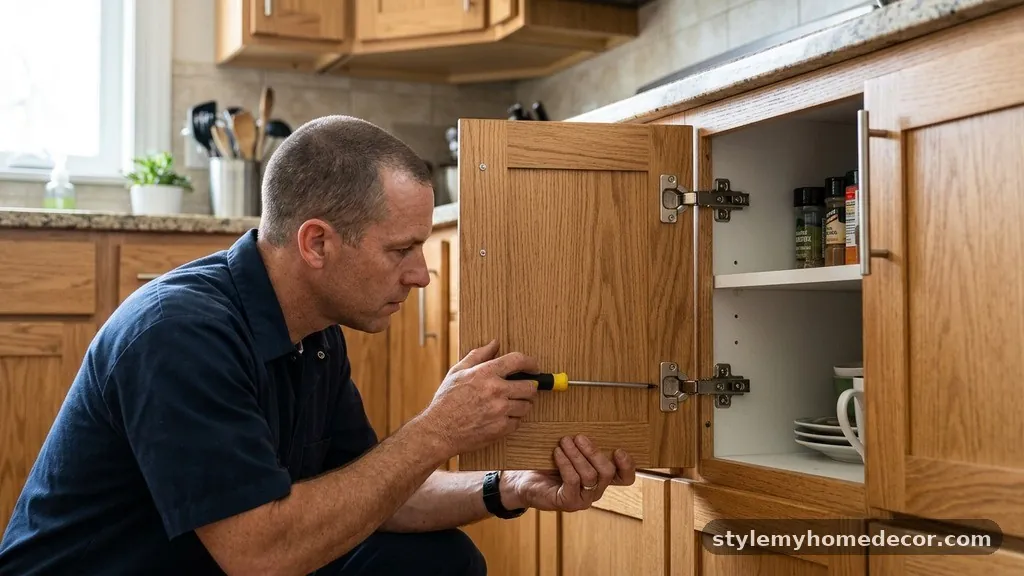
Most modern kitchen cabinets utilize European-style hinges, which feature three distinct adjustment screws. These screws allow you to move the door in three dimensions: up and down, side to side, and in and out. Start by identifying the screw that controls horizontal movement, typically located closest to the cabinet door itself.
Turning this screw clockwise moves the door toward the center, while counter-clockwise moves it away. This is usually the first step when addressing a door that does not sit flush against the face frame.
Vertical adjustment is handled by the screws that attach the hinge plate to the cabinet wall. You will often find these behind a decorative cover or integrated directly into the mounting bracket. Loosen these screws slightly to allow the door to slide up or down, then tighten them back into place once the door is level.
If your door is hitting the face frame, you need to adjust the depth. The back screw on the hinge arm controls this, moving the door closer to or further away from the cabinet box. Small, incremental turns are vital here; a quarter-turn can make a significant difference in how the door sits.
Correcting Drawer Front Alignment
Drawer alignment is often more challenging than door adjustment because the mechanics are hidden inside the cabinet box. Modern soft close slides are designed for precision, but they can drift over time. Many high-end drawer slides feature a small lever or adjustment wheel located under the drawer box or at the front of the slide mechanism.
These controls allow you to tweak the tilt of the drawer front to ensure it remains parallel to the cabinet frame. If you cannot find adjustment controls, you may need to remove the drawer entirely to inspect the mounting screws.
When a drawer front is visibly tilted, it often indicates that one of the side slides is mounted slightly lower than the other. You can fix this by loosening the mounting screws inside the cabinet and shifting the slide bracket. Before tightening everything back down, use a piece of painter’s tape to mark the current position so you have a reference point.
If the drawer is rubbing against the bottom, you might need to insert a thin shim behind the slide bracket to lift the entire assembly. This is a common solution for older cabinets where the wood has expanded or contracted due to humidity.
The Role of Soft Close Mechanisms
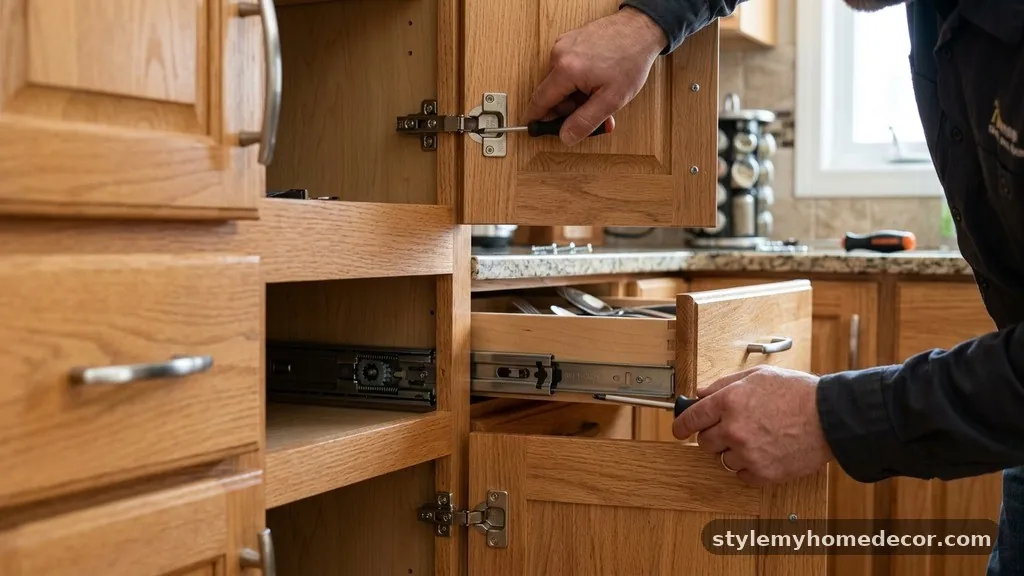
Soft close hardware has become a standard in modern homes, but it adds a layer of complexity to the adjustment process. These systems rely on hydraulic dampers that must be perfectly positioned to function correctly. If your soft close drawers are not engaging or are closing unevenly, the issue is often a lack of tension or a misaligned trigger.
Check the damper mechanism for any debris that might be preventing it from fully extending or retracting. Sometimes, a simple cleaning with a damp cloth is enough to resolve the sluggish movement.
If the soft close feature is still inconsistent, check the alignment of the drawer box relative to the cabinet frame. The damper needs to make firm contact with the slide to trigger the closing action. If the drawer is too far to the left or right, the trigger might miss the damper entirely.
You can adjust the drawer position laterally using the same screws that control the general slide alignment. Ensure the drawer slides move smoothly without resistance before finalizing your adjustments to the damper.
Standard Hardware Adjustment Reference
To keep track of which screw does what, it helps to follow a standard logic for most hardware manufacturers. While brands vary, the mechanical principles remain consistent across most installations. You can refer to this table to determine which adjustment direction matches your specific problem.
| Adjustment Type | Screw Location | Resulting Movement |
|---|---|---|
| Horizontal | Front Hinge Screw | Moves door left or right |
| Depth | Rear Hinge Screw | Moves door toward/away from box |
| Vertical | Hinge Mounting Plate | Moves door up or down |
| Drawer Tilt | Slide Front Lever | Tilts drawer front up or down |
Tools Required for Precision Adjustments
You do not need a massive toolkit to achieve professional results when aligning your cabinetry. A high-quality #2 Phillips screwdriver is the most important tool in your arsenal. Avoid using power drills for these adjustments, as the torque can easily strip the screw heads or damage the particleboard or wood cabinet frames.
A small level can also be helpful if you are trying to align multiple drawers in a vertical stack. Having a flashlight on hand will help you see into the dark corners of the cabinet box where the mounting plates are located.
If you are working with older cabinets, you might encounter rusted or stuck screws. A small amount of lubricant, like graphite or silicone spray, can help loosen these without damaging the surrounding wood. Keep a few spare screws of the same size on hand, just in case one is stripped during the process.
If a hole has become stripped, you can fill it with a wooden toothpick and some wood glue before re-inserting the screw. This simple trick provides enough bite for the screw to hold firmly once the glue has dried.
Maintaining Consistent Gaps
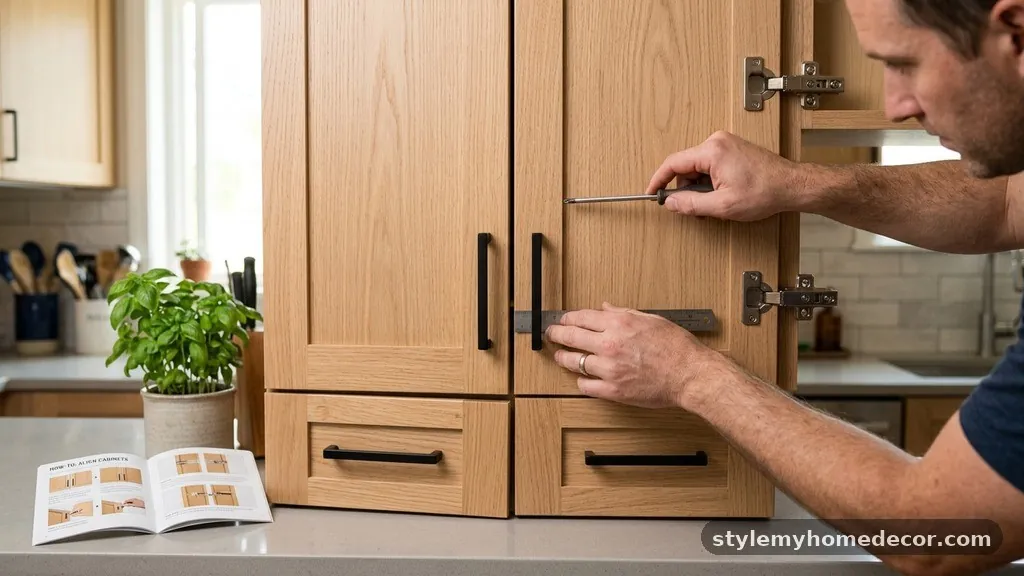
Achieving a uniform gap, often called the reveal, is the hallmark of a high-quality installation. If your gaps are uneven, the entire kitchen will look unfinished, even if the doors are technically functional. Aim for a consistent gap of about 1/8 inch between doors and between the door and the drawer front.
You can use a small piece of cardboard or a dedicated gap gauge to check this distance as you work. If the gap is too tight, the doors may rub against each other, leading to chipped paint or damaged wood edges.
When adjusting for the reveal, work from the outside in. Start with the outermost doors or drawers and move toward the center of the cabinet run. This ensures that any minor discrepancies are pushed toward the middle where they are less noticeable.
If you have a long run of cabinets, consider using a long level across all the doors to ensure they align perfectly. This visual check is much more accurate than relying on your eye alone, especially in rooms with uneven flooring.
Handling Face Frame Cabinets
Aligning hardware on face frame cabinets requires a slightly different approach than working with frameless, full-access cabinetry. In face frame designs, the hinges are typically mounted to a narrow strip of wood that covers the front of the cabinet box. This means you have less room for error when mounting your hardware.
If the face frame itself is slightly out of square, you may need to use offset hinges to compensate for the angle. These specialized hinges can save you from having to remount the entire cabinet box.
If you find that the drawer slides are mounted directly to the face frame, ensure they are securely anchored with blocking behind the frame. Without this support, the slides can eventually pull away from the frame under the weight of the drawer. If you notice the drawer front is sagging, check the internal blocking to see if it has cracked.
You may need to add a small gusset or brace to provide additional stability for the slide. This extra step prevents the alignment issues from returning a few months later.
Best Practices for Long-Term Alignment
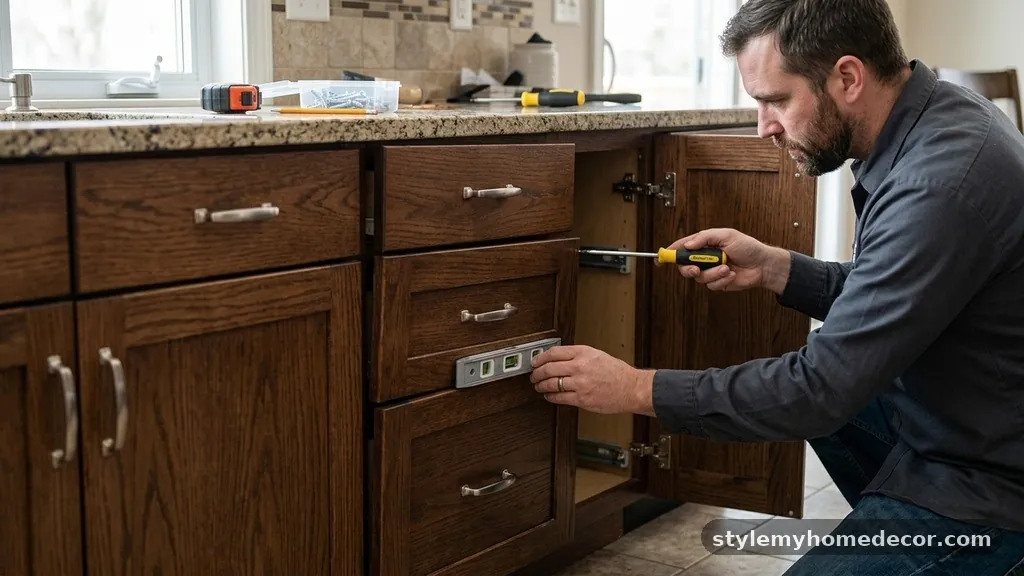
Once you have achieved perfect alignment, you want to keep it that way for as long as possible. The most common cause of future misalignment is overloading drawers and doors. Avoid storing heavy cast iron pans or large stacks of plates in drawers that were not designed for that weight.
If you must store heavy items, ensure they are distributed evenly across the drawer bottom to prevent the slides from torquing. Periodically check your hinges and slides for loose screws and tighten them before they cause visible shifting.
Keeping your hardware clean is another often-overlooked maintenance step. Kitchen grease and dust can build up in the tracks of drawer slides, causing them to stick and eventually leading to uneven wear. Wipe down the slides with a dry cloth every few months to remove debris and ensure smooth operation.
If the movement feels gritty, a tiny drop of silicone-based lubricant can help, but avoid heavy oils that attract more dust. Following these simple habits will significantly extend the life of your cabinet hardware.
Troubleshooting Persistent Issues
Sometimes, no amount of adjustment seems to fix the problem. If you have adjusted the hinges and slides to their limit and the door still sits crooked, the cabinet box itself might be twisted. You can check this by measuring the diagonals of the cabinet opening; if the measurements are not identical, the box is out of square.
In this scenario, you may need to loosen the mounting screws that hold the cabinet to the wall and use shims to force the box into a square position. This is a significant task that should only be attempted if you are comfortable with basic carpentry.
Another persistent issue occurs when the hinge plate holes have become enlarged or stripped. If the screw just spins in the hole, it will never hold the door in the correct position. You can repair this by plugging the hole with a hardwood dowel and wood glue, then drilling a new pilot hole.
This provides a fresh, solid surface for the screw to grip. For a more detailed look at the mechanics of furniture and cabinetry, you can consult resources like the Wood Magazine technical library for guidance on structural repairs.
Frequently Asked Questions
Why do my cabinet doors keep sagging even after I adjust them?
Sagging usually happens because the mounting screws have lost their grip in the wood or the hinge itself is worn out. If the screws are tight but the door still drops, the hinge mechanism might be fatigued and require a complete replacement. Check if the weight of the door exceeds the hinge’s capacity, which can happen if you have added heavy decorative panels to the front.
Is there a specific rule for the gap between cabinet doors?
A standard industry gap, or reveal, is typically 1/8 inch. This gap provides enough clearance so that the doors do not rub against each other when opened or closed. You can use a spacer of this thickness to ensure all your doors have a consistent look across the entire kitchen.
How do I know if my drawer slides are broken?
If a drawer does not glide smoothly, makes a grinding noise, or feels like it is falling off the track, the slide is likely damaged. Look for bent metal, missing ball bearings, or loose mounting screws. If the slide is physically bent or warped, no amount of adjustment will fix it; you will need to replace the slide set.
Can I adjust soft close drawers if they don’t close all the way?
Yes, soft close drawers can be adjusted by checking the damper mechanism and the drawer alignment. Ensure the drawer is not being blocked by an internal obstruction and verify that the trigger on the slide is making full contact with the damper. If the drawer is physically catching on the frame, adjust the slide position until it clears the opening.
What is the best way to level a drawer front?
Most modern drawers have a small lever or dial on the underside of the slide that allows for vertical adjustment. Simply turning this dial slightly will raise or lower the front of the drawer to match the adjacent cabinets. If your slides lack this feature, you may need to adjust the mounting screws on the cabinet interior to shift the entire slide assembly.
Conclusion
Aligning hardware when cabinet doors and drawers are uneven is a manageable process that yields immediate visual improvements. By systematically adjusting the hinges and slides, you can eliminate gaps, fix sagging, and ensure that every door sits flush against the frame. Start by identifying the specific screw responsible for the movement you need, and always make small, incremental changes to avoid over-correcting.
Regular maintenance, such as tightening loose screws and keeping tracks clean, will prevent these issues from recurring. Whether you are dealing with minor drifts or significant misalignments, the techniques described here will help you achieve a professional, polished finish in your home. Take your time with the process, and you will enjoy perfectly functioning cabinetry for years to come.