
Fireclay vs Porcelain Bathroom Sinks: Which Chips Easier?
Choosing between materials for a new bathroom vanity is a significant decision that impacts both the daily aesthetics and long-term maintenance of your home. When weighing the pros and cons of Fireclay vs Porcelain Bathroom Sinks, homeowners often focus on the durability of the finish and the likelihood of accidental damage. Understanding how these two…
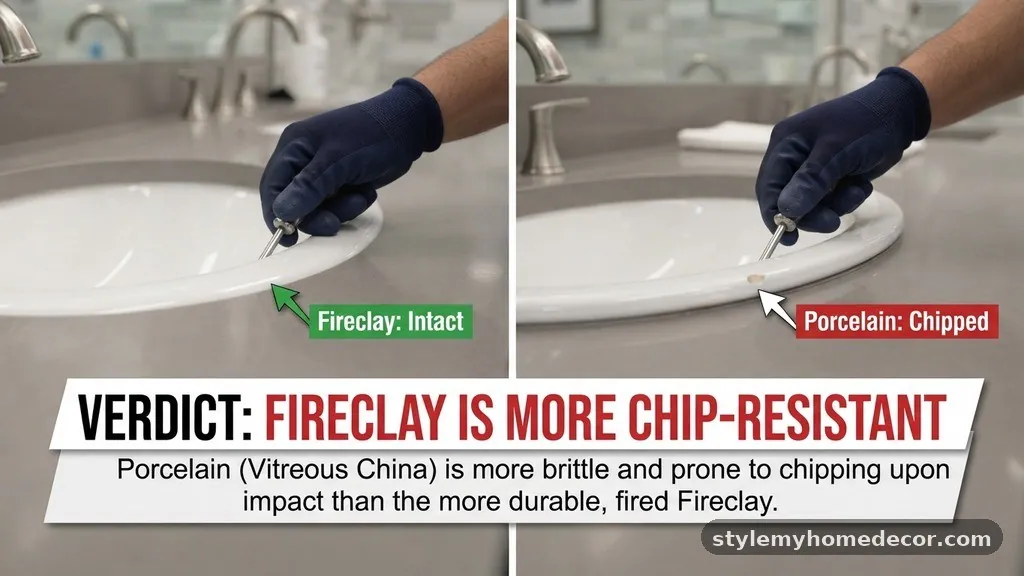
Choosing between materials for a new bathroom vanity is a significant decision that impacts both the daily aesthetics and long-term maintenance of your home. When weighing the pros and cons of Fireclay vs Porcelain Bathroom Sinks, homeowners often focus on the durability of the finish and the likelihood of accidental damage.
Understanding how these two materials handle impact is crucial for anyone looking to invest in a piece that will look pristine for decades. By examining the structural composition and manufacturing processes of both options, we can clarify which material is more prone to chipping and why.
The Verdict: Which Material Chips More Easily?
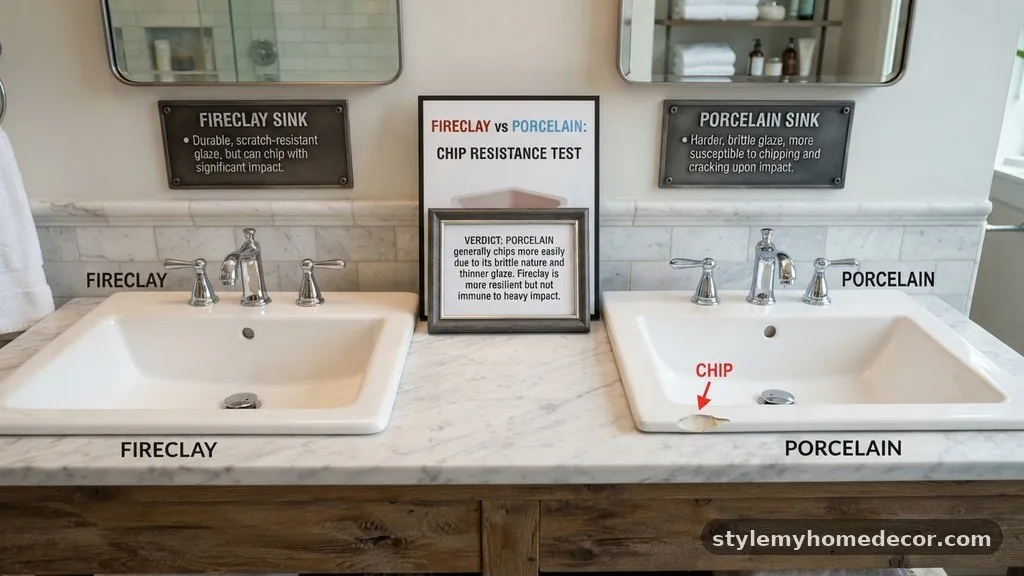
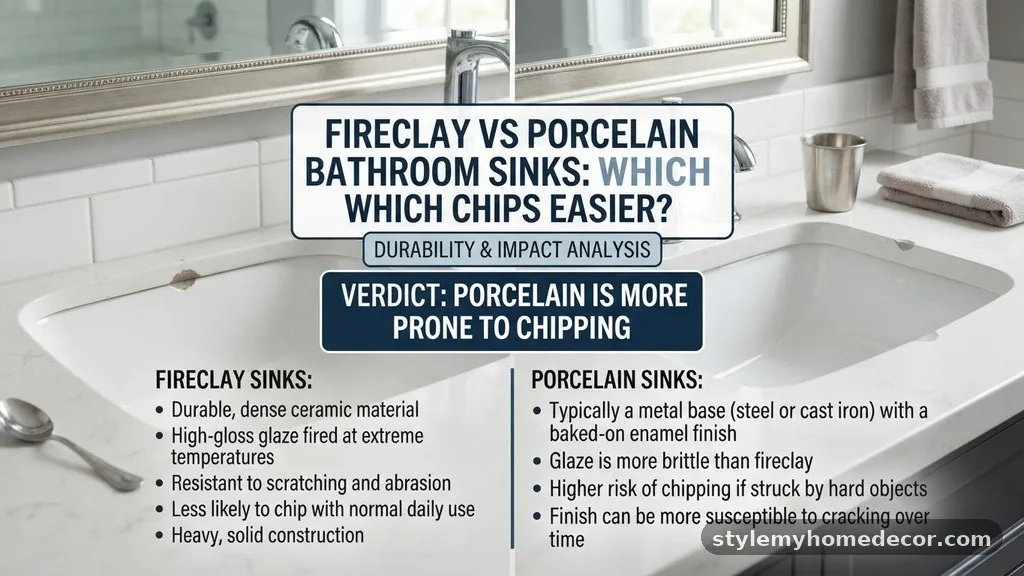
If you are looking for the short answer regarding which sink is more likely to sustain a chip, the evidence points toward fireclay. While both materials are incredibly durable, fireclay is essentially a type of ceramic that is fired at extremely high temperatures to create a dense, rock-hard body. Because this material is so rigid, it lacks the slight “give” or flexibility that can sometimes help a surface absorb a sharp impact.
Porcelain, particularly when applied over a metal base like cast iron, acts differently under stress. When we discuss traditional porcelain sinks, we are often referring to vitreous china or porcelain-enameled steel.
These materials are bonded to a substrate that can handle impact in a way that solid, brittle fireclay cannot. Consequently, a heavy object dropped into a fireclay basin is more likely to cause a surface crack or a chip than it would in a high-quality enameled sink.
Understanding Fireclay Manufacturing
Fireclay is crafted from a mixture of clay and minerals that are fired in kilns at temperatures exceeding 1,600 degrees Fahrenheit. This intense heat causes the material to fuse into a solid, heavy, and very dense object. Once the shape is formed, it is coated with a thick layer of glaze that essentially becomes part of the basin itself.
The resulting product is prized for its classic aesthetic and heavy, high-end feel. Because the material is so dense, it is remarkably resistant to heat, chemicals, and everyday wear.
However, the very nature of this high-temperature firing process makes the final product quite brittle. If something heavy strikes the edge of a fireclay basin, the impact is concentrated on a small, hard point, which frequently results in a chip that exposes the clay body underneath.
The Composition of Porcelain Sinks
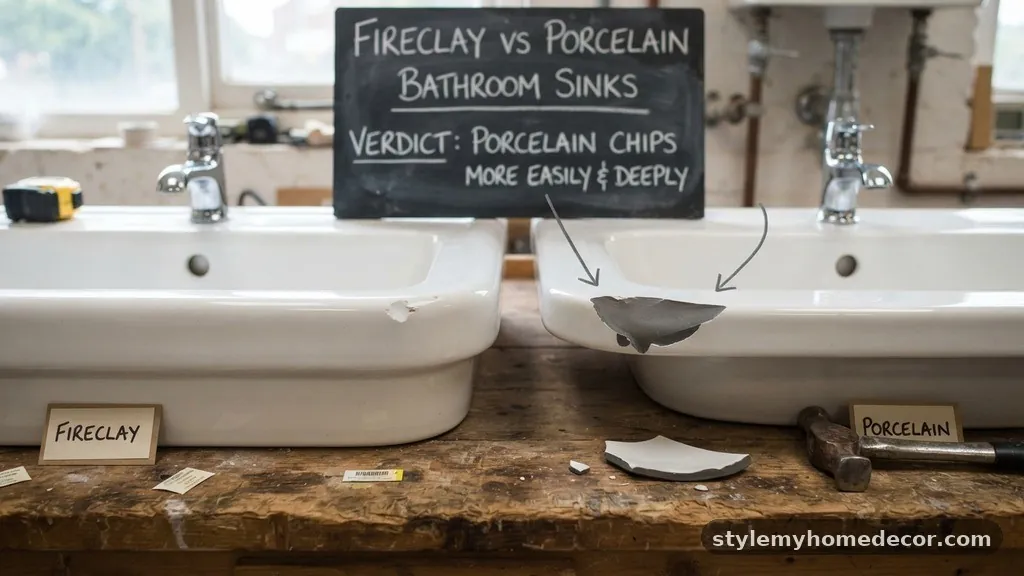
Porcelain sinks are often categorized as vitreous china, which is a ceramic material that has been glazed and fired at high heat. Unlike the heavy clay body of a fireclay unit, vitreous china is typically lighter and thinner. The term porcelain is also used to describe enamel coatings applied to metal surfaces, such as enameled cast iron.
When porcelain is applied to a cast iron base, the combination provides a unique set of benefits. The iron provides structural strength, while the porcelain enamel provides a smooth, non-porous, and hygienic surface.
This composite nature means that the sink is less likely to crack through the entire body, even if the top layer of enamel suffers a chip. You can learn more about material standards and preservation to understand how different surfaces behave over time.
Comparing Durability and Resilience
When evaluating Fireclay vs Porcelain Bathroom Sinks in terms of raw durability, it is important to distinguish between surface damage and structural failure. Fireclay is arguably more resistant to deep scratches and acid-based stains because of its thick, high-quality glaze. It is a workhorse material that handles hot water and harsh cleaning agents without breaking a sweat.
Porcelain, while also very resistant to stains, can be slightly more susceptible to surface-level wear if the glaze is of lower quality. However, the lower density of porcelain means it won’t shatter as easily under the weight of a heavy dropped object. The following table illustrates how these two materials compare across various categories of home use.
| Feature | Fireclay | Porcelain (Vitreous China) |
|---|---|---|
| Impact Resistance | Low (Prone to chipping) | Moderate (More flexible) |
| Stain Resistance | Very High | High |
| Weight | Very Heavy | Light to Moderate |
| Heat Resistance | Excellent | High |
The Impact of Daily Use on Chipping
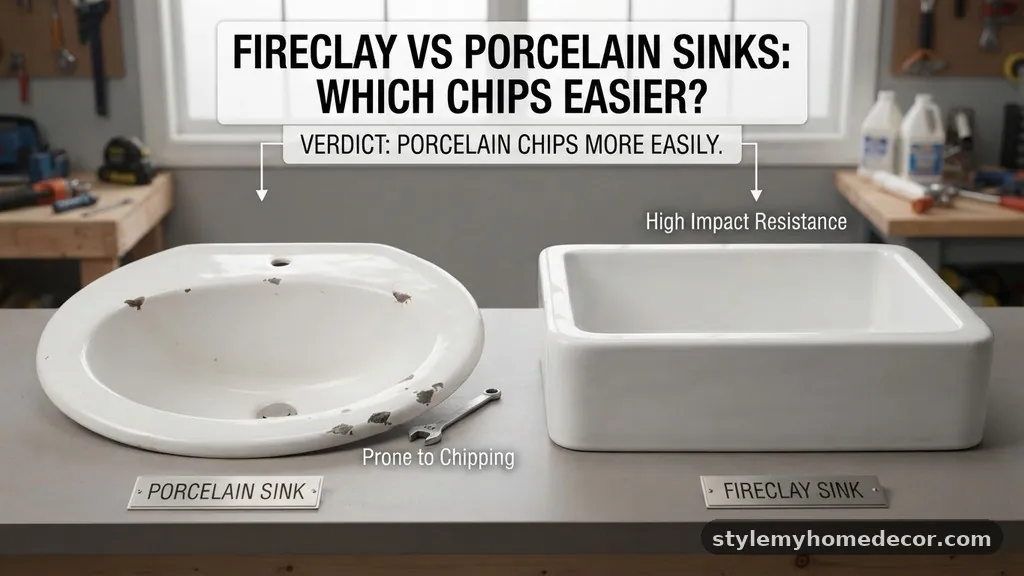
Bathroom sinks endure a surprising amount of abuse, from heavy glass perfume bottles to metal faucets and dropped hair tools. In a busy household, the frequency of these small impacts is what eventually leads to damage. Fireclay sinks are particularly popular for the farmhouse look, but they are often installed as top-mount or apron-front units.
When a sink has an exposed edge, such as an apron-front design, it becomes a target for heavy objects slipping from a user’s hands. If you drop a heavy curling iron or a ceramic soap dispenser on the edge of a fireclay rim, the force is often enough to cause a visible chip. Porcelain sinks, especially those integrated into vanity tops, often have less exposed rim area, which inherently reduces the risk of accidental impact.
Maintenance and Repair Options
If you do end up with a chip in your basin, the repair process differs based on the material. Repairing fireclay can be tricky because the glaze is so thick and specific to the manufacturer’s original firing process. While you can purchase epoxy-based repair kits, the patched area may never perfectly match the original luster or color of the basin.
Porcelain repairs are generally more common and often easier to blend. Because porcelain enamel is essentially a glass-like coating, there are many widely available touch-up kits designed to fill in small chips and nicks. These kits are usually color-matched to standard white fixtures, making the repair nearly invisible to the casual observer.
Aesthetic Considerations for Your Bathroom
Beyond the question of which material chips easier, the visual appeal is a major factor for most buyers. Fireclay offers a distinct, high-end appearance that feels substantial and premium. It is often the preferred choice for period-style bathrooms or luxury farmhouse designs because of its smooth, deep finish.
Porcelain has a more traditional, versatile look that fits almost any design style, from modern to minimalist. It is the industry standard for a reason: it provides a clean, bright, and sterile look that is easy to keep looking new. If your priority is a timeless, low-maintenance aesthetic, the sheer variety of porcelain shapes and sizes will give you more options to choose from.
Weight and Installation Requirements
The physical weight of these materials dictates how they must be installed and supported. Fireclay is exceptionally heavy, often requiring reinforced cabinetry or specialized vanity supports to ensure the unit does not pull away from the wall or crack the countertop. This structural requirement adds to the overall cost of installation.
Porcelain is significantly lighter, making it much easier to handle and install. You can often drop a porcelain sink into a standard vanity with minimal extra support, which saves time and labor costs. If you are planning a DIY installation, the lighter weight of porcelain makes it a much more manageable choice for a single person to handle.
Common Myths About Ceramic and Fireclay
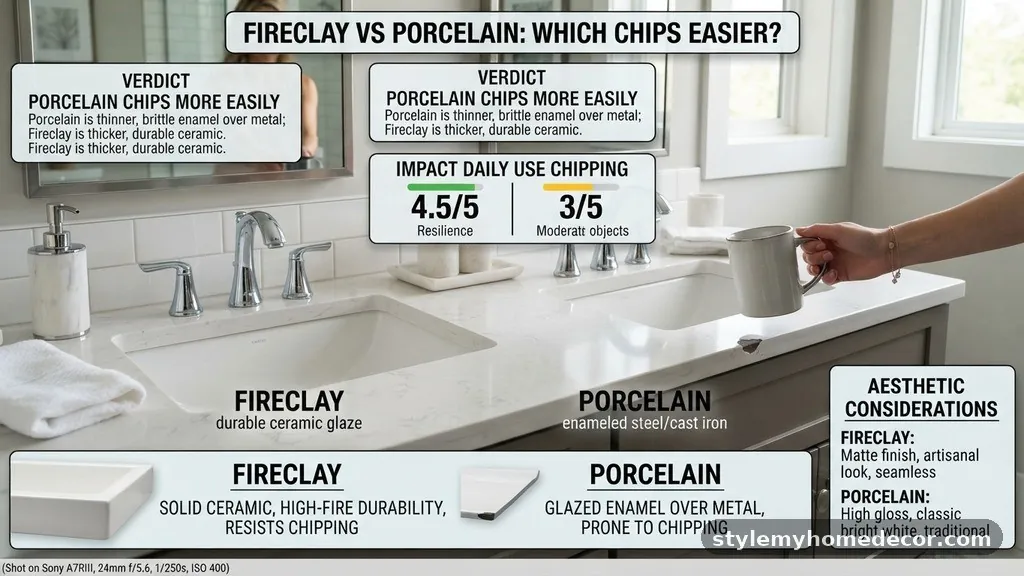
There is often confusion between standard ceramic, vitreous china, and fireclay. Many people assume that if a sink is white and shiny, it must be the same material as every other white sink. This is a mistake that can lead to disappointment regarding durability.
* Ceramic: A broad category that includes everything from clay pottery to industrial tiles.
* Vitreous China: A type of ceramic that is glazed and fired at high temperatures to be non-porous.
* Fireclay: A specialized ceramic created by firing clay at even higher temperatures for maximum density.
* Porcelain Enamel: A glass-like coating fired onto metal surfaces like cast iron or steel.
By understanding these nuances, you can avoid buying a lower-quality ceramic product that is prone to cracking, thinking you are getting the durability of fireclay. Always check the manufacturer’s specifications to see if they define the material as true fireclay or simply generic ceramic.
Frequently Asked Questions
Do fireclay sinks crack easily under normal conditions?
No, they do not crack under normal, everyday use. They are extremely durable and heat-resistant, but they are brittle. Cracking or chipping usually occurs only when a hard, heavy object is dropped directly onto the surface or an exposed edge.
Can I use bleach to clean a fireclay sink?
Most manufacturers advise against using harsh chemicals like concentrated bleach on a regular basis, as it can dull the finish over time. Mild soap and water are generally sufficient for keeping these sinks clean and sanitary. Always check the specific care manual provided with your model.
Is there a difference between fireclay and farmhouse sinks?
Fireclay is a material, while “farmhouse” refers to a style of sink characterized by an exposed front apron. Many farmhouse sinks are made of fireclay, but you can also find them in stainless steel, copper, or porcelain. The two terms are often used together because fireclay is the most popular material for that specific aesthetic.
Which material is better for a high-traffic family bathroom?
For a high-traffic bathroom, porcelain is often the more practical choice. It is lighter, easier to repair, and generally less expensive to replace if a significant accident occurs. While fireclay is beautiful, its susceptibility to chipping makes it a higher-risk investment in a home with children.
Do these sinks require special cleaning tools?
Neither material requires specialized tools, but both should be protected from abrasive scrubbers. Avoid steel wool or harsh scouring pads, as these can scratch the glaze on both fireclay and porcelain. A soft microfiber cloth or a non-abrasive sponge is perfectly adequate for daily maintenance.
Moving Forward with Your Choice
Deciding between Fireclay vs Porcelain Bathroom Sinks ultimately comes down to your personal priorities regarding style, budget, and the level of care you are willing to provide. If you are drawn to the heavy, classic aesthetic of fireclay and are willing to be mindful of how you handle heavy objects near the basin, it is a stunning addition to any home. If you prefer a lighter, more forgiving material that is easier to repair and install, porcelain remains the reliable, time-tested standard for most households.
Consider the layout of your vanity and the habits of those who will use the sink daily. If you are leaning toward a heavy farmhouse-style basin, ensure you have the proper cabinet support to handle the weight.
Whatever you choose, both materials offer a clean and hygienic surface that will serve your household well for years to come. If you have further questions about specific models or installation techniques, reach out to a local professional to ensure your project is a success.