10 House Front Yard Ideas
Introduction A front yard does more than fill the space between your home and the street. It shapes the first impression, improves curb appeal, and helps your house feel more welcoming before anyone even reaches the door. For many USA homes, the front yard is also one of the most visible outdoor areas, so even…
Introduction
A front yard does more than fill the space between your home and the street. It shapes the first impression, improves curb appeal, and helps your house feel more welcoming before anyone even reaches the door. For many USA homes, the front yard is also one of the most visible outdoor areas, so even small upgrades can make a big difference. A thoughtful House Front Yard plan can make your exterior look cleaner, warmer, and more expensive without needing a full renovation.
The best front yard ideas are not always the biggest or most costly. Sometimes, a better walkway, fresh planting border, updated porch pots, soft lighting, or a clean mailbox area can completely change the look of the home. This guide gives you practical, Pinterest-friendly ideas that work for suburban homes, small cottages, ranch-style houses, townhomes, and modern builds. Each idea focuses on beauty, function, materials, and real-life use so you can create a front yard that feels polished, personal, and easy to maintain.
1. Welcoming Walkway
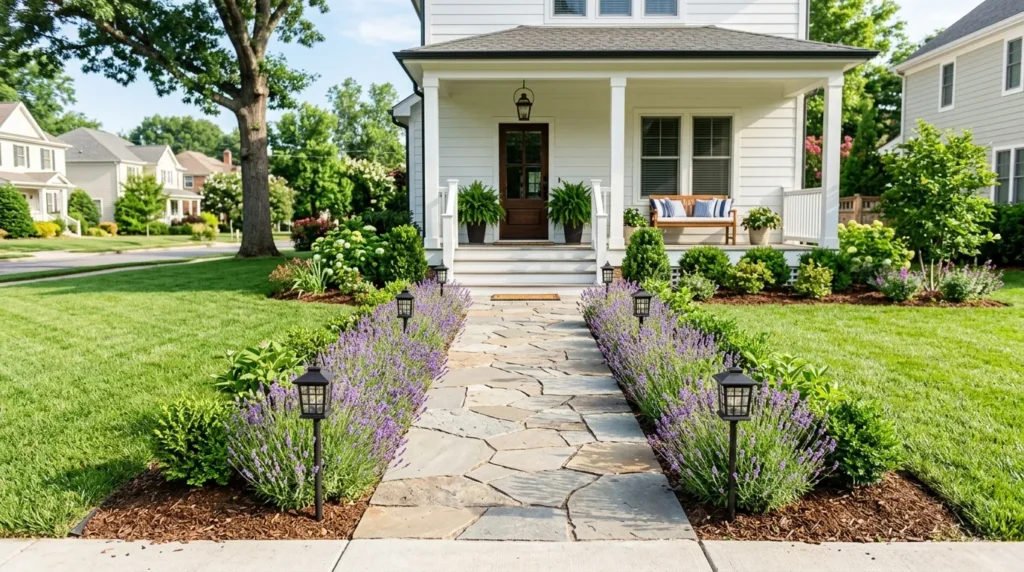
- Creates a clear path from the street, driveway, or sidewalk.
- Makes the entry feel more organized and inviting.
- Works with brick, flagstone, concrete pavers, or stepping stones.
- Can be softened with low plants, mulch, gravel, or lighting.
- Helps guests move naturally toward the front door.
Your front yard is the first design moment your home gives to guests. A balanced entry path helps the whole exterior feel welcoming because it guides people naturally from the sidewalk, driveway, or curb to the front door. Use concrete pavers, brick, flagstone, or large stepping stones, depending on your home’s style. Keep the route clear, wide enough for two people, and visually connected to the porch. In my experience, a walkway looks best when it feels intentional, not like a narrow strip added after everything else was finished.
The transformation comes from making movement feel easy and beautiful at the same time. A curved path softens a plain lawn, while a straight path gives a classic and formal look. Add low plants along the edges, such as liriope, lavender, boxwood, or ornamental grass, so the walkway feels framed but not crowded. Solar lights can help at night, but keep them spaced naturally instead of lining them too tightly. The result is a cleaner arrival experience that improves curb appeal and makes the home feel more cared for every day.
2. Layered Planting
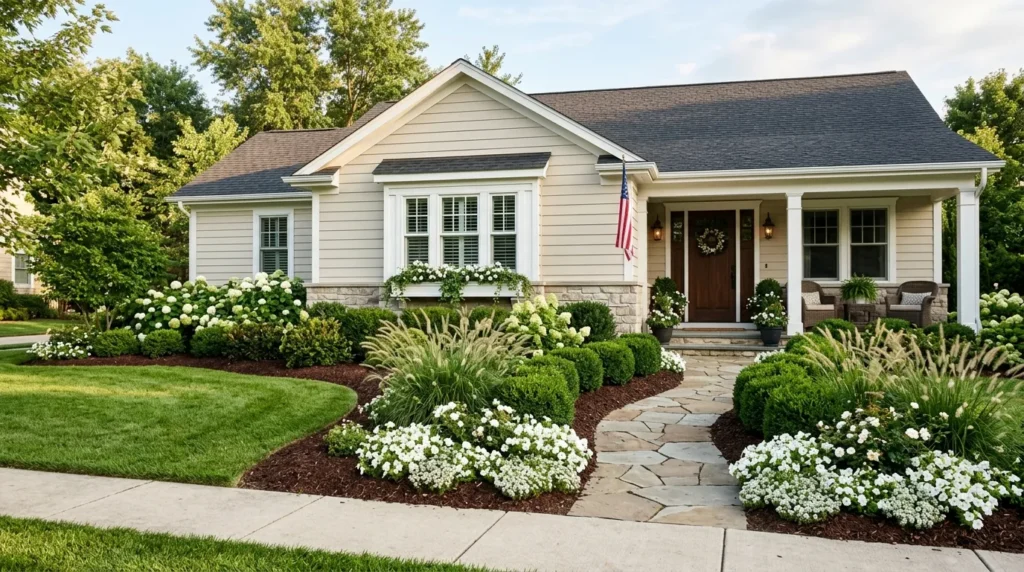
- Adds depth instead of using one flat row of shrubs.
- Combines tall, medium, and low plants for balance.
- Works well around porches, windows, and foundation beds.
- Makes the home look softer and more finished.
- Can be designed with low-maintenance plants for easier care.
Layered planting makes a front yard look fuller without feeling messy. The idea is simple: place taller shrubs or small trees in the back, medium plants in the middle, and low flowers or groundcover near the front. This creates depth, which helps the home look more settled into the landscape. That’s why many designers recommend layers instead of one flat row of bushes under the windows. Use plants that match your sunlight, soil, and region, because the best-looking yard is also one that can survive your actual climate.
The real beauty of layered planting is how it changes the house itself. Plain siding, brick, or stucco can look warmer once greenery softens the edges. For a clean look, repeat a few plant varieties instead of buying one of everything at the nursery. Try boxwood, hydrangea, salvia, hosta, ornamental grass, dwarf evergreens, or native perennials based on your location. Add mulch to control weeds and define the beds. The finished space feels more mature, balanced, and photo-ready while still being practical for weekly maintenance.
3. Porch Planters
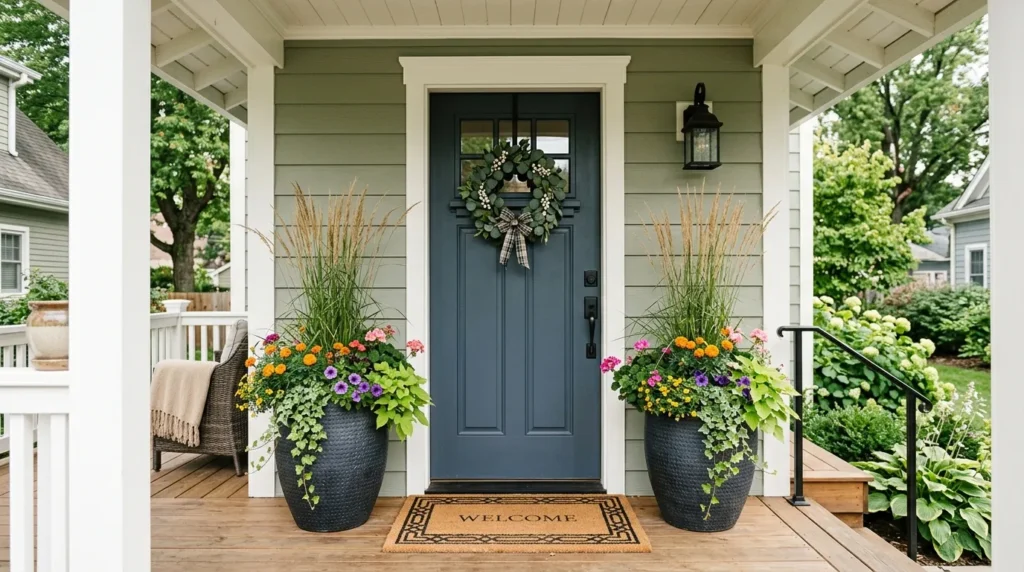
- Adds instant color near the front door.
- Works for homes with small or large porches.
- Can be changed seasonally without redesigning the yard.
- Uses ceramic, resin, concrete, or metal containers.
- Helps connect the front door with the landscape.
Porch planters are one of the fastest ways to upgrade a front entry. They add color, height, and texture exactly where guests look first. Use matching planters on both sides of the door for a classic look, or choose one large statement pot if your porch is narrow. Fill them with thriller, filler, and spiller plants, such as tall grass, seasonal flowers, and trailing vines. I’ve noticed that planters look more expensive when the container color matches the door hardware, shutters, trim, or exterior light fixtures.
This idea works because it is flexible and easy to refresh. In spring, you can use pansies, tulips, or greenery. In summer, try petunias, begonias, sweet potato vine, or coleus. In fall, add mums, ornamental kale, or small pumpkins. In winter, use evergreen branches, pinecones, and lanterns. Even if the rest of the yard is simple, porch pots give the entry personality. The key is keeping the soil healthy, watering consistently, and choosing plants that fit the amount of sun your porch gets each day.
4. Border Edging
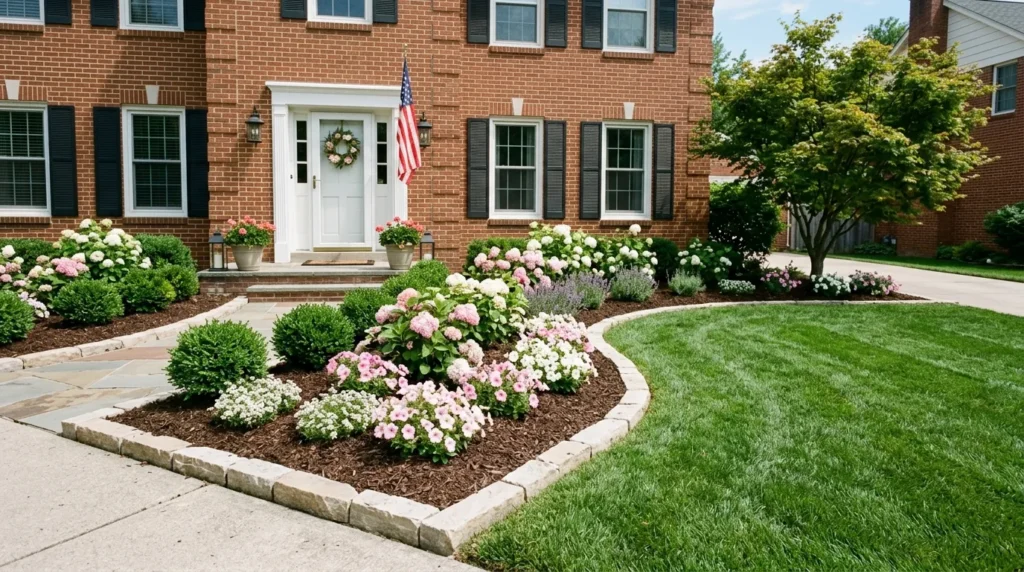
- Gives flower beds a clean, finished shape.
- Separates lawn, mulch, gravel, and planting areas.
- Works with stone, brick, metal, concrete, or plastic edging.
- Helps reduce grass creeping into garden beds.
- Makes the yard look neater with less visual clutter.
Clean edging can make an ordinary yard look professionally maintained. When grass, mulch, and flowers blur together, even healthy landscaping can look unfinished. Edging creates a crisp boundary that tells the eye where each area begins and ends. You can use natural stone for a cottage look, brick for traditional homes, black metal for modern exteriors, or concrete curbing for a permanent finish. In my experience, simple edging makes the biggest difference when the planting beds already exist but lack a clean outline.
The upgrade is practical because it also makes maintenance easier. A defined border helps keep mulch inside the bed and grass outside the planting area. It also gives you a clear line to follow when trimming or mowing. For curved beds, use flexible metal or small stones that follow the shape naturally. For straight modern beds, use long metal strips or rectangular pavers. Once the edges are clean, the entire front yard feels more organized. It gives the home a tidy, cared-for look without adding extra decoration.
5. Statement Tree
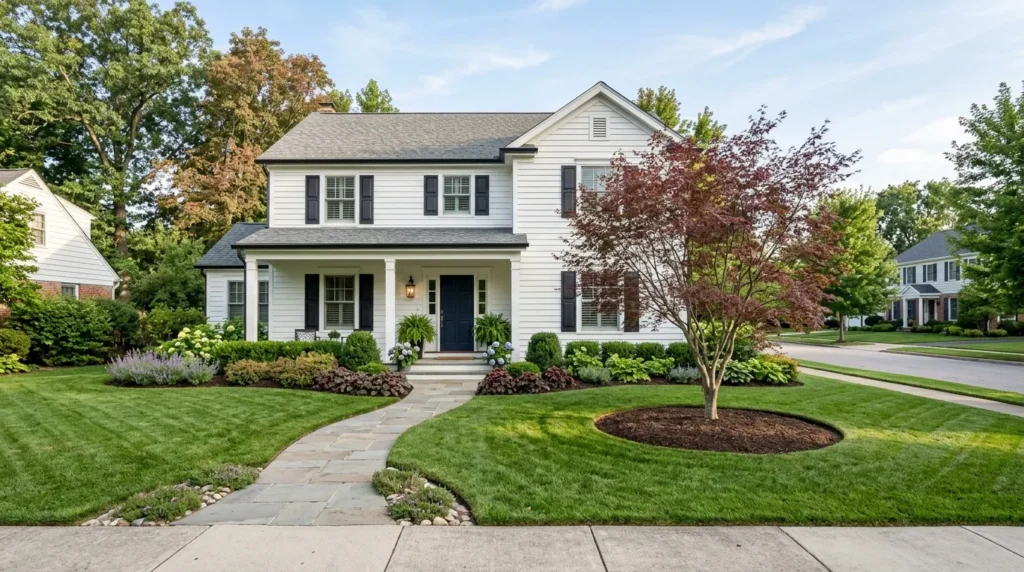
- Creates height and a strong focal point.
- Works well near walkways, lawns, or front corners.
- Can provide shade, flowers, seasonal color, or structure.
- Should be chosen based on mature size and local climate.
- Makes the yard feel established and balanced.
A single beautiful tree can anchor the entire front yard. It gives height, shade, seasonal interest, and a natural focal point that smaller plants cannot provide. The important part is choosing the right tree for the space, not just the prettiest one at the garden center. Consider mature height, root spread, sun needs, and distance from the house, driveway, and utilities. Good options may include Japanese maple, dogwood, crape myrtle, serviceberry, redbud, or small ornamental evergreens, depending on your region and climate.
This idea changes the yard over time, which is part of its charm. A young tree may look simple at first, but it becomes more valuable and attractive as it grows. Place it where it frames the home instead of blocking windows or crowding the entry. Add a clean mulch ring, low groundcover, or a few shade-friendly plants around the base. The result feels timeless and natural. A well-placed tree can make a small front yard feel layered, mature, and more connected to the neighborhood around it.
6. Mailbox Garden
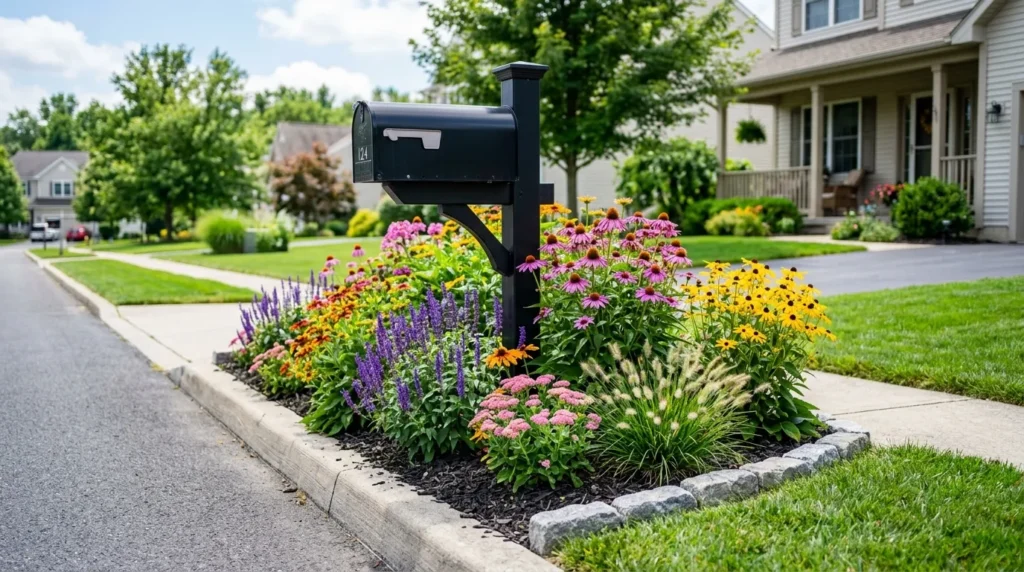
- Turns a plain mailbox area into a pretty focal point.
- Works with flowers, mulch, small shrubs, or ornamental grass.
- Adds charm near the curb without changing the whole yard.
- Should stay low enough for visibility and mail access.
- Helps improve curb appeal from the street view.
A mailbox garden adds charm where most people forget to decorate. Since the mailbox sits close to the street, it is one of the first details people notice when passing your home. A small planting bed around it can make the entire exterior feel more cared for. Use low flowers, mulch, compact shrubs, or ornamental grasses that will not block the box or make mail delivery difficult. I’ve seen this work well in many homes because it creates impact without needing a large budget.
The best mailbox gardens are simple, durable, and easy to maintain. Choose plants that can handle roadside heat, reflected sunlight, and occasional dry soil. Coneflowers, daylilies, creeping phlox, salvia, sedum, and dwarf grasses often work well in many areas, but always check your local climate. Add a clean border with brick, stone, or metal edging to keep the shape neat. This small project can make the curb view feel warmer and more finished, especially when the rest of the front yard is still simple.
7. Rock Accents
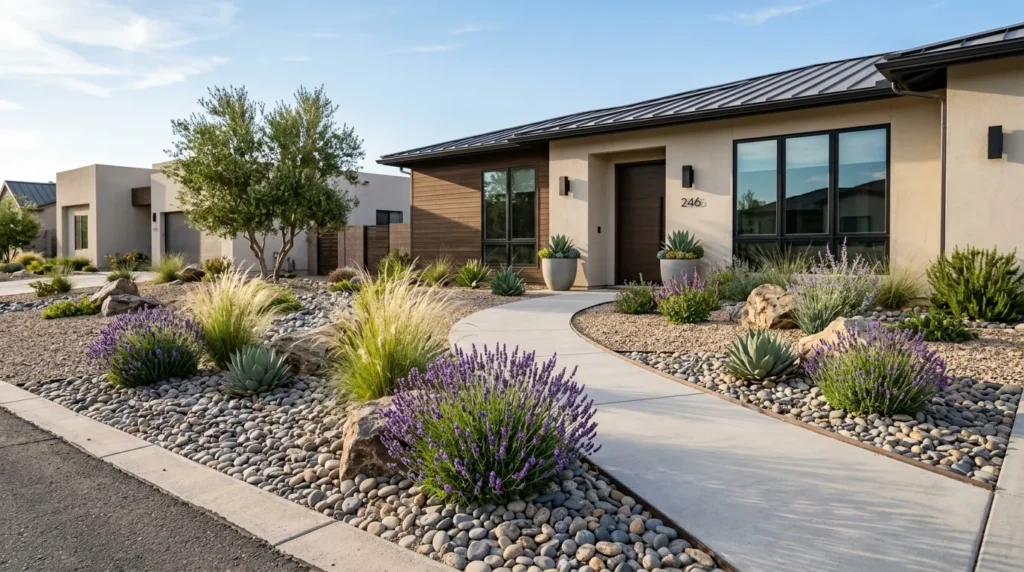
- Adds texture without needing constant watering.
- Works well in dry climates or low-maintenance yards.
- Can be used around beds, walkways, trees, or porch areas.
- Pairs nicely with drought-tolerant plants and grasses.
- Creates a clean, natural look when colors are limited.
Rock accents can make a front yard feel polished and low-maintenance. Instead of using only mulch or grass, add river rock, pea gravel, boulders, crushed stone, or decomposed granite for texture. The key is using stone with purpose, not scattering random rocks everywhere. Larger boulders look best when partly buried, while smaller stones work well as groundcover in dry beds. That’s why many designers recommend choosing one or two stone colors so the yard feels calm instead of visually busy.
This idea is especially useful in hot, dry, or water-conscious regions of the USA. Rock can reduce muddy areas, highlight planting beds, and create contrast around greenery. Pair it with ornamental grasses, lavender, yucca, agave, sedum, or native plants for a natural look. Avoid placing rock too close to delicate plants that dislike heat, because stones can reflect warmth. When used carefully, rock accents give the front yard structure, texture, and a clean modern feel while lowering the amount of weekly upkeep needed.
8. Window Boxes
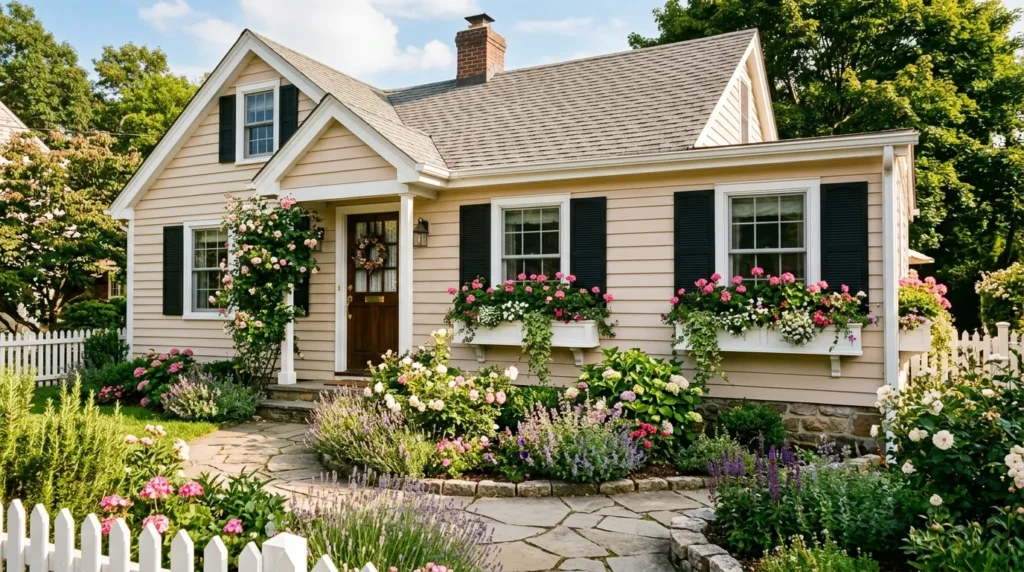
- Adds color directly to the home exterior.
- Works well on cottages, ranch homes, and traditional houses.
- Can be planted seasonally for fresh curb appeal.
- Uses wood, metal, composite, or PVC boxes.
- Softens plain walls and makes windows feel more charming.
Window boxes make the house itself part of the garden. They bring flowers, greenery, and texture up to eye level, which is especially helpful if the front yard is small or narrow. Use boxes that match the home’s style, such as painted wood for cottage homes, black metal for classic exteriors, or white composite for a clean look. Make sure they are securely attached and have drainage. In my experience, window boxes look best when the planting colors connect with the front door, shutters, or porch decor.
The transformation feels cheerful because the color sits right where people naturally look. In spring and summer, you can use geraniums, petunias, ivy, bacopa, sweet potato vine, or begonias. For fall, try mums, trailing greenery, and small ornamental cabbage. For winter, use evergreen cuttings and berries where appropriate. Keep the plants full but not overgrown, so windows still feel open. A few well-designed window boxes can soften a plain facade, add personality, and make the front exterior look more loved throughout the year.
9. Outdoor Lighting
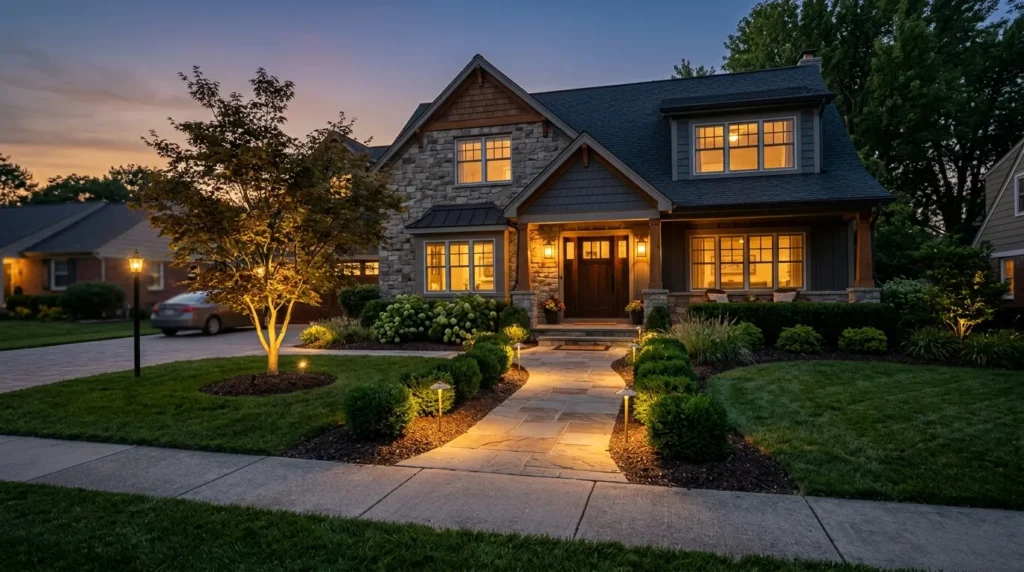
- Improves safety along paths, steps, and porch areas.
- Highlights trees, walls, and architectural details.
- Makes the front yard look warm after sunset.
- Works with solar, low-voltage, or hardwired fixtures.
- Should use warm light instead of harsh bright tones.
Soft outdoor lighting can make your front yard look beautiful after dark. It also improves safety, which matters for walkways, steps, driveways, and porch entries. Use warm white lighting to create a welcoming glow instead of harsh brightness. Path lights can guide movement, uplights can highlight trees, and wall lights can show off brick, siding, or stone details. I’ve noticed that homes look more expensive at night when lighting is subtle, layered, and placed with intention instead of installed everywhere at once.
The best lighting plan focuses on the areas people actually use. Light the path to the door, the porch steps, the house number, and one or two landscape features. Avoid mixing too many fixture styles, because that can make the yard feel cluttered. Solar lights are easy for beginners, while low-voltage systems usually look more consistent and last longer. With the right placement, your front exterior feels safer, warmer, and more inviting. It also gives the home strong curb appeal during evening hours, not just daytime.
10. Seasonal Entry
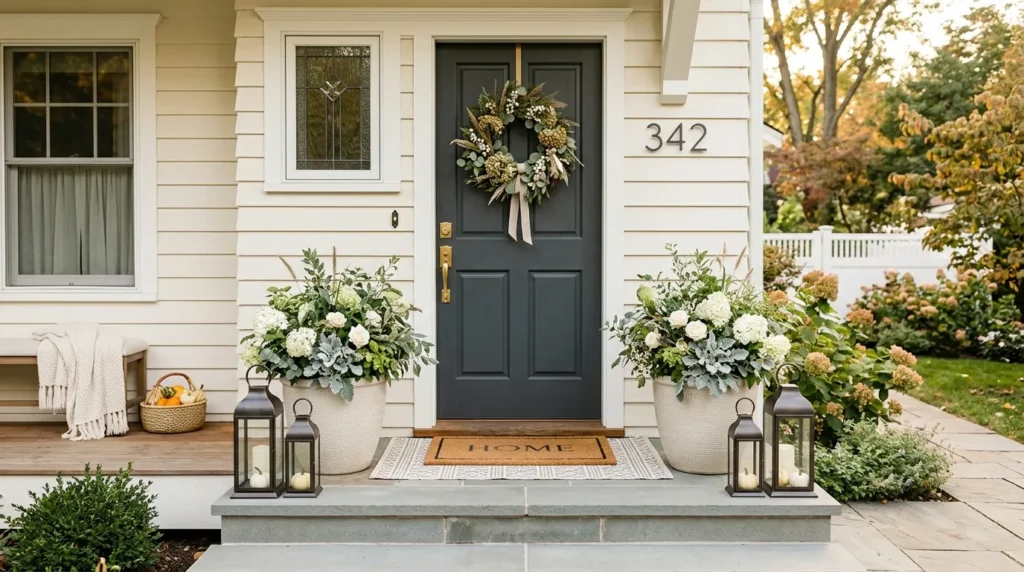
- Keeps the front yard fresh throughout the year.
- Uses wreaths, planters, doormats, lanterns, and simple accents.
- Adds personality without permanent changes.
- Works best with a controlled color palette.
- Helps the entrance feel updated for each season.
A seasonal entry keeps your home feeling fresh without redesigning the whole yard. The front door area is the easiest place to update because small changes show immediately. Use a wreath, layered doormat, porch pots, lanterns, or a simple bench to reflect the season. Keep the color palette controlled so it looks styled, not cluttered. For spring, use soft greens and florals. For summer, try bright flowers. For fall, add warm pumpkins and mums. For winter, use evergreens, pinecones, and warm lighting.
This idea works because it gives your home personality while staying easy to manage. You do not need to buy new decor every month. A few reusable basics, such as lanterns, neutral planters, and a simple outdoor rug, can stay in place while seasonal plants or accents change. The entry feels more welcoming for guests, deliveries, holidays, and everyday life. When done with restraint, seasonal styling can make your House Front Yard feel updated, cozy, and Pinterest-ready without overwhelming the home’s natural architecture.