11 Mud Kitchen Setups Kids Won’t Leave
There’s a reason some backyard play areas become the center of nonstop activity while others barely get used. It usually comes down to one thing—how engaging and interactive the setup feels. When a space invites creativity, hands-on play, and a little bit of mess, kids naturally gravitate toward it. That’s exactly why Mud Kitchen Setups…
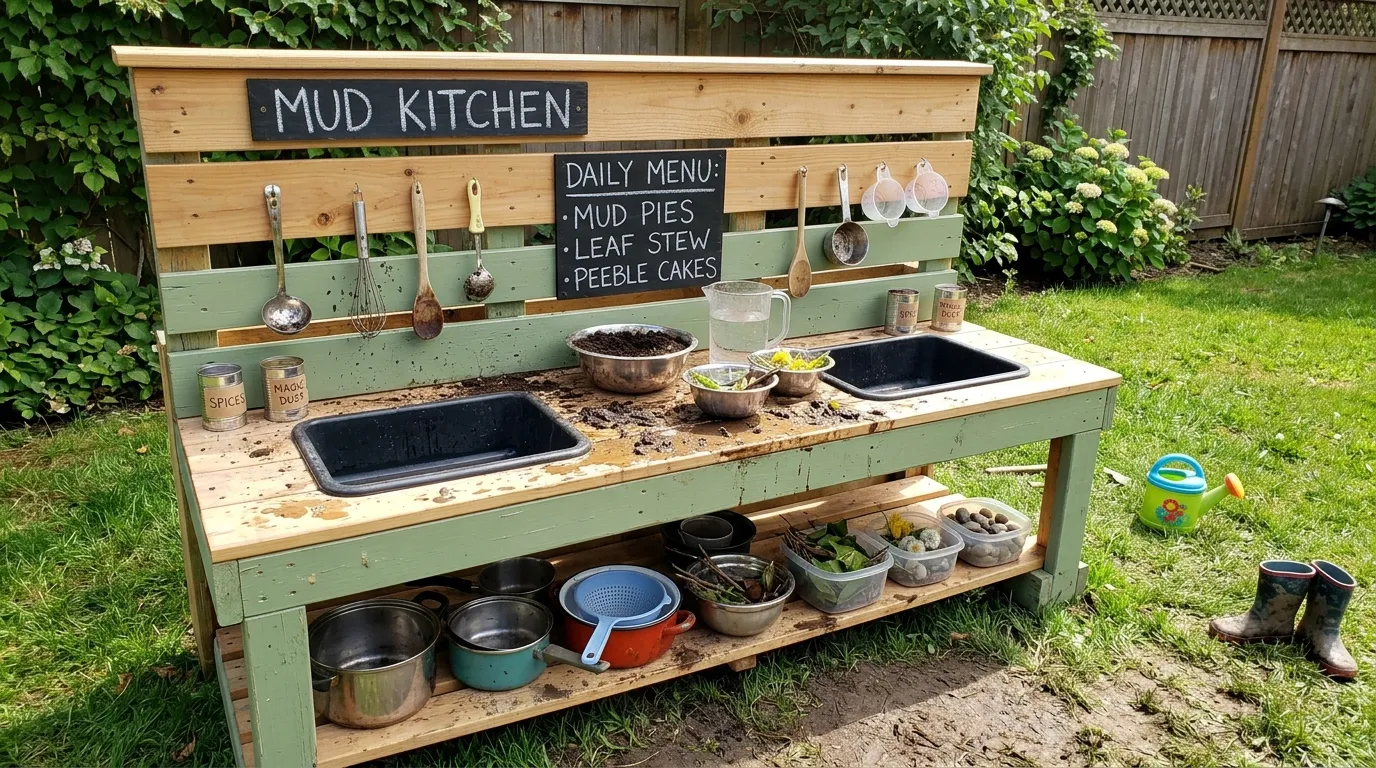
There’s a reason some backyard play areas become the center of nonstop activity while others barely get used. It usually comes down to one thing—how engaging and interactive the setup feels. When a space invites creativity, hands-on play, and a little bit of mess, kids naturally gravitate toward it. That’s exactly why Mud Kitchen Setups have become such a favorite across the USA. They offer a perfect mix of imagination, outdoor time, and sensory exploration.
A well-designed mud kitchen isn’t just a play station—it’s a miniature world where kids can experiment, pretend, and create. From mixing “recipes” with dirt and water to organizing their own cooking stations, these setups keep children entertained for hours without screens. And the best part? You can build something incredible using simple, affordable materials.
In this guide, you’ll discover 11 practical and creative backyard ideas that turn a basic mud kitchen into a space kids truly won’t want to leave. Each idea focuses on usability, fun, and real-life functionality—making your outdoor play area more engaging and long-lasting.
1. Double Sink Station
- Adds two play zones
- Encourages group interaction
- Enhances water play
- Feels like real kitchen
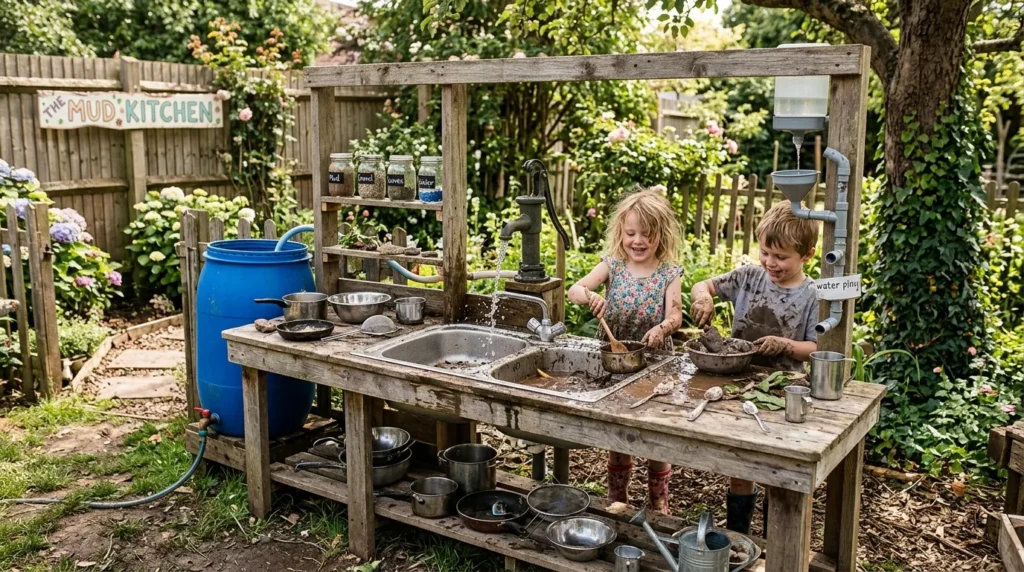
Nothing grabs attention faster than a setup that feels real and interactive. A double sink instantly creates two working areas, allowing multiple kids to play at the same time without crowding. In my experience, this simple upgrade makes a huge difference in how long kids stay engaged. It turns play into a shared activity rather than a solo one.
I’ve seen this work well in many backyards where siblings or friends naturally divide tasks—one washing, one mixing. It creates a more dynamic experience and reduces waiting time. The result is a setup that feels lively, collaborative, and far more fun to use.
2. Mud Prep Counter
- Provides dedicated workspace
- Keeps play organized
- Adds realistic cooking feel
- Improves usability
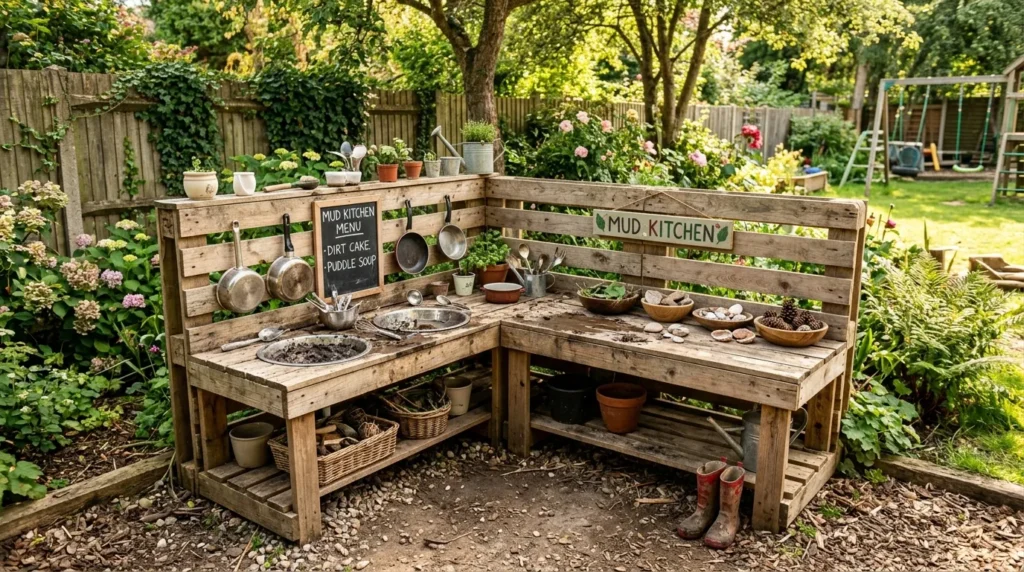
A proper prep counter gives kids a defined area to mix, sort, and create their muddy masterpieces. Without it, everything tends to happen in one spot, which can feel messy and limiting. In my experience, having a clear surface area makes play more structured and enjoyable.
I’ve noticed that kids naturally use the counter as their “main station.” It becomes the place where creativity happens. This simple addition turns a basic setup into something that feels more complete and purposeful, encouraging longer and more imaginative play sessions.
3. Hanging Utensil Rack
- Keeps tools accessible
- Saves counter space
- Adds realistic detail
- Encourages organization
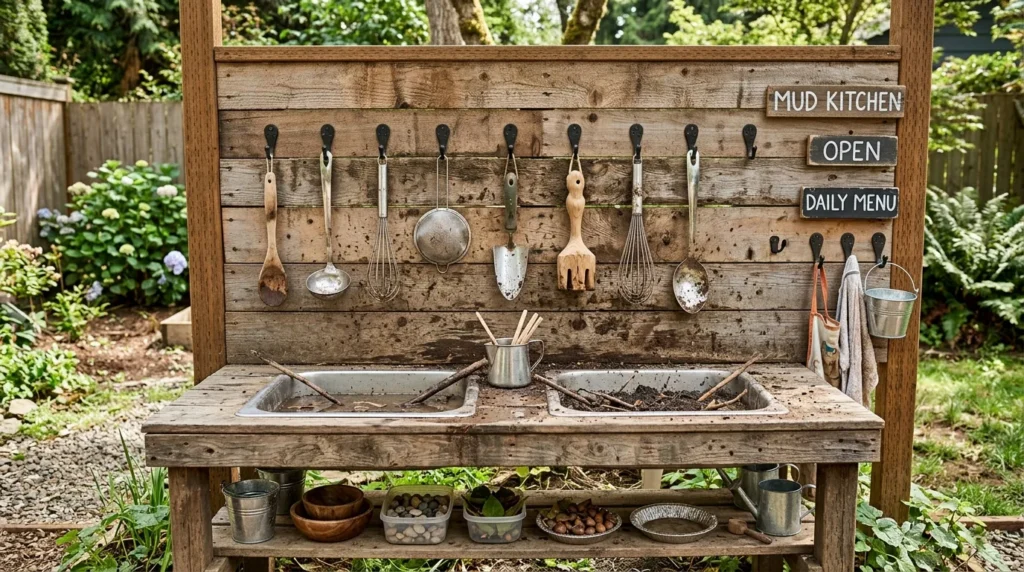
Small details often create the biggest impact. A hanging utensil rack makes the setup feel like a real kitchen while also keeping everything organized. Hooks or small rails work perfectly for holding spoons, cups, and other play tools.
In my experience, kids love interacting with this feature. I’ve seen this work in many setups where hanging and rearranging tools becomes part of the play itself. It keeps the space tidy while adding a layer of realism that makes the entire kitchen feel more engaging.
4. Water Pour Station
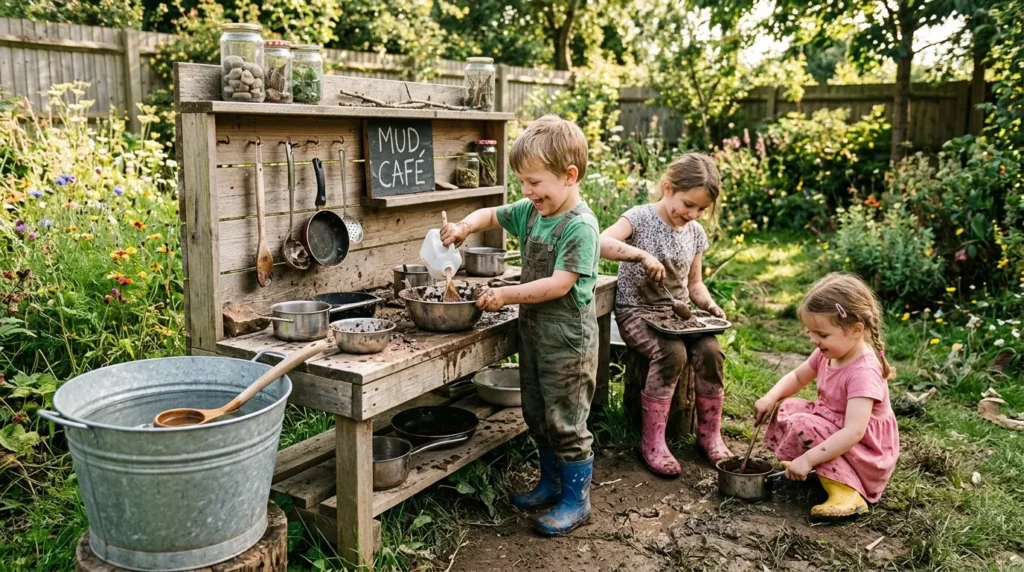
- Adds sensory play element
- Easy to refill
- No plumbing needed
- Encourages experimentation
Water is essential for any mud kitchen, and a dedicated pouring station makes it easier and more fun to use. Buckets, pitchers, or containers can create a simple yet effective system.
I’ve noticed that kids spend most of their time pouring, mixing, and refilling. In my experience, this setup keeps the play area active and engaging without requiring complex installation. It’s a low-effort addition with high impact.
5. Built-In Storage Crates
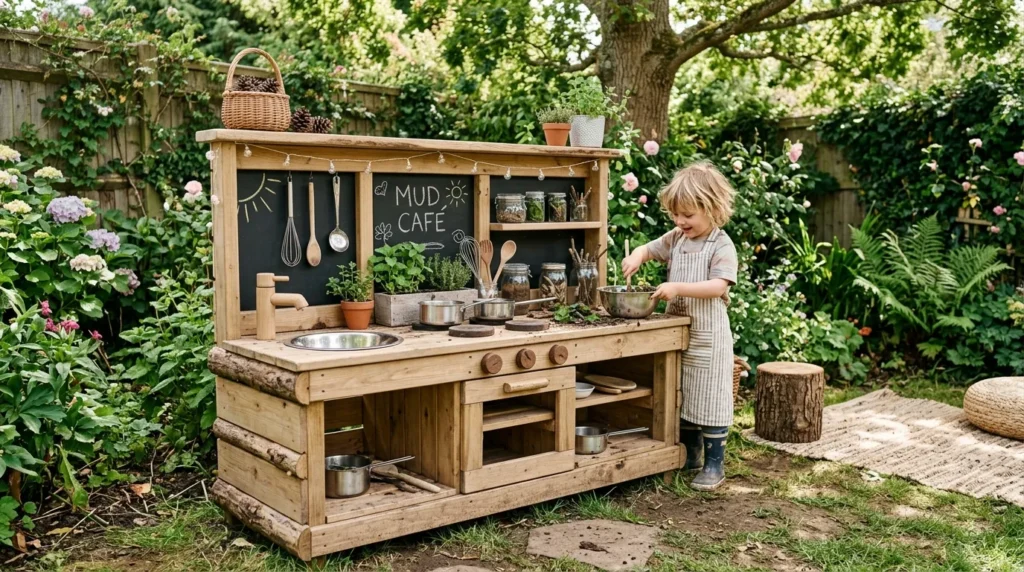
- Keeps tools organized
- Reduces clutter
- Adds rustic charm
- Easy to build
Storage is what keeps a mud kitchen usable over time. Built-in crates or boxes allow kids to store their tools neatly while still keeping everything within reach.
In my experience, organized spaces encourage better play habits. I’ve seen this work well in many homes where kids actually enjoy putting things back because it feels part of the setup. It keeps the area clean and visually appealing.
6. Chalkboard Menu Wall
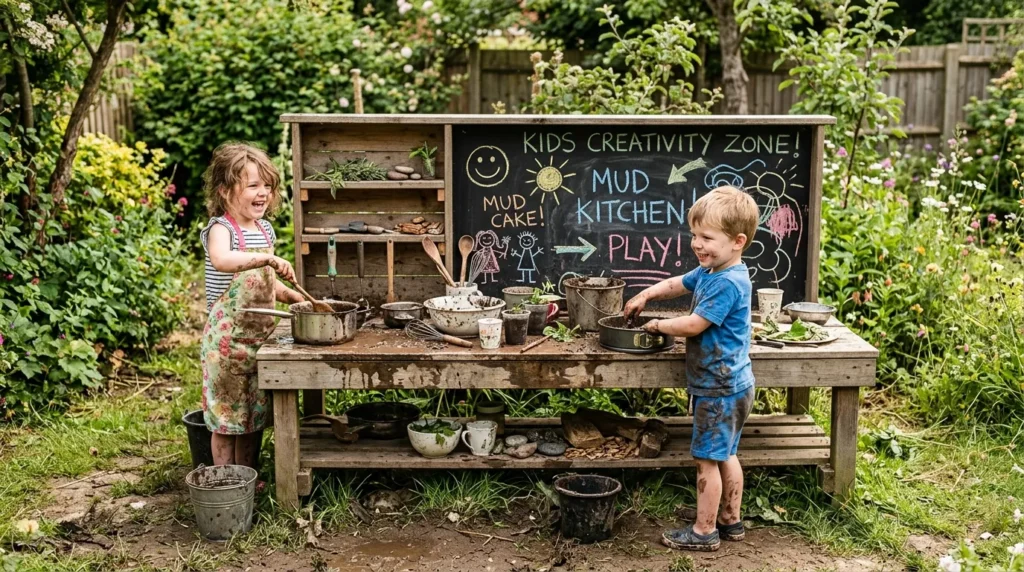
- Encourages creativity
- Adds interactive feature
- Customizable design
- Easy to clean
A chalkboard wall turns a mud kitchen into a creative hub. Kids can write menus, draw recipes, or simply express themselves while playing.
I’ve noticed that this feature keeps evolving over time. In my experience, it adds a personal touch that makes the space feel unique and engaging. It’s not just a kitchen—it becomes a creative zone.
7. Rustic Wood Design
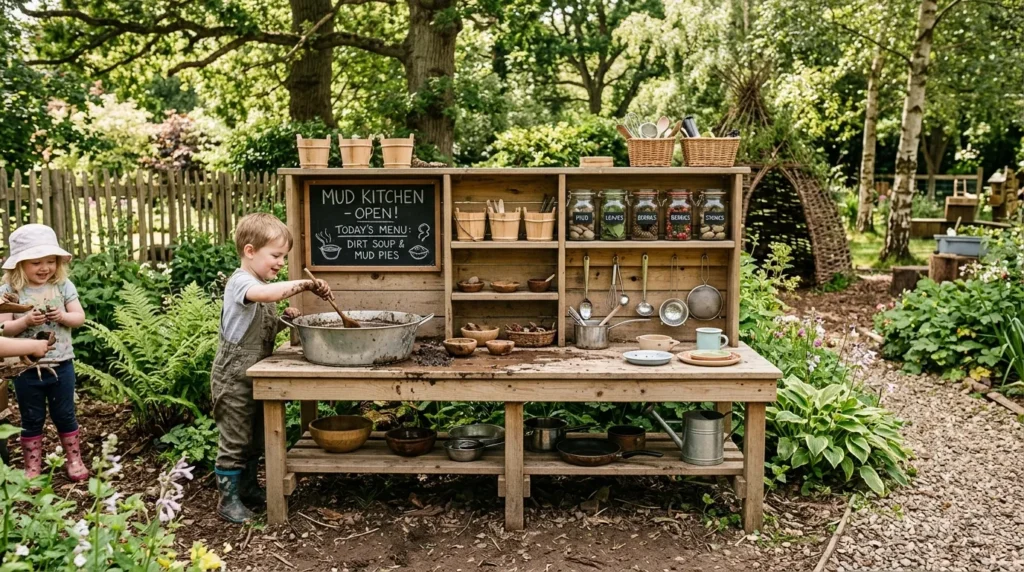
- Blends with backyard
- Durable and natural
- Creates warm look
- Easy maintenance
Natural wood gives the kitchen a timeless, rustic feel that fits perfectly in an outdoor setting. It also holds up well against weather and wear.
In my experience, this style feels more inviting and authentic. I’ve seen this work beautifully in many setups where the kitchen becomes part of the landscape rather than standing out unnaturally.
8. Mini Stove Setup
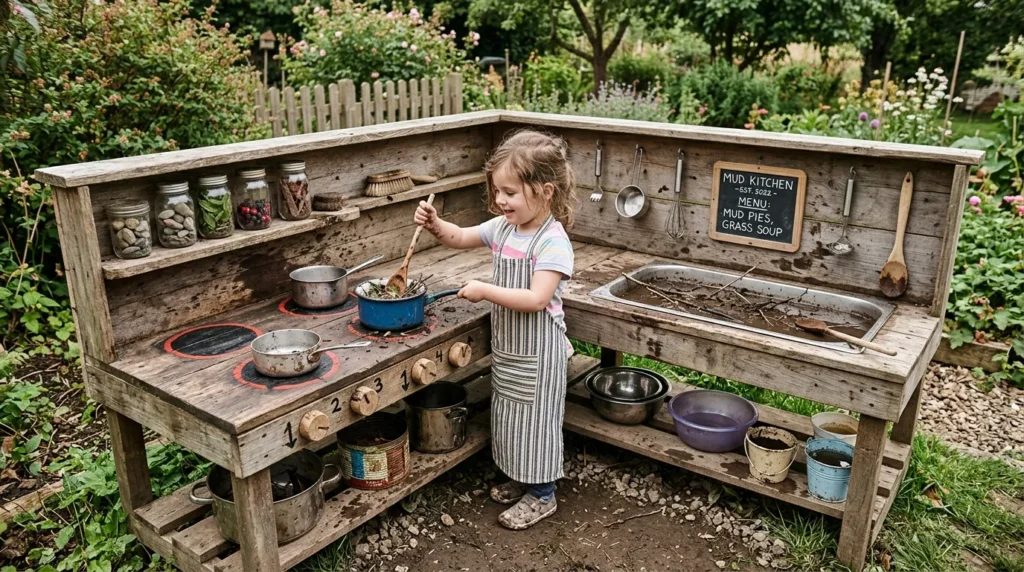
- Adds pretend cooking area
- Enhances realism
- Easy DIY feature
- Encourages imagination
A mini stove area makes the kitchen feel complete. Simple painted burners or attached knobs create a realistic cooking zone.
I’ve noticed that kids naturally gravitate toward cooking play. In my experience, this feature keeps them engaged longer and makes the setup feel more interactive.
9. Herb Garden Corner
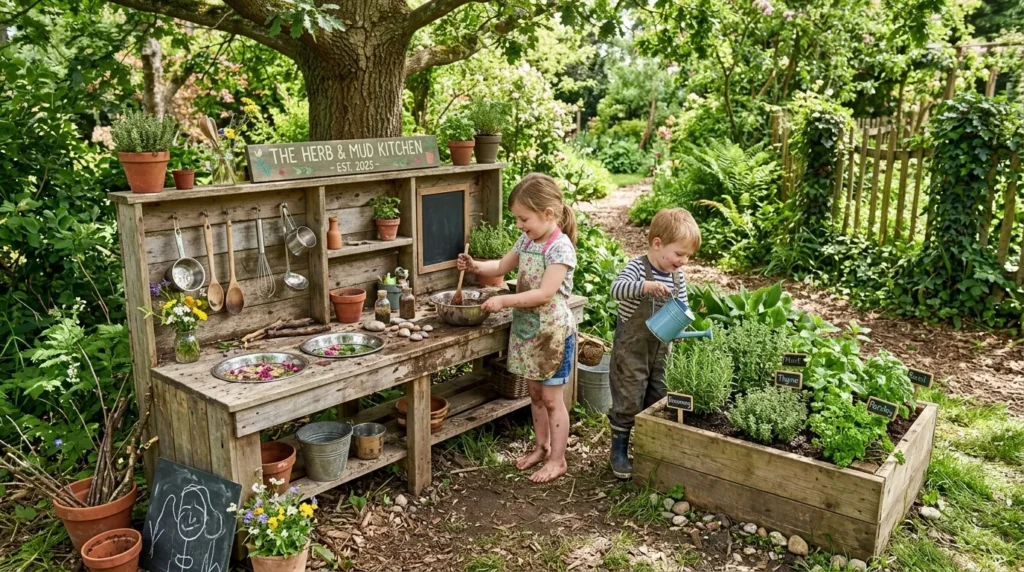
- Adds learning element
- Encourages exploration
- Connects with nature
- Enhances play value
Adding a small herb garden introduces a new layer of play. Kids can pick leaves and incorporate them into their pretend recipes.
I’ve seen this work well in many backyards where learning and play come together. In my experience, it encourages curiosity and makes the space feel alive.
10. Covered Play Roof
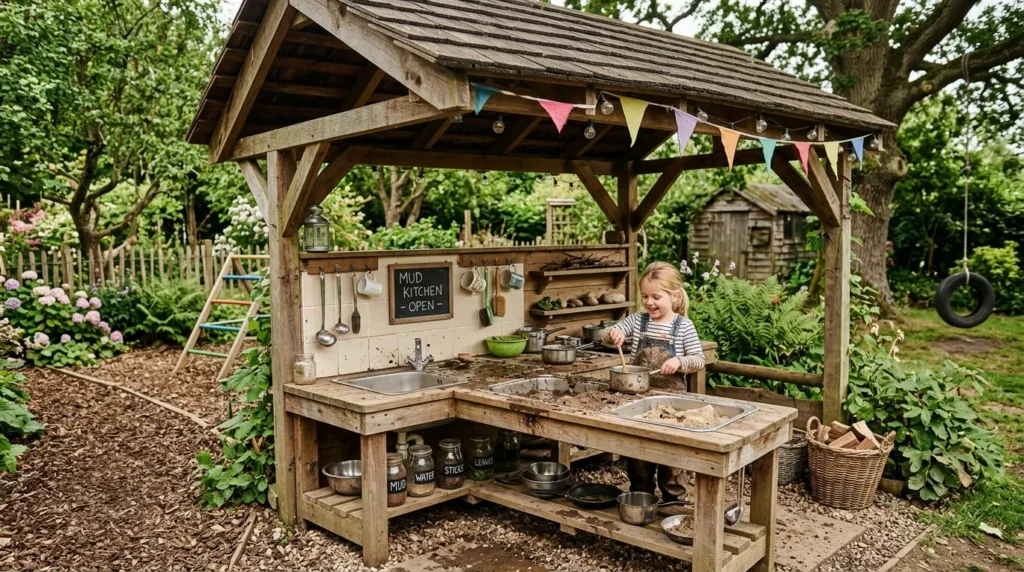
- Protects from weather
- Extends playtime
- Adds structure
- Keeps area dry
A simple roof or cover makes the kitchen usable in different weather conditions. It also protects the structure itself.
In my experience, this addition greatly improves durability. I’ve noticed that covered setups stay cleaner and more inviting, making kids more likely to use them regularly.
11. Open Play Layout
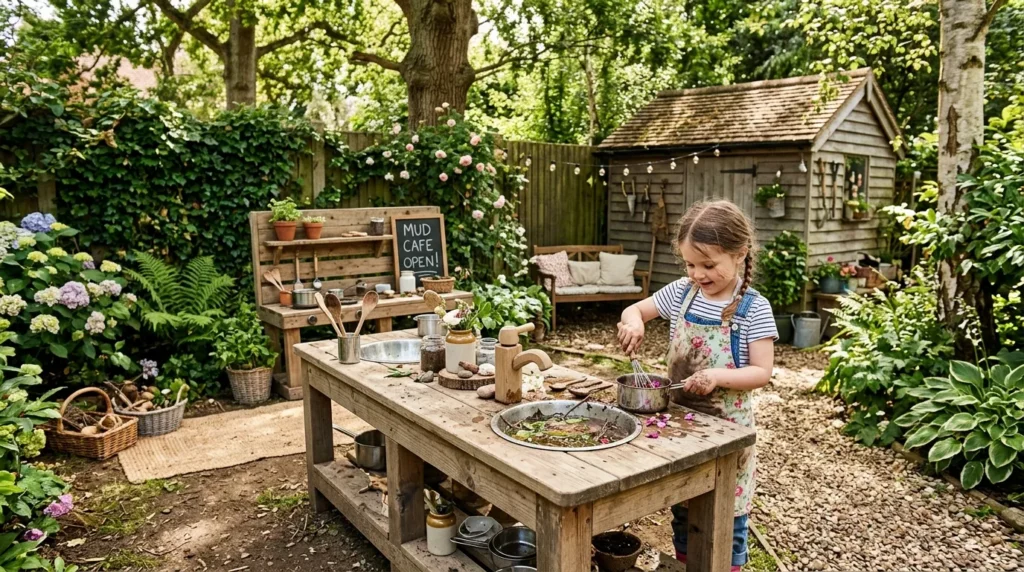
- Allows easy movement
- Prevents crowding
- Encourages group play
- Keeps space flexible
A good layout is just as important as the features themselves. Keeping the area open ensures kids can move freely and interact comfortably.
In my experience, open layouts always work best. I’ve seen this in many homes where a little extra space around the kitchen makes it feel more inviting and easier to use.