11 Backyard Play Kitchens Kids Will Love
There’s something special about a backyard that truly invites kids to play. Not just run around for a few minutes—but stay, explore, create, and lose track of time. That’s exactly what Backyard Play Kitchens are designed to do. They turn a simple outdoor space into an interactive world where kids can mix, pretend, experiment, and…
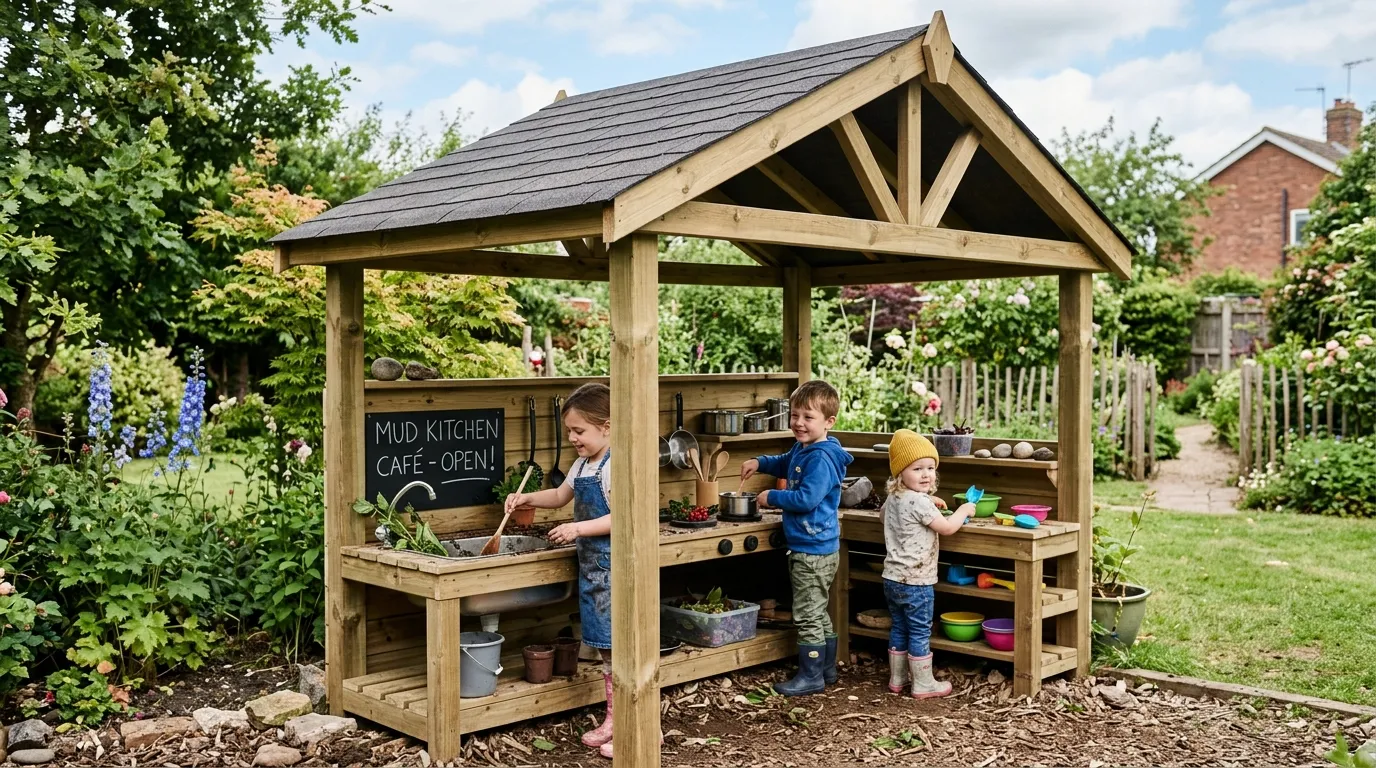
There’s something special about a backyard that truly invites kids to play. Not just run around for a few minutes—but stay, explore, create, and lose track of time. That’s exactly what Backyard Play Kitchens are designed to do. They turn a simple outdoor space into an interactive world where kids can mix, pretend, experiment, and enjoy the kind of messy, creative play that sticks in their memories.
Across the USA, more families are rethinking outdoor spaces—not just as lawns, but as play environments that encourage imagination and independence. A well-designed play kitchen doesn’t need to be fancy or expensive. It just needs to be thoughtful, engaging, and built around how kids naturally play.
In this guide, you’ll discover 11 creative and practical ideas to build outdoor play kitchens that kids genuinely love. These aren’t just cute setups—they’re designed for real use, real fun, and long-lasting enjoyment.
1. Pallet Kitchen Base
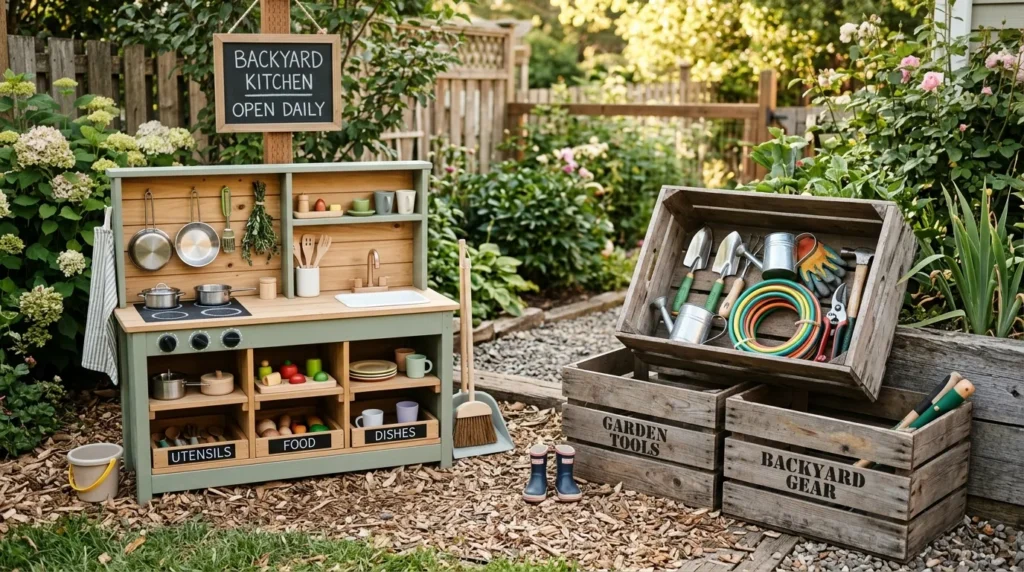
- Uses recycled wooden pallets
- Budget-friendly build
- Easy to customize
- Creates sturdy structure
Sometimes the simplest builds create the most lasting fun. A pallet base gives you a strong, affordable starting point that can be shaped into almost any design. In my experience, pallets are one of the easiest materials to work with because they already provide structure—you just refine and build around them.
I’ve seen this work well in many backyards where a basic pallet setup turns into a complete kitchen with shelves and counters. It creates a rustic, natural look that blends beautifully outdoors while still being functional enough for everyday play.
2. Double Play Stations
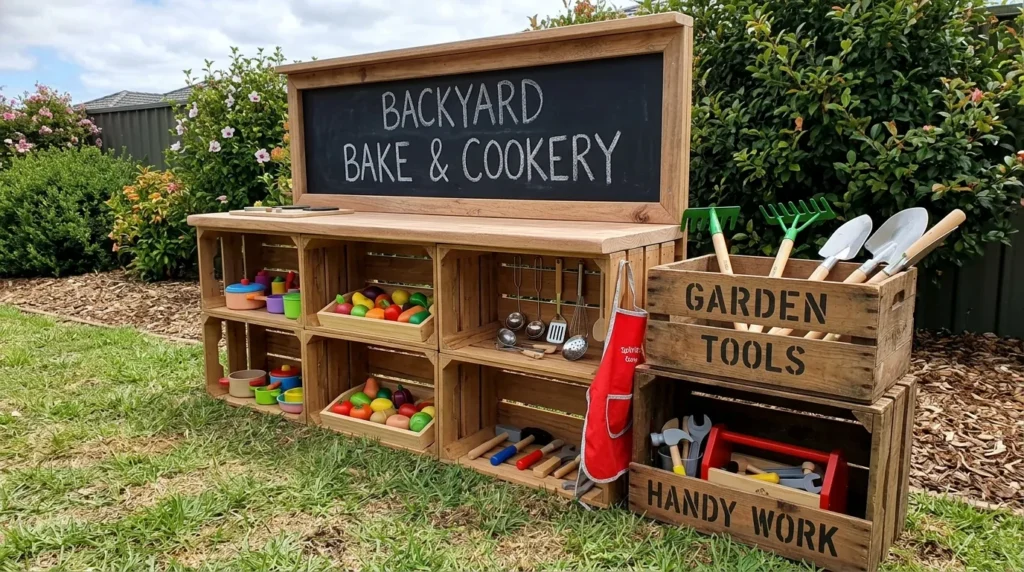
- Allows multiple kids to play
- Reduces waiting and crowding
- Encourages teamwork
- Enhances activity flow
One of the biggest mistakes in outdoor play setups is designing for only one child at a time. Adding two play stations instantly doubles the usability and makes the space more social. In my experience, kids stay engaged longer when they can play alongside each other instead of taking turns.
I’ve noticed that this setup naturally creates collaboration. Kids assign roles, share tasks, and interact more, turning simple play into a group experience. It makes the kitchen feel more alive and active, which is exactly what keeps kids coming back.
3. Water And Sink Area
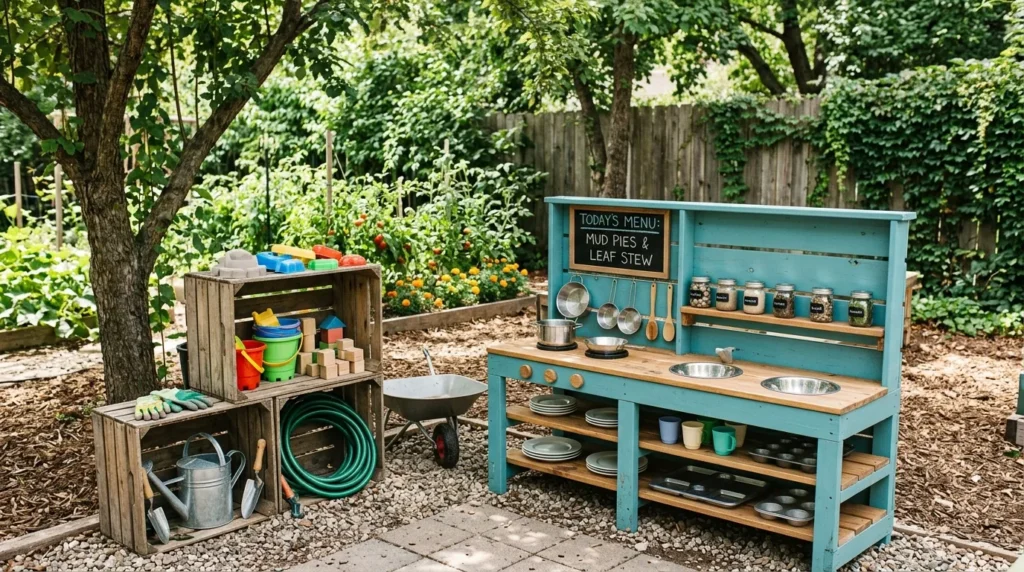
- Adds real-life interaction
- Encourages sensory play
- Easy to create with basin
- Keeps play engaging
Water is the element that transforms a play kitchen into something truly immersive. A simple sink or basin allows kids to pour, wash, and mix, making the experience feel more real.
In my experience, this becomes the most used part of the setup. I’ve seen kids spend hours just pouring and experimenting with water. It adds movement and excitement that keeps the play area constantly active and fun.
4. Open Counter Workspace
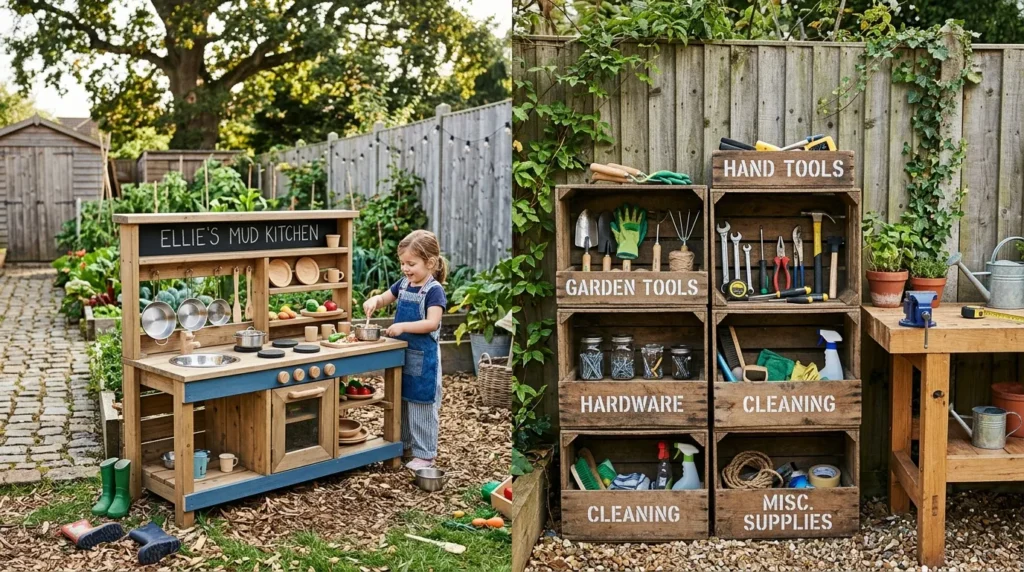
- Provides large play surface
- Supports multiple activities
- Keeps setup organized
- Encourages creativity
A wide counter gives kids room to explore without feeling restricted. It becomes the main area for mixing, building, and experimenting.
I’ve noticed that when kids have more space to work, their play becomes more creative. In my experience, an open workspace encourages longer and more varied play sessions because kids aren’t limited by space.
5. Hanging Tool Hooks
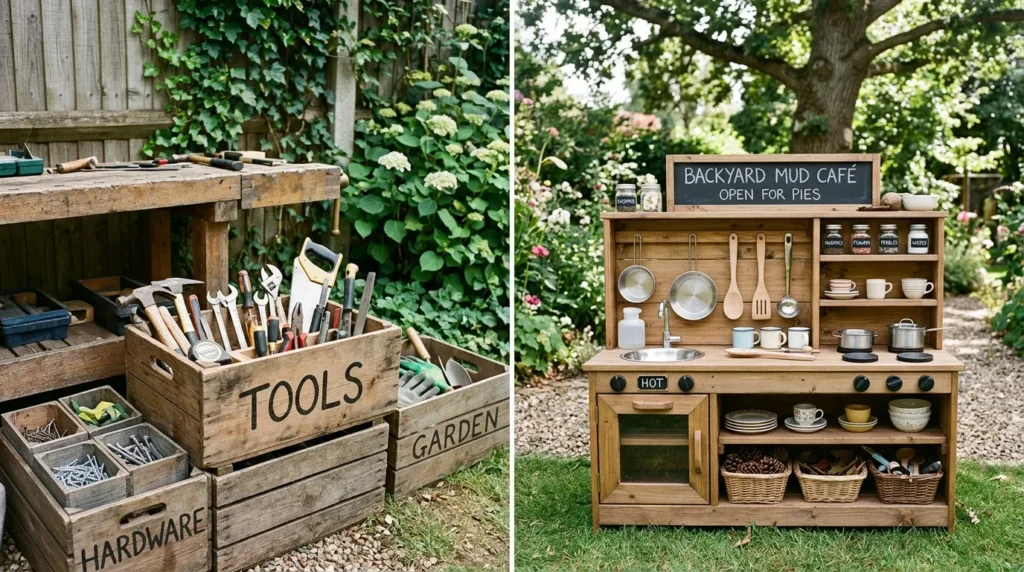
- Keeps tools accessible
- Saves space
- Adds realistic kitchen feel
- Improves organization
Small details often make the biggest difference. Hooks for hanging tools keep everything within reach while also making the setup feel like a real kitchen.
In my experience, kids love interacting with this feature. I’ve seen them hang, remove, and rearrange tools constantly, which adds another layer of engagement. It also keeps the area tidy without extra effort.
6. Chalkboard Back Wall
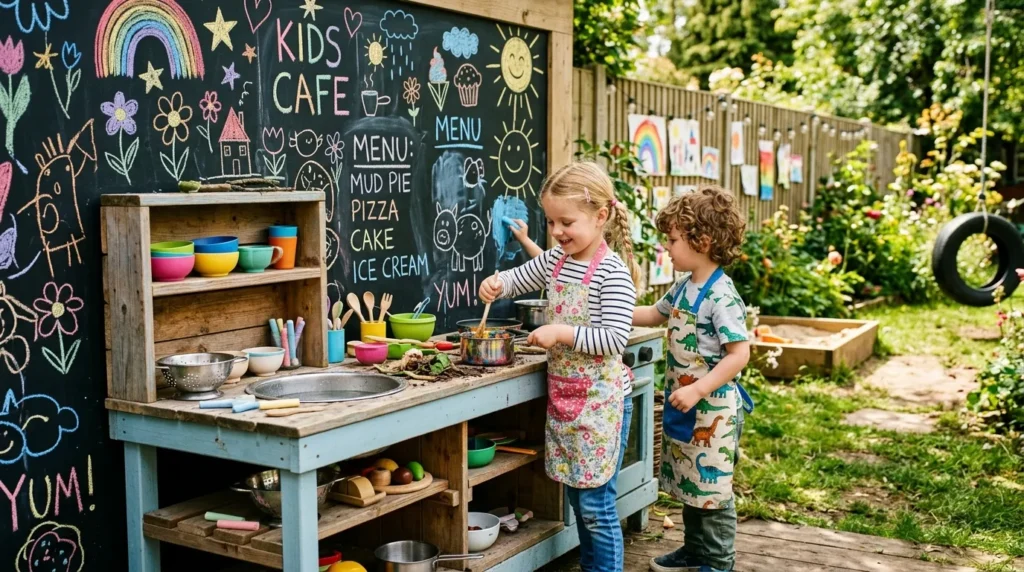
- Adds creative feature
- Encourages drawing and writing
- Customizable space
- Easy to clean
A chalkboard turns a play kitchen into a creative hub. Kids can draw menus, write recipes, or simply express themselves while they play.
I’ve seen this work beautifully in many setups where the chalkboard becomes just as popular as the kitchen itself. In my experience, it adds variety and keeps kids engaged longer by offering more ways to interact with the space.
7. Natural Wood Design
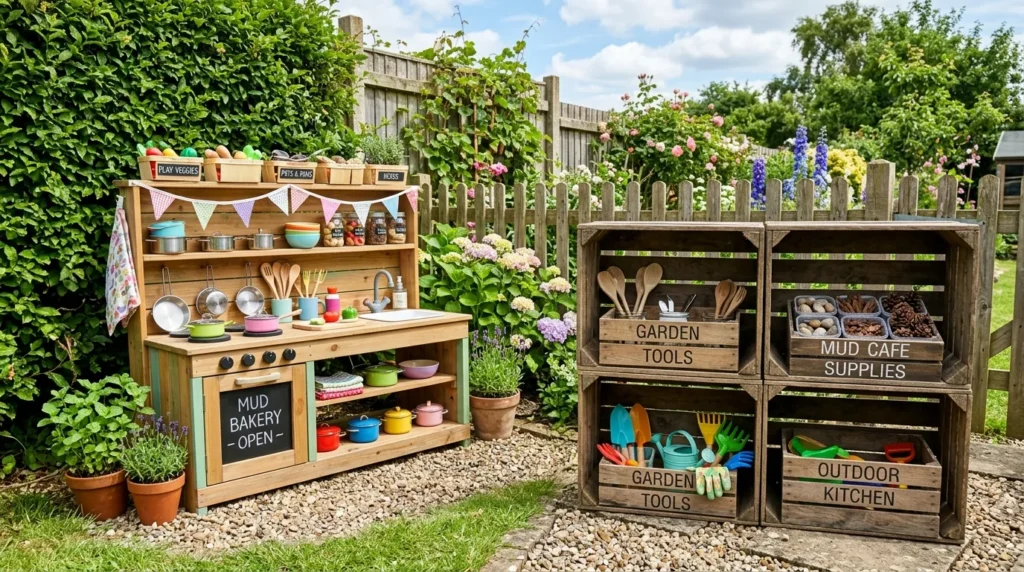
- Blends with outdoor setting
- Durable material choice
- Creates warm aesthetic
- Easy maintenance
Natural wood gives the kitchen a timeless and inviting look. It feels more connected to the outdoor environment compared to painted or plastic setups.
In my experience, wood ages beautifully and handles outdoor conditions well when sealed properly. I’ve noticed that it also makes the setup feel more authentic and visually appealing, which adds to the overall charm.
8. Mud And Sand Zone
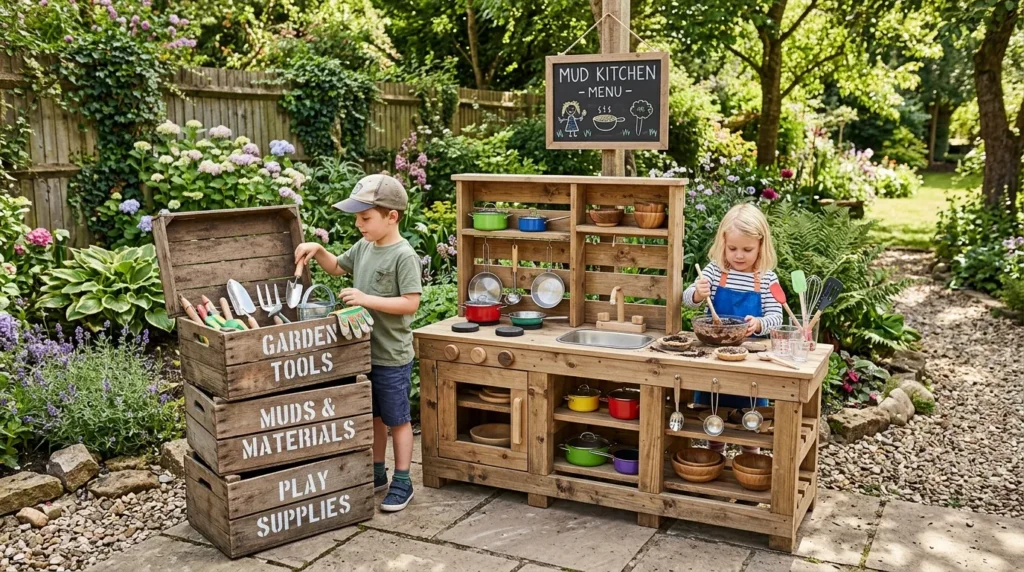
- Adds sensory play
- Encourages hands-on activity
- Easy to maintain
- Enhances messy fun
A dedicated mud and sand area creates the perfect environment for messy play. It gives kids a space to fully engage without worrying about making a mess.
I’ve seen this work well in many backyards where kids naturally gravitate toward this zone. In my experience, it becomes the heart of the play area because it offers endless possibilities for creativity.
9. Storage Crate Shelving
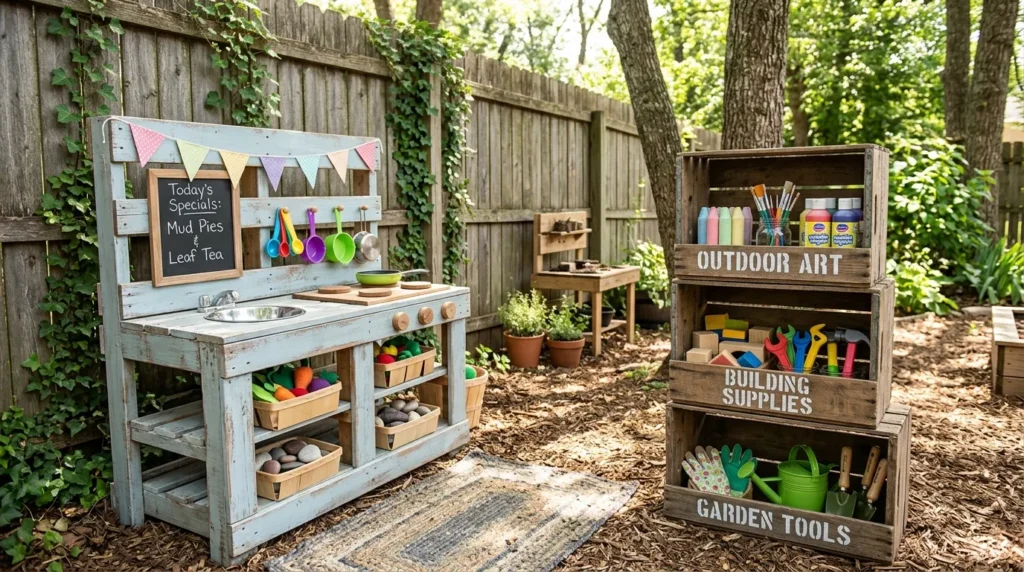
- Keeps tools organized
- Easy DIY solution
- Adds rustic charm
- Improves usability
Storage crates are a simple and effective way to keep everything in place. They can hold utensils, containers, and other play items without cluttering the main area.
In my experience, organized spaces lead to better play experiences. I’ve noticed that kids are more likely to keep things tidy when storage is easy to use and accessible.
10. Covered Play Roof
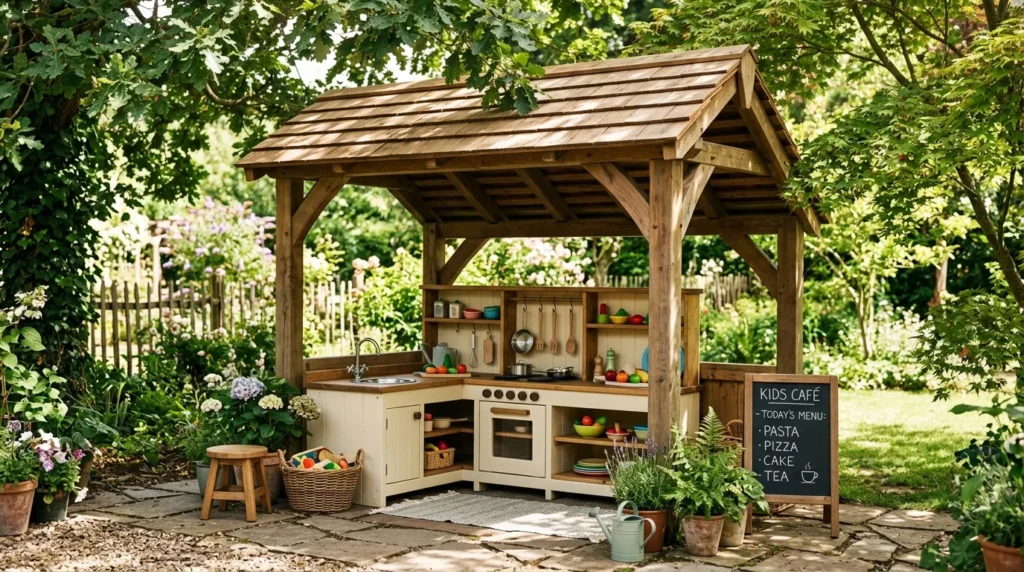
- Protects from weather
- Extends playtime
- Adds structure
- Keeps materials dry
A small roof or cover makes a big difference in usability. It allows kids to play even in light rain or strong sun.
In my experience, this feature adds longevity to the setup. I’ve seen this work in many homes where covered kitchens remain a favorite spot throughout different seasons.
11. Cozy Play Corner
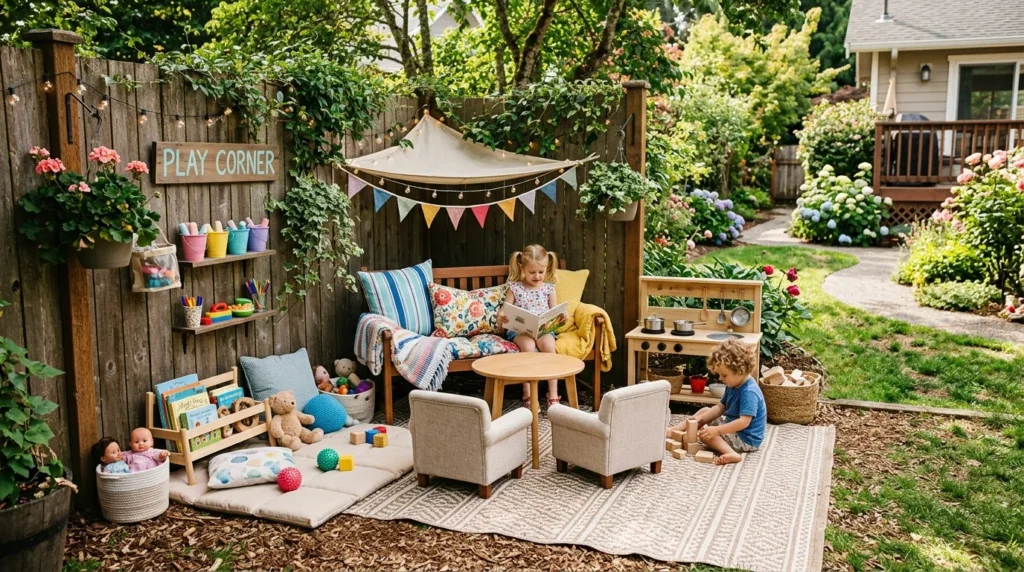
- Creates dedicated zone
- Adds comfort
- Encourages quiet play
- Feels inviting
A small corner with seating or soft elements gives kids a place to relax within the play area. It balances active play with quieter moments.
In my experience, this becomes a favorite spot for kids to pause and imagine. I’ve noticed that adding a cozy corner makes the entire setup feel more complete and welcoming.