How to Organize a Tiny Bedroom Like an Interior Designer
A small bedroom can easily feel crowded when every piece of furniture competes for valuable floor space. But size isn’t always the problem—it’s often how the room is organized. I’ve seen tiny bedrooms feel surprisingly spacious simply by rethinking the layout, choosing multifunctional furniture, and using smart storage solutions that keep everyday essentials neatly tucked…
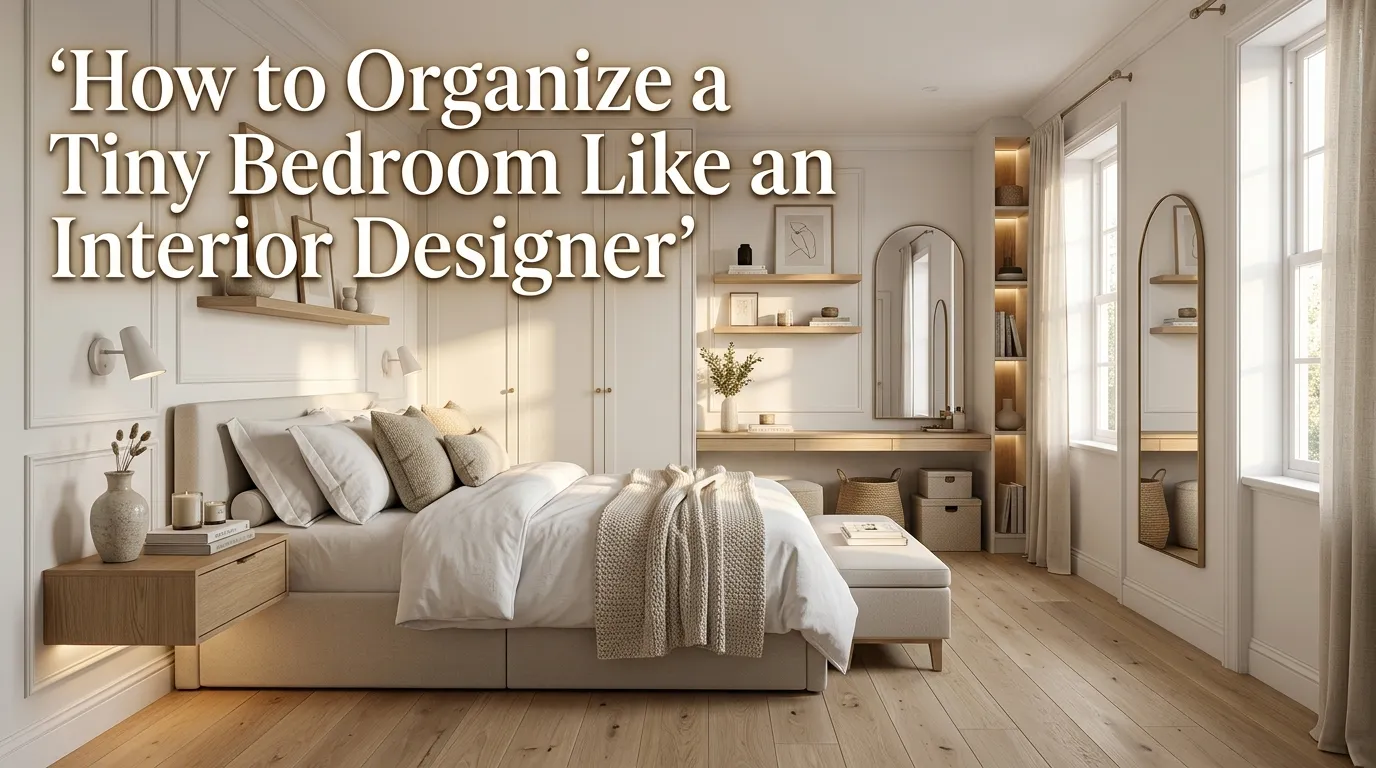
A small bedroom can easily feel crowded when every piece of furniture competes for valuable floor space. But size isn’t always the problem—it’s often how the room is organized. I’ve seen tiny bedrooms feel surprisingly spacious simply by rethinking the layout, choosing multifunctional furniture, and using smart storage solutions that keep everyday essentials neatly tucked away.
Many people believe they need a larger bedroom to enjoy a calm and stylish retreat, but interior designers approach small spaces differently. Instead of filling every corner, they focus on creating balance, improving flow, and making every piece of furniture work harder. Thoughtful organization helps the room feel lighter, more functional, and far more inviting without requiring a major renovation.
One thing that works especially well is combining hidden storage with carefully selected décor. Floating shelves, under-bed storage, slim nightstands, and vertical organization free up valuable floor space while maintaining a clean, uncluttered appearance. A cohesive color palette and layered lighting also help the room feel open and visually larger.
Whether you’re organizing a small apartment bedroom, a guest room, a college bedroom, or a compact primary suite, these designer-inspired ideas can help you make the most of every square foot. Many require only small changes, yet they have a noticeable impact on both functionality and style.
In this guide on How to Organize a Tiny Bedroom Like an Interior Designer, you’ll discover practical strategies that combine beautiful design with smart storage, helping your bedroom feel organized, relaxing, and surprisingly spacious.
Table of Contents
1. Clear the Floor
Create an open and spacious foundation.
2. Under-Bed Storage
Use hidden space efficiently.
3. Floating Nightstands
Free valuable floor space.
4. Vertical Shelving
Take advantage of wall height.
5. Multi-Functional Furniture
Choose pieces that serve more than one purpose.
6. Closet Organization
Maximize every inch of storage.
7. Neutral Color Palette
Create a brighter, larger-looking room.
8. Decorative Baskets
Hide clutter beautifully.
9. Layered Lighting
Make the room feel open and inviting.
10. Minimal Styling
Finish with a calm designer aesthetic.
1. Clear the Floor
Quick Benefits
- Makes the room feel larger
- Improves traffic flow
- Reduces visual clutter
- Easier to clean
- Creates a calming atmosphere
Why It Works
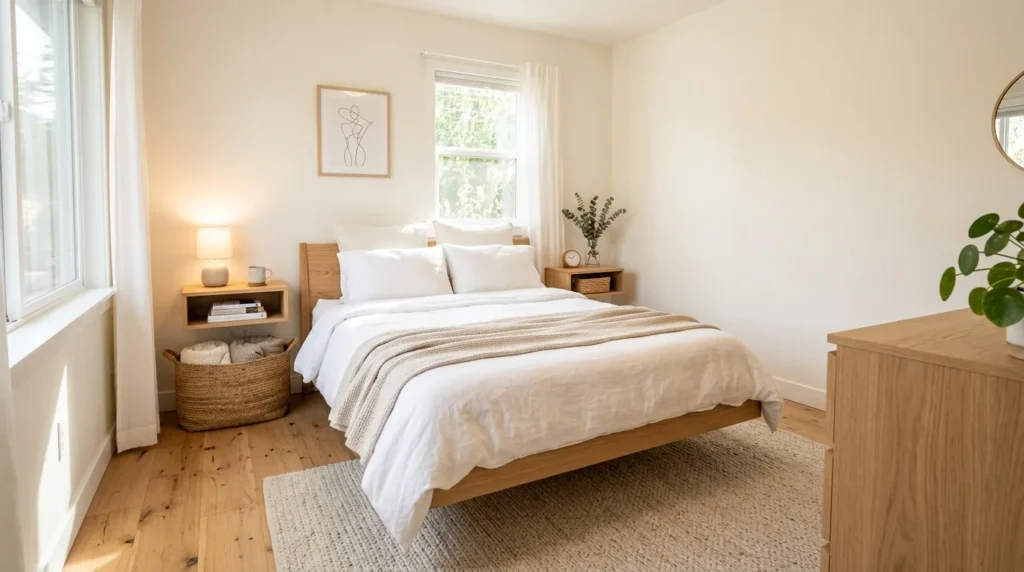
One of the first things interior designers do is remove anything unnecessary from the floor. When the floor remains visible, the room instantly appears larger because your eyes can travel uninterrupted from one side to the other. I’ve noticed that even a few extra baskets, boxes, or piles of clothing can make a compact bedroom feel significantly smaller. Creating open floor space immediately improves both functionality and the overall visual balance of the room.
How To Style It
Keep only essential furniture such as the bed, nightstands, and dresser. Store seasonal items beneath the bed or inside closets rather than beside furniture. Choose furniture with visible legs to create a lighter appearance, and avoid oversized pieces that block walking paths. A large area rug placed beneath the bed helps define the sleeping area while maintaining an open, organized look.
2. Under-Bed Storage
Quick Benefits
- Maximizes unused space
- Keeps clutter hidden
- Ideal for seasonal storage
- Budget-friendly solution
- Easy to organize
Why It Works
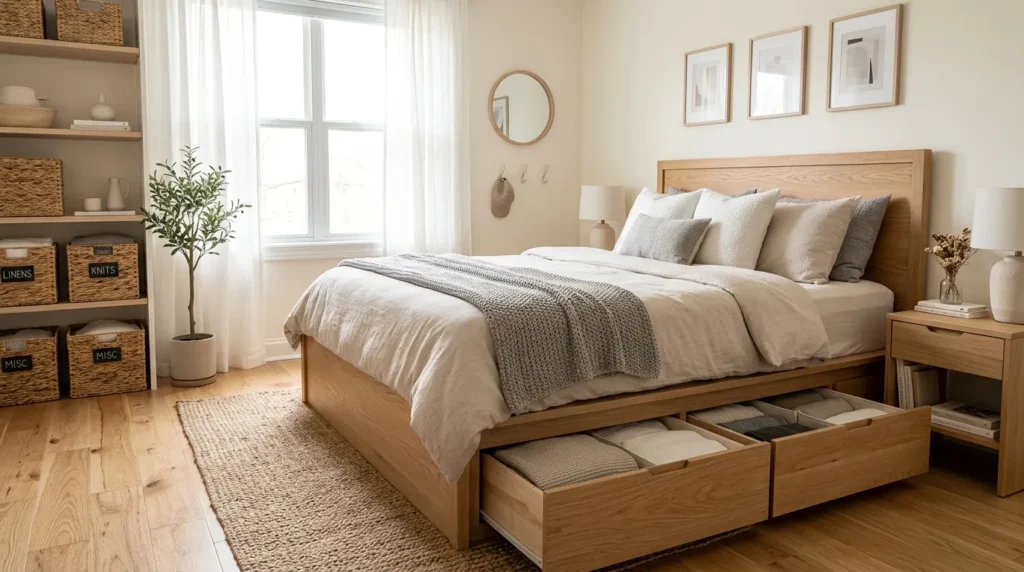
The area beneath your bed is one of the most overlooked storage opportunities in a small bedroom. Rather than filling closets with bulky seasonal items, under-bed storage keeps belongings neatly out of sight while remaining easily accessible. In my experience, using matching storage bins or rolling drawers creates a cleaner appearance than loose containers because everything stays organized and protected from dust.
How To Style It
Choose shallow storage containers with lids, fabric organizers, or rolling drawers designed to fit beneath your bed frame. Label each container for quick access and group similar items together such as extra bedding, winter clothing, shoes, or keepsakes. If your bed sits low, consider using bed risers to create additional storage space without changing the room’s layout.
3. Floating Nightstands
Quick Benefits
- Saves floor space
- Modern appearance
- Easier to clean
- Creates visual openness
- Great for compact bedrooms
Why It Works
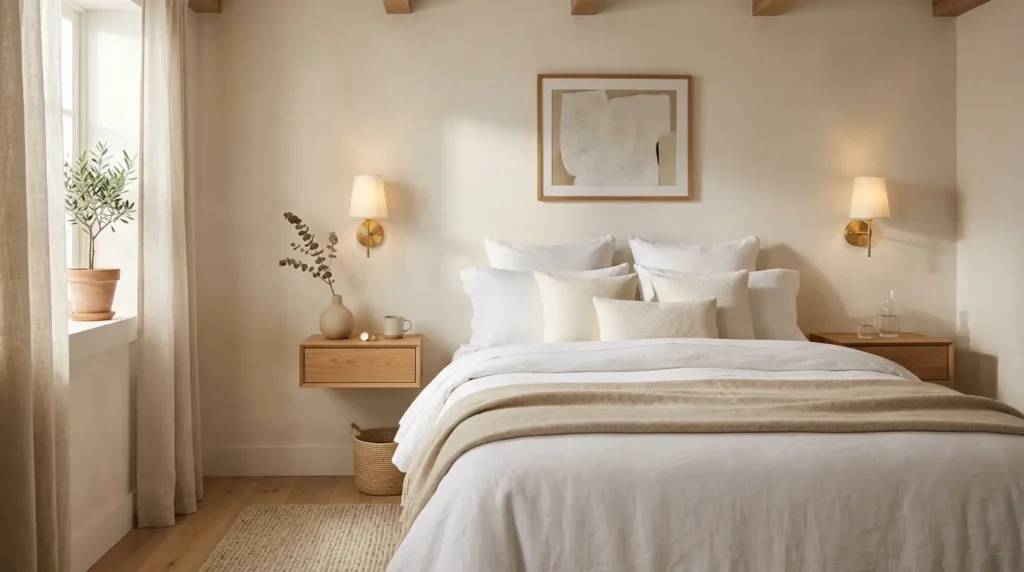
Floating nightstands provide everyday functionality while keeping the floor completely visible underneath. One thing that works especially well is mounting them slightly above mattress height, making the room feel lighter and more spacious. Since they occupy less visual weight than traditional bedside tables, floating designs naturally contribute to a cleaner, more contemporary bedroom.
How To Style It
Choose simple wood, white, or black floating shelves with one small drawer for essentials. Pair each nightstand with a wall-mounted reading light or hanging pendant lamp to free additional surface space. Style the top with a small ceramic vase, candle, or framed photo while keeping decorative accessories minimal to maintain the uncluttered look.
4. Vertical Shelving
Quick Benefits
- Adds storage without using floor space
- Displays decorative accessories
- Easy DIY project
- Makes ceilings appear taller
- Perfect for renters and homeowners
Why It Works
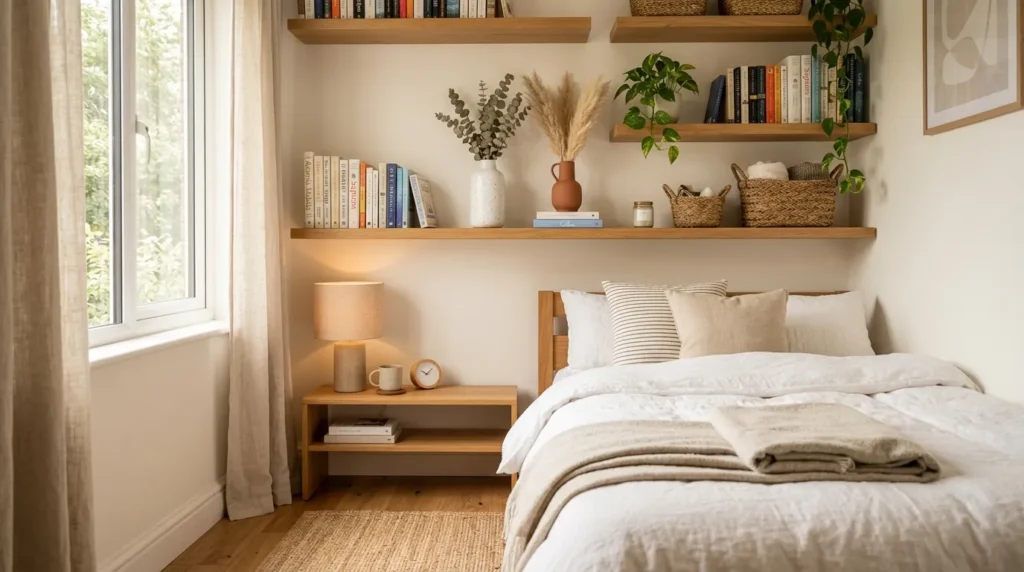
Interior designers often think vertically instead of horizontally when organizing compact rooms. Tall shelving draws the eye upward, making ceilings appear higher while providing valuable storage for books, baskets, plants, and decorative objects. I’ve seen narrow wall shelves completely transform small bedrooms by reducing clutter on dressers and nightstands while introducing personality through thoughtfully arranged décor.
How To Style It
Install floating wood shelves above the bed, dresser, or desk using evenly spaced brackets. Store practical items inside woven baskets while displaying books, framed artwork, greenery, and ceramic décor on open shelves. Maintain consistent spacing and avoid overcrowding to preserve a clean designer-inspired appearance.
5. Multi-Functional Furniture
Quick Benefits
- Saves valuable space
- Reduces clutter
- Improves organization
- Budget-friendly investment
- Ideal for apartments
Why It Works
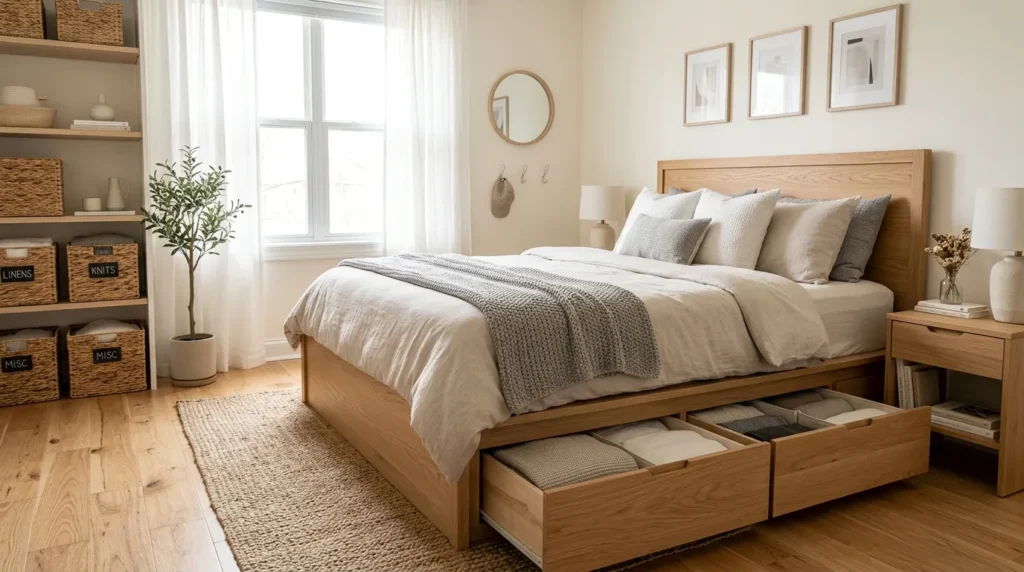
Every piece of furniture should perform multiple functions in a small bedroom whenever possible. That’s why many designers recommend storage beds, benches with hidden compartments, desks that double as vanities, and ottomans with interior storage. I’ve found that replacing just one standard piece of furniture with a multifunctional version can dramatically improve organization without requiring additional square footage.
How To Style It
Choose a platform bed with built-in drawers, a storage bench at the foot of the bed, or a compact desk with shelving above. Keep furniture finishes consistent using oak, walnut, white, or matte black to maintain visual harmony. Decorate with neutral bedding, soft textiles, and simple accessories so the room feels cohesive despite the added functionality.
6. Closet Organization
Quick Benefits
- Maximizes every inch of storage
- Reduces daily clutter
- Makes clothing easier to find
- Creates a boutique-style look
- Helps maintain long-term organization
Why It Works
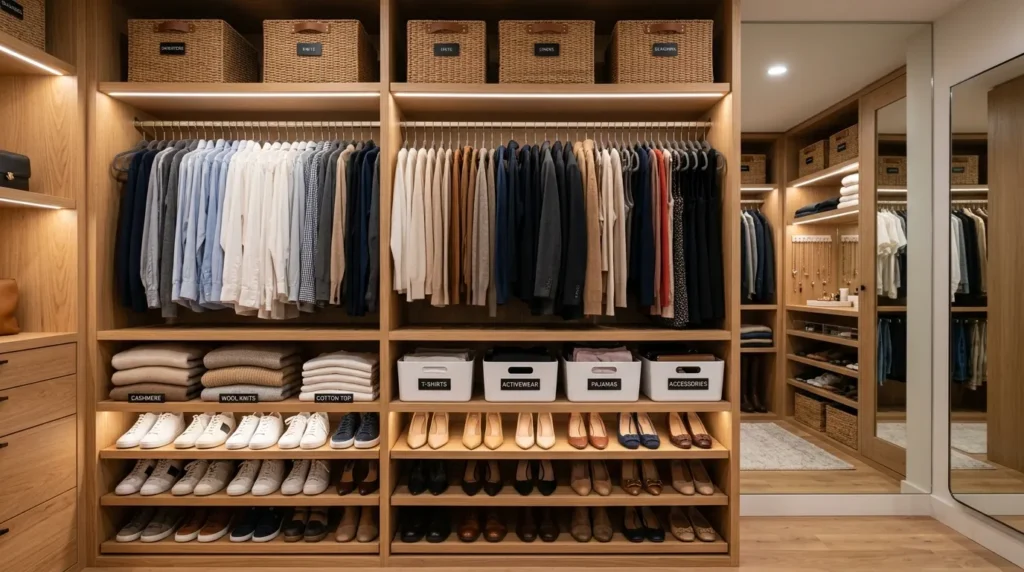
A well-organized closet has a huge impact on how tidy the rest of your bedroom feels. When clothing, shoes, and accessories have designated places, they’re much less likely to end up on chairs, the bed, or the floor. In my experience, interior designers don’t necessarily rely on larger closets—they simply use every inch more efficiently. Double hanging rods, shelf dividers, matching hangers, and storage bins all help transform an ordinary closet into a functional storage system that supports your everyday routine.
How To Style It
Start by removing anything you no longer wear or use. Replace mismatched hangers with slim velvet hangers to create a uniform appearance while saving space. Add stackable bins for seasonal clothing, clear shoe organizers, and labeled baskets for accessories. Install extra shelves above hanging clothes to maximize vertical storage. Keeping similar colors and categories together creates the clean, boutique-inspired look often seen in professionally organized homes.
7. Neutral Color Palette
Quick Benefits
- Makes the room feel larger
- Creates a calming atmosphere
- Brightens small spaces
- Timeless designer style
- Easy to coordinate
Why It Works
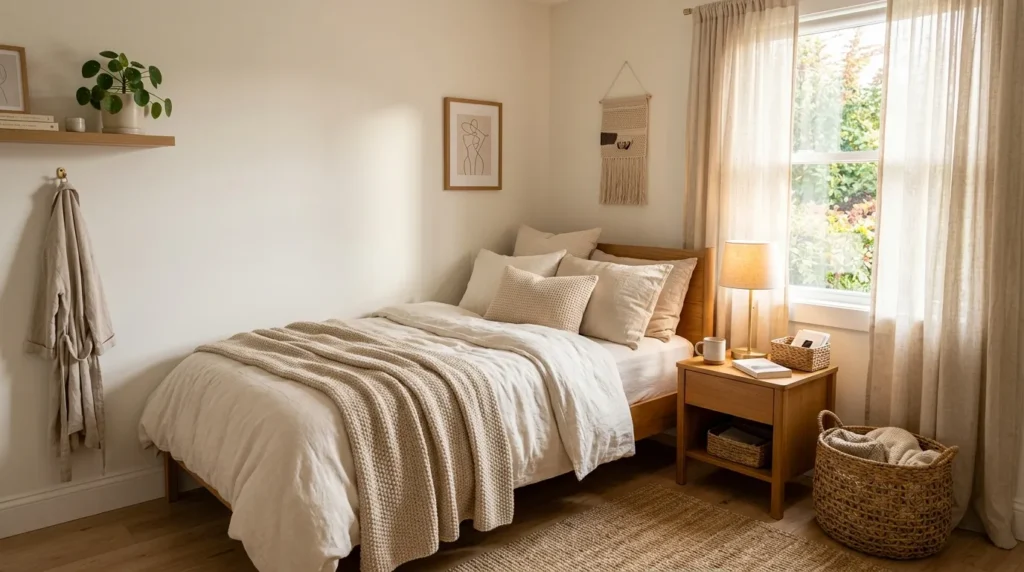
Color has a powerful influence on how spacious a bedroom feels. Light neutral tones reflect natural light, soften visual boundaries, and make compact rooms appear more open. I’ve noticed that designers often use layered shades of white, cream, beige, greige, and soft gray instead of relying on stark contrasts. This creates a seamless flow throughout the room while allowing textures and furniture to become the focus rather than bold color changes.
How To Style It
Paint walls in warm white or soft greige and coordinate bedding, curtains, and rugs using similar neutral shades. Add warmth through natural wood furniture, woven baskets, linen fabrics, and ceramic accessories. Introduce subtle contrast with matte black hardware or brushed brass lighting for an elegant finish that feels luxurious without overwhelming the room.
8. Decorative Baskets
Quick Benefits
- Hides everyday clutter
- Adds texture
- Budget-friendly storage
- Easy to move
- Complements any décor style
Why It Works
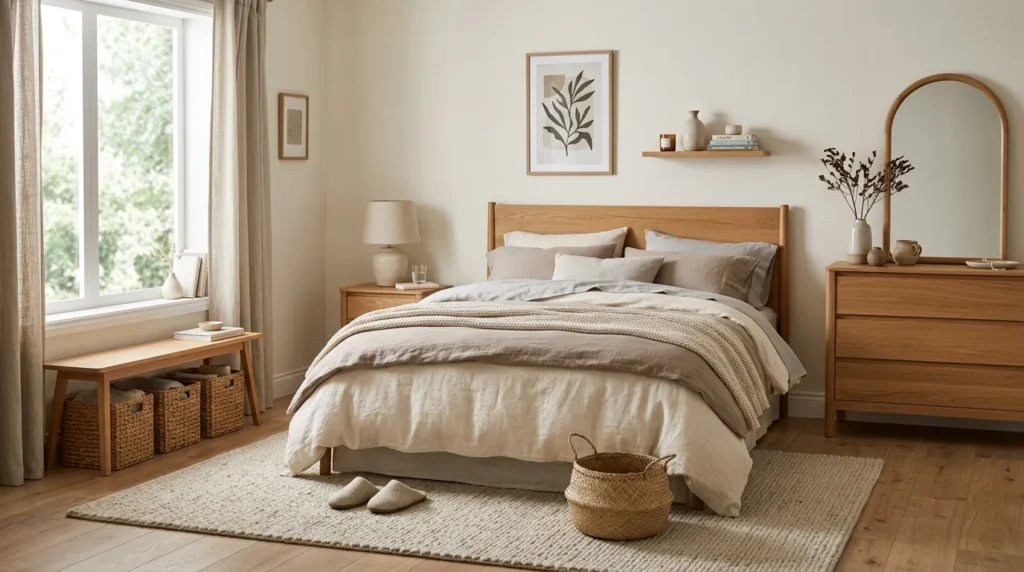
Beautiful storage is one of the easiest ways to keep a small bedroom organized. Decorative baskets conceal items while contributing warmth and texture to the overall design. One thing that works especially well is choosing baskets that match the room’s color palette instead of treating storage as an afterthought. This allows practical organization to become part of the décor itself, creating a room that feels intentional and beautifully styled.
How To Style It
Use woven seagrass, rattan, or cotton rope baskets beneath floating shelves, beside dressers, or under benches. Store blankets, books, slippers, electronics, or seasonal accessories inside while keeping basket styles consistent throughout the room. Pair them with wood furniture and neutral textiles to create a cozy designer-inspired atmosphere.
9. Layered Lighting
Quick Benefits
- Makes the room feel larger
- Creates a cozy atmosphere
- Improves functionality
- Highlights decorative features
- Enhances evening comfort
Why It Works
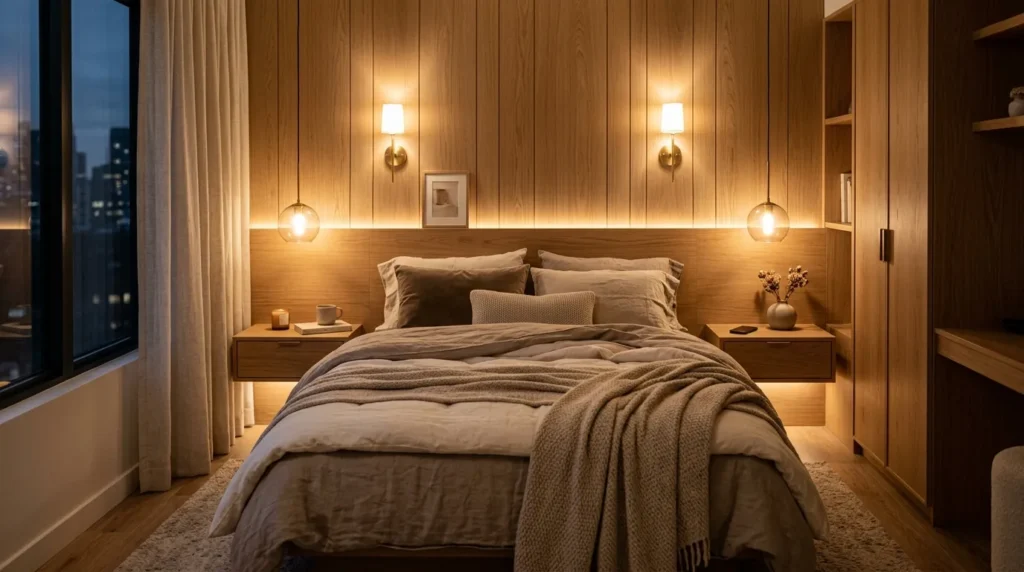
Lighting can dramatically change the way a tiny bedroom feels. Harsh overhead lights often flatten the room, while layered lighting creates warmth and depth. I’ve found that combining bedside lamps, wall sconces, pendant lights, and soft ambient lighting helps eliminate dark corners, making the space appear brighter and more inviting. This layered approach is commonly used in boutique hotels because it creates a relaxing environment that’s both functional and visually appealing.
How To Style It
Choose warm white bulbs between 2700K and 3000K for a soft glow. Install wall-mounted sconces or pendant lights above floating nightstands to save surface space. Add a small table lamp on a dresser and incorporate LED strip lighting beneath shelves or behind the headboard for subtle ambient illumination. Finish with candles or flameless lanterns to create an inviting nighttime atmosphere.
10. Minimal Styling
Quick Benefits
- Reduces visual clutter
- Makes the room feel larger
- Easier to maintain
- Timeless designer look
- Promotes relaxation
Why It Works
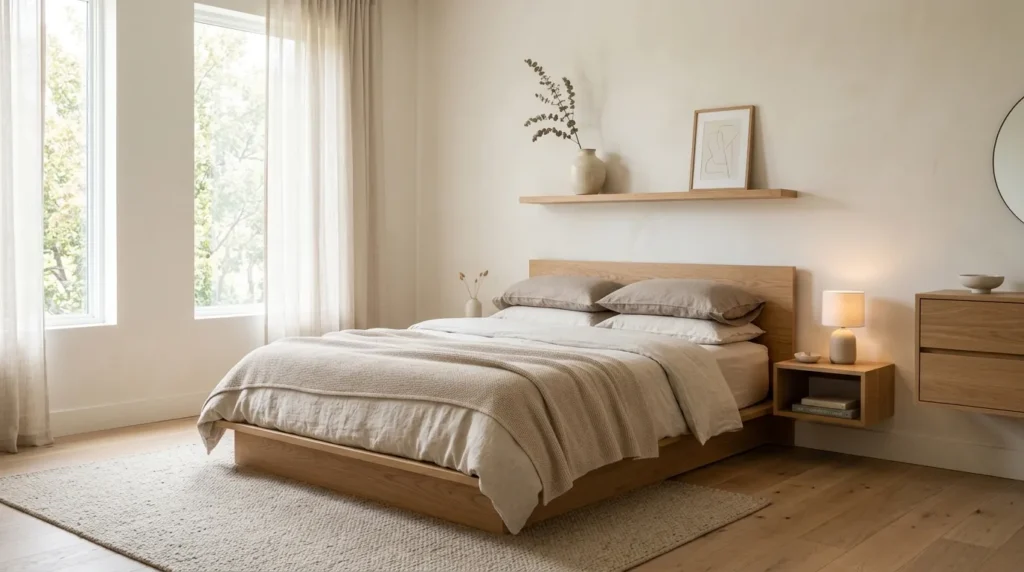
One of the biggest differences between a professionally designed bedroom and a cluttered one is restraint. Interior designers carefully select a few meaningful decorative pieces instead of filling every surface. In my experience, leaving empty space around furniture and accessories creates balance, allowing each item to stand out. A calm, uncluttered room naturally feels more luxurious, regardless of its size.
How To Style It
Choose just a few decorative accents such as framed artwork, candles, ceramic vases, greenery, and stacked books. Keep dresser tops mostly clear and avoid overcrowding shelves. Store everyday necessities inside drawers or baskets so surfaces remain clean and organized. A thoughtfully edited room feels brighter, calmer, and much more spacious.
Frequently Asked Questions
How do interior designers make tiny bedrooms look bigger?
Designers use light color palettes, multifunctional furniture, mirrors, vertical storage, layered lighting, and minimal décor. They also keep floors visible and reduce unnecessary clutter to create an open, airy appearance.
What is the best storage solution for a small bedroom?
Under-bed storage, floating shelves, storage beds, closet organizers, and decorative baskets are some of the most effective ways to maximize space without making the room feel crowded.
How can I organize a tiny bedroom without buying new furniture?
Start by decluttering, rearranging your furniture for better flow, using baskets and storage containers you already own, organizing your closet efficiently, and taking advantage of vertical wall space with shelves or hooks.
What colors work best in a tiny bedroom?
Warm whites, cream, beige, greige, soft gray, and muted earth tones reflect natural light and make small bedrooms feel brighter and more spacious. Consistent colors also create a calm, cohesive atmosphere.
Should a small bedroom have lots of decorations?
Less is usually more. Choosing a few well-placed decorative items instead of filling every surface creates a cleaner, more sophisticated appearance while helping the room feel larger.
How often should I reorganize a tiny bedroom?
A quick weekly reset combined with seasonal decluttering every few months helps keep small bedrooms organized. Regular maintenance prevents clutter from building up and makes everyday cleaning much easier.
Conclusion
Organizing a tiny bedroom like an interior designer isn’t about buying expensive furniture or expanding your square footage. It’s about making thoughtful choices that improve both function and style. By maximizing vertical space, choosing multifunctional furniture, using hidden storage, and maintaining a cohesive color palette, even the smallest bedroom can feel calm, comfortable, and beautifully organized.
I’ve found that small improvements often have the biggest impact. Something as simple as floating nightstands, matching storage baskets, or clearing unnecessary items from the floor can completely change how a room feels. Layering soft lighting, natural textures, and minimal décor helps create a peaceful retreat that feels much larger than its actual size.
Start with one or two ideas that fit your space and gradually build an organization system that works for your lifestyle. With a little planning and consistency, your tiny bedroom can become a stylish sanctuary that’s just as functional as it is beautiful.
Related Articles
- 10 Small Bedroom Ideas That Feel Bigger
- How to Decorate a Luxury Bedroom on a Budget
- 10 Modern Bedroom Storage Ideas You’ll Love
- 10 Cozy Bedroom Decor Ideas for Small Spaces
- 10 Apartment Bedroom Organization Ideas