Horizontal vs Vertical Pulls on Upper Cabinets: Which Is More Ergonomic?
Deciding between horizontal vs vertical pulls on upper cabinets often leaves homeowners torn between aesthetic trends and daily physical comfort. While design magazines frequently showcase long, horizontal bar pulls for a sleek, contemporary look, the actual movement required to open a door matters more for long-term ergonomics. Understanding how your hand naturally grips hardware at…
Deciding between horizontal vs vertical pulls on upper cabinets often leaves homeowners torn between aesthetic trends and daily physical comfort. While design magazines frequently showcase long, horizontal bar pulls for a sleek, contemporary look, the actual movement required to open a door matters more for long-term ergonomics. Understanding how your hand naturally grips hardware at different heights can prevent unnecessary wrist strain.
By analyzing the mechanics of your reach, you can make a choice that balances modern style with genuine ease of use. This article breaks down the physical impact of hardware orientation to help you decide which configuration truly works best for your kitchen workspace.
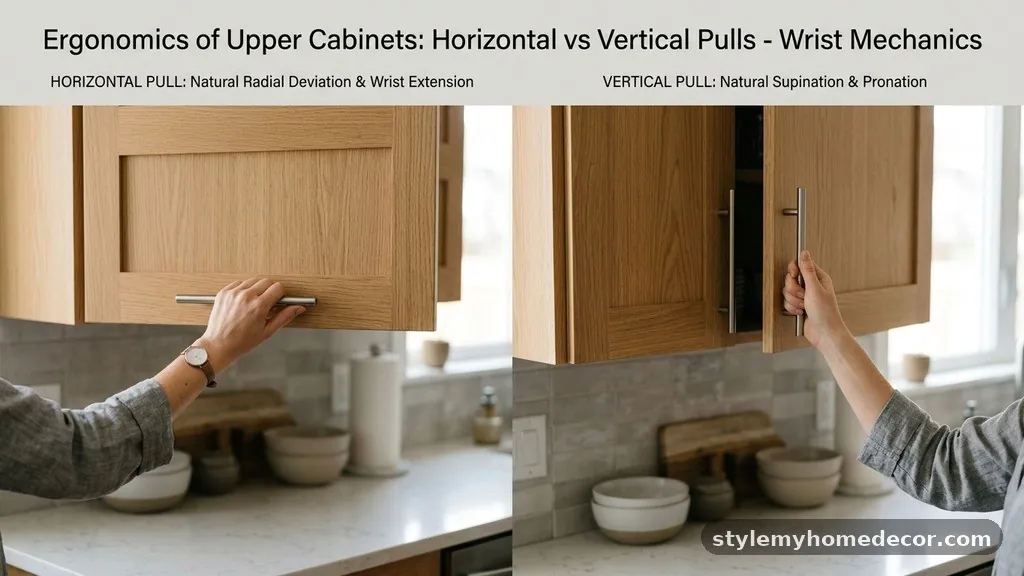
The short answer is that vertical pulls are generally more ergonomic for upper cabinets, while horizontal pulls are better suited for base cabinets and drawers. When you reach for an upper cabinet, your arm naturally follows a vertical path, and a vertical pull aligns with the natural rotation of your wrist.
Placing a pull horizontally on an upper door often forces you to twist your wrist into an awkward or strained position to get a proper grip. Because upper cabinets are positioned above eye level for many users, the vertical orientation allows for a more comfortable, downward-pulling motion.
The Mechanics of Natural Wrist Movement
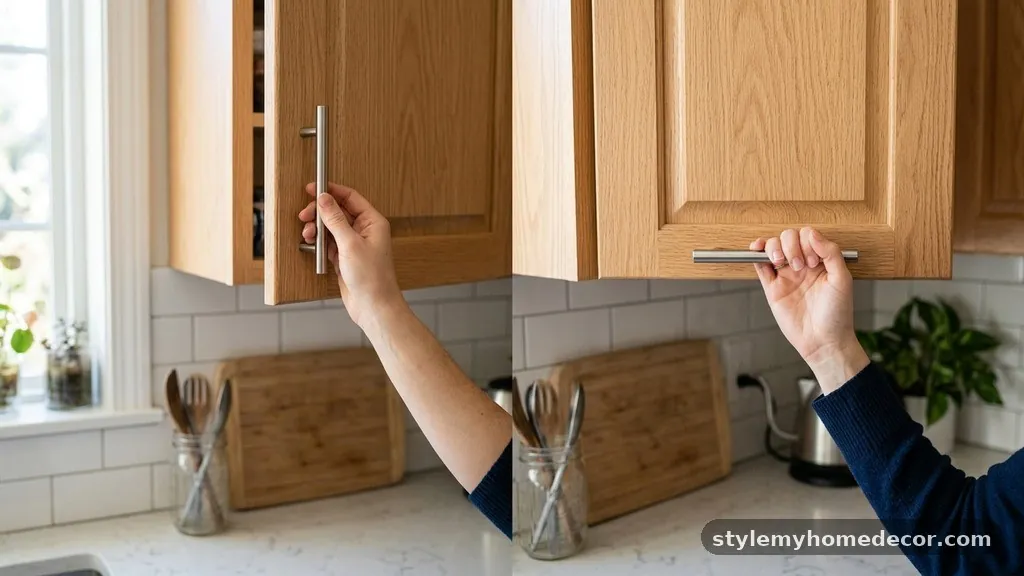
Human anatomy dictates how we interact with physical objects like kitchen hardware. When your arm is raised to shoulder height or above, your wrist is naturally oriented to grasp objects that are positioned vertically.
If you install a horizontal handle on an upper cabinet door, you are essentially asking your wrist to rotate away from its neutral position to engage the grip. Over time, this repetitive, unnatural movement can contribute to minor discomfort or fatigue, particularly if the doors are heavy or have strong magnetic catches.
Vertical handles allow for a more intuitive “hook” motion where the fingers wrap around the pull from the side. This motion utilizes the strength of the forearm and bicep rather than relying on the smaller, more delicate muscles of the wrist.
By choosing a vertical orientation, you align the hardware with the arc of your elbow, which is the natural pivot point for opening a door. This simple alignment significantly reduces the torque applied to your wrist joint during daily kitchen tasks.
Comparing Pull Orientations for Daily Use
The following table provides a quick reference for how different hardware placements impact physical comfort across various types of kitchen storage.
| Cabinet Location | Recommended Orientation | Ergonomic Rationale |
|---|---|---|
| Upper Wall Cabinets | Vertical | Aligns with natural arm reach and wrist rotation. |
| Base Cabinets | Vertical | Maintains consistent look with uppers; easy to grip. |
| Drawers | Horizontal | Matches the natural side-to-side motion of a drawer pull. |
| Full-Height Pantry | Vertical | Supports full-length grip and varied height access. |
Visual Impact of Cabinet Hardware Styles
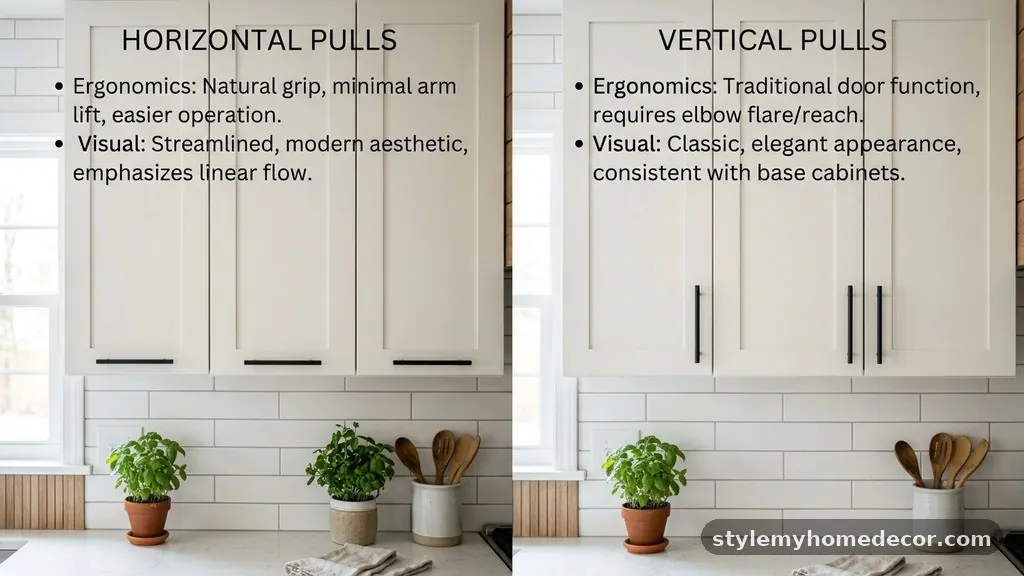
While ergonomics is the primary concern, the visual impact of your hardware choices cannot be ignored in kitchen design. Horizontal pulls often emphasize the length of a cabinet, which can make a small kitchen feel wider and more expansive.
This creates a clean, linear aesthetic that aligns with modern and minimalist design trends. However, this aesthetic choice often prioritizes the look of the cabinet over the physical comfort of the user.
Vertical pulls, conversely, draw the eye upward and can make a kitchen feel taller by emphasizing vertical lines. This is particularly effective in kitchens with high ceilings or stacked cabinetry where you want to accentuate the height of the room.
When you choose hardware, think about the rhythm of your kitchen. A mix of horizontal pulls on drawers and vertical pulls on doors often creates a balanced, professional look that doesn’t sacrifice usability.
The Importance of Grip and Clearance
Beyond orientation, the size and shape of the hardware play a critical role in how easy a door is to open. A pull that is too small or too flush against the cabinet door will force you to pinch your fingers, which is never ergonomic.
You need enough clearance between the back of the handle and the face of the door to slide your fingers in comfortably. This is especially true for upper cabinets, where you are often grabbing the handle without looking directly at it.
Consider the diameter or thickness of the pull as well. A pull that is too thin can feel sharp or uncomfortable, whereas a slightly rounded or wider profile distributes pressure more evenly across your hand.
When evaluating horizontal vs vertical pulls on upper cabinets, ensure that the chosen hardware allows for a full-hand grip rather than a fingertip pinch. High-quality hardware often includes specifications regarding projection, which is the distance the handle extends from the cabinet face.
Consistency Across the Kitchen Layout
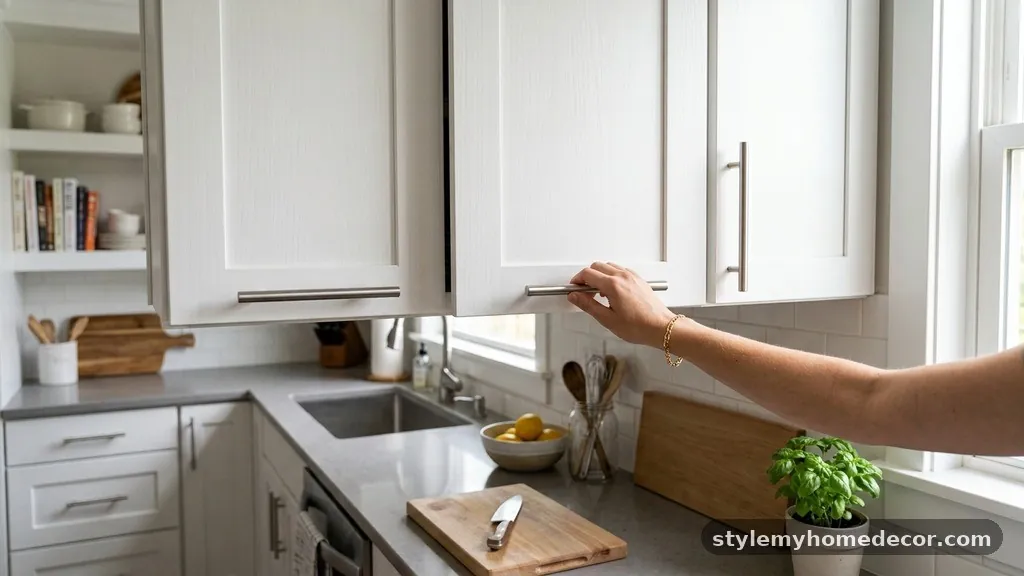
Consistency is a pillar of good design, but it shouldn’t come at the expense of functional logic. Many designers choose one style of pull and use it everywhere, which can lead to a mix of ergonomic successes and failures.
For example, using long horizontal bars on everything might look uniform, but it makes the upper cabinets harder to open. You don’t have to choose just one orientation for the entire kitchen.
It is perfectly acceptable to use vertical pulls on all doors and horizontal pulls on all drawers. This strategy provides a consistent visual language while respecting the different physical requirements of doors versus drawers.
By separating these categories, you avoid the conflict between form and function. This approach also helps define zones within the kitchen, as the eye quickly learns to recognize which orientation corresponds to which type of storage.
Addressing the Needs of Different Users
Kitchen design must account for the varying heights and physical abilities of the people who live in the house. A child or a person of shorter stature may find it much easier to reach a vertical handle than a horizontal one that is placed too high.
When a handle is mounted vertically, it provides a longer target area for your hand to find, which is helpful if you are reaching up toward the top of a cabinet. This is a subtle but important detail for accessibility.
If you are designing a space for long-term aging in place, minimizing physical strain is vital. Reducing the need for awkward wrist rotations or reaching into uncomfortable positions can make a big difference in how long someone can independently manage a kitchen.
Consult the ADA standards for accessible design to see how professional guidelines prioritize ease of access and grip. These standards often favor hardware that can be operated with a loose grip rather than a tight grasp.
Common Mistakes to Avoid in Hardware Selection
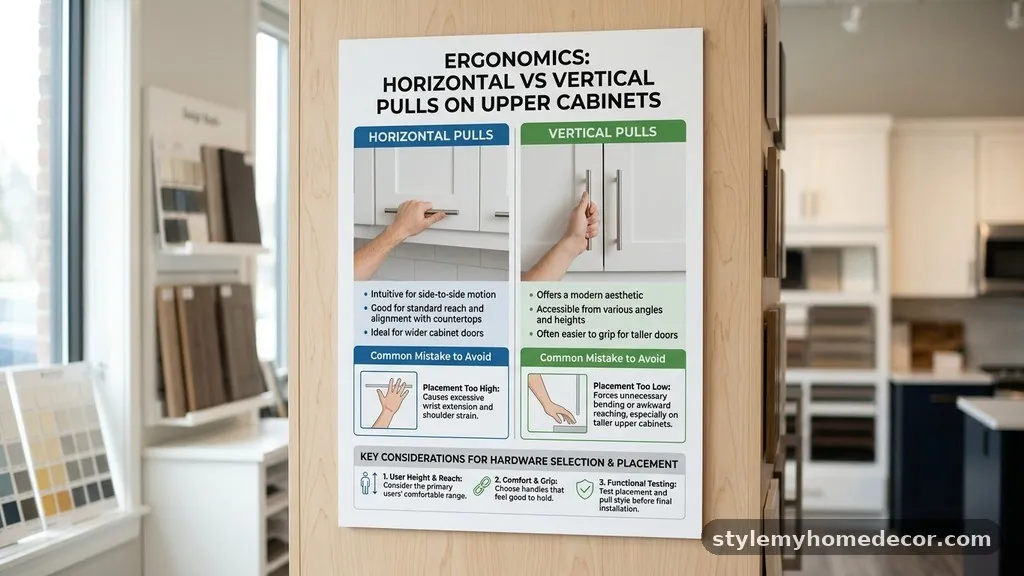
One common mistake is choosing hardware based solely on photos from glossy magazines without considering the actual door height. A handle that looks balanced on a 30-inch cabinet might look comically small on a 42-inch cabinet.
Conversely, a massive handle on a small door can be overwhelming and difficult to maneuver. Always measure your cabinet doors before committing to a specific length of hardware.
Another error is ignoring the proximity of the handle to the cabinet frame. If a handle is placed too close to the edge, it can interfere with the opening of adjacent doors or drawers.
This is especially common in corner configurations where clearance is tight. Always mock up your hardware placement with painter’s tape to see how it feels and how it interacts with nearby surfaces before drilling any holes.
Installation and Placement Best Practices
Where you place the handle on the door is just as important as the orientation. For upper cabinets, the standard practice is to place the handle at the bottom corner for easy access.
If you have a door that is very tall, you might consider placing the handle slightly higher, but never so high that it becomes difficult to reach. Consistency in placement is key to a professional look.
* Measure from the bottom rail of the door to the center of the handle.
* Ensure all handles are aligned at the exact same height across a run of cabinets.
* Use a template to mark your holes to prevent uneven mounting.
* Check for clearance issues with adjacent appliances or walls.
* Consider the weight of the door; heavier doors might require a more robust handle.
Maintenance and Long-Term Durability

Hardware is subjected to a lot of wear and tear, especially in a busy kitchen environment. Horizontal pulls on upper cabinets often collect more dust and grease on their upper surface than vertical ones.
This can lead to more frequent cleaning requirements to keep the kitchen looking pristine. Vertical pulls naturally shed dust more effectively because they have less exposed top surface area.
Over time, loose screws can also cause handles to rotate or wobble, which is frustrating and potentially damaging to the cabinet finish. Use thread-locking fluid or ensure that the mounting bolts are tightened securely during installation to prevent this.
High-quality materials like solid brass or stainless steel will hold up better than hollow or plastic alternatives. Investing in better materials now will save you from having to replace or repair hardware in a few years.
FAQ: Common Questions on Cabinet Hardware
Should cabinet handles be vertical or horizontal?
The general rule is to place handles vertically on doors and horizontally on drawers. This aligns with the natural motion required to open each type of unit. Vertical pulls on doors allow for a more ergonomic, downward-pulling motion, while horizontal pulls on drawers match the side-to-side motion.
What cabinet pulls are in style in 2026?
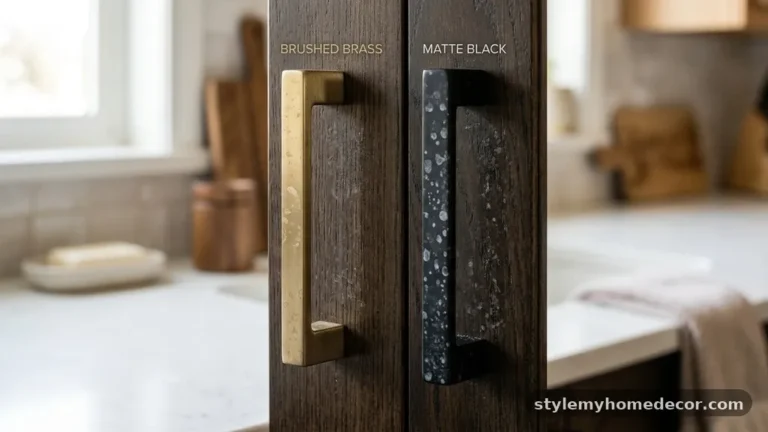
Minimalist, matte black, and brushed brass finishes continue to be popular in 2026. Many designers are moving toward “knobs-only” for upper cabinets and “pulls-only” for base cabinets to create a clean, uncluttered look. However, the most “in style” choice is one that prioritizes the user’s comfort and the overall kitchen workflow.
What is the 1/3 rule for cabinet handles?
The 1/3 rule suggests that the length of your handle should be roughly one-third the height of the cabinet door. This provides a balanced look that isn’t too small or too large. It helps maintain visual harmony while ensuring the handle is substantial enough to grip comfortably.
Is it modern to put cabinet pulls on top cabinets?
Yes, it is very modern to include hardware on upper cabinets, though some ultra-minimalist designs opt for touch-latches or integrated channels. Using sleek, thin-profile hardware on uppers is a hallmark of contemporary design. It adds a layer of texture and detail that can elevate the entire kitchen aesthetic.
Can I mix knobs and pulls in the same kitchen?
Yes, mixing knobs and pulls is a classic design technique. A common approach is to use knobs on doors and pulls on drawers. This creates a functional distinction between the two types of storage and can make the kitchen feel less repetitive and more custom-designed.
Final Considerations for Your Kitchen Project
When you weigh the pros and cons of horizontal vs vertical pulls on upper cabinets, remember that your personal comfort is the ultimate metric. While design trends might pull you toward a specific aesthetic, the physical ease of opening your cabinets every day is what matters most. Vertical pulls generally offer a superior ergonomic experience for doors, reducing wrist strain and aligning with natural arm movement.
By selecting high-quality hardware and ensuring consistent, thoughtful placement, you can create a kitchen that is both beautiful and functional. Take the time to test your choices in person, perhaps by visiting a showroom, to see how different styles feel in your hand. Your kitchen is a workspace, and the right hardware is a tool that should make your life easier, not more difficult.