
Should Pantry Tall Door Handles Be Placed at Standard Door Knob Height?
Deciding whether you should pantry tall door handles be placed at standard door knob height is a common dilemma during kitchen renovations. While standard interior doors typically feature hardware at 36 inches from the floor, tall pantry cabinets function differently in a room. Placing your hardware at this traditional height often creates an awkward visual…
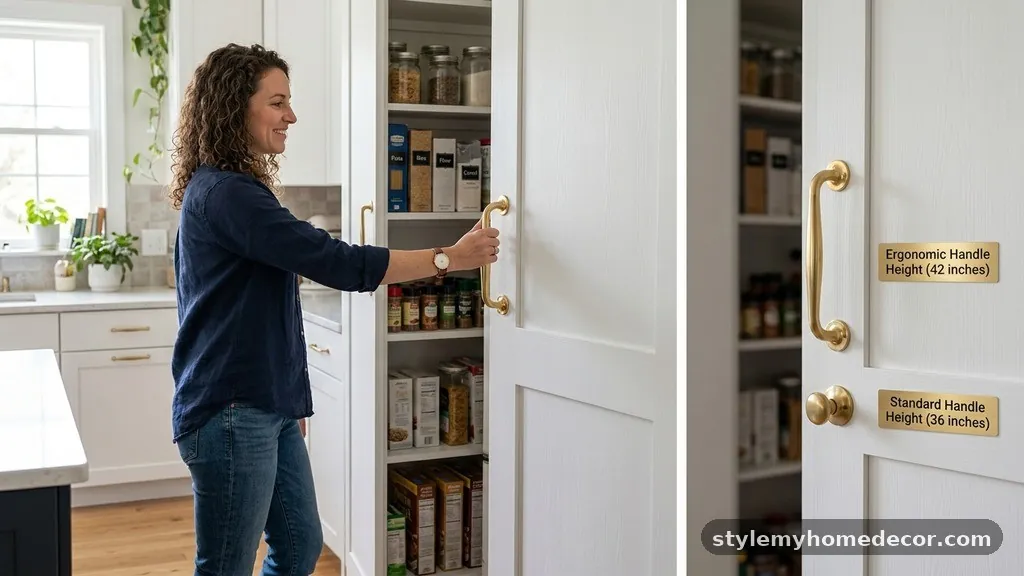
Deciding whether you should pantry tall door handles be placed at standard door knob height is a common dilemma during kitchen renovations. While standard interior doors typically feature hardware at 36 inches from the floor, tall pantry cabinets function differently in a room. Placing your hardware at this traditional height often creates an awkward visual and physical experience for the user.
Understanding the balance between reach, ergonomics, and aesthetic symmetry is essential for a functional kitchen design. This article clarifies the optimal placement strategies to ensure your tall cabinet hardware looks professional and feels comfortable to use every day.
The short answer is no; you should generally avoid placing tall pantry door handles at standard door knob height. Standard interior doors are designed for adult reach at a specific elevation, but pantry doors are usually much taller than they are wide.
Placing a handle at 36 inches on an 84-inch or 96-inch pantry door looks disproportionately low and makes the top section of the door feel visually heavy. Most designers recommend placing hardware in the middle or slightly below the vertical center of the door to ensure the best balance.
Ergonomics and Reach Requirements
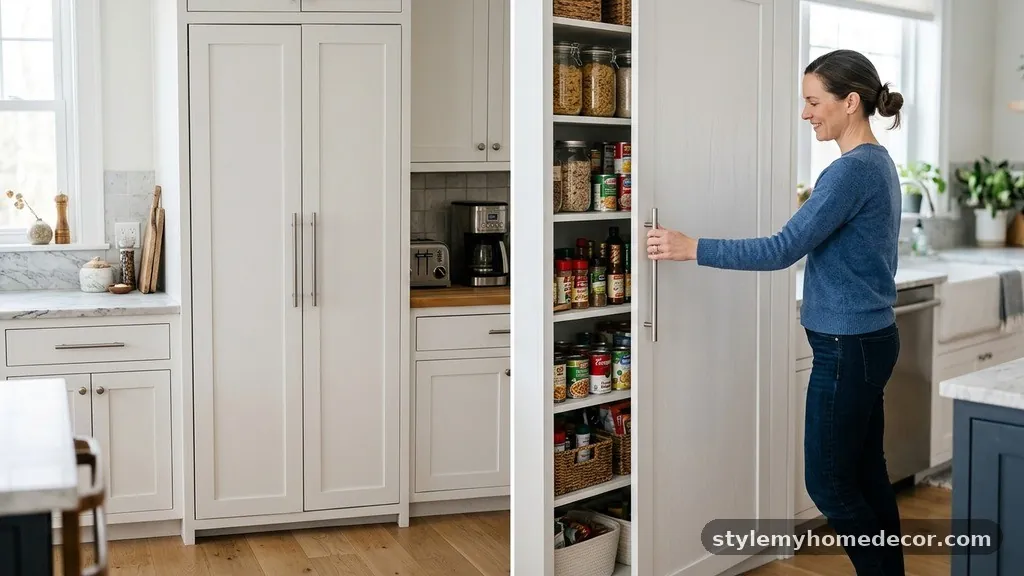
When you consider whether you should pantry tall door handles be placed at standard door knob height, you must prioritize how the door opens. A tall pantry door acts more like a cabinet door than an entry door, requiring a different movement pattern.
If you place the handle too low, you force yourself to bend down to access the top portion of the cabinet. This creates an unnecessary physical strain that becomes frustrating during frequent use.
Most people find that placing the handle at a height that aligns with the elbow or the lower chest is far more comfortable. This typically ranges from 40 to 50 inches from the floor, depending on the height of the user and the length of the door.
By elevating the hardware, you maintain a more natural standing posture while gripping the pull. This height also ensures that the handle is within easy reach for multiple household members.
Visual Proportions and Symmetry
The visual impact of hardware placement is just as important as the ergonomic function. A tall cabinet door requires a sense of balance to look intentional within a kitchen layout.
If you place a handle at 36 inches on a floor-to-ceiling cabinet, the remaining space above the handle looks empty and unfinished. This creates a “top-heavy” look that disrupts the clean lines of modern cabinetry.
Designers often use the “center-line” rule to avoid this visual imbalance. By placing the handle at the vertical center of the door, you create a focal point that anchors the piece.
Alternatively, you might place the handle slightly below the center, roughly one-third of the way up from the bottom of the door. This alignment creates a sophisticated look that mimics the scale of the surrounding cabinetry.
Impact of Cabinet Hardware Styles
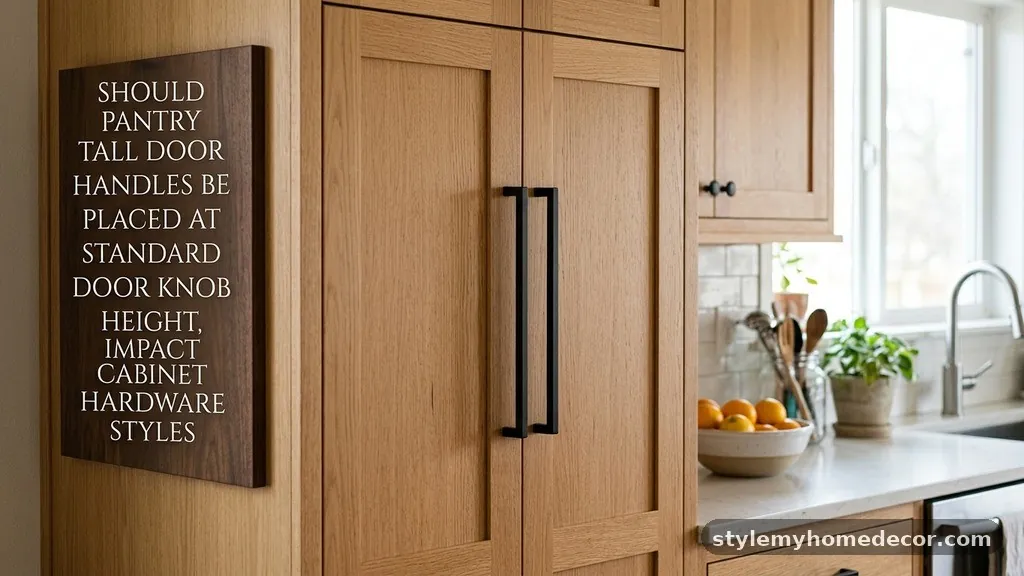
The type of hardware you choose significantly influences where it should be placed. Long, vertical bar pulls have different requirements than small, circular knobs.
A long pull can span several inches, meaning the mounting holes must be carefully positioned to maintain a balanced look. If you use a long pull, the center of the hardware is what matters most for the overall aesthetic.
Knobs, by contrast, are smaller and more compact, making their exact placement more flexible. You can place a knob at the vertical center of the door for a clean, minimalist look.
If you have a shaker-style door, you might place the knob on the stile, which is the vertical frame of the door. This choice shifts the focus away from the center panel and highlights the craftsmanship of the cabinet frame.
Comparing Placement Standards
To help you visualize the differences, consider how various door types dictate hardware location. Standard doors are built for passage, while pantry doors are built for storage accessibility. The following table illustrates the typical height ranges for different types of vertical door hardware.
| Door Type | Standard Height Range | Primary Consideration |
|---|---|---|
| Standard Interior Door | 34″ – 38″ | Passage and privacy |
| Tall Pantry Door (Center) | 42″ – 52″ | Ergonomic reach |
| Wall Cabinet Door | Bottom 1/3 of door | Easy access from below |
| Full-Height Pantry (Offset) | 38″ – 44″ | Visual alignment with drawers |
Aligning with Adjacent Cabinetry
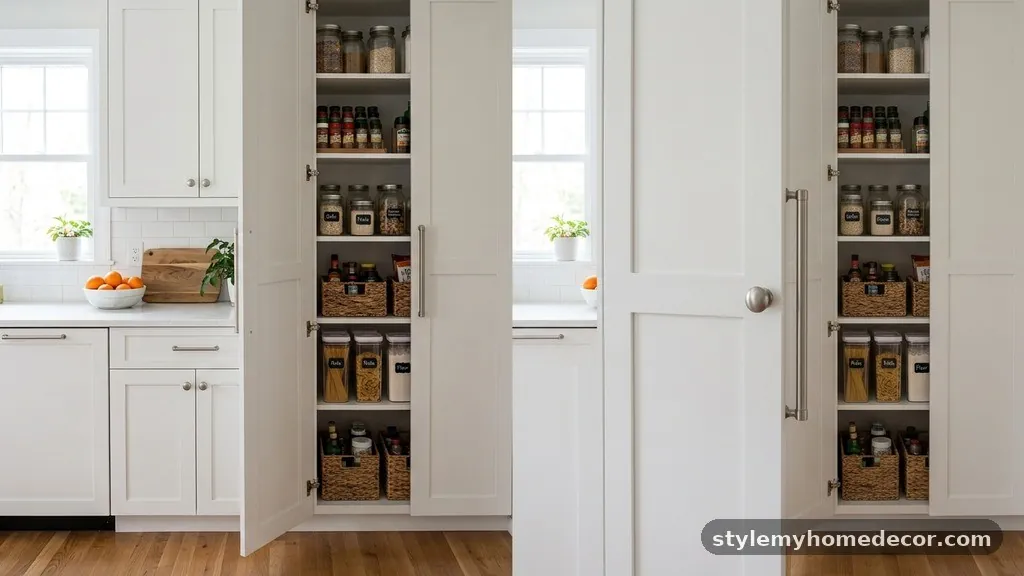
One of the best ways to determine handle height is to look at the other cabinets in your kitchen. If you have a row of base cabinets and wall cabinets, you want your tall pantry handle to relate to those horizontal lines.
For example, you might align the top of your pantry handle with the top of a nearby wall cabinet door. This creates a cohesive “sightline” that makes the kitchen feel organized and custom-designed.
If your pantry is standalone, you have more freedom to choose a height that fits your personal preference. However, even in this case, try to maintain a relationship with nearby drawer fronts.
Aligning the bottom or center of your pantry handle with the top drawer line of an adjacent unit provides a sense of order. This small detail prevents the pantry from looking like an afterthought in your kitchen floor plan.
The Role of the Cabinet Stile
If you are using a shaker-style cabinet door, the stile plays a critical role in your placement decision. The stile is the vertical piece of the door frame.
Placing your hardware on the stile is a classic design choice that keeps the center panel clean and unobstructed. If you place a knob here, it should be centered horizontally within the width of the stile.
When working with a stile, you must ensure the handle does not interfere with the door’s operation. If the handle is too large, it might hit the adjacent cabinet frame or wall when the door opens.
Check the clearance before drilling any holes. You can find detailed technical specifications on cabinet construction at the National Kitchen & Bath Association website to ensure your installation is standard.
Accounting for User Height Variations
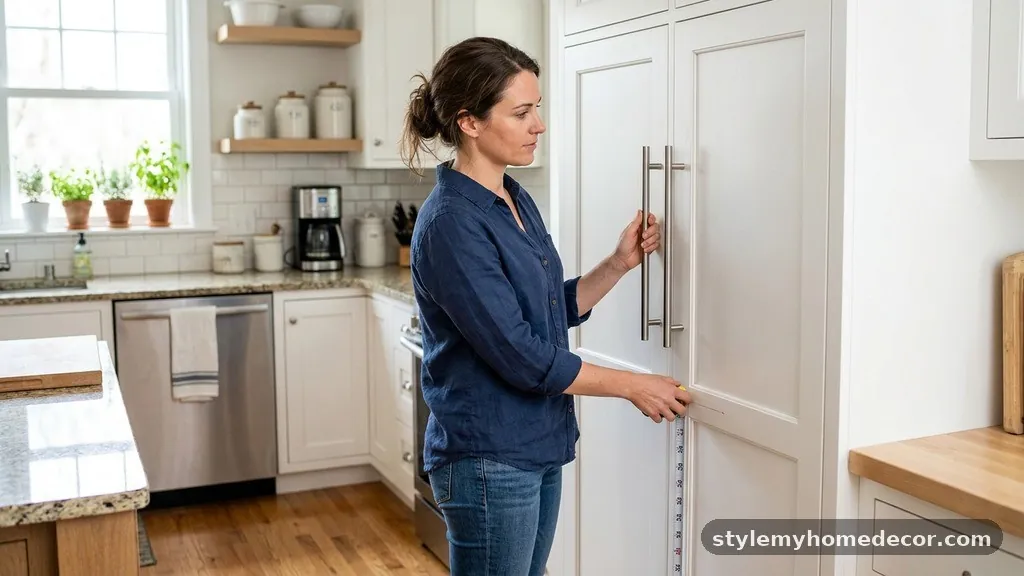
Kitchens are often used by people of different heights, which makes a single “perfect” height difficult to define. If you are exceptionally tall, a standard 36-inch height will feel very low, while a shorter person might find a 50-inch height inconvenient.
This is why the center-line approach is so effective. It provides a middle ground that accommodates most adults comfortably.
If you have children or individuals with mobility challenges in your home, consider how they will access the pantry. A lower placement might be necessary for accessibility, even if it deviates from high-end design trends.
Always prioritize the daily usability of the space over rigid adherence to aesthetic rules. You can also use a “mock-up” method by taping a piece of paper at different heights to see what feels best.
Common Mistakes in Hardware Placement
One of the most frequent mistakes is placing hardware too low on a tall door. This often happens when people default to the height of their existing interior door handles.
Another common error is failing to consider the swing of the door. If you place a handle too close to the edge of the door, it may feel awkward to pull or may bump into the casing.
Another mistake is ignoring the size of the handle relative to the door. A tiny knob on a massive, floor-to-ceiling pantry door can look lost and undersized.
Conversely, a massive handle on a small door can overpower the design. Always aim for a scale that feels proportional to the surface area of the door panel.
Tools for Accurate Installation
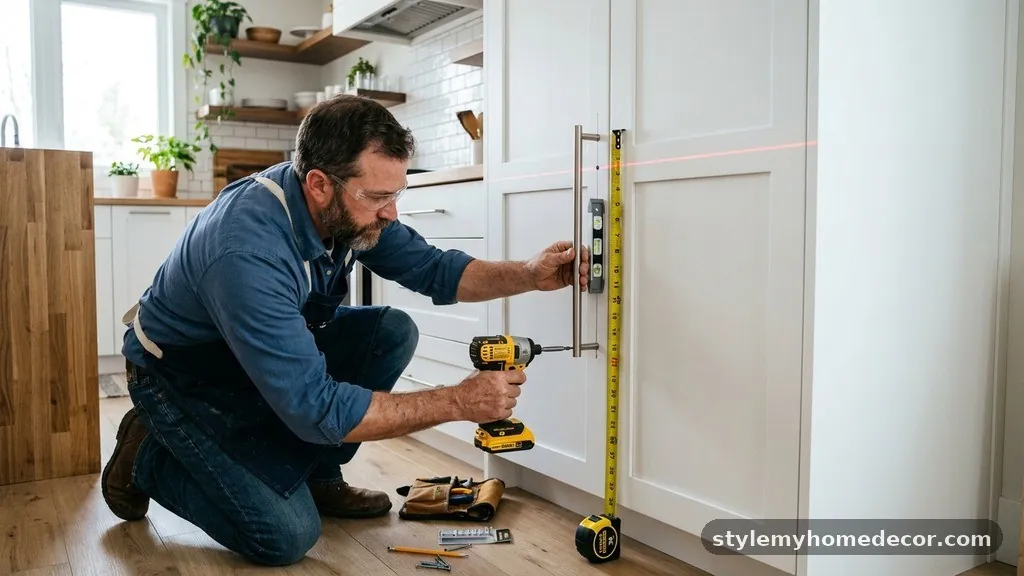
Installing hardware correctly requires more than just a good eye. You should use a cabinet hardware template or jig to ensure every hole is drilled in exactly the same spot.
This is especially important if you have multiple pantry doors that need to look uniform. A template allows you to mark the center, height, and spacing without relying on manual measurements for every single door.
Before drilling, double-check your measurements against the actual hardware you purchased. Sometimes the center-to-center distance on a pull can vary slightly from the manufacturer’s description.
Taking the time to verify these details prevents costly mistakes that could ruin an expensive cabinet door. A little preparation goes a long way in achieving a professional finish.
Key Factors for Your Decision
When finalizing your layout, keep these essential points in mind to ensure your kitchen remains functional and visually appealing. Using a systematic approach will help you avoid the pitfalls of improper hardware placement.
- Vertical Center: Placing hardware at the center of the door provides the most balanced look for tall units.
- Drawer Alignment: Aligning hardware with adjacent drawer lines creates a clean, architectural aesthetic.
- Stile Constraints: Ensure there is enough space on the frame to mount the hardware without hitting other surfaces.
- Ergonomic Testing: Perform a physical reach test before drilling to ensure the height is comfortable for your specific needs.
- Proportional Scale: Match the size of the handle to the scale of the door to avoid a cluttered or sparse appearance.
Frequently Asked Questions
Does the height of the pantry door change where the handle should go?
Yes, the height of the door is the primary factor. A door that is 84 inches tall requires a higher handle placement than a standard 30-inch cabinet door to maintain visual balance and ergonomic ease.
Can I use two handles on one tall pantry door?
You can use two handles, often placed at the top and bottom sections, if the door is very tall or functions as a double-door unit. However, for a single tall door, a single handle placed at the center is usually preferred for a modern look.
What if my pantry door has a decorative panel?
If the door has a decorative panel, you should avoid drilling through the panel itself if possible. Placing the handle on the surrounding stile is the standard practice for inset or shaker-style cabinets to preserve the door’s integrity.
Is it ever okay to use the standard 36-inch height?
It is technically okay if you prefer that look, but it is generally discouraged for tall pantry doors. Using the standard height can make the door look bottom-heavy and may cause you to stoop down to open it.
How do I align handles if I have a mix of cabinets?
The best approach is to find a common horizontal line across your kitchen, such as the top of your base cabinets or the bottom of your wall units, and align the center of your pantry hardware with that line.
Deciding whether you should pantry tall door handles be placed at standard door knob height ultimately comes down to balancing ergonomics with visual harmony. While it is tempting to follow the standard 36-inch rule used for interior doors, tall pantry cabinets benefit significantly from a more elevated, centered, or aligned placement. By positioning your hardware in the middle or according to the lines of your existing cabinetry, you create a kitchen that is both easier to use and more aesthetically pleasing.
Take the time to mock up your preferred heights, check your reach, and ensure the scale of your hardware matches the size of your doors. With these steps, you will achieve a professional, functional result that enhances your home’s design. If you need further assistance with your kitchen layout, consult a local cabinet installer or professional designer to refine your plan.