
10 Smart Garden Craft Ideas
Gardening isn’t just about planting flowers or vegetables; it’s about creating a space that’s both functional and visually inspiring. A smart garden blends creativity with practicality, turning outdoor spaces into areas of beauty and innovation. From DIY planters to clever decorative structures, there’s immense potential to personalize your yard, balcony, or backyard. In this article,…

Gardening isn’t just about planting flowers or vegetables; it’s about creating a space that’s both functional and visually inspiring. A smart garden blends creativity with practicality, turning outdoor spaces into areas of beauty and innovation. From DIY planters to clever decorative structures, there’s immense potential to personalize your yard, balcony, or backyard. In this article, we explore ten garden craft ideas that combine style and function. Each idea is designed to be achievable, providing real-life solutions for organizing, beautifying, and enhancing your outdoor environment, while appealing to Pinterest’s visually-driven audience.
These smart garden craft ideas are perfect for USA-based readers looking to upgrade their outdoor spaces with creativity and purpose. They go beyond simple plant displays, offering innovative ways to incorporate materials like wood, metal, and recycled items while maintaining a polished aesthetic. By following practical tips and layout suggestions, you can transform any ordinary garden area into a functional, eye-catching retreat. Each craft emphasizes both visual appeal and usability, ensuring your efforts create lasting, Instagram-worthy results.
Whether your goal is to add color, improve organization, or introduce interactive elements, these ideas give you actionable guidance. Every craft is explained in depth, including materials, step-by-step methods, and visual styling tips. This way, your garden doesn’t just look good—it becomes a smart, engaging space. By the end, you’ll have inspiration and practical techniques to elevate your outdoor areas into a harmonious blend of innovation and natural beauty.
1. Vertical Pallet Planters
Bullet Points:
- Maximizes space for small gardens or balconies
- Provides structured organization for herbs and flowers
- Easy to build with recycled pallets and simple tools
- Offers a stylish, rustic aesthetic that elevates your space
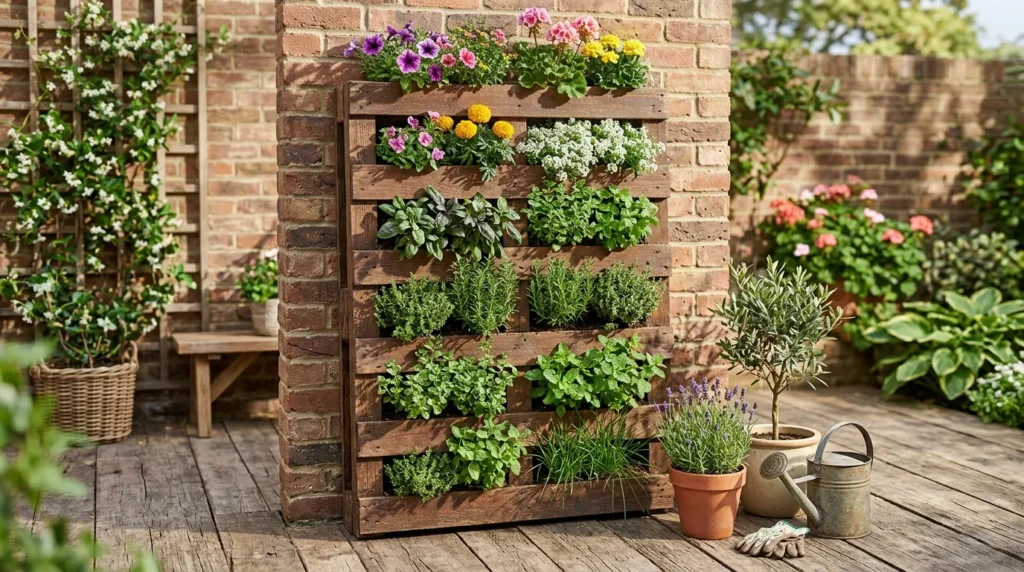
Vertical pallet planters are an ingenious way to optimize limited garden space while creating a visually striking arrangement. By repurposing old pallets, you can install multiple levels for planting herbs, succulents, or small flowering plants. In my experience, this approach works particularly well in small yards, patios, or urban balconies. You can paint or stain the pallet to match your outdoor décor. Using lightweight soil and durable planters prevents structural strain, while hanging mechanisms or anchors ensure stability. The end result is an organized, functional, and aesthetically pleasing garden feature that’s easy to maintain.
This craft transforms ordinary pallets into a vertical garden centerpiece. By arranging plants at different heights, you create dimension and depth, enhancing the visual appeal of the area. Vertical planting also improves accessibility, making watering, pruning, and harvesting simpler. You can include a mix of leafy greens and flowering plants for variety and seasonal color. With minimal investment in materials and a few simple tools, vertical pallet planters are a practical, space-saving solution that enhances both functionality and style, proving that even small areas can support a lush, organized, and smart garden.
2. Mason Jar Herb Garden
Bullet Points:
- Ideal for indoor or small outdoor spaces
- Uses recycled jars for sustainable gardening
- Simple to install on shelves, windowsills, or fences
- Adds charm and greenery in a compact design
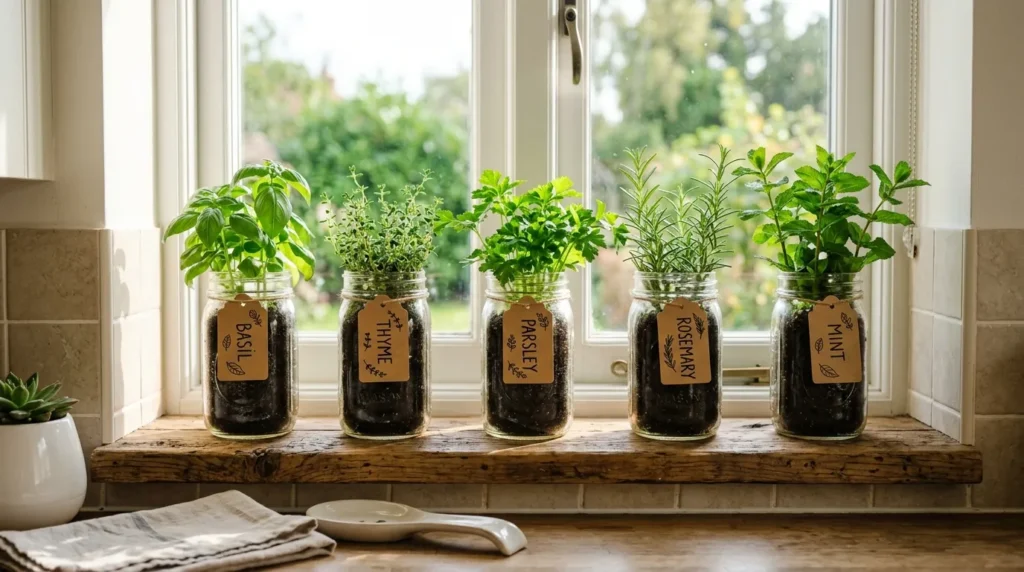
Mason jar herb gardens provide a creative, compact way to grow fresh herbs while adding a decorative touch to your smart garden. Using clean, repurposed jars, you can cultivate basil, rosemary, or parsley indoors or on a balcony. In my experience, this method works beautifully for kitchens or patios where limited space might otherwise restrict gardening. With proper drainage, small pebbles at the bottom, and quality potting mix, plants thrive while reducing mess. This approach combines functionality and aesthetic appeal, making it a practical and charming addition to any garden setup.
The transformation is visually delightful. Mason jar herb gardens elevate plain shelves or counters into dynamic, green focal points. They encourage organized planting and easy access for cooking, allowing fresh herbs to be harvested efficiently. Hanging or arranging the jars at varying heights adds visual interest, while labeling jars creates a structured layout. This craft is low-maintenance and flexible, suitable for seasonal rotation of herbs. With thoughtful placement and minimal tools, a mason jar herb garden is a practical and sustainable way to incorporate greenery and freshness into a smart, stylish garden design.
3. DIY Wooden Trellis
Bullet Points:
- Supports climbing plants like beans, roses, and ivy
- Adds height and dimension to flat garden areas
- Can be made from inexpensive lumber or recycled wood
- Creates a charming, structured visual element
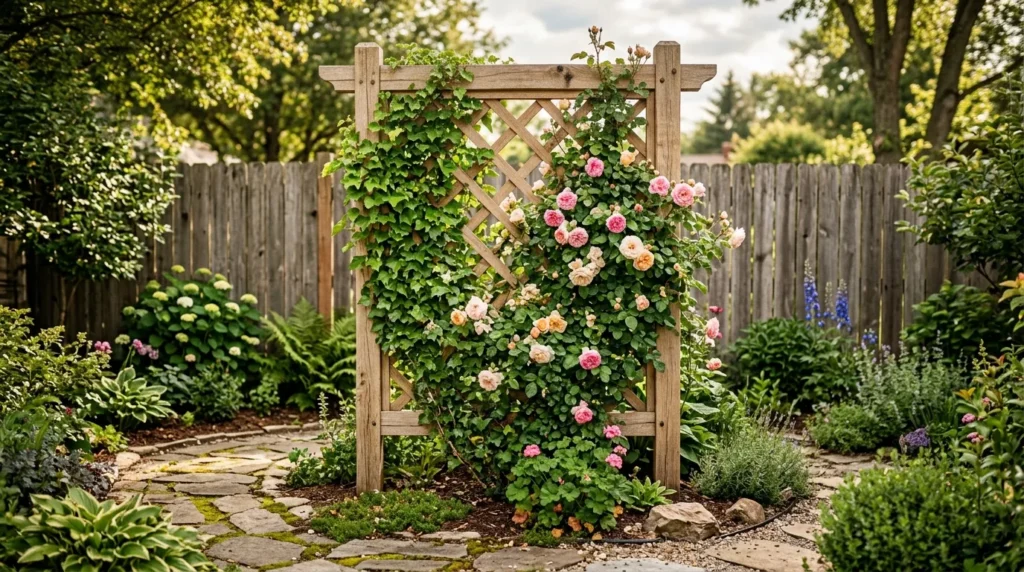
A DIY wooden trellis is a functional and decorative addition to any garden. By constructing a framework of wooden slats, you can train climbing plants, creating vertical interest and maximizing space. I’ve seen this technique work beautifully for roses, clematis, and peas, providing structure for healthy growth. Trellises can be customized to fit your garden size, painted to complement surrounding elements, and installed along walls or in open areas. This combination of practicality and aesthetic appeal enhances the overall look of your outdoor area while supporting plant health and growth.
The transformation is both visual and functional. Wooden trellises elevate greenery off the ground, adding height and architectural appeal to the space. They provide natural support for climbing plants, reducing damage and improving airflow. Trellises can be freestanding or wall-mounted, offering flexibility in design and placement. By carefully choosing wood type, color, and style, you can harmonize the trellis with existing garden décor. This craft encourages creative planting layouts, making your garden appear fuller, organized, and thoughtfully designed while combining practicality with aesthetic charm.
4. Painted Rock Markers
Bullet Points:
- Enhances organization and labeling in garden beds
- Provides creative and personalized decorative elements
- Uses inexpensive and readily available rocks and paints
- Protects plants by marking boundaries clearly
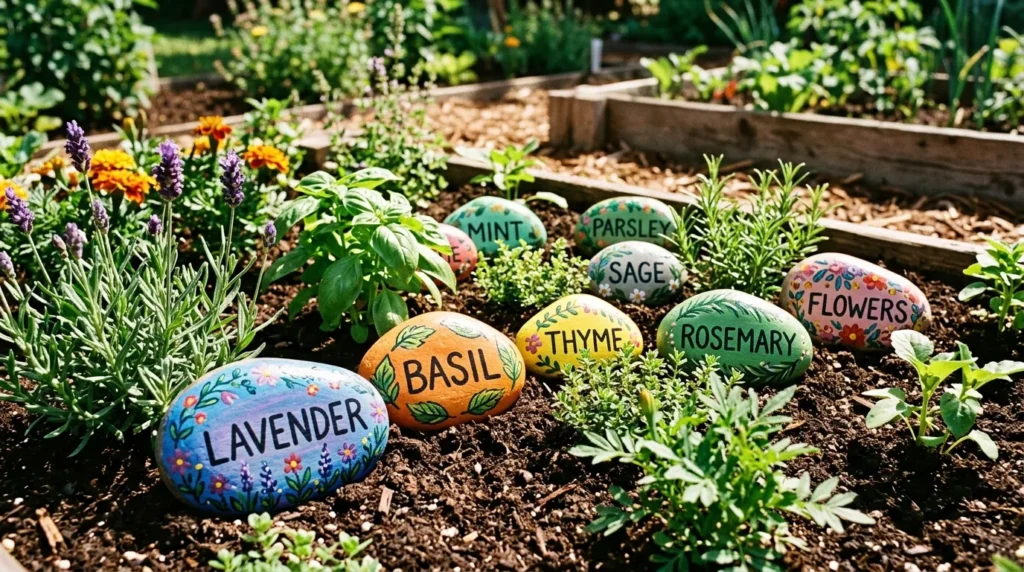
Painted rock markers offer a simple yet creative solution for organizing plants in your garden. By labeling herbs, vegetables, or flowers on stones using weather-resistant paint, you can maintain a smart, organized layout. In my experience, adding color-coded designs or small illustrations makes it easier to identify plants while enhancing visual appeal. Using a sealant protects the paint from rain and sunlight, ensuring durability. This approach combines functionality with creativity, turning ordinary rocks into charming, practical elements that improve both garden management and aesthetic quality.
The transformation is striking and practical. Painted rocks create defined spaces within garden beds, helping prevent accidental trampling or misplacement. They introduce pops of color and personality, adding a whimsical touch to outdoor areas. Rock markers also encourage engagement from children or guests, making gardening interactive and educational. This craft requires minimal materials but offers maximum visual impact. By strategically placing markers around plants or pathways, you maintain a visually organized, smart garden while promoting functionality, creativity, and a sense of cohesion throughout your outdoor space.
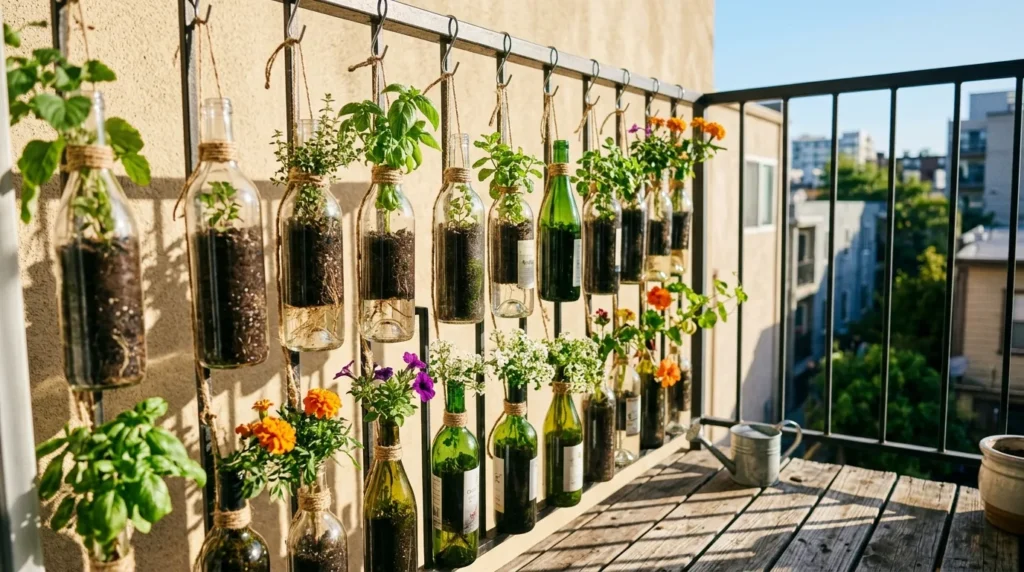
5. Hanging Bottle Planters
Bullet Points:
- Upcycles plastic or glass bottles for vertical planting
- Ideal for small patios or balconies
- Supports flowers, herbs, or succulents
- Adds layered, hanging visual interest to outdoor areas
Hanging bottle planters are a smart solution for vertical gardening in limited spaces. By cutting and repurposing bottles, you can create pockets for soil and plants, suspending them on hooks or strings. I’ve noticed this technique works especially well for lightweight flowers, succulents, or herbs. Painting or decorating bottles adds style, while proper drainage ensures plant health. This approach combines sustainable upcycling with aesthetic design, transforming ordinary bottles into functional garden containers that optimize space without compromising visual appeal.
This craft transforms flat walls or balcony rails into dynamic garden displays. Hanging bottles create vertical layers, giving dimension to otherwise empty spaces. The plants remain accessible for watering and harvesting, while the decorative arrangement adds charm and vibrancy. You can mix colors, sizes, and textures of bottles to enhance visual interest. This method is practical for small-scale gardening, urban spaces, or renters seeking creative solutions. By combining sustainability with innovative design, hanging bottle planters demonstrate how a smart garden can be both environmentally friendly and visually captivating.
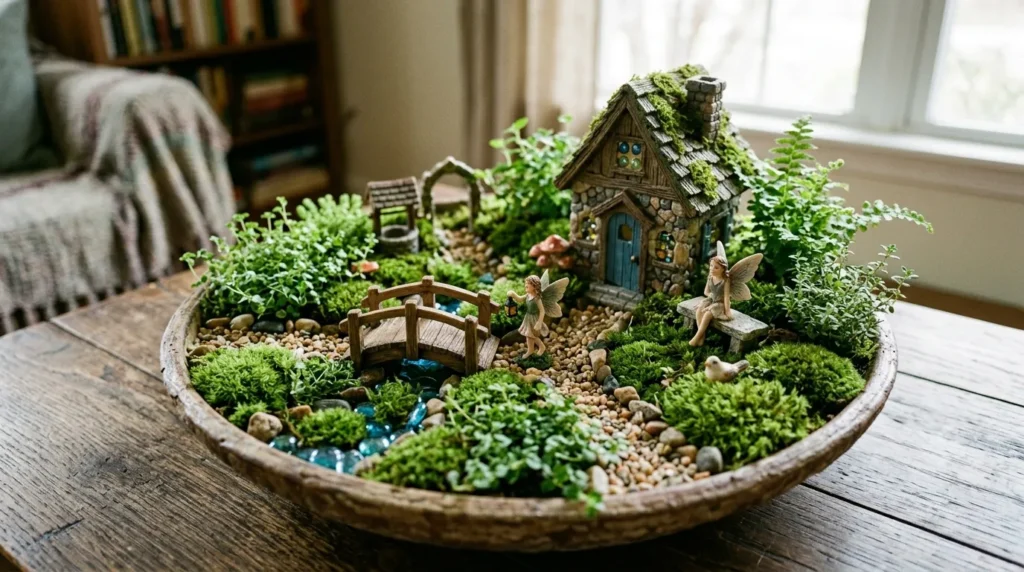
6. Miniature Fairy Gardens
Bullet Points:
- Combines decorative elements with small-scale planting
- Engages creativity and personal expression
- Uses miniature figurines, moss, pebbles, and small containers
- Ideal for patios, window boxes, or table-top gardens
Miniature fairy gardens transform ordinary containers into enchanting, storybook-like spaces. Using small figurines, moss, and low-maintenance plants, you can create whimsical arrangements that delight both adults and children. I’ve seen this craft add charm to patios or balcony corners, offering a focal point that feels magical. These gardens encourage creativity and personalization, allowing you to mix textures, colors, and miniature decorations. With basic tools and small containers, this idea is highly adaptable, making it a practical yet visually inspiring addition to a smart garden setup.
The result is both charming and engaging. Miniature fairy gardens provide visual layers, creating a sense of depth and intrigue in small spaces. Plants such as moss or succulents thrive in contained environments while adding greenery. Decorative pebbles, tiny fences, or figurines enhance storytelling, turning the garden into a unique, Pinterest-worthy display. This craft is perfect for DIY enthusiasts, family activities, or as a creative gift idea. By integrating small-scale gardening with imaginative elements, fairy gardens combine beauty, function, and personal expression into a cohesive, smart outdoor arrangement.
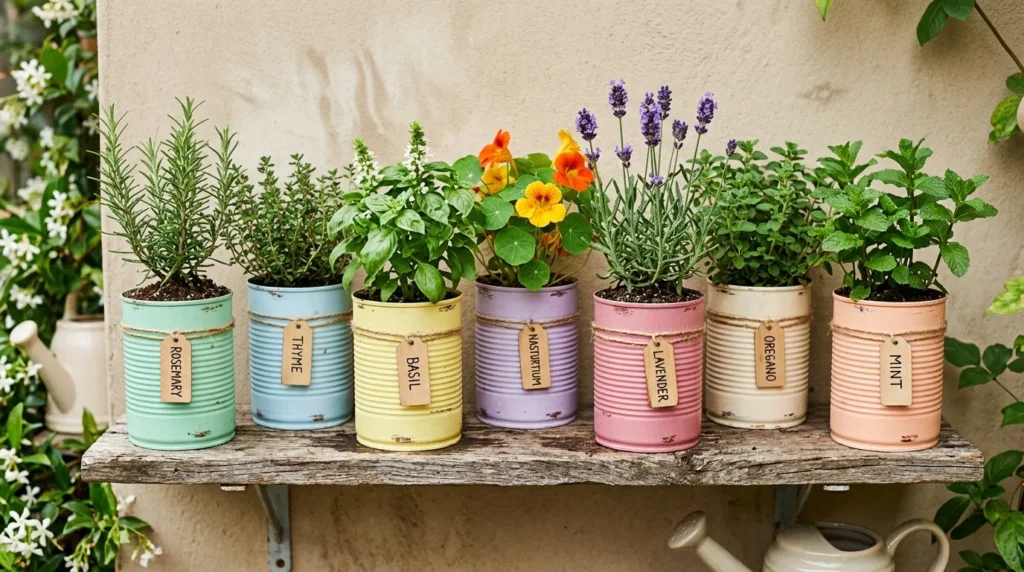
7. Recycled Can Planters
Bullet Points:
- Upcycles tin or food cans for sustainable gardening
- Ideal for herbs, flowers, or seedlings
- Can be painted or labeled for decorative appeal
- Compact, organized, and easy to move
Recycled can planters are a budget-friendly way to create organized garden displays. By cleaning and decorating tin cans, you can cultivate herbs or flowers in a compact, portable format. I’ve noticed that these planters work exceptionally well for small spaces or tabletop gardens. A few drainage holes in the bottom prevent waterlogging, while paint or labels enhance aesthetics. This approach combines functionality and environmental responsibility, transforming everyday items into practical, visually appealing containers suitable for indoor or outdoor gardening projects.
The transformation is practical and visually interesting. Arranging cans on shelves or in clusters adds organized layers to your garden. Plants grow healthily in contained soil, while the decorative finishes create a cohesive, stylish appearance. This craft allows flexibility, enabling rotation of plants by season or light needs. It’s ideal for beginners, families, or urban gardeners seeking space-efficient solutions. Recycled can planters demonstrate how a smart garden can be both sustainable and beautiful, providing greenery and style while promoting resourcefulness and creativity in everyday gardening.
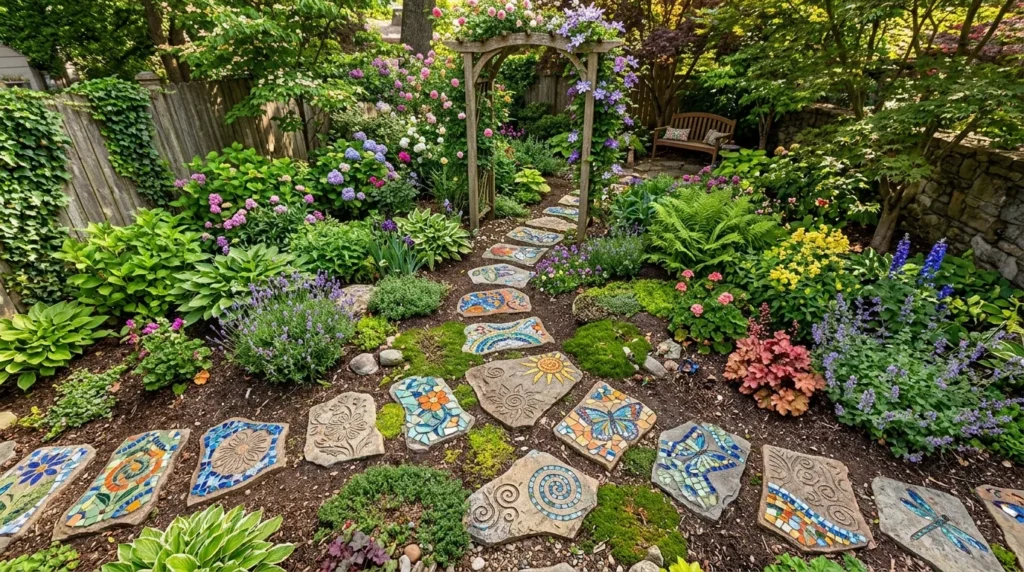
8. Stepping Stone Crafts
Bullet Points:
- Adds decorative and functional pathways in the garden
- Can include personalized designs, mosaics, or imprints
- Provides safe, organized movement around plants
- Enhances visual appeal and thematic cohesion
Stepping stone crafts are both practical and decorative. By creating concrete or resin stones with embedded designs, you can mark paths, borders, or focal points in your garden. I’ve seen this approach add charm and personality while protecting plants from foot traffic. Stones can be customized with mosaics, engraved patterns, or painted motifs, making each piece unique. Proper placement ensures durability and stability. This craft combines functionality with creativity, giving the garden a structured yet visually appealing layout while enhancing the smart, organized feel of outdoor spaces.
The transformation is visually structured. Stepping stones create defined paths, allowing safe navigation while adding artistic elements. They provide cohesion between garden sections, connecting plants, planters, and decorative features. The designs can reflect seasonal themes, personal style, or color schemes, creating harmony. This project is practical for foot traffic areas, ensuring plants remain undisturbed. With minimal materials, stepping stones offer long-lasting functionality while boosting aesthetic appeal. They demonstrate how a smart garden can integrate beauty and utility, turning pathways into stylish and purposeful design elements.
9. Vertical Pallet Herb Wall
Bullet Points:
- Optimizes vertical space for small gardens
- Provides easy access to culinary herbs
- Adds rustic, organized charm to patios or decks
- Supports rotation of seasonal plants
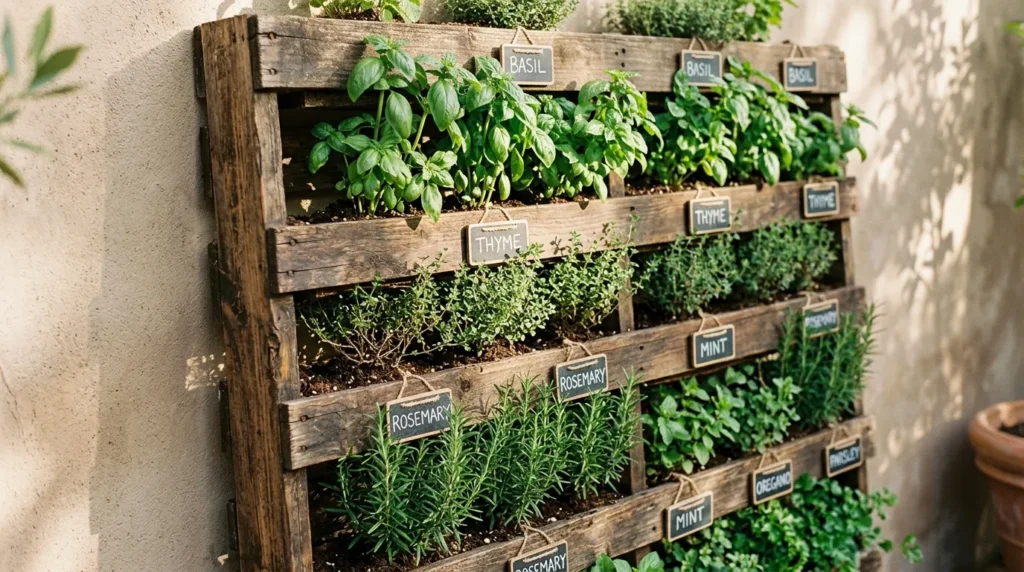
A vertical pallet herb wall is a stylish and functional solution for compact spaces. Using a repurposed wooden pallet, you can install multiple pockets to grow herbs like basil, thyme, or cilantro. I’ve noticed this method works particularly well for patios or balcony gardens, creating a green backdrop that is both practical and visually appealing. Proper mounting, lightweight soil, and irrigation considerations ensure plants thrive. This approach transforms simple pallets into multi-level, accessible garden walls that integrate beauty and utility seamlessly, offering a smart and efficient planting option.
The effect is transformative. By arranging herbs vertically, you free ground space while creating visual layers. Plants are easily accessible for cooking or pruning, while the rustic pallet adds charm. Rotating plants seasonally is simple, keeping the display fresh. Incorporating paint or decorative finishes enhances style, complementing surrounding garden elements. This craft combines practicality, sustainability, and aesthetics, making your garden feel organized, lush, and thoughtfully designed. Vertical herb walls showcase how a smart garden can maximize space without sacrificing beauty or usability.
10. DIY Garden Lanterns
Bullet Points:
- Introduces ambient lighting to outdoor spaces
- Can be made from jars, cans, or recycled materials
- Enhances evening aesthetics and usability
- Supports themed or seasonal décor integration
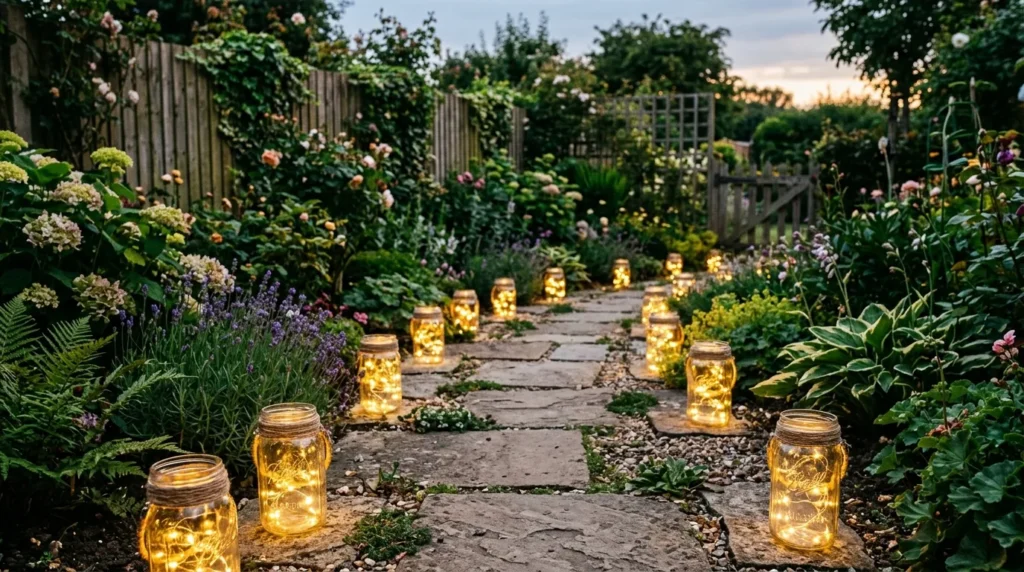
DIY garden lanterns provide both function and ambiance, illuminating pathways, patios, or flower beds. By using jars, cans, or recycled containers with candles or LED lights, you can create soft, inviting glow while complementing your garden décor. I’ve noticed this approach is particularly effective for evening gatherings, creating warmth and charm. Materials can be painted, etched, or decorated for seasonal themes. This craft combines lighting with visual appeal, enhancing your outdoor environment while keeping it practical and safe, ideal for creating Pinterest-worthy, ambient outdoor spaces.
The transformation is immediate and captivating. Lanterns add depth, highlight plant textures, and guide movement in your garden. Soft lighting enhances mood, making outdoor areas feel cozy and welcoming. Arranging lanterns along pathways, fences, or clusters near seating areas adds visual layers. This craft is versatile, supporting both functional and decorative purposes, and is low-maintenance when using LED options. DIY garden lanterns demonstrate how lighting can be smartly integrated, elevating garden aesthetics while improving usability and ambiance, creating an inviting space for relaxation or social gatherings.