11 Hallway Decorating Ideas
A hallway may be one of the most overlooked spaces in a home, but it shapes the way the entire house feels. It connects rooms, welcomes guests, carries daily traffic, and often becomes the first visual transition between the front door and the rest of the home. In many USA homes, hallways are narrow, dim,…
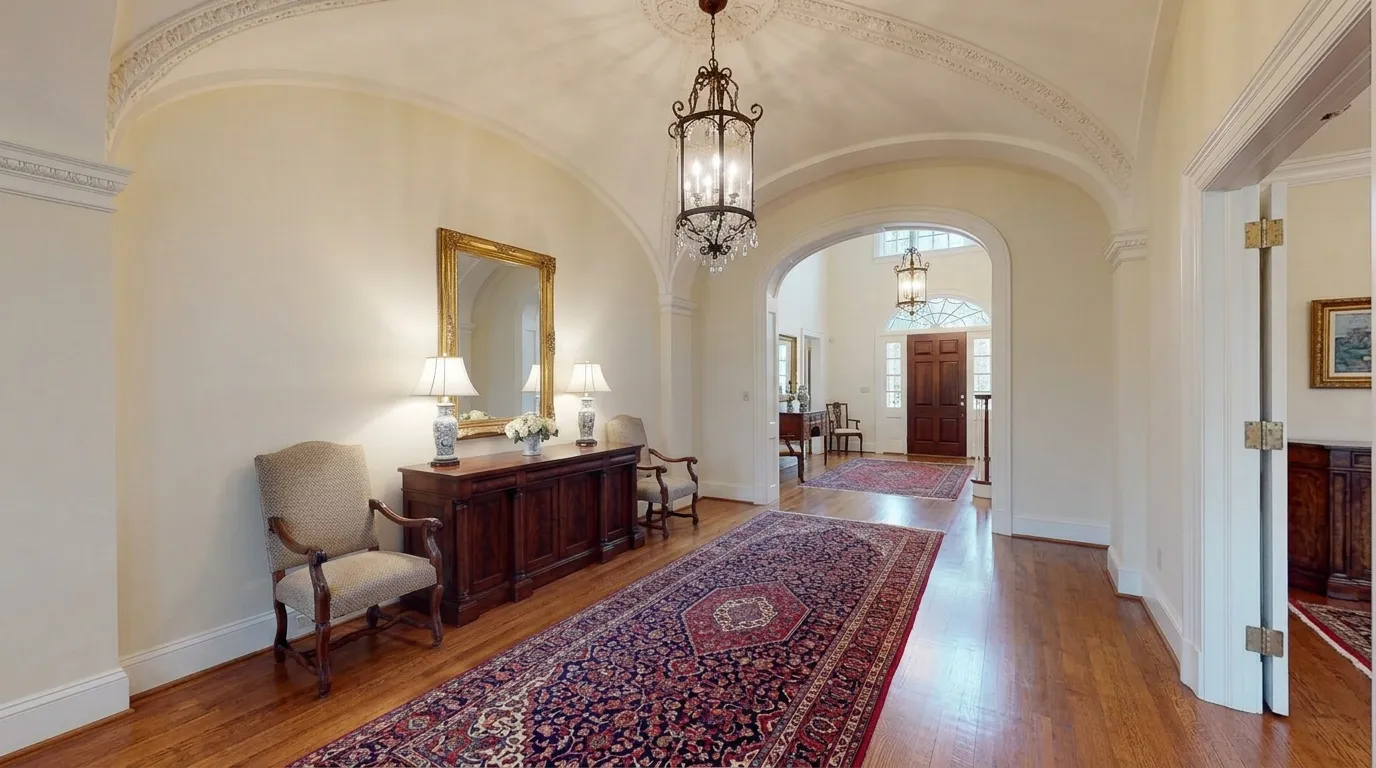
A hallway may be one of the most overlooked spaces in a home, but it shapes the way the entire house feels. It connects rooms, welcomes guests, carries daily traffic, and often becomes the first visual transition between the front door and the rest of the home. In many USA homes, hallways are narrow, dim, or treated as purely functional paths, even though they have so much design potential.
Smart Hallway Decorating is not about filling every wall or buying a lot of extra furniture. It is about using scale, lighting, texture, color, storage, and wall details in a way that makes the corridor feel intentional. A good hallway should be beautiful, but it should also remain easy to walk through, clean, and live with every day.
The ideas below are practical for small apartments, suburban homes, townhouses, ranch homes, and family houses with busy entry paths. Each concept can be adapted to your home’s size, budget, and style, whether you love modern, farmhouse, cottage, traditional, minimalist, or transitional decor.
1. Gallery Wall
Bullet Points
- Adds personality without taking up valuable floor space.
- Works well with family photos, art prints, sketches, or travel memories.
- Helps long blank walls feel collected, warm, and intentional.
- Looks best with consistent spacing, frame color, or mat style.
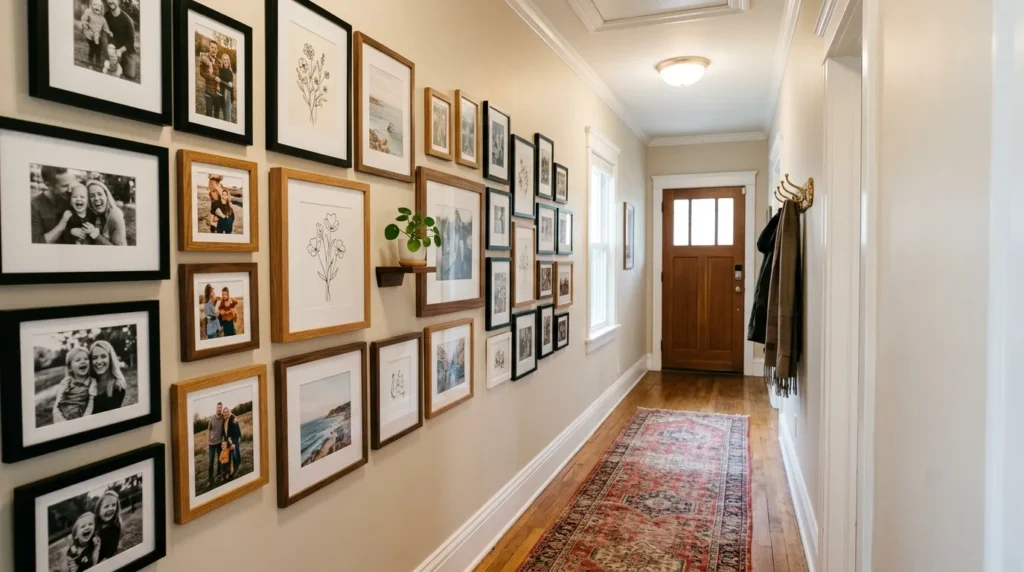
A gallery wall turns a plain hallway into a personal story instead of a forgotten pass-through. This idea works because hallways usually have long stretches of wall that can carry art, family photos, travel prints, or framed sketches without taking up floor space. Keep the arrangement intentional by choosing one frame color, one mat style, or one shared color palette. In my experience, narrow corridors look best when the frames feel connected, even if the artwork itself is collected over time. This approach feels curated without becoming stiff or overly formal.
The biggest transformation comes from spacing and scale. Before hanging anything, tape paper templates to the wall and check how the layout feels from both ends of the hallway. Mix vertical and horizontal frames, but keep the center line consistent so the wall feels calm. Use lightweight frames, removable picture strips, a level, and measuring tape for cleaner results. A gallery wall adds warmth, personality, and movement, making the walk from room to room feel more finished and visually memorable. It also photographs beautifully for Pinterest inspiration across every season.
2. Runner Rug
Bullet Points
- Adds warmth, softness, and pattern to a narrow hallway.
- Helps reduce echo on hardwood, tile, or laminate floors.
- Protects flooring in high-traffic areas.
- Works best with a non-slip rug pad underneath.
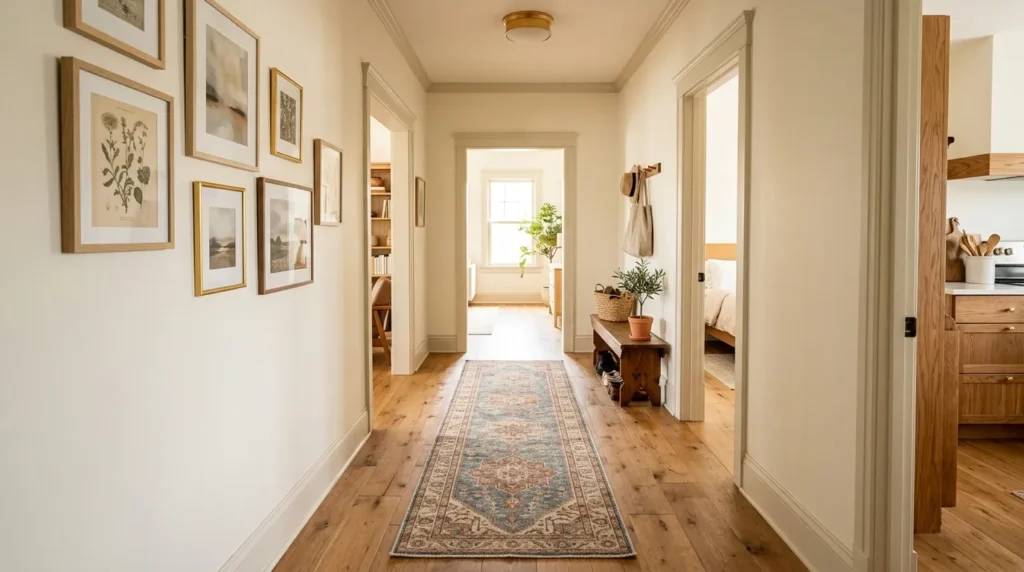
A runner rug can instantly make a hallway feel warmer, longer, and more pulled together. Because corridors are usually narrow, the floor becomes one of the strongest design surfaces in the space. Choose a runner that leaves a few inches of visible flooring on each side so the layout feels balanced. Vintage-inspired patterns, washable rugs, low-pile wool, jute blends, and subtle stripes all work beautifully. I’ve noticed that a patterned runner is especially helpful in busy USA homes because it hides everyday dust, pet hair, and shoe marks while still feeling stylish and welcoming.
The right runner also improves comfort and sound. Hallways with hardwood, tile, or laminate can echo, especially in family homes where kids, pets, and guests move through constantly. Use a quality rug pad to prevent slipping and keep corners flat. For long hallways, choose one continuous runner when possible instead of several small rugs that shift out of place. The result is a corridor that feels softer underfoot, more welcoming to guests, and visually connected to nearby rooms without requiring paint, furniture, or renovation. It is also one of the easiest seasonal swaps.
3. Slim Console
Bullet Points
- Creates a practical surface without crowding the walkway.
- Works near entries, stairs, or wider hallway sections.
- Offers space for keys, lamps, bowls, books, and small decor.
- Looks best when styled simply with useful everyday items.
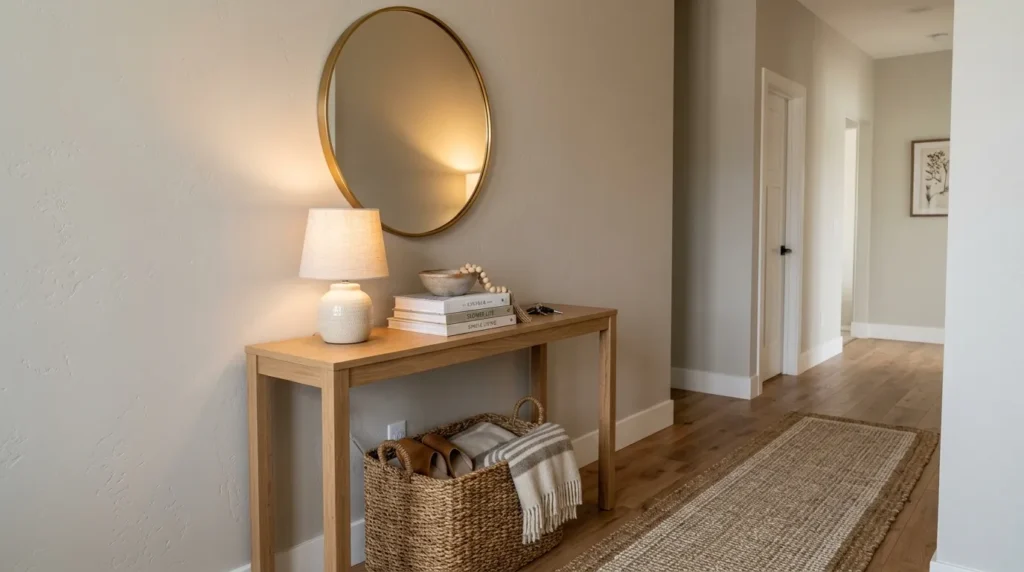
A slim console table gives a hallway purpose without making it feel crowded. The key is choosing a piece with shallow depth, open legs, or wall-mounted support so the walkway remains clear. A console works well near an entry, beside a staircase, or along a wider corridor that needs a visual pause. Style it with a lamp, small bowl, stacked books, or a vase, but leave breathing room. That’s why many designers recommend treating hallway surfaces as edited moments, not full display shelves. This keeps the arrangement elegant, breathable, and useful every day.
This idea works best when the table solves a real household need. A drawer can hold keys, sunglasses, dog bags, or mail, while a basket underneath can store slippers or seasonal accessories. Materials like narrow wood, painted finishes, metal frames, cane fronts, and marble-look tops can match many decor styles. Keep the top surface simple so the hallway does not become a dumping ground. A well-placed console makes the corridor feel intentional, practical, and styled, especially when paired with a mirror or artwork above. It also creates a natural place for seasonal accents.
4. Statement Mirror
Bullet Points
- Reflects light and makes a narrow hallway feel more open.
- Works above a console, near an entry, or at the end of a corridor.
- Adds style through arched, round, antique, wood, or brass frames.
- Combines decoration with everyday function.
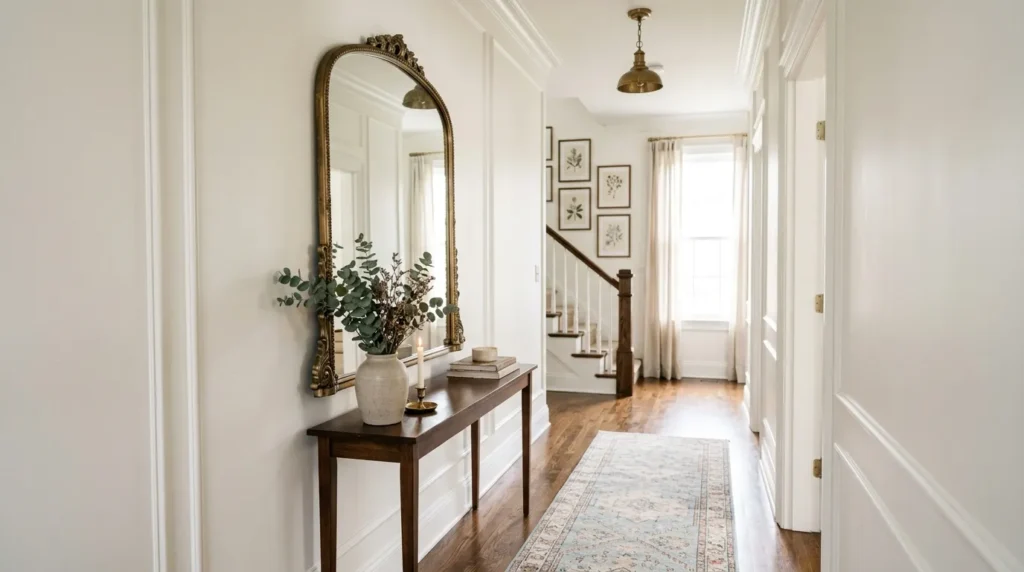
A statement mirror can brighten a hallway faster than almost any other wall accent. Since many corridors have limited natural light, a mirror helps bounce brightness from nearby windows, lamps, or open rooms. Choose an arched mirror for softness, a round mirror for balance, or a tall rectangular mirror for a more classic look. The frame matters too: brass feels warm, black feels modern, wood feels natural, and antique finishes add character. Place it where it reflects something pleasant, not clutter or a blank door. This simple decision makes the reflection feel intentional and attractive.
Beyond style, a mirror makes a narrow space feel less closed in. Hang it above a console, opposite a window, or at the end of a hallway to create depth. For safety, use proper wall anchors and avoid hanging heavy mirrors where they may be bumped by backpacks, furniture, or children. Pair the mirror with soft lighting, a runner, or a small plant for a layered look. The hallway becomes brighter, more open, and more useful for quick checks before leaving the house. It also supports the practical rhythm of daily life.
5. Wall Sconces
Bullet Points
- Adds warmth and atmosphere beyond basic ceiling lights.
- Helps highlight artwork, mirrors, trim, or architectural details.
- Works with hardwired, plug-in, or battery-operated options.
- Looks best with warm white bulbs and slim fixture profiles.
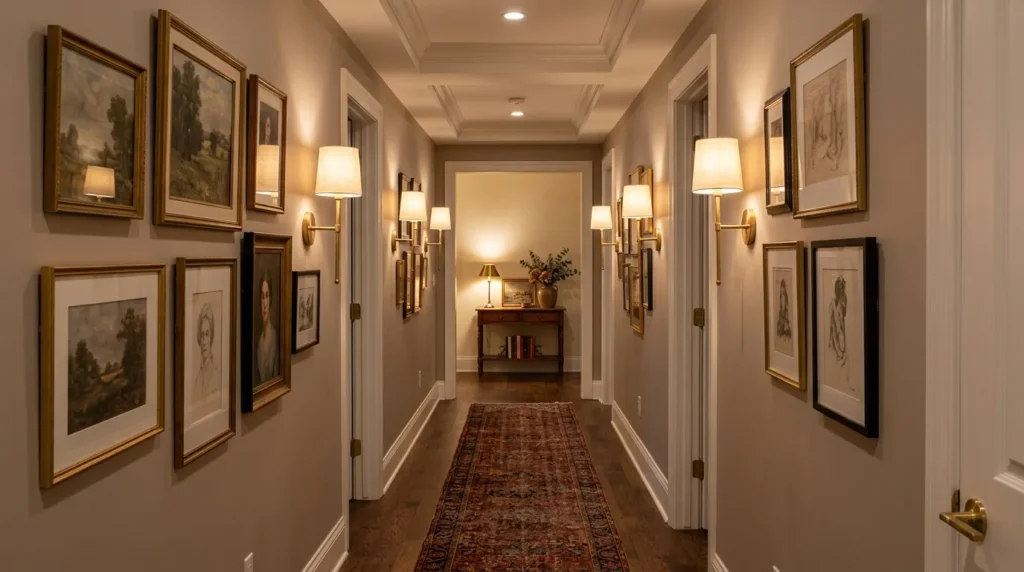
Wall sconces bring atmosphere to a hallway that overhead lighting alone cannot create. A single ceiling fixture may technically light the space, but sconces add warmth, rhythm, and architectural interest along the walls. Use them in pairs for symmetry, or repeat matching fixtures down a longer corridor for a polished look. Hardwired sconces are classic, but plug-in and battery-operated options make this idea renter-friendly. In my experience, warm white bulbs create the most inviting glow, especially against cream, taupe, greige, or soft white walls. This lighting choice feels softer than harsh overhead brightness.
Good lighting changes how the entire hallway feels at night. It softens shadows, highlights artwork, and makes the path safer for family and guests. Choose fabric shades for a cozy traditional look, brass arms for vintage warmth, black metal for modern contrast, or ceramic details for a softer handmade feel. Keep fixtures narrow enough that they do not interrupt the walkway. When paired with dimmers or low-watt bulbs, sconces turn a basic corridor into a gentle transition space between rooms. This is a quiet upgrade with a surprisingly high-end effect.
6. Built-In Storage
Bullet Points
- Adds hidden organization to a hallway without visual clutter.
- Works well for shoes, bags, linens, toys, paperwork, or seasonal items.
- Helps older homes or small homes gain useful storage.
- Looks best when painted to match trim or surrounding walls.
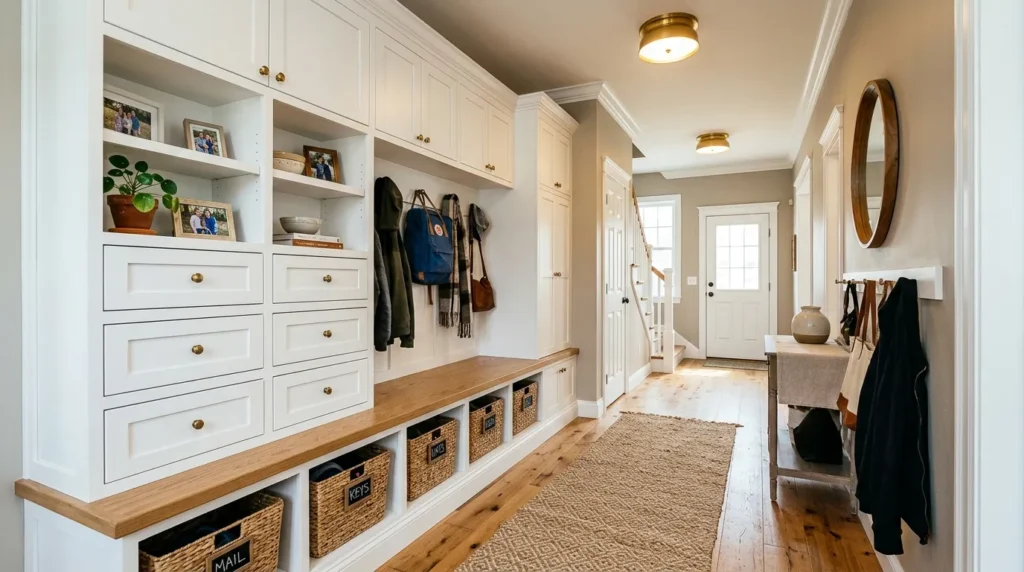
Built-in storage makes a hallway work harder without looking messy. If the corridor is wide enough, shallow cabinets, closed drawers, cubbies, or recessed shelves can hold items that usually spill into bedrooms, closets, or entryways. The trick is keeping the storage depth slim so the walking path stays comfortable. Painted built-ins that match the trim can blend into the architecture, while wood finishes add warmth. This idea is especially useful in older homes where closet space is limited and every inch needs a job. Measure carefully before building so doors and drawers open easily.
The best built-ins combine closed and open storage. Use drawers for hats, gloves, cords, or paperwork, then add a small open shelf for books, baskets, or decorative pieces. If children use the hallway, assign lower cubbies for backpacks or shoes and higher cabinets for seasonal items. Durable paint, wood trim, labeled bins, and soft-close hardware make the setup feel finished. A storage-focused hallway becomes calmer because clutter has a destination, yet the space still looks thoughtful, custom, and connected to the rest of the home. It also helps daily routines feel easier to manage.
7. Picture Ledges
Bullet Points
- Makes hallway art easy to update without rehanging everything.
- Works with framed prints, family photos, postcards, and children’s artwork.
- Adds layered visual interest while staying shallow.
- Ideal for renters or anyone who changes decor seasonally.
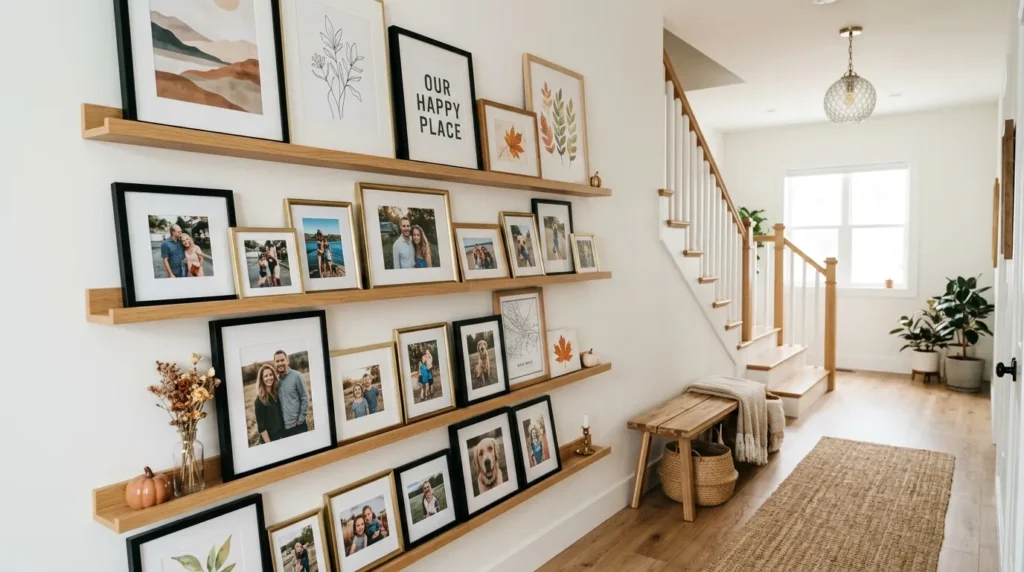
Picture ledges are perfect for anyone who likes to change hallway decor often. Instead of committing to a fixed gallery wall, ledges let you layer framed prints, small canvases, children’s artwork, seasonal pieces, or family photos with almost no new holes. They work especially well in narrow corridors because they add visual interest while staying shallow. Choose ledges in wood, white, black, or brass-toned finishes depending on your home’s style. Keep the pieces overlapping slightly so the display feels relaxed but still intentional. They are forgiving, flexible, and perfect for evolving family style.
The flexibility makes this idea practical for real life. You can rotate art for holidays, update family photos, add small postcards from trips, or change the color mood as your home evolves. Use sturdy anchors and avoid placing fragile items where bags or shoulders might knock them. For a cleaner look, repeat two ledges at the same length, or run one long ledge along a feature wall. The hallway becomes an easy-to-refresh display zone that feels creative, personal, and much less permanent than traditional framed arrangements. It also makes decorating feel approachable rather than intimidating.
8. Accent Paint
Bullet Points
- Adds color and character without adding furniture or clutter.
- Works on end walls, trim, doors, ceilings, or lower wall sections.
- Helps connect the hallway with nearby rooms.
- Can make a builder-grade corridor feel more custom.
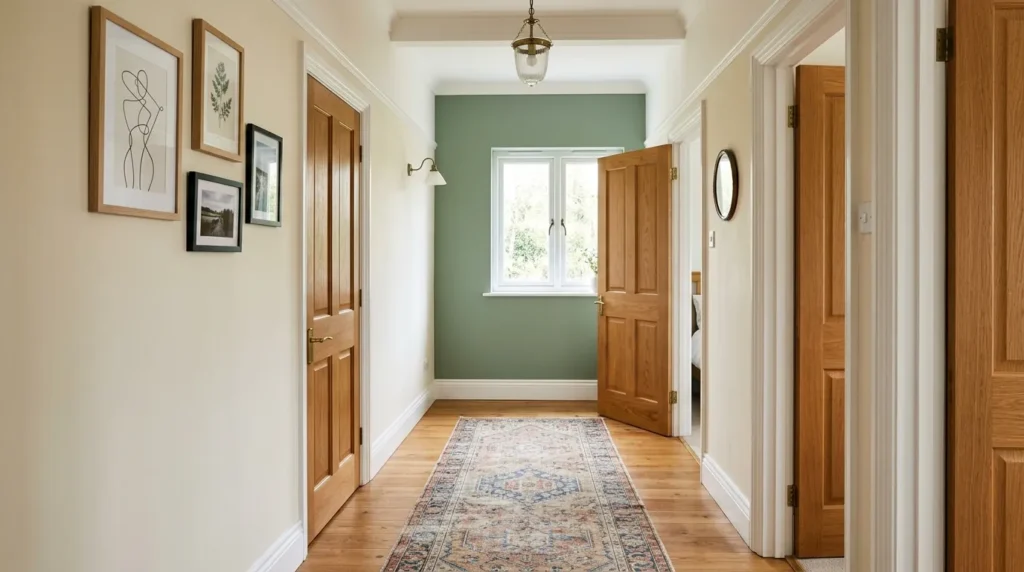
Accent paint can give a hallway personality without filling it with objects. Because corridors often connect several rooms, color can help create flow, contrast, or a clear visual destination. Try painting the end wall, lower half, doors, trim, or ceiling instead of every surface. Soft sage, warm beige, dusty blue, charcoal, clay, and creamy white all work beautifully depending on the home’s natural light. I’ve seen this work well when the accent color repeats subtly in rugs, artwork, or nearby rooms. This creates a look that feels intentional from room to room.
This approach is affordable, but preparation matters. Clean the walls, patch dents, tape trim carefully, and test color samples in morning and evening light before committing. A dark end wall can make a long corridor feel more grounded, while painted trim can add charm to a plain builder-grade hallway. If the space is narrow, keep the main wall color lighter and use accents strategically. Paint creates a custom look with minimal furniture, making the hallway feel fresh, styled, and connected to the home’s overall palette. It is a weekend project with lasting visual impact.
9. Landing Bench
Bullet Points
- Creates a useful pause point in an entry or hallway.
- Works for shoes, bags, laundry baskets, or quick seating.
- Adds warmth when paired with baskets, pillows, or hooks.
- Best in wider hallways where traffic flow remains open.
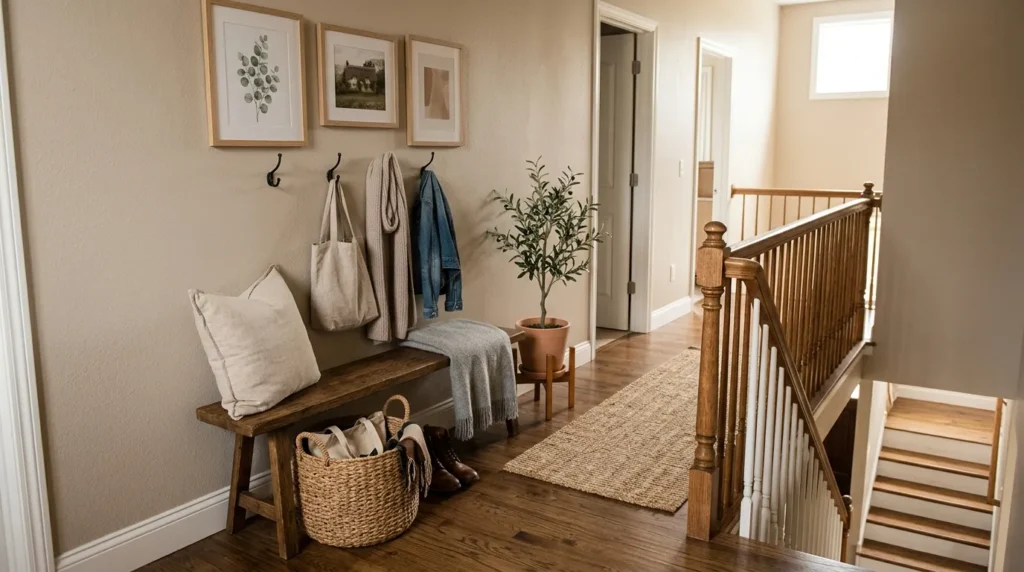
A landing bench gives the hallway a useful pause point instead of leaving it empty. This works especially well near an entry door, garage entrance, staircase, or bedroom hallway where people naturally stop to put on shoes, drop a bag, or sort laundry. Choose a narrow bench that hugs the wall and does not block traffic. Wood, upholstered, metal, or woven styles can all work, but the scale must be right. The best hallway bench feels helpful first and decorative second. Measure depth carefully so the walkway still feels open.
To style it well, keep the bench simple and functional. Add one cushion, one small pillow, or a folded throw, then leave room for someone to actually sit. A basket underneath can hold slippers, scarves, dog leashes, or kids’ accessories. Hang hooks or artwork above it if the wall feels bare. This idea makes the corridor feel more like a finished room while still supporting everyday routines. The hallway becomes a welcoming landing zone rather than a space people simply rush through. It adds comfort without demanding a large floor plan.
10. Door Trim
Bullet Points
- Makes multiple hallway doors feel coordinated and intentional.
- Adds architectural interest without using wall decor.
- Works with fresh paint, updated hardware, molding, or casing.
- Helps older or builder-grade hallways look more polished.
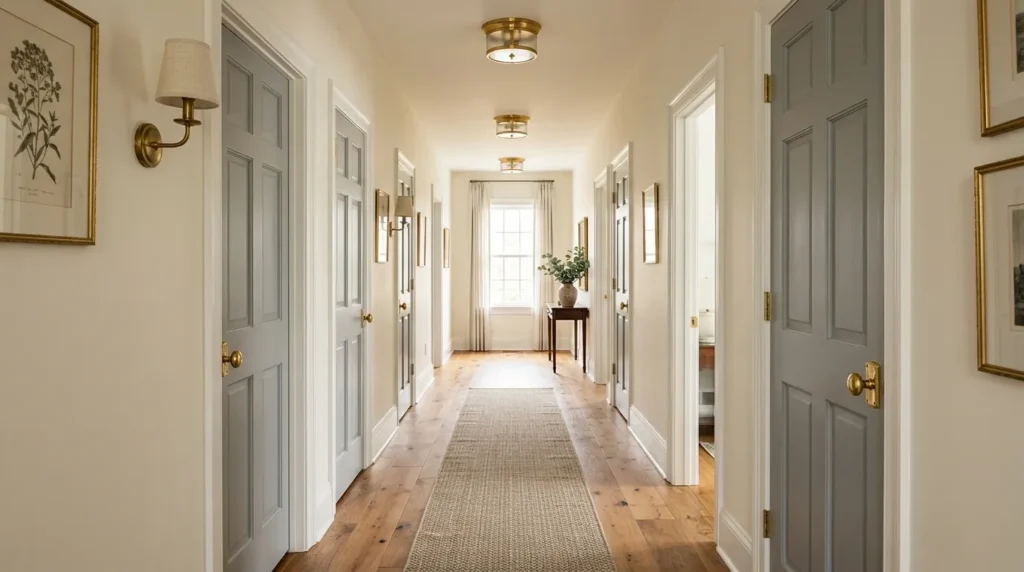
Door trim details can make a hallway feel custom even when the walls are simple. Many corridors have multiple doors, so upgrading the trim, paint, or hardware creates a repeated design element that instantly looks intentional. Fresh white trim feels crisp, stained wood feels warm, and painted doors can add quiet drama. Swap basic knobs for matte black, brass, bronze, or brushed nickel hardware to make the update feel complete. That small repeated detail helps the entire hallway look more considered. It is subtle, but it changes the whole rhythm.
This idea is practical because it improves the architecture rather than adding clutter. If your hallway feels busy, keep all doors one color and let the hardware provide contrast. If the space feels plain, paint interior doors a soft gray, muted green, black, or warm taupe. Use semi-gloss or satin paint for durability, especially in family homes where doors are touched often. With fresh trim, clean lines, and coordinated hardware, the hallway feels sharper, newer, and more connected to the surrounding rooms. This upgrade feels polished without needing extra furniture.
11. End Focal Point
Bullet Points
- Gives a long hallway a clear visual destination.
- Works with mirrors, artwork, plants, wallpaper, cabinets, or lighting.
- Helps prevent narrow corridors from feeling like tunnels.
- Looks best when one strong feature is used instead of many small pieces.
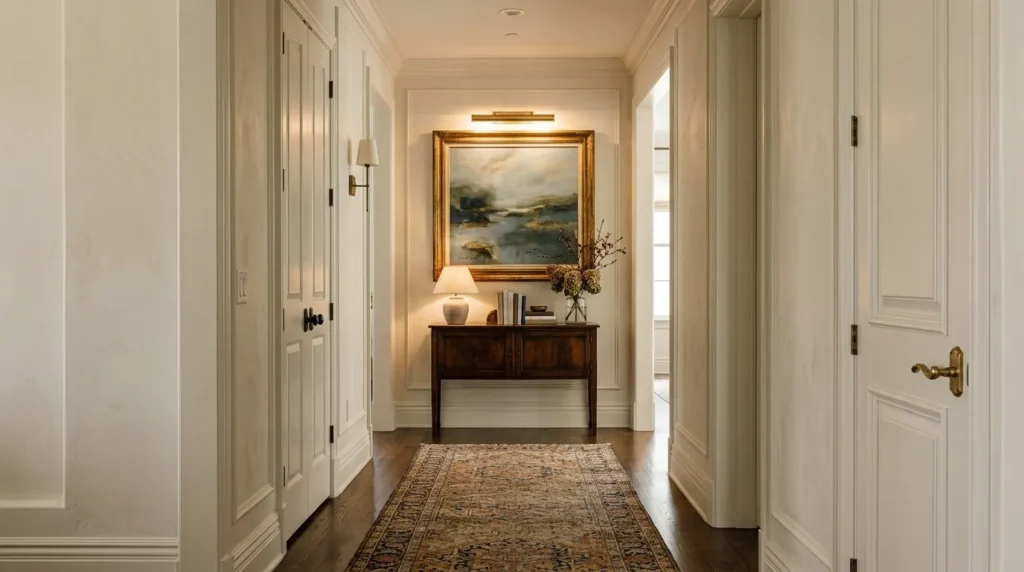
An end focal point gives the eye somewhere beautiful to land. Long hallways can feel like tunnels when there is nothing interesting at the far end, so a strong visual moment creates depth and purpose. Use a large artwork, mirror, narrow cabinet, plant, wallpaper panel, or sculptural light to anchor the view. The piece should be visible from a distance and scaled to the wall. In my experience, one confident focal point looks better than several small items scattered around the end wall. It gives the corridor a clear and polished destination.
This idea makes the hallway feel designed from every angle. A mirror at the end can reflect light, while artwork adds color and personality. A small cabinet can offer storage, and a tall plant can add height and softness. Keep the surrounding wall area simple so the focal point has room to breathe. Use proper lighting, such as a picture light or nearby sconce, to make the feature stand out. The corridor instantly feels more complete, balanced, and connected to the rest of the home. It is simple, but the visual payoff feels substantial.